
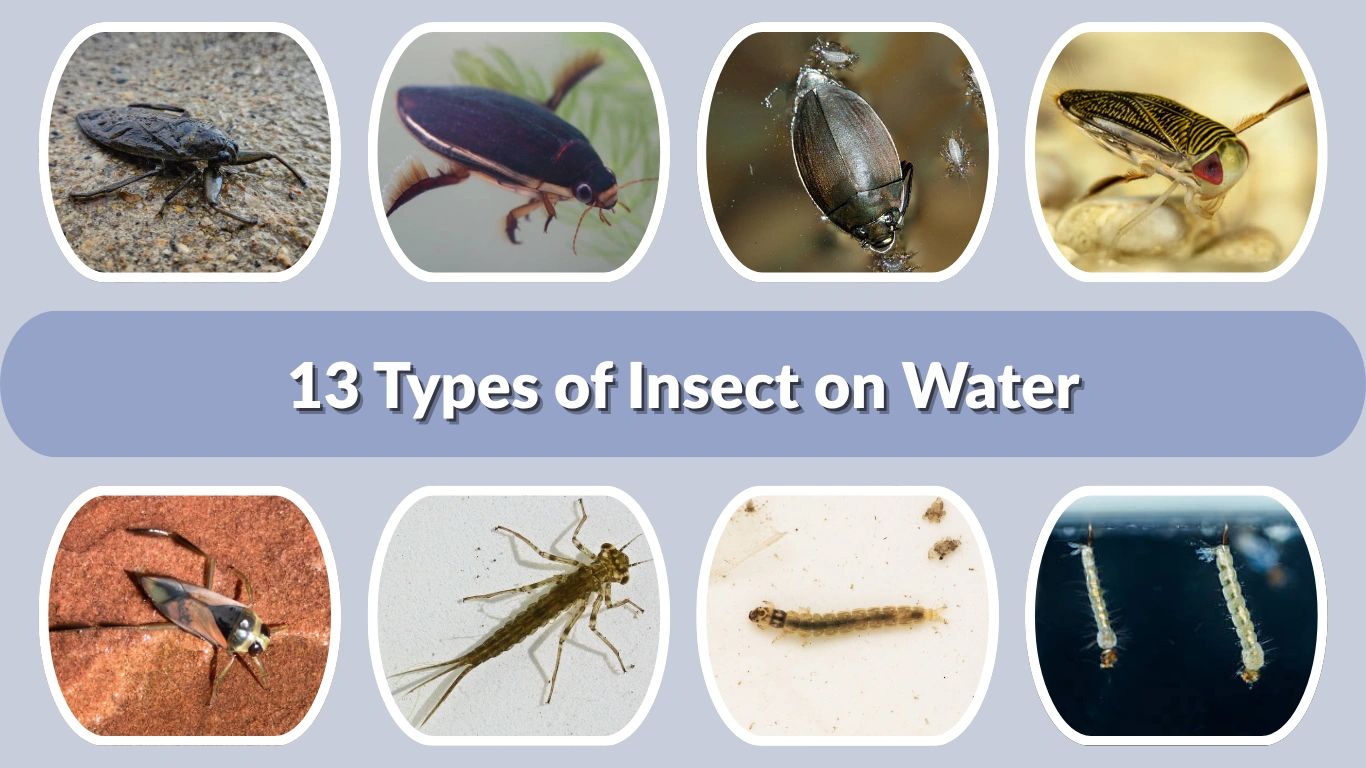
Water environments attract a wide variety of insects that live on, in, or around the surface. These insects are specially adapted to survive in aquatic conditions, using unique features like water-repellent legs, breathing tubes, or strong swimming abilities. They play an important role in maintaining the balance of aquatic ecosystems.
Understanding different types of insects found on water can help you identify them easily and learn their role in nature. Some are harmless and beneficial, while others may bite or act as predators. In this guide, you’ll discover 13 common types of insects found on water, along with key details to help you recognize them.
1. Water Striders
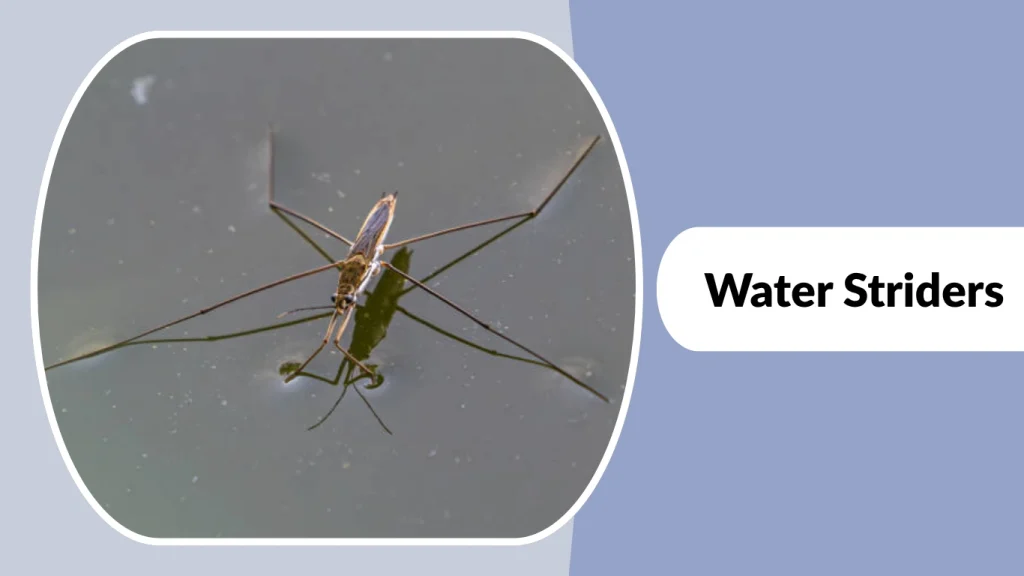
Water striders are unique insects known for their ability to walk and glide on the surface of water. They are commonly found in ponds, lakes, and slow-moving streams. Their long legs and lightweight bodies allow them to stay on top of the water without sinking.
Identification
- Slender body with long legs
- Usually brown or gray in color
- Length ranges from 2–15 mm depending on species
- Front legs shorter, middle and hind legs longer
- Able to stand and move on water surface
Habitat
Water striders live on the surface of calm or slow-moving freshwater bodies such as ponds, lakes, marshes, and streams. They prefer areas with little disturbance, where the water surface remains still.
They are rarely found in fast-flowing water because strong currents disrupt their movement. Vegetation around water bodies provides shelter and breeding areas. They spend most of their lives on the water surface and rarely leave it.
Behaviors
Water striders are known for their ability to skate across water using surface tension. They move quickly and smoothly, often seen darting across the surface.
They are highly sensitive to vibrations, which helps them detect prey or avoid predators. Water striders are active during the day and usually stay in groups.
They do not dive underwater and rely entirely on the surface for movement and feeding.
Diet
Water striders are carnivorous and feed on small insects and organisms that fall onto the water surface. This includes mosquitoes, flies, and other tiny aquatic insects.
They use their front legs to grab prey and pierce it with their mouthparts to suck out body fluids. Their feeding helps control insect populations in aquatic environments.
Lifecycle
Water striders go through three stages: egg, nymph, and adult. Females lay eggs on plants or debris near the water surface.
The eggs hatch into nymphs, which resemble smaller versions of adults. Nymphs grow through several molts before becoming adults. The full lifecycle can take a few weeks to a few months, depending on environmental conditions.
2. Water Boatmen
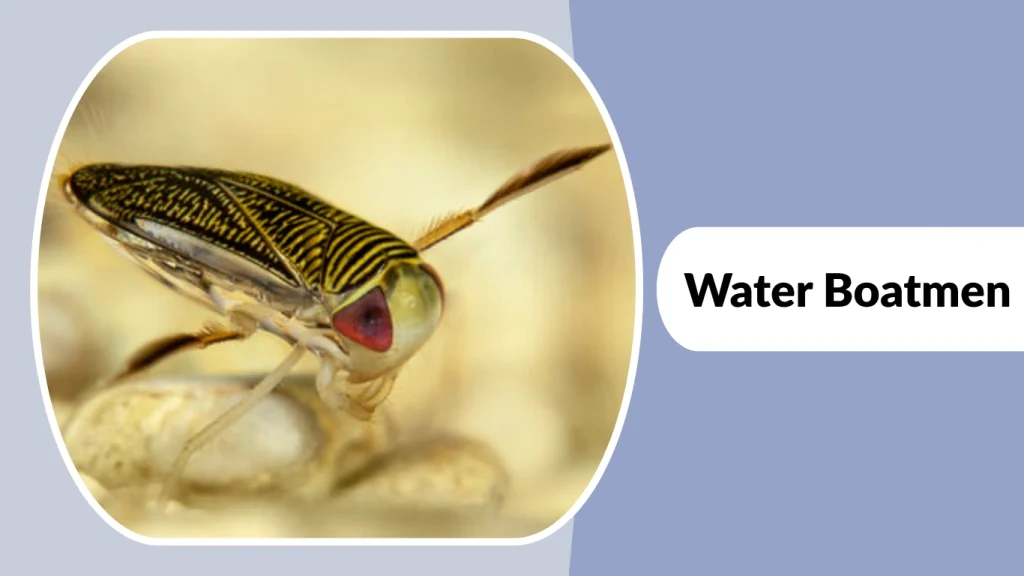
Water boatmen are small aquatic insects commonly found in freshwater environments. They are known for their oval-shaped bodies and oar-like hind legs, which they use to swim. Unlike many other water insects, they are generally harmless and often seen moving actively in ponds and still water.
Identification
- Small size (about 5–15 mm long)
- Oval, flattened body shape
- Light brown or tan color with dark markings
- Long, oar-like hind legs for swimming
- Head appears wider than the body
Habitat
Water boatmen live in freshwater habitats such as ponds, lakes, marshes, and slow-moving streams. They prefer calm water with plenty of vegetation, which provides shelter and food.
They are often found near the bottom or swimming just below the surface. These insects can also survive in temporary water bodies like rain pools or ditches.
They may occasionally fly from one water source to another, especially at night, in search of better conditions.
Behaviors
Water boatmen are active swimmers and move smoothly through water using their hind legs like paddles. They are often seen swimming in a steady, rowing motion.
Unlike some aquatic insects, they are not aggressive and do not bite humans. They may occasionally come to the surface to collect air, which they store around their bodies for breathing.
They are generally active during the day and tend to stay in groups.
Diet
Water boatmen are mostly herbivorous but can also feed on small organisms. Their diet includes algae, plant material, and microscopic aquatic life.
They use their mouthparts to scrape and collect food from surfaces. This feeding habit helps maintain the balance of algae in water bodies.
Lifecycle
Water boatmen go through three stages: egg, nymph, and adult. Females lay eggs on aquatic plants or submerged surfaces.
The eggs hatch into nymphs, which resemble small adults but lack fully developed wings. Nymphs grow through several molts before becoming adults. The lifecycle duration depends on environmental conditions but typically takes several weeks.
3. Backswimmers
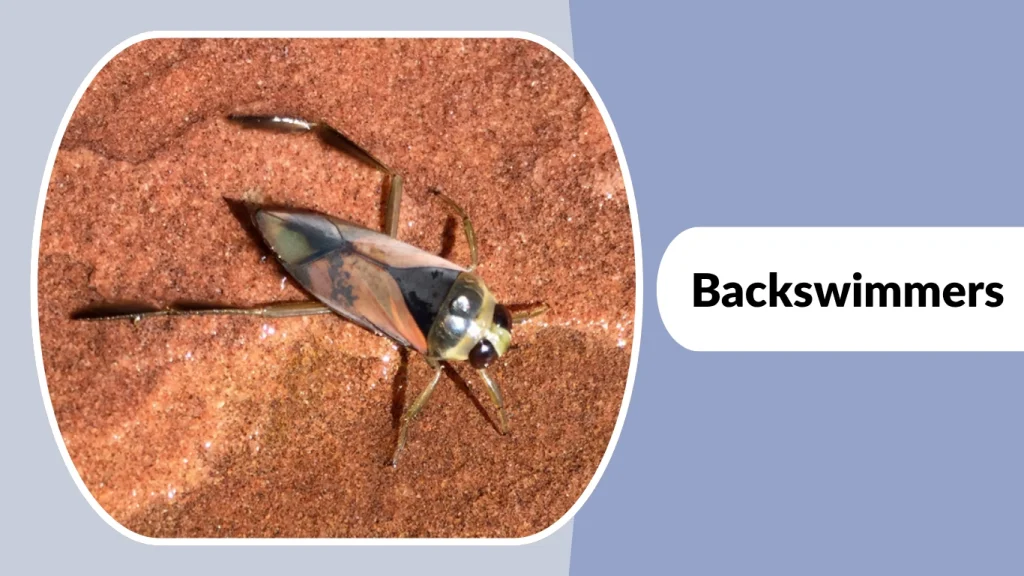
Backswimmers are aquatic insects known for their unusual swimming behavior, as they move upside down in the water. They are commonly found in ponds and still water bodies. Unlike water boatmen, backswimmers can bite, making them one of the more noticeable water insects.
Identification
- Medium size (about 5–15 mm long)
- Elongated, oval-shaped body
- Light brown or tan underside with darker back
- Long, oar-like hind legs
- Swims upside down (distinct feature)
Habitat
Backswimmers prefer still or slow-moving freshwater environments such as ponds, lakes, marshes, and ditches. They are often found just below the water surface, where they can easily access air.
They thrive in clean water with vegetation, which provides shelter and hunting grounds. Backswimmers may also fly between water bodies, especially at night, to find new habitats.
They are commonly seen in outdoor water sources but rarely stay indoors unless accidentally brought in.
Behaviors
Backswimmers are active predators and strong swimmers. They move upside down using their hind legs, which act like paddles.
They frequently come to the water surface to trap air, which they carry with them for breathing. Unlike many aquatic insects, they can bite if handled, and the bite can be painful.
They are generally solitary and spend most of their time hunting.
Diet
Backswimmers are carnivorous and feed on small aquatic insects, larvae, and even tiny fish or tadpoles. They use their sharp mouthparts to pierce prey and suck out body fluids.
Their feeding behavior helps control populations of other small water organisms, including mosquito larvae.
Lifecycle
Backswimmers undergo incomplete metamorphosis with three stages: egg, nymph, and adult. Females lay eggs on aquatic plants or submerged surfaces.
The eggs hatch into nymphs, which resemble adults but are smaller and wingless. Nymphs grow through several molts before becoming adults. The lifecycle usually takes a few weeks to complete.
4. Water Scorpions
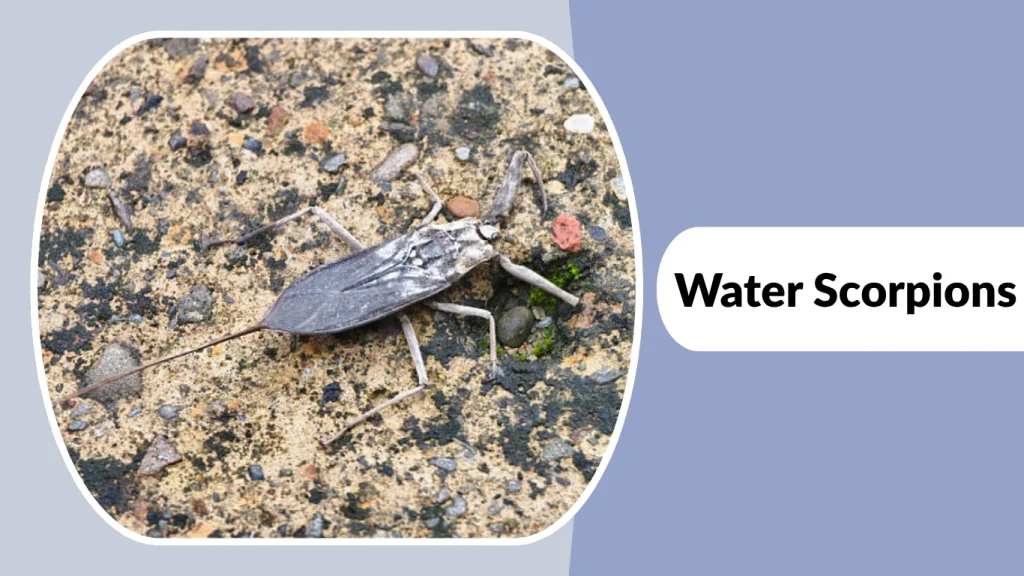
Water scorpions are aquatic insects known for their long, stick-like bodies and tail-like breathing tubes. Despite their name, they are not true scorpions, but they can deliver a painful bite. They are usually found in still water where they remain hidden among plants.
Identification
- Medium to large size (about 20–50 mm long)
- Long, slender or leaf-like body
- Brown color for camouflage
- Long front legs adapted for grasping prey
- Tail-like breathing tube at the rear
Habitat
Water scorpions prefer calm, shallow freshwater environments such as ponds, marshes, and slow-moving streams. They are often found among aquatic plants, where they can blend in easily.
They avoid fast-moving water and prefer areas with plenty of vegetation. These insects usually stay near the bottom or cling to plants, using their breathing tube to access air from the surface.
Their excellent camouflage makes them difficult to spot in natural environments.
Behaviors
Water scorpions are slow-moving and rely on stealth rather than speed. They often remain still, waiting for prey to come close before striking.
They use their front legs to grab prey quickly and hold it firmly. Although they are not aggressive toward humans, they can bite if handled, and the bite can be painful.
They come to the surface occasionally to breathe using their tail-like tube.
Diet
Water scorpions are carnivorous and feed on small aquatic insects, larvae, tadpoles, and even small fish. They use their sharp mouthparts to pierce prey and suck out body fluids.
Their feeding behavior makes them effective predators in aquatic ecosystems.
Lifecycle
Water scorpions undergo incomplete metamorphosis with three stages: egg, nymph, and adult. Females lay eggs on or near aquatic plants.
The eggs hatch into nymphs, which resemble smaller versions of adults. Nymphs grow through several molts before becoming adults. The lifecycle may take several weeks to months depending on environmental conditions.
5. Whirligig Beetles
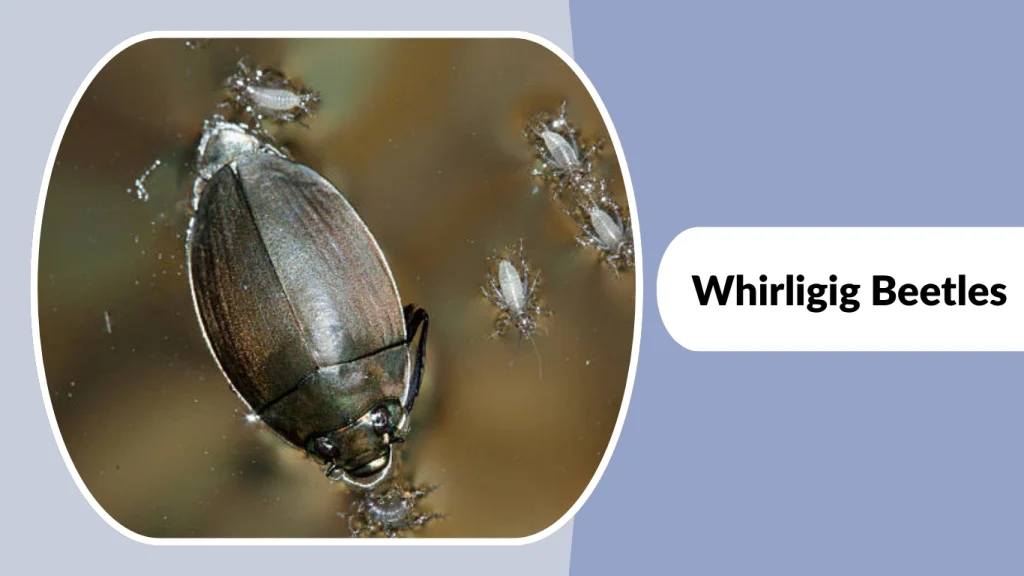
Whirligig beetles are small aquatic insects known for their rapid, circular movement on the water surface. They are often seen spinning in groups, creating a whirling motion that gives them their name. These beetles are commonly found in calm freshwater environments.
Identification
- Small size (about 3–8 mm long)
- Oval, shiny black body
- Short antennae
- Split eyes (upper for air, lower for water)
- Rapid, circular movement on water surface
Habitat
Whirligig beetles live on the surface of still or slow-moving freshwater such as ponds, lakes, and quiet streams. They prefer clean water with minimal disturbance.
They are usually found in groups near the surface, especially in sunny areas. Vegetation along the edges of water bodies provides shelter and protection.
They rarely leave the water except when flying to new habitats, usually at night.
Behaviors
Whirligig beetles are known for their fast, spinning movement on the water surface. This behavior helps them detect prey and avoid predators.
They are highly social and often seen moving in groups. When disturbed, they quickly scatter and then regroup shortly after.
Their unique split eyes allow them to see both above and below the water at the same time.
Diet
Whirligig beetles are carnivorous and feed on small insects and organic matter on the water surface. They capture prey that falls into the water, such as flies or other tiny insects.
They use their mouthparts to grab and consume prey quickly. Their feeding helps control insect populations in aquatic environments.
Lifecycle
Whirligig beetles go through four stages: egg, larva, pupa, and adult. Females lay eggs on aquatic plants or submerged surfaces.
The larvae live underwater and feed on small organisms. After growing, they leave the water to pupate. Adults emerge and return to the water surface, continuing the cycle.
6. Predaceous Diving Beetles
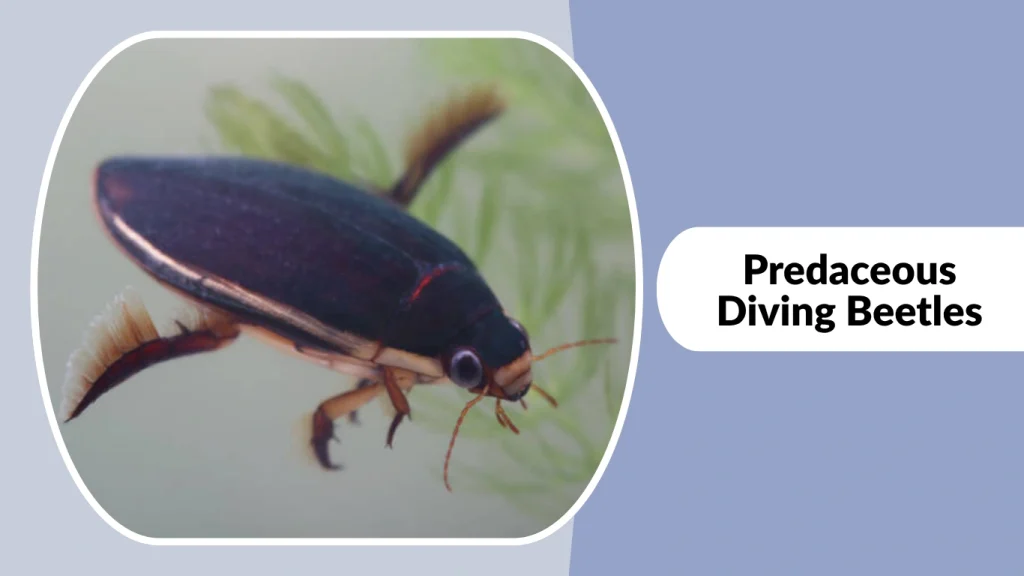
Predaceous diving beetles are strong aquatic insects known for their ability to swim and hunt underwater. They are commonly found in ponds and other freshwater habitats. Both adults and larvae are active predators, making them important in controlling other aquatic insect populations.
Identification
- Medium to large size (about 10–35 mm long)
- Oval, smooth, and streamlined body
- Dark brown or black color
- Strong hind legs adapted for swimming
- Shiny, hard outer shell
Habitat
Predaceous diving beetles live in freshwater environments such as ponds, lakes, marshes, and slow-moving streams. They prefer still water with vegetation, which provides hiding spots and hunting areas.
They spend most of their time underwater but come to the surface occasionally to breathe. These beetles can also fly and may move between water bodies, especially at night.
They are commonly found in natural water sources but may also appear in garden ponds.
Behaviors
These beetles are active swimmers and use their hind legs like paddles to move quickly through water. They are capable of diving and staying submerged for long periods.
They come to the surface to trap air under their wings for breathing. Predaceous diving beetles are solitary and spend most of their time hunting.
They are generally not aggressive toward humans but may bite if handled.
Diet
Predaceous diving beetles are carnivorous and feed on a variety of aquatic organisms. Their diet includes insect larvae, small fish, tadpoles, and other small creatures.
Both adults and larvae are strong predators. The larvae, often called “water tigers,” are especially aggressive hunters and consume large amounts of prey.
Lifecycle
These beetles undergo complete metamorphosis with four stages: egg, larva, pupa, and adult. Females lay eggs in aquatic plants or submerged surfaces.
The larvae live in water and actively hunt for food. After growing, they leave the water to pupate in moist soil. Adults emerge and return to water, continuing the lifecycle.
7. Mosquito Larvae
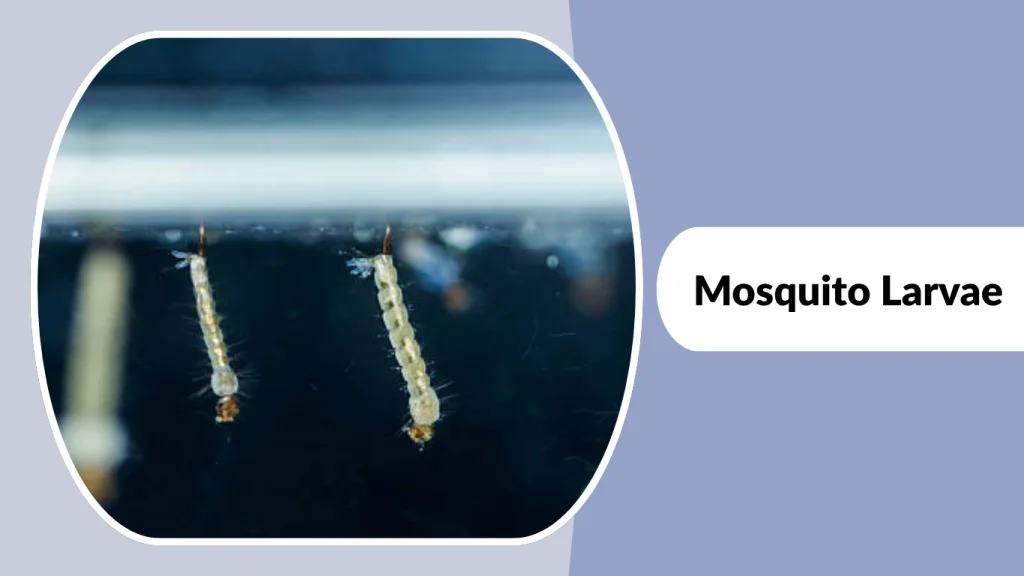
Mosquito larvae are the immature stage of mosquitoes and are commonly found in standing water. They are often called “wrigglers” because of their jerky movement in water. While they do not bite, they eventually develop into adult mosquitoes, which can be a major nuisance.
Identification
- Very small size (about 3–10 mm long)
- Thin, worm-like body
- Light brown or translucent color
- Distinct head with a tube-like breathing siphon
- Wriggling movement in water
Habitat
Mosquito larvae live in stagnant or slow-moving water. Common places include ponds, puddles, buckets, flower pots, drains, and any container that collects water.
They prefer warm environments and can survive in very small amounts of water. Even a small puddle can support their development.
They stay near the water surface to breathe and are rarely found in fast-moving water.
Behaviors
Mosquito larvae are active and constantly move in a wriggling motion. They hang near the water surface to breathe through their siphon tube.
When disturbed, they quickly dive downward and then return to the surface. They are not harmful at this stage but are important because they develop into biting adults.
They remain in water until they mature into pupae.
Diet
Mosquito larvae feed on microorganisms, algae, and organic matter found in water. They filter tiny particles from the water using specialized mouthparts.
Their feeding helps them grow quickly, especially in nutrient-rich water. This diet supports rapid development into the next stage.
Lifecycle
Mosquito larvae are part of a four-stage lifecycle: egg, larva, pupa, and adult. Eggs are laid on the surface of water and hatch into larvae within a few days.
The larvae grow and molt several times before turning into pupae. This stage usually lasts about 5 to 14 days, depending on temperature. After pupation, adult mosquitoes emerge from the water.
8. Dragonfly Nymphs

Dragonfly nymphs are the aquatic, immature stage of dragonflies. They live underwater and are active predators, feeding on a variety of small aquatic organisms. Although they are rarely seen, they play an important role in controlling insect populations in water ecosystems.
Identification
- Medium size (varies by species, usually 10–40 mm)
- Thick, robust body
- Brown or green color for camouflage
- Large head with prominent eyes
- Extendable lower jaw (used to catch prey)
Habitat
Dragonfly nymphs live in freshwater environments such as ponds, lakes, marshes, and slow-moving streams. They prefer areas with vegetation, mud, or debris where they can hide.
They stay at the bottom or cling to plants and are well camouflaged. Clean, oxygen-rich water supports their growth. They remain underwater for most of their life until they mature.
Behaviors
Dragonfly nymphs are stealthy hunters. They remain still and wait for prey to come close, then quickly extend their lower jaw to capture it.
They can move by crawling or by quickly jetting through the water. They are not aggressive toward humans but can bite if handled.
They spend most of their time hidden and are rarely noticed.
Diet
Dragonfly nymphs are carnivorous and feed on small aquatic animals. Their diet includes mosquito larvae, small insects, tadpoles, and even tiny fish.
They use their extendable jaw to grab prey with great speed. This makes them effective predators in aquatic environments.
Lifecycle
Dragonfly nymphs are part of an incomplete metamorphosis: egg, nymph, and adult. Females lay eggs in or near water.
The nymph stage can last several months to years, depending on the species. Once fully developed, the nymph leaves the water and transforms into an adult dragonfly.
9. Damselfly Nymphs
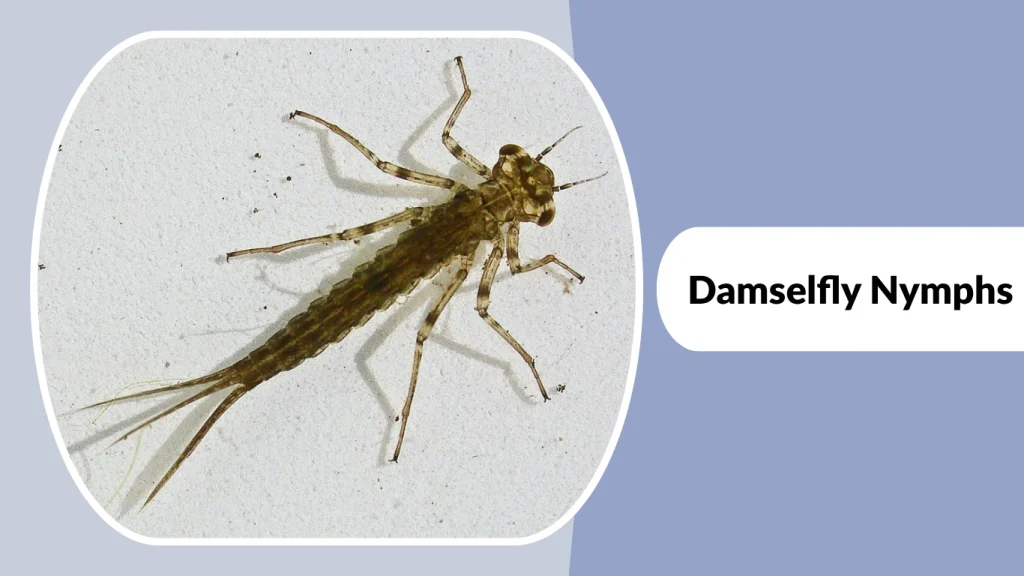
Damselfly nymphs are the underwater stage of damselflies and are commonly found in freshwater habitats. They are slender and less bulky than dragonfly nymphs but are still active predators. These nymphs play an important role in maintaining the balance of aquatic ecosystems.
Identification
- Small to medium size (about 10–30 mm long)
- Slender, elongated body
- Brown or green color for camouflage
- Three leaf-like gills at the tail end
- Large eyes and narrow head
Habitat
Damselfly nymphs live in freshwater environments such as ponds, lakes, marshes, and slow-moving streams. They prefer areas with plenty of aquatic plants where they can hide and hunt.
They are usually found clinging to vegetation or resting among debris. Clean, still water provides the best conditions for their survival.
They remain underwater throughout their development until they are ready to emerge as adults.
Behaviors
Damselfly nymphs are slow-moving but effective predators. They often stay still and wait for prey to come close before striking.
They move by crawling or gently swimming using their tail gills. These gills also help them breathe underwater.
They are not harmful to humans but may react if handled.
Diet
Damselfly nymphs are carnivorous and feed on small aquatic organisms. Their diet includes mosquito larvae, tiny insects, and other small creatures.
They use their specialized mouthparts to catch and consume prey. Their feeding helps control populations of smaller insects in water.
Lifecycle
Damselfly nymphs are part of an incomplete lifecycle: egg, nymph, and adult. Females lay eggs in or near water, where they hatch into nymphs.
The nymph stage can last several weeks to months. Once fully developed, the nymph climbs out of the water and transforms into an adult damselfly.
10. Giant Water Bugs
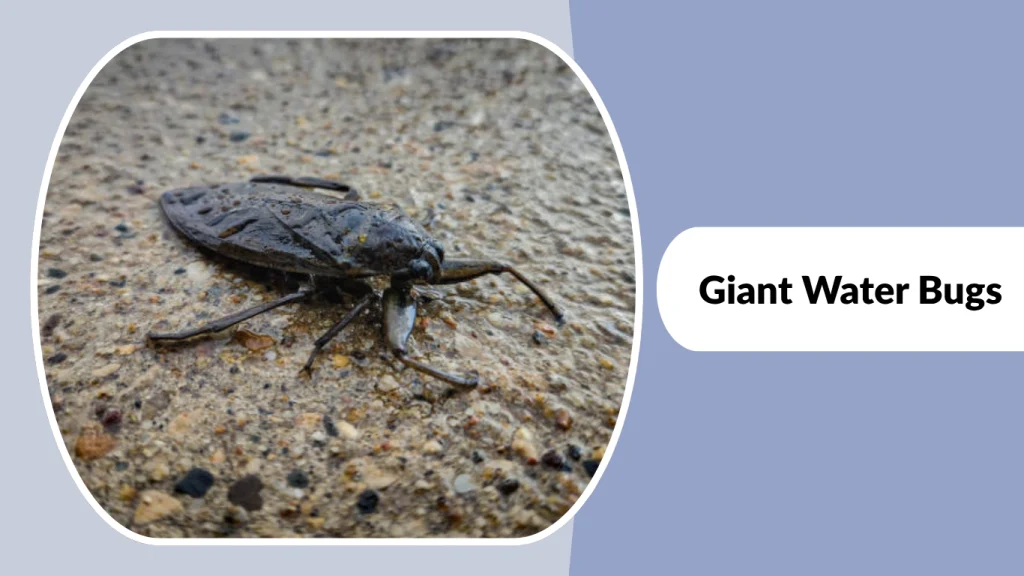
Giant water bugs are large aquatic insects known for their strong predatory behavior. They are often called “toe-biters” because they can deliver a painful bite if handled. These insects are commonly found in ponds and other freshwater bodies.
Identification
- Large size (about 20–65 mm long)
- Flat, oval-shaped body
- Dark brown or black color
- Strong front legs adapted for grabbing prey
- Short breathing tube at the rear
Habitat
Giant water bugs live in freshwater environments such as ponds, lakes, marshes, and slow-moving streams. They prefer still water with plenty of vegetation where they can hide and hunt.
They often stay near the bottom or cling to plants. At night, they may fly and are attracted to lights, sometimes appearing near homes.
They require access to the water surface to breathe.
Behaviors
Giant water bugs are ambush predators. They remain still and wait for prey to come close before attacking quickly.
They can swim but are not as active as some other aquatic insects. When threatened or handled, they can bite, which may be painful.
They are mostly active at night and tend to stay hidden during the day.
Diet
Giant water bugs are carnivorous and feed on a wide range of aquatic animals. Their diet includes insects, tadpoles, small fish, and even frogs.
They use their strong front legs to capture prey and inject digestive fluids to break it down before feeding. This makes them powerful predators in aquatic ecosystems.
Lifecycle
Giant water bugs undergo incomplete metamorphosis with three stages: egg, nymph, and adult. In some species, females lay eggs on plants or even on the backs of males.
The eggs hatch into nymphs, which resemble smaller versions of adults. Nymphs grow through several molts before becoming adults. The lifecycle typically takes several weeks to months.
11. Mayfly Nymphs

Mayfly nymphs are the aquatic immature stage of mayflies and are commonly found in clean freshwater environments. They are sensitive to pollution, so their presence often indicates good water quality. Although they are not harmful, they play an important role in aquatic ecosystems.
Identification
- Small to medium size (about 5–25 mm long)
- Slender, soft body
- Brown, yellow, or green color
- Three long tail filaments (sometimes two in some species)
- Leaf-like gills along the sides of the abdomen
Habitat
Mayfly nymphs live in freshwater habitats such as streams, rivers, ponds, and lakes. They are most commonly found in clean, well-oxygenated water with minimal pollution.
They usually stay near the bottom, hiding under rocks, sand, or aquatic plants. Flowing water environments like streams are especially ideal for many species.
Their presence is often used as an indicator of healthy aquatic ecosystems because they cannot survive in heavily polluted water.
Behaviors
Mayfly nymphs are generally slow-moving and spend most of their time clinging to surfaces or crawling along the bottom. Some species are better swimmers, but most prefer to stay hidden.
They are mostly active during the day and avoid strong currents when possible. Their behavior helps them avoid predators such as fish.
They are not harmful to humans and are rarely noticed unless water is closely examined.
Diet
Mayfly nymphs are mostly herbivorous or detritivorous. They feed on algae, plant material, and organic debris found in the water.
Some species may also consume tiny microorganisms. Their feeding helps recycle nutrients and maintain balance in aquatic ecosystems.
Lifecycle
Mayflies undergo incomplete metamorphosis with three stages: egg, nymph, and adult. Females lay eggs in water, where they hatch into nymphs.
The nymph stage can last several months to over a year, depending on the species. When fully developed, they emerge from the water as winged adults, often in large numbers, but adults live only a short time.
12. Caddisfly Larvae
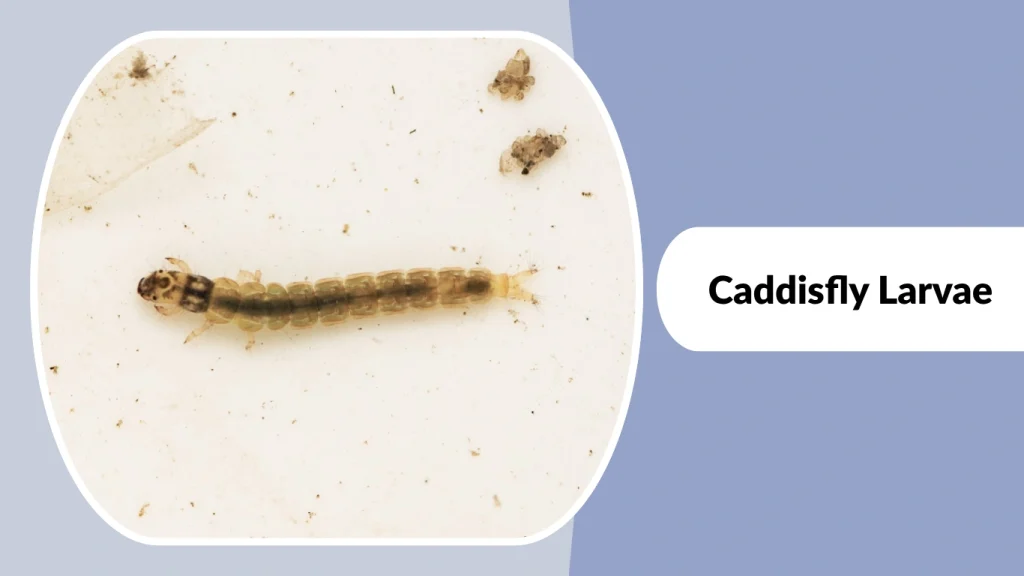
Caddisfly larvae are aquatic insects known for building protective cases using materials from their environment. These cases can be made of sand, small stones, or plant debris, making them easy to recognize in freshwater habitats. They are important for maintaining clean and balanced water ecosystems.
Identification
- Small to medium size (about 5–20 mm long)
- Soft, worm-like body
- Usually green, brown, or cream-colored
- Head is hardened and darker
- Often found inside a protective case made of debris
Habitat
Caddisfly larvae live in freshwater environments such as streams, rivers, ponds, and lakes. They are commonly found in clean, well-oxygenated water with plenty of natural materials.
They stay on the bottom, attaching their cases to rocks, plants, or submerged surfaces. Flowing water habitats are especially suitable for many species.
Their presence often indicates good water quality, as they are sensitive to pollution.
Behaviors
Caddisfly larvae are mostly slow-moving and remain inside their protective cases. They extend part of their body out to move or feed while staying protected.
Some species anchor themselves to surfaces, while others crawl along the bottom. Their case-building behavior helps them avoid predators and adapt to their environment.
They are not harmful to humans and are rarely noticed unless closely observed.
Diet
Caddisfly larvae have varied diets depending on the species. Many feed on algae, plant material, and organic debris, while others are predators that eat small aquatic insects.
Their feeding plays an important role in breaking down organic matter and maintaining ecosystem balance.
Lifecycle
Caddisflies undergo complete metamorphosis with four stages: egg, larva, pupa, and adult. Females lay eggs in or near water.
The larvae live in water and build protective cases as they grow. When ready to transform, they seal themselves inside the case and pupate. Adults emerge as winged insects and leave the water to reproduce.
13. Dobsonfly Larvae
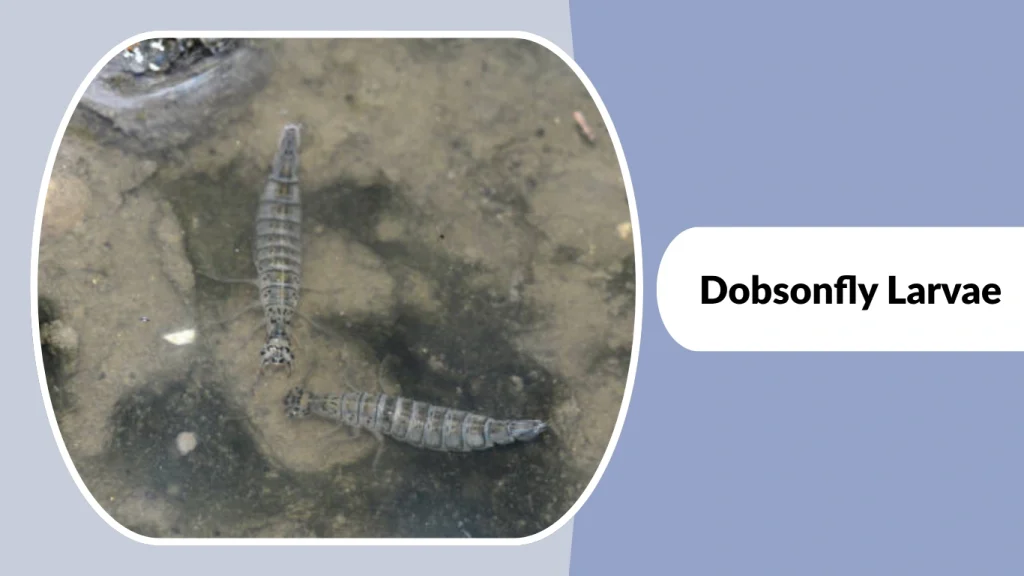
Dobsonfly larvae, commonly known as hellgrammites, are large aquatic insects found in freshwater environments. They are known for their fierce appearance and strong jaws. Despite their intimidating look, they are mainly important as predators in aquatic ecosystems and indicators of clean water.
Identification
- Large size (about 20–100 mm long)
- Long, flattened body
- Dark brown or black color
- Strong, curved jaws (mandibles)
- Lateral filaments (gill-like structures) along the body
Habitat
Dobsonfly larvae live in clean, fast-flowing freshwater such as rivers and streams. They prefer rocky bottoms where they can hide under stones and debris.
They require well-oxygenated water, which is why they are rarely found in polluted or stagnant environments. Their presence is often a sign of good water quality.
They remain underwater for most of their life and only leave when ready to transform into adults.
Behaviors
Dobsonfly larvae are active predators and spend much of their time hiding under rocks, waiting for prey. They can move by crawling along the stream bed.
When disturbed, they may raise their heads and use their jaws defensively. Although they can bite, they are not aggressive unless handled.
They are mostly active at night and remain hidden during the day.
Diet
Dobsonfly larvae are carnivorous and feed on small aquatic organisms. Their diet includes insect larvae, worms, and other small invertebrates.
They use their strong jaws to capture and hold prey before consuming it. Their feeding helps control populations of other aquatic insects.
Lifecycle
Dobsonflies undergo complete metamorphosis with four stages: egg, larva, pupa, and adult. Females lay eggs near water, and larvae hatch and enter the water.
The larval stage can last 1 to 3 years, making it the longest part of their lifecycle. When fully grown, they leave the water to pupate in soil. Adults emerge later, live briefly, and reproduce to continue the cycle.
FAQs
What insects live on water surfaces?
Insects like water striders, whirligig beetles, and backswimmers are commonly seen on water surfaces. They are specially adapted to move or float on water, using surface tension or specialized body structures to stay afloat.
Are water insects harmful to humans?
Most water insects are harmless and do not pose any danger to humans. However, some like backswimmers and giant water bugs can bite if handled. These bites may be painful but are generally not dangerous.
Why are insects attracted to water?
Water provides essential resources like food, breeding sites, and shelter. Many insects lay their eggs in water, while others feed on organisms living in or near it. Moist environments also support their survival and growth.
Can water insects enter homes?
Yes, some water insects can enter homes, especially if there are water sources like ponds, drains, or containers nearby. They may also be attracted to lights at night and accidentally come indoors.
How can I reduce insects around water?
To reduce water insects, remove standing water, keep water sources clean, and improve drainage. Cover containers, clean ponds regularly, and reduce outdoor lighting near water areas to limit their attraction.
