
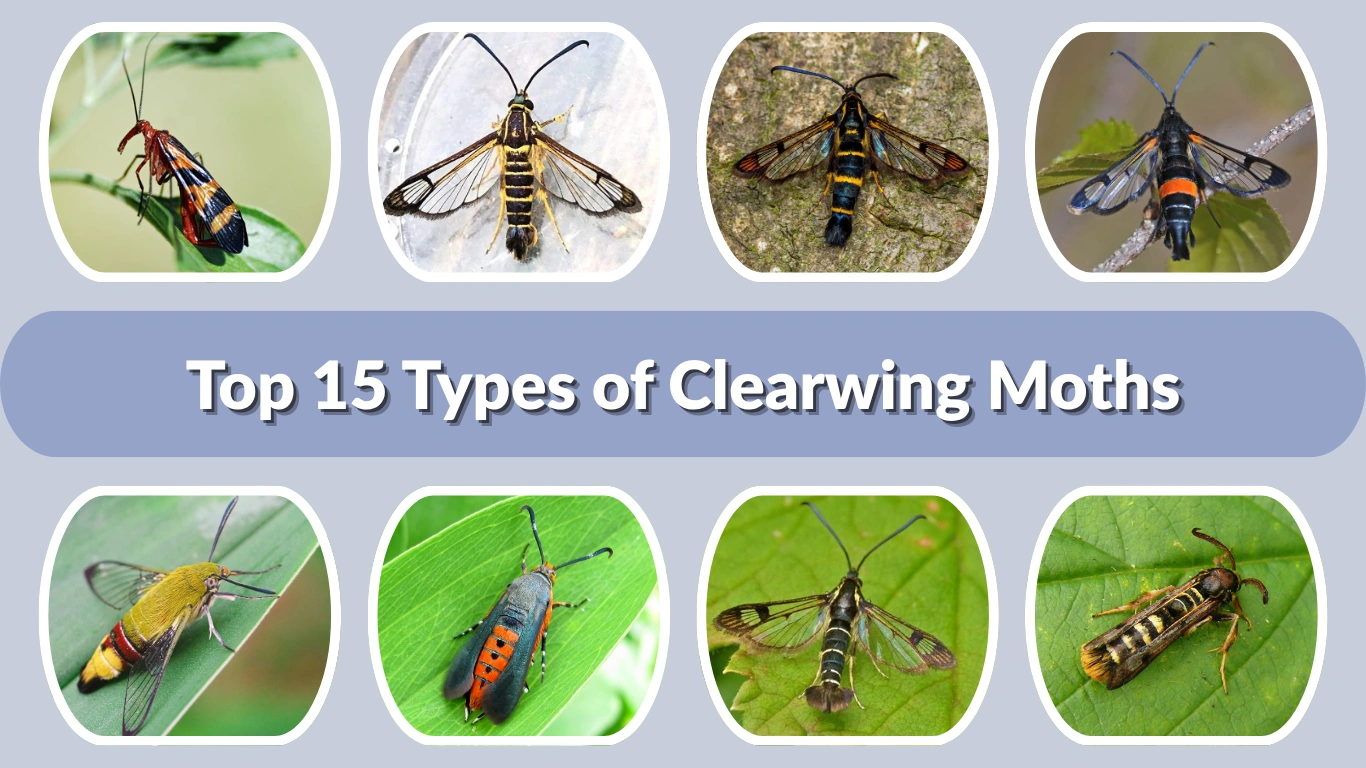
Clearwing moths are fascinating insects known for their transparent wings and remarkable resemblance to bees or wasps. Belonging mainly to the family Sesiidae, these moths are active during the daytime and are often seen hovering around flowers or tree trunks. Their unique appearance helps protect them from predators through mimicry. Some species are important pollinators, while others are considered agricultural or garden pests because their larvae bore into stems, trunks, and roots of plants. From the Hummingbird Clearwing to the Peach Tree Borer, clearwing moths display impressive diversity in behavior, habitat, appearance, and lifecycle across different regions of the world.
1. Hummingbird Clearwing
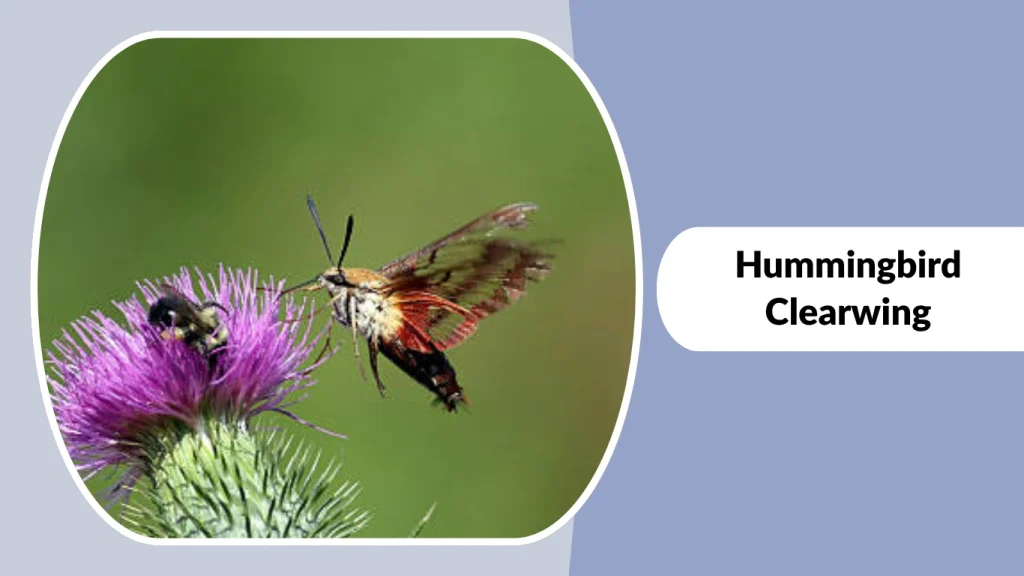
The Hummingbird Clearwing is a fascinating clearwing moth known for its transparent wings and hummingbird-like flight behavior. This daytime moth hovers in front of flowers while feeding on nectar, often causing people to mistake it for a small hummingbird. It is widely admired for its fast flight, fuzzy body, and important role as a pollinator in gardens and natural habitats.
Identification
- Scientific name: Hemaris thysbe
- Wings are mostly transparent with dark borders
- Body is thick and covered with yellowish or olive-colored hairs
- Wingspan ranges from 4 to 5.5 cm
- Fast hovering flight resembles a hummingbird
- Long proboscis is used for feeding on nectar
Habitat and Distribution
The Hummingbird Clearwing is widely distributed across North America. It commonly inhabits gardens, meadows, woodland edges, parks, and open fields where flowering plants are abundant throughout the warmer months.
Behavior and Diet
Unlike many moth species, the Hummingbird Clearwing is active during the daytime. Adults hover while feeding on nectar from flowers such as bee balm, phlox, and honeysuckle. Caterpillars feed on leaves from plants including viburnum, hawthorn, and snowberry.
Lifecycle
Females lay eggs on suitable host plants during the breeding season. Caterpillars hatch and feed through several developmental stages before pupating in leaf litter or soil. Adult moths later emerge and continue the reproductive cycle under favorable environmental conditions.
2. Snowberry Clearwing
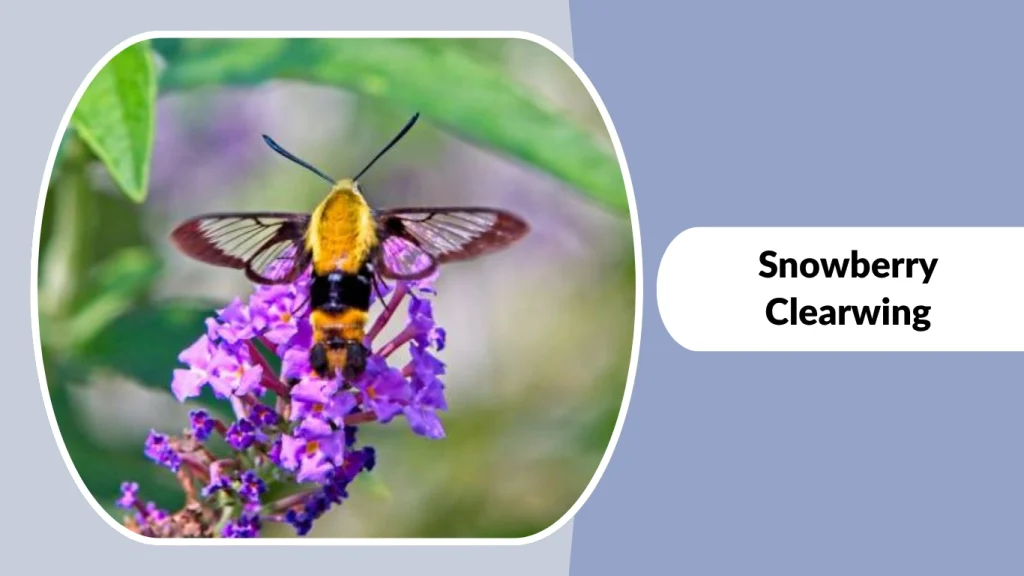
The Snowberry Clearwing is a colorful clearwing moth recognized for its transparent wings and bee-like appearance. This active daytime moth hovers around flowers while feeding on nectar, making it resemble both a hummingbird and a bumblebee. It is commonly seen in gardens and open habitats where flowering plants and suitable host shrubs are widely available.
Identification
- Scientific name: Hemaris diffinis
- Wings are mostly transparent with dark edges
- Body is black and yellow, resembling a bumblebee
- Wingspan ranges from 4 to 5 cm
- Fast hovering flight while feeding on flowers
- Long proboscis is used to collect nectar
Habitat and Distribution
The Snowberry Clearwing is widely distributed across North America. It commonly inhabits gardens, meadows, woodland edges, parks, grasslands, and open countryside with abundant flowering plants and shrubs.
Behavior and Diet
Unlike many moth species, the Snowberry Clearwing is active during daylight hours. Adults hover while feeding on nectar from flowers such as lilac, honeysuckle, phlox, and bee balm. Caterpillars feed mainly on snowberry, viburnum, and honeysuckle leaves.
Lifecycle
Females lay eggs on suitable host plants during warm seasons. Caterpillars hatch and feed through several developmental stages before pupating in leaf litter or loose soil. Adult moths later emerge and continue the reproductive cycle under favorable environmental conditions.
3. Raspberry Clearwing
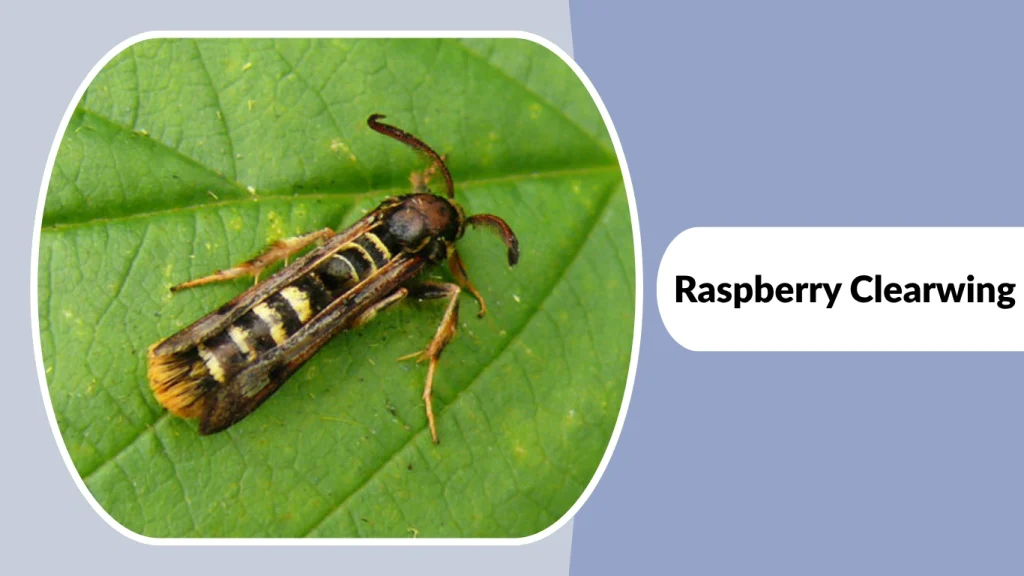
The Raspberry Clearwing is a slender clearwing moth species known for its transparent wings and wasp-like appearance. This moth is commonly associated with raspberry and blackberry plants where its larvae bore into stems and can weaken the host plant. Because of its clear wings and narrow body, it is often mistaken for a small wasp during flight.
Identification
- Scientific name: Pennisetia hylaeiformis
- Wings are transparent with dark borders
- Body is black with yellow banding
- Wingspan ranges from 2 to 3 cm
- Narrow body gives a wasp-like appearance
- Adults are active during daytime hours
Habitat and Distribution
The Raspberry Clearwing is widely distributed across Europe and parts of North America. It commonly inhabits gardens, berry farms, hedgerows, woodland edges, and agricultural areas where raspberry and blackberry plants are cultivated.
Behavior and Diet
Adult moths are mainly active during the daytime and may be seen flying around berry plants during warm weather. Caterpillars bore into raspberry and blackberry canes where they feed internally and may weaken plant growth.
Lifecycle
Females lay eggs on raspberry or blackberry stems during the breeding season. Caterpillars hatch and tunnel into plant canes where they continue feeding through several developmental stages. Pupation occurs inside the stem, and adult moths later emerge to continue the reproductive cycle.
4. Squash Vine Borer Moth
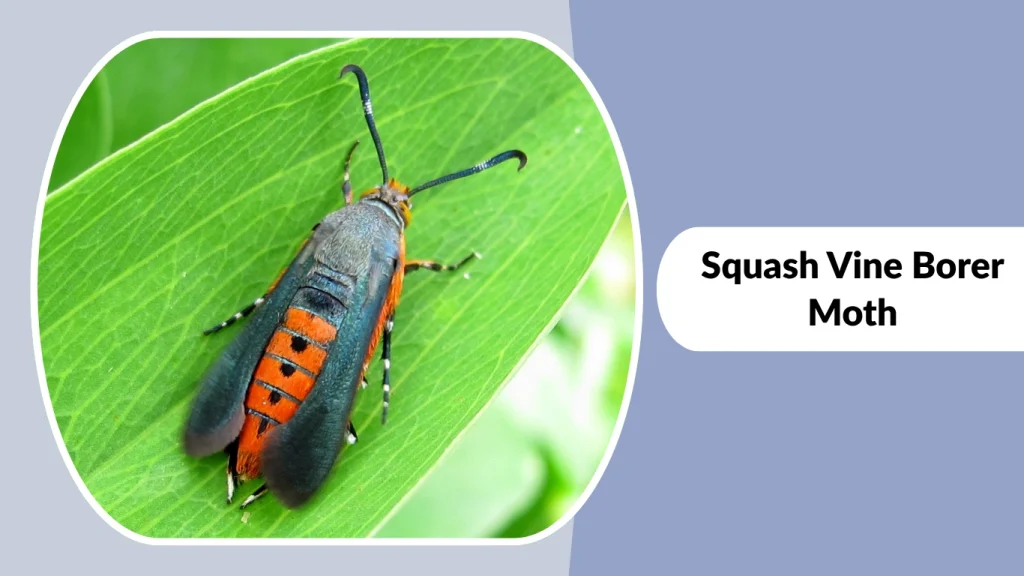
The Squash Vine Borer Moth is a clearwing moth species well known for damaging squash, pumpkin, and zucchini plants. Although it is a moth, its bright colors and transparent wings make it resemble a wasp during flight. This species is considered a serious garden pest because its larvae tunnel into plant stems and may cause sudden wilting.
Identification
- Scientific name: Melittia cucurbitae
- Wings are mostly transparent with dark margins
- Body is orange-red with black markings
- Wingspan ranges from 2.5 to 4 cm
- Hind legs are covered with orange hairs
- Adults resemble small wasps in appearance
Habitat and Distribution
The Squash Vine Borer Moth is widely distributed across North America. It commonly inhabits gardens, farms, vegetable fields, and agricultural areas where squash, pumpkins, gourds, and zucchini plants are cultivated.
Behavior and Diet
Adult moths are active during daytime hours and are often seen flying around squash plants in warm weather. Caterpillars bore into plant stems and feed internally, disrupting water flow and causing plants to wilt or collapse.
Lifecycle
Females lay eggs near the base of squash plant stems during the breeding season. Caterpillars hatch and tunnel into stems where they feed through several developmental stages. Mature larvae pupate in the soil, and adult moths later emerge to continue the reproductive cycle.
5. Currant Clearwing
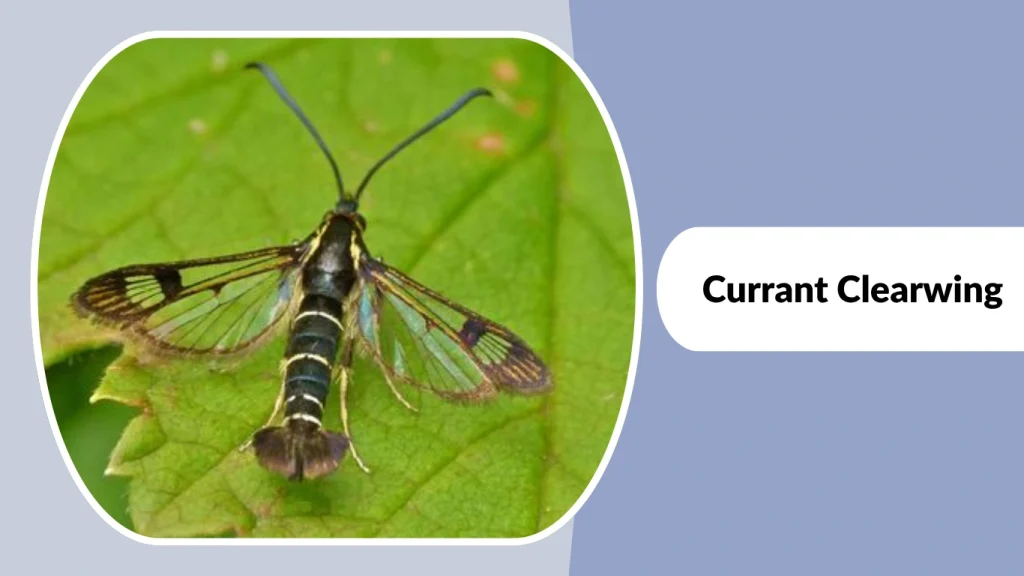
The Currant Clearwing is a small clearwing moth species commonly associated with currant and gooseberry plants. Its transparent wings and yellow-striped body give it a strong resemblance to a small wasp. This moth is considered a garden pest because its larvae bore into stems, weakening plants and reducing fruit production in affected shrubs.
Identification
- Scientific name: Synanthedon tipuliformis
- Wings are transparent with dark borders
- Body is black with narrow yellow bands
- Wingspan ranges from 1.5 to 2.5 cm
- Slender body creates a wasp-like appearance
- Adults are active mainly during daytime hours
Habitat and Distribution
The Currant Clearwing is widely distributed across Europe, Asia, and parts of North America. It commonly inhabits gardens, orchards, berry farms, hedgerows, and agricultural areas where currant and gooseberry plants are cultivated.
Behavior and Diet
Adult moths are active during warm daylight hours and may be seen flying around berry bushes. Caterpillars bore into currant and gooseberry stems where they feed internally, often weakening branches and reducing fruit yield.
Lifecycle
Females lay eggs on stems of currant and gooseberry plants during the breeding season. Caterpillars hatch and tunnel into stems where they feed through several developmental stages. Pupation occurs inside the stem, and adult moths later emerge to continue the reproductive cycle.
6. Peach Tree Borer
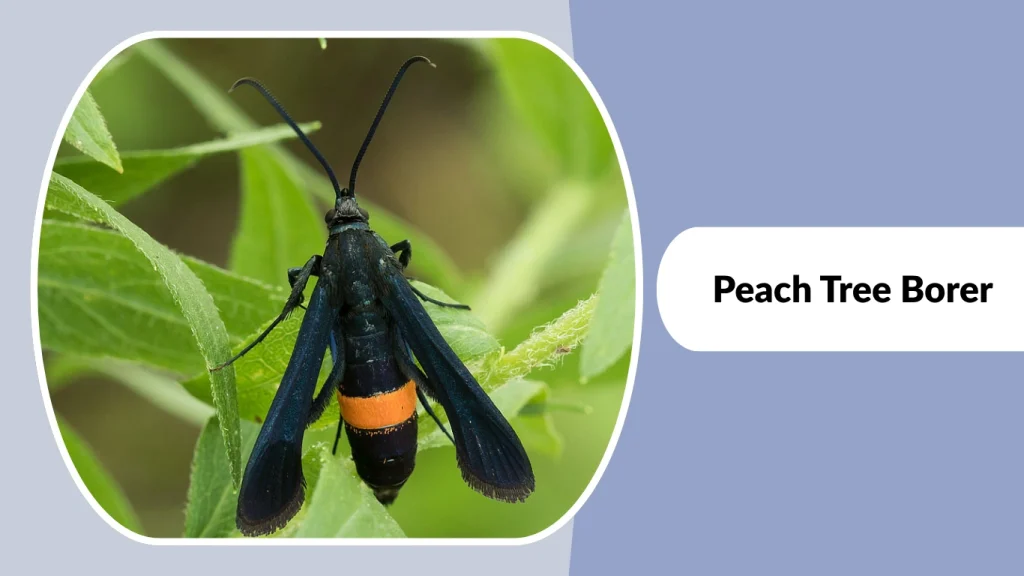
The Peach Tree Borer is a destructive clearwing moth species known for attacking peach, cherry, plum, and other stone fruit trees. Its transparent wings and dark body make it resemble a wasp during flight. This moth is considered a serious orchard pest because its larvae tunnel into tree bark and roots, weakening or even killing young trees.
Identification
- Scientific name: Synanthedon exitiosa
- Wings are mostly transparent with dark edges
- Body is dark blue or black with orange bands
- Wingspan ranges from 2.5 to 4 cm
- Females are larger and more brightly colored than males
- Adults resemble wasps in appearance and movement
Habitat and Distribution
The Peach Tree Borer is widely distributed across North America. It commonly inhabits orchards, gardens, farms, and suburban areas where peach, plum, cherry, and apricot trees are cultivated.
Behavior and Diet
Adult moths are active during daytime hours and are often seen flying around fruit trees in warm weather. Caterpillars bore into the lower trunk and roots of host trees where they feed internally, causing sap leakage and structural damage.
Lifecycle
Females lay eggs near the base of tree trunks during the breeding season. Caterpillars hatch and tunnel into bark and roots where they feed through several developmental stages. Pupation occurs near the soil surface, and adult moths later emerge to continue the reproductive cycle.
7. Lilac Borer
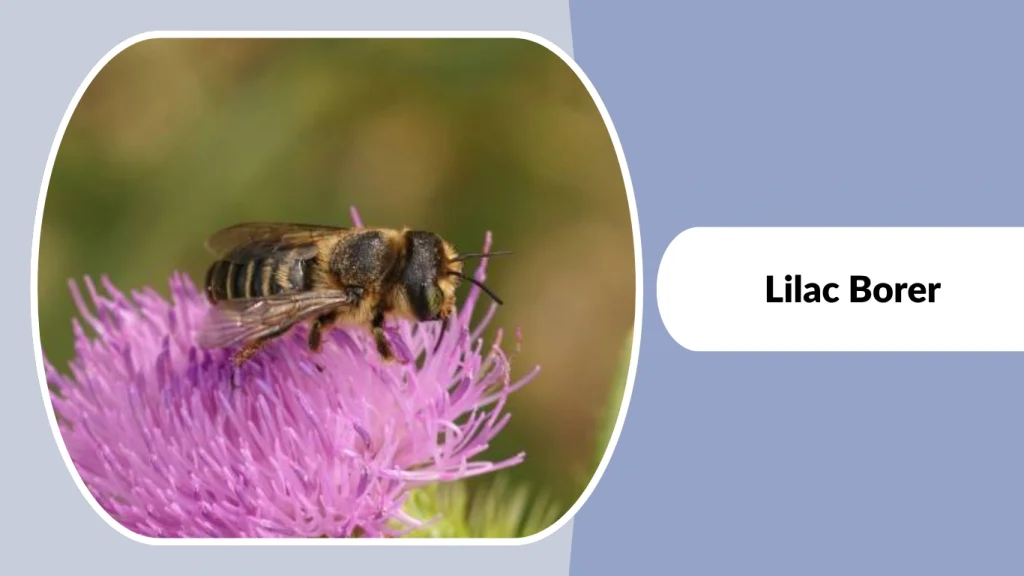
The Lilac Borer is a clearwing moth species commonly associated with lilac bushes and ash trees. Its transparent wings and yellow-striped body give it a strong resemblance to a wasp, helping it avoid predators. This moth is considered a plant pest because its larvae tunnel into woody stems and trunks, weakening ornamental shrubs and trees over time.
Identification
- Scientific name: Podosesia syringae
- Wings are mostly transparent with dark borders
- Body is dark brown or black with yellow bands
- Wingspan ranges from 2.5 to 4 cm
- Slender body creates a wasp-like appearance
- Adults are active mainly during daytime hours
Habitat and Distribution
The Lilac Borer is widely distributed across North America. It commonly inhabits gardens, parks, suburban landscapes, orchards, and woodland edges where lilac bushes, ash trees, and related plants are cultivated.
Behavior and Diet
Adult moths are active during warm daylight hours and are often seen flying near host plants. Caterpillars bore into stems and trunks of lilac and ash trees where they feed internally, weakening branches and damaging plant structure.
Lifecycle
Females lay eggs on bark or near wounds on host plants during the breeding season. Caterpillars hatch and tunnel into woody tissue where they feed through several developmental stages. Pupation occurs inside the stem or trunk, and adult moths later emerge to continue the reproductive cycle.
8. Banded Ash Clearwing
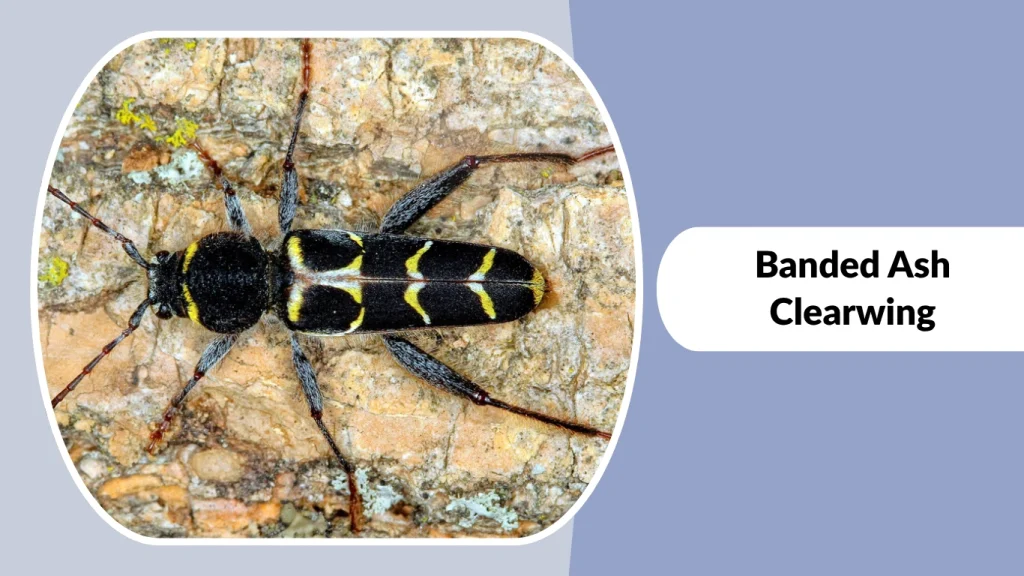
The Banded Ash Clearwing is a clearwing moth species recognized for its transparent wings and yellow-banded body that closely resembles a wasp. This species is commonly associated with ash trees, where its larvae bore into trunks and branches. It is considered a forestry and ornamental tree pest because internal feeding may weaken trees over time.
Identification
- Scientific name: Podosesia aureocincta
- Wings are transparent with dark margins
- Body is dark with bright yellow bands
- Wingspan ranges from 2.5 to 4 cm
- Slender body gives a wasp-like appearance
- Adults are active mainly during daytime hours
Habitat and Distribution
The Banded Ash Clearwing is found mainly across North America. It commonly inhabits forests, parks, gardens, orchards, and suburban areas where ash trees and related woody plants are abundant.
Behavior and Diet
Adult moths are active during warm daylight hours and may often be seen flying around tree trunks and branches. Caterpillars bore into ash tree wood where they feed internally, weakening stems and reducing tree health.
Lifecycle
Females lay eggs on bark or near damaged sections of host trees during the breeding season. Caterpillars hatch and tunnel into the wood where they feed through several developmental stages. Pupation occurs inside the tree, and adult moths later emerge to continue the reproductive cycle.
9. Coffee Clearwing
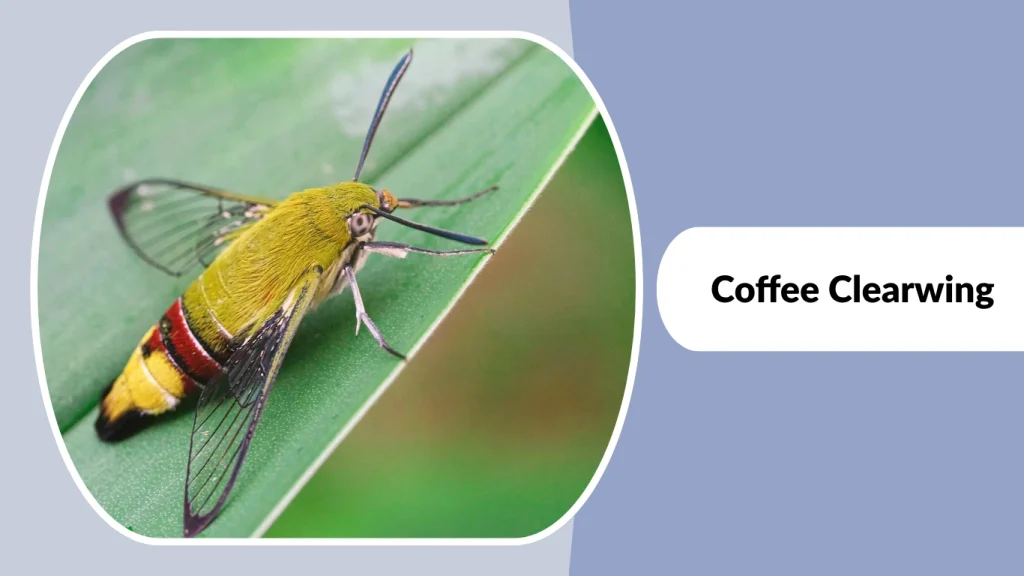
The Coffee Clearwing is a clearwing moth species known for attacking coffee plants and other woody shrubs in tropical regions. Its transparent wings and narrow striped body make it resemble a small wasp during flight. This moth is considered an agricultural pest because its larvae bore into stems and branches, weakening coffee plants and reducing crop productivity.
Identification
- Scientific name: Cephonodes hylas
- Wings are mostly transparent with dark borders
- Body is greenish-brown with pale markings
- Wingspan ranges from 4 to 5 cm
- Slender body gives a wasp-like appearance
- Adults are fast daytime fliers
Habitat and Distribution
The Coffee Clearwing is distributed across tropical and subtropical regions of Asia, Africa, and parts of Oceania. It commonly inhabits coffee plantations, gardens, forests, and agricultural areas with flowering shrubs and woody plants.
Behavior and Diet
Adult moths are active during daytime hours and hover around flowers while feeding on nectar. Caterpillars bore into stems and branches of coffee plants and related shrubs, feeding internally and weakening plant structure over time.
Lifecycle
Females lay eggs on host plants during favorable seasons. Caterpillars hatch and tunnel into stems where they feed through several developmental stages. Pupation occurs within plant tissue or nearby sheltered areas, and adult moths later emerge to continue the reproductive cycle.
10. Yellow-legged Clearwing
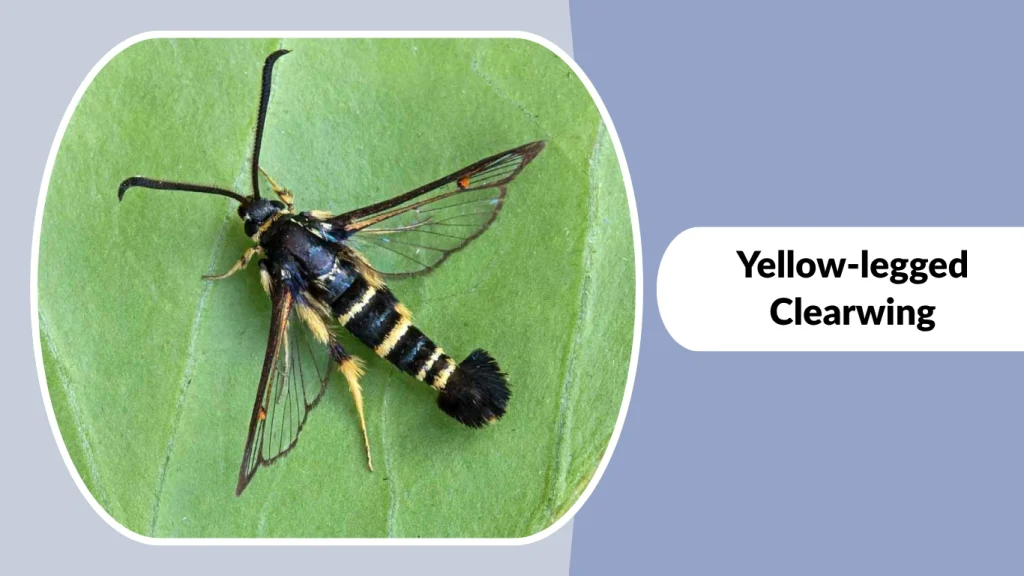
The Yellow-legged Clearwing is a slender clearwing moth species recognized for its transparent wings and bright yellow legs. Its body coloration and fast daytime flight make it resemble a small wasp, helping protect it from predators. This moth is commonly associated with woody plants and trees where its larvae bore into stems and branches during development.
Identification
- Scientific name: Synanthedon vespiformis
- Wings are transparent with dark borders
- Legs are bright yellow or yellow-orange
- Body is dark with narrow yellow bands
- Wingspan ranges from 2 to 3 cm
- Adults resemble small wasps during flight
Habitat and Distribution
The Yellow-legged Clearwing is widely distributed across Europe and parts of Asia. It commonly inhabits woodlands, forests, parks, gardens, and hedgerows where oak and other deciduous trees are abundant.
Behavior and Diet
Adult moths are active during warm daylight hours and may often be seen flying near tree trunks and branches. Caterpillars bore into weakened or damaged wood where they feed internally during their development.
Lifecycle
Females lay eggs on bark or damaged areas of host trees during the breeding season. Caterpillars hatch and tunnel into wood where they feed through several developmental stages. Pupation occurs inside the stem or trunk, and adult moths later emerge to continue the reproductive cycle.
11. Red-belted Clearwing
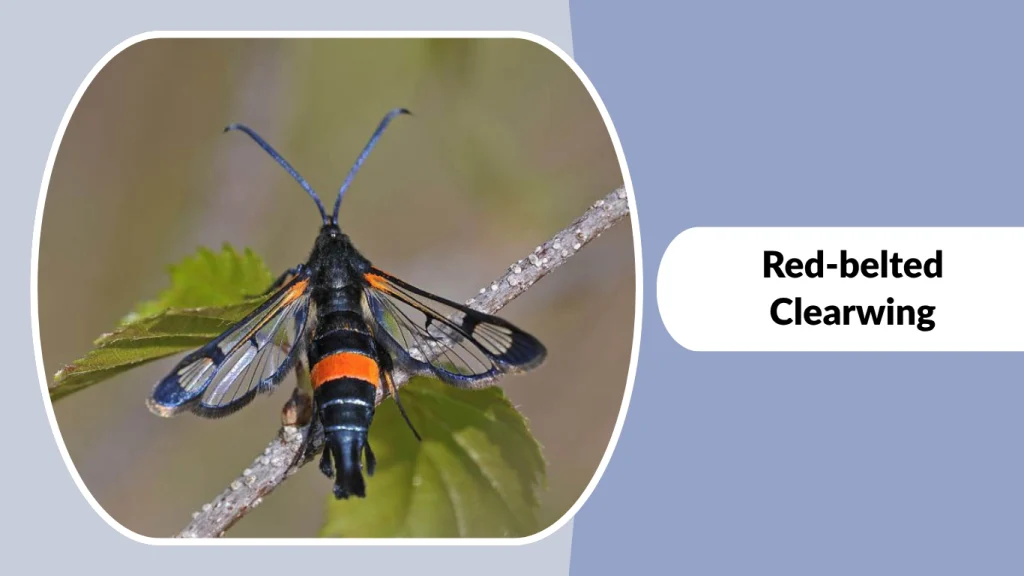
The Red-belted Clearwing is a striking clearwing moth species known for the bright reddish band across its dark body. Its transparent wings and wasp-like appearance help protect it from predators while flying during daytime hours. This species is commonly associated with fruit trees and woody plants where its larvae bore into bark and stems during development.
Identification
- Scientific name: Synanthedon myopaeformis
- Wings are transparent with dark margins
- Body is dark blue or black with a reddish-orange band
- Wingspan ranges from 2 to 3 cm
- Slender body creates a wasp-like appearance
- Adults are active mainly during daytime hours
Habitat and Distribution
The Red-belted Clearwing is widely distributed across Europe, Asia, and parts of North America. It commonly inhabits orchards, gardens, parks, hedgerows, and woodland edges where apple and related fruit trees are cultivated.
Behavior and Diet
Adult moths are active during warm daylight hours and are often seen flying around tree trunks and branches. Caterpillars bore into bark and woody tissue of apple trees and other fruit trees, feeding internally and weakening plant structure.
Lifecycle
Females lay eggs on bark cracks or damaged areas of host trees during the breeding season. Caterpillars hatch and tunnel into woody tissue where they feed through several developmental stages. Pupation occurs inside the tree, and adult moths later emerge to continue the reproductive cycle.
12. Oak Clearwing
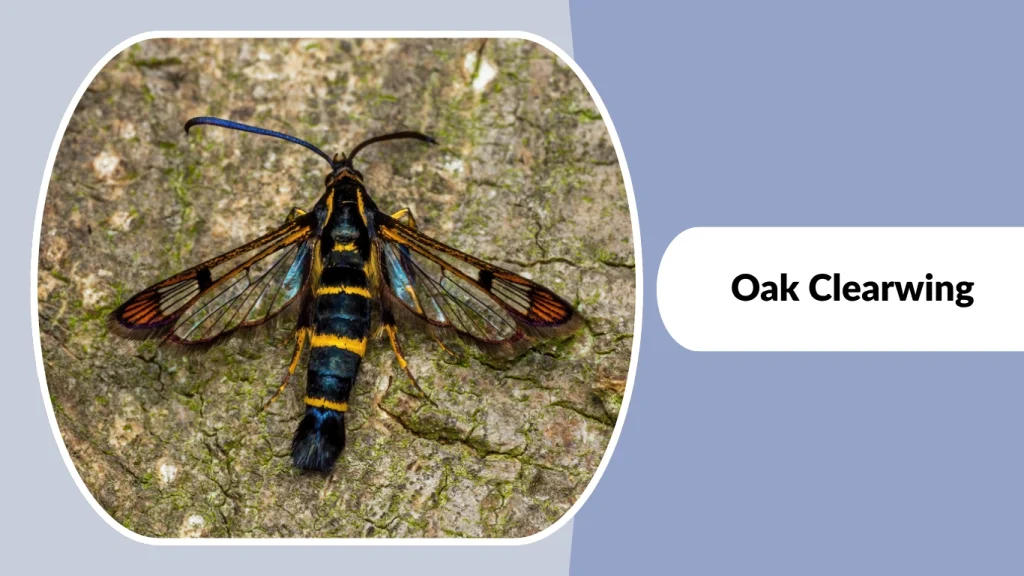
The Oak Clearwing is a rare and fascinating clearwing moth species associated mainly with oak trees. Its transparent wings and narrow striped body give it the appearance of a small wasp during flight. This moth is often difficult to observe because adults are active for short periods and spend much of their time around tree trunks and woodland habitats.
Identification
- Scientific name: Synanthedon conopiformis
- Wings are transparent with dark borders
- Body is dark brown or black with yellow bands
- Wingspan ranges from 2 to 3 cm
- Slender body resembles a small wasp
- Adults are active during warm daytime hours
Habitat and Distribution
The Oak Clearwing is distributed across Europe and parts of Asia. It commonly inhabits oak woodlands, forests, parks, hedgerows, and mature tree habitats where old oak trees are abundant.
Behavior and Diet
Adult moths are mainly active during daytime hours and may often be seen flying around oak trunks in warm weather. Caterpillars bore into damaged or weakened oak wood where they feed internally during development.
Lifecycle
Females lay eggs in bark crevices or damaged areas of oak trees during the breeding season. Caterpillars hatch and tunnel into woody tissue where they feed through several developmental stages. Pupation occurs inside the wood, and adult moths later emerge to continue the reproductive cycle.
13. Orange-tailed Clearwing
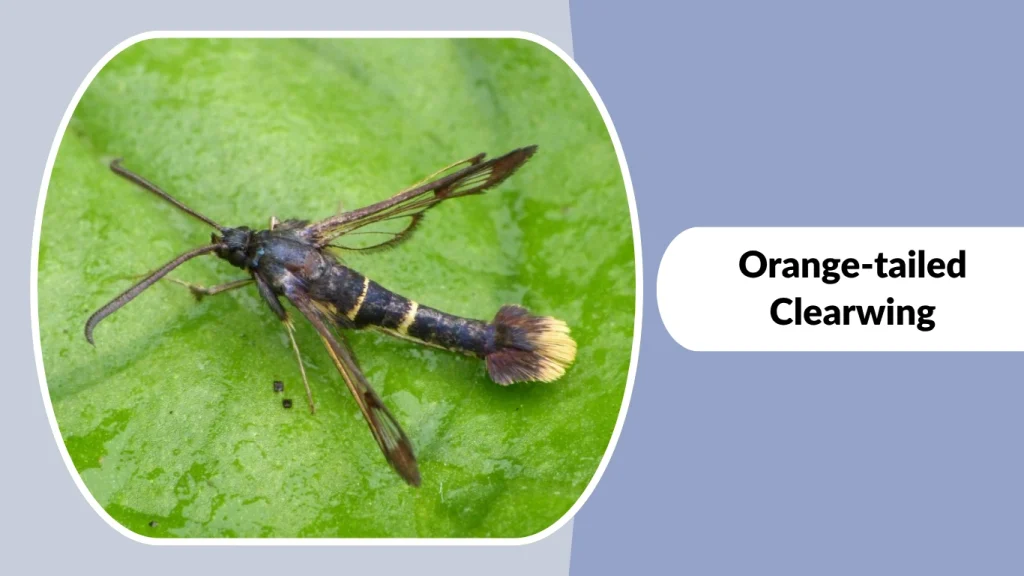
The Orange-tailed Clearwing is a colorful clearwing moth species recognized for the bright orange tuft near the end of its abdomen and its transparent wings. Its narrow body and fast daytime flight make it closely resemble a small wasp. This species is commonly associated with woody plants and trees where its larvae develop inside stems and branches.
Identification
- Scientific name: Synanthedon andrenaeformis
- Wings are transparent with dark borders
- Body is dark with yellow and orange markings
- Bright orange tuft appears near the tail
- Wingspan ranges from 2 to 3 cm
- Adults resemble small wasps during flight
Habitat and Distribution
The Orange-tailed Clearwing is widely distributed across Europe and parts of Asia. It commonly inhabits woodlands, gardens, parks, hedgerows, orchards, and suburban areas where deciduous trees and shrubs are abundant.
Behavior and Diet
Adult moths are active mainly during warm daytime hours and are often seen flying near tree trunks and branches. Caterpillars bore into stems and woody tissue of host plants where they feed internally during development.
Lifecycle
Females lay eggs on bark cracks or damaged sections of host plants during the breeding season. Caterpillars hatch and tunnel into woody tissue where they feed through several developmental stages. Pupation occurs inside the stem or trunk, and adult moths later emerge to continue the reproductive cycle.
14. Five-spotted Clearwing
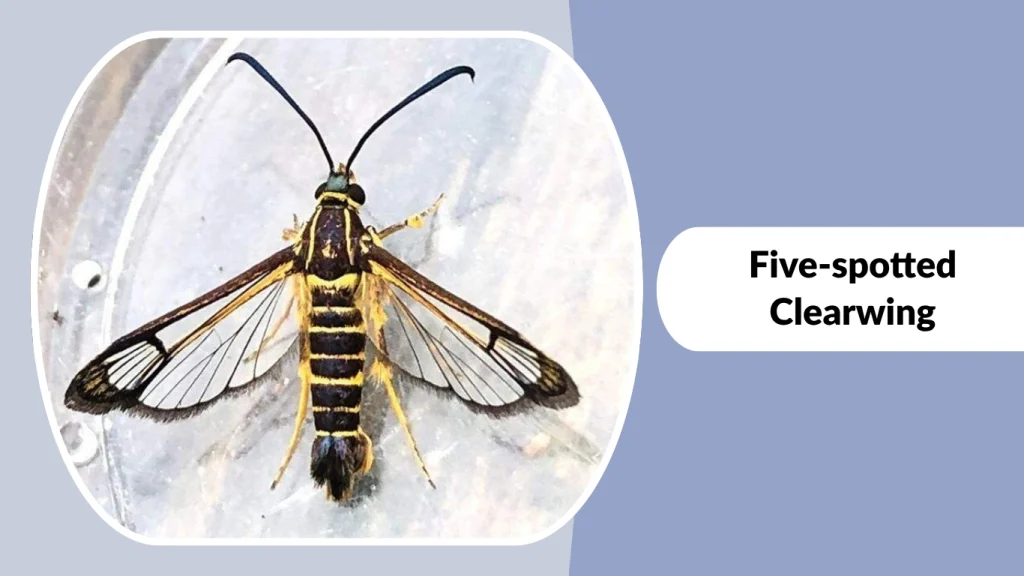
The Five-spotted Clearwing is a large and fast-flying clearwing moth species often mistaken for a hummingbird because of its hovering flight and daytime activity. Its transparent wings and colorful body markings make it one of the most recognizable clearwing moths in North America. This species is an important pollinator commonly seen visiting flowers in gardens and open habitats.
Identification
- Scientific name: Hemaris diffinis
- Wings are mostly transparent with dark borders
- Body is black and yellow with reddish markings
- Wingspan ranges from 4 to 6 cm
- Fast hovering flight resembles a hummingbird
- Long proboscis is used for feeding on nectar
Habitat and Distribution
The Five-spotted Clearwing is widely distributed across North America. It commonly inhabits gardens, meadows, woodland edges, parks, and open grasslands where flowering plants are abundant during warmer months.
Behavior and Diet
Adult moths are active during daytime hours and hover while feeding on nectar from flowers such as phlox, honeysuckle, and bee balm. Caterpillars feed on leaves from viburnum, snowberry, and related shrubs.
Lifecycle
Females lay eggs on suitable host plants during the breeding season. Caterpillars hatch and feed through several developmental stages before pupating in leaf litter or loose soil. Adult moths later emerge and continue the reproductive cycle under favorable environmental conditions.
15. Maple Callus Borer
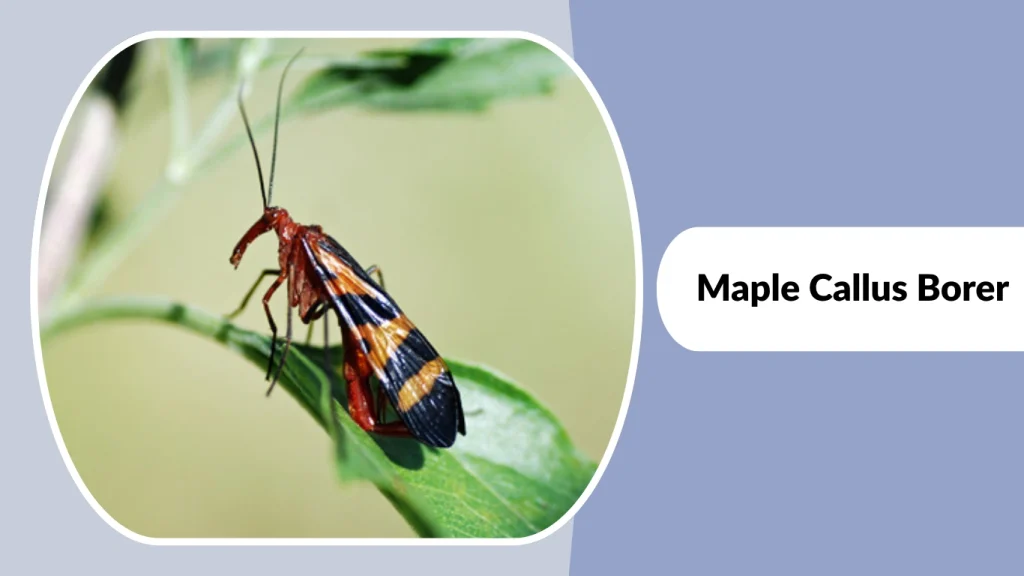
The Maple Callus Borer is a clearwing moth species associated mainly with maple trees and other hardwood species. Its transparent wings and narrow striped body create a strong resemblance to a small wasp during flight. This moth is considered a wood-boring pest because its larvae tunnel into bark and woody tissue, especially around damaged or healing tree areas.
Identification
- Scientific name: Synanthedon acerni
- Wings are transparent with dark edges
- Body is dark with yellow or orange banding
- Wingspan ranges from 2 to 3 cm
- Slender body resembles a small wasp
- Adults are active mainly during daytime hours
Habitat and Distribution
The Maple Callus Borer is found mainly across North America. It commonly inhabits forests, parks, gardens, suburban landscapes, and woodland habitats where maple and other deciduous trees are abundant.
Behavior and Diet
Adult moths are active during warm daylight hours and are often seen near tree trunks and damaged bark areas. Caterpillars bore into callused or wounded sections of maple trees where they feed internally and continue developing within the wood.
Lifecycle
Females lay eggs on injured or damaged bark during the breeding season. Caterpillars hatch and tunnel into woody tissue where they feed through several developmental stages. Pupation occurs inside the tree, and adult moths later emerge to continue the reproductive cycle.
FAQs
What are clearing moths?
Clearwing moths are a group of moths known for their transparent wings and wasp-like appearance. Most species belong to the family Sesiidae. Their clear wings and narrow bodies help them mimic bees or wasps, which protects them from predators in natural environments.
Why do clearwing moths look like wasps?
Clearwing moths mimic wasps and bees as a defense strategy against predators. Their transparent wings, striped bodies, and fast daytime flight make them appear dangerous, even though they are harmless moths that do not sting humans.
Are clearwing moths active during the day?
Unlike many moth species, most clearwing moths are active during daytime hours. They are often seen hovering around flowers, tree trunks, gardens, and woodland edges while feeding on nectar or searching for mates.
What do clearwing moth caterpillars eat?
Clearwing moth caterpillars usually bore into stems, trunks, roots, or branches of plants and trees. Different species feed on fruit trees, berry plants, oak, maple, ash, squash vines, and many other woody or cultivated plants.
Are clearwing moths harmful to plants?
Some clearwing moth species are considered agricultural or garden pests because their larvae tunnel inside plants and weaken stems or trunks. Species such as the Peach Tree Borer and Squash Vine Borer can cause serious damage to crops and ornamental plants.
