
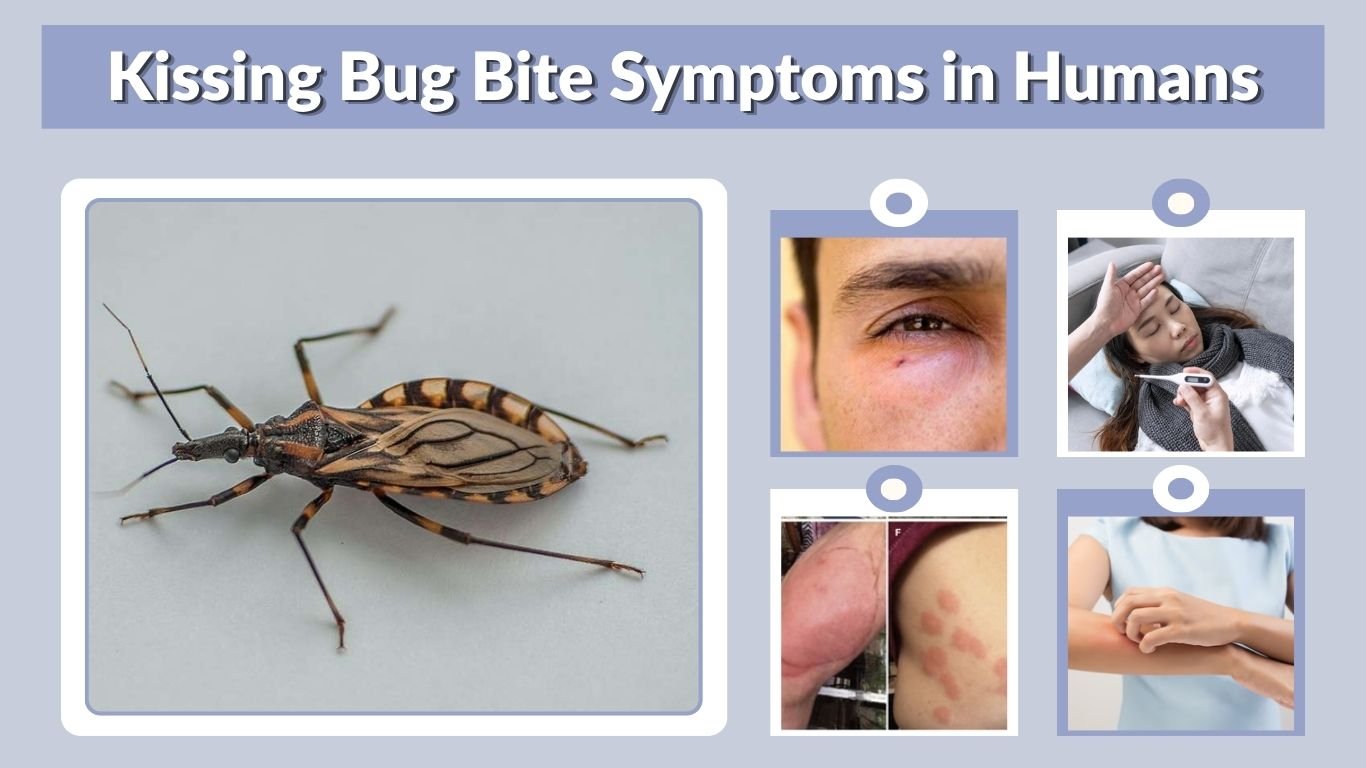
Kissing bug bite symptoms are often mild and may resemble the reaction caused by a mosquito, flea, or bed bug. Some people develop a small red bump, itching, or swelling, while others notice no reaction at all.
The bite itself does not automatically cause Chagas disease. Infection can occur when feces from a kissing bug carrying the Trypanosoma cruzi parasite enter broken skin, the bite wound, the eyes, or the mouth. Understanding the difference between an ordinary bite reaction and possible infection symptoms can help you determine when medical attention is necessary.
Common Kissing Bug Bite Symptoms
Kissing bugs usually feed at night while people or animals are sleeping. The insect may bite the face, neck, arms, hands, legs, or any other exposed area.
A short time after the bite, the affected skin may become red, raised, itchy, or mildly swollen. However, kissing bug bites are not always noticeable.
Symptoms at the Bite Site
Common local symptoms include:
- A small red or pink bump
- Mild swelling around the bite
- Itching or irritation
- Warmth in the affected area
- Slight tenderness
- A raised welt
- A small central puncture mark
- Several bumps close together
On darker skin, the affected area may appear brown, purple, deep red, or darker than the surrounding skin.
The bite is often painless while the insect is feeding. Itching and swelling may appear later, making it difficult to identify exactly when the bite occurred.
How Long Do the Symptoms Last?
A mild skin reaction may improve within several days. However, redness or discoloration can sometimes remain longer, particularly when the area has been scratched.
Worsening pain, spreading redness, warmth, pus, or drainage may indicate a secondary bacterial infection rather than a normal bite reaction. A healthcare professional should evaluate symptoms that continue getting worse.
Kissing Bug Bite Symptoms in Humans
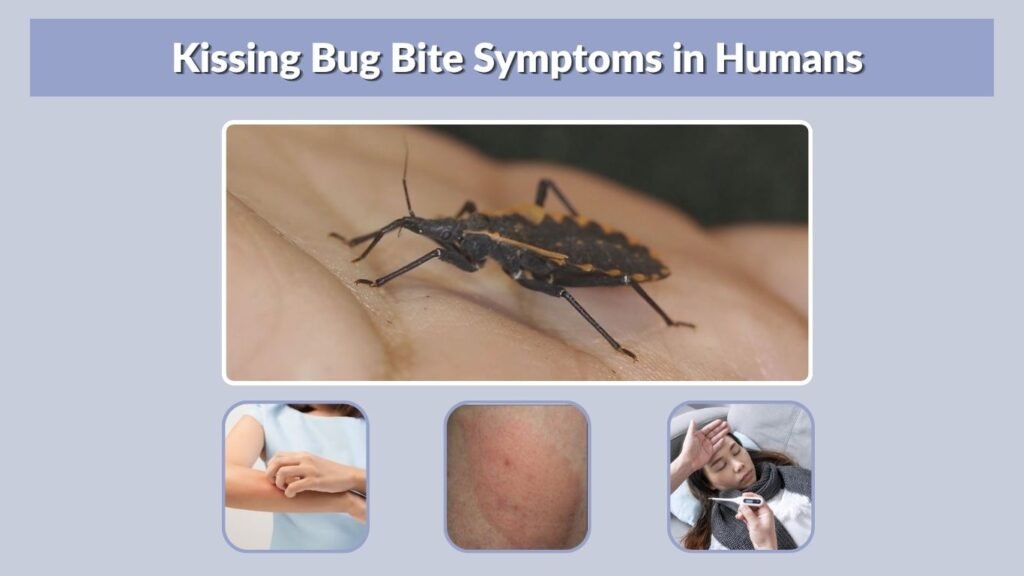
Human reactions can range from no visible symptoms to significant swelling or an allergic response. A person’s reaction depends on individual sensitivity, the number of bites, and previous exposure to kissing bugs.
| Reaction type | Possible symptoms | Level of concern |
| Mild local reaction | Itching, redness and a small swollen bump | Usually improves with basic care |
| Large local reaction | Extensive swelling, heat and discomfort | May require medical advice |
| Allergic reaction | Hives, facial swelling or breathing difficulty | Requires urgent care |
| Possible Chagas infection | Fever, fatigue, body aches or eyelid swelling | Requires medical evaluation |
| Skin infection | Spreading redness, pus, warmth or increasing pain | Requires medical attention |
A skin mark alone cannot confirm that a kissing bug caused the bite. Mosquito, flea, bed bug, and other insect bites can produce similar symptoms.
Kissing Bug Bite Eye Symptoms
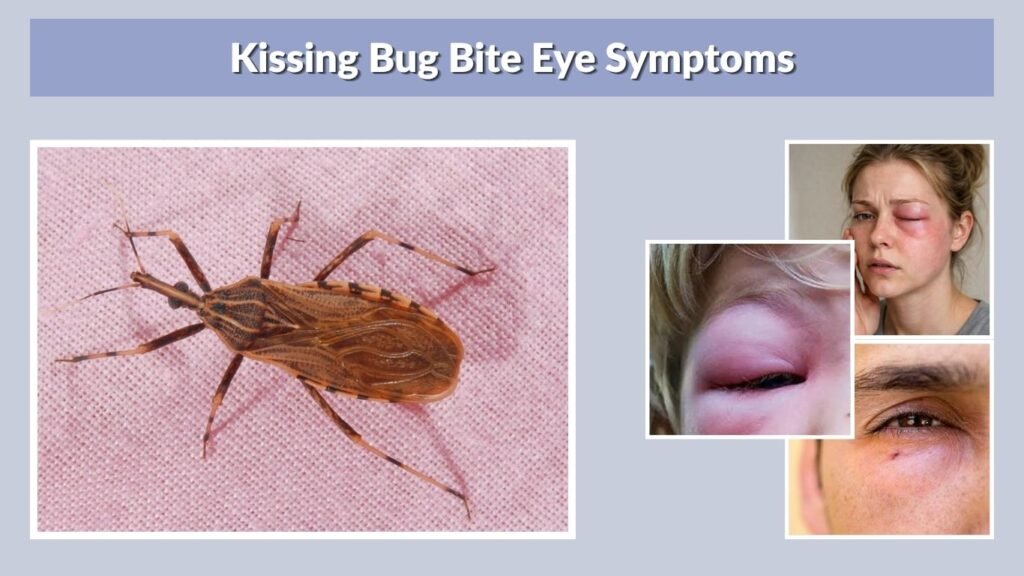
Kissing bugs are sometimes associated with bites around the eyes, lips, and face because those areas may remain uncovered during sleep. A simple bite near the eye may cause localized itching, redness, or temporary puffiness.
However, severe swelling of one eyelid can have greater medical importance.
Romaña’s Sign
Romaña’s sign is noticeable swelling of one eyelid associated with acute Chagas disease. It can occur when contaminated kissing bug feces enter the eye or a bite near the eye.
The swelling is not caused merely by the bug feeding. It develops when the Trypanosoma cruzi parasite enters the surrounding tissue. Unexplained one-sided eyelid swelling following possible kissing bug exposure should be evaluated by a healthcare professional.
Other possible eye-area symptoms include:
- Swelling around one eye
- Redness of the eyelid
- Tenderness near the eye
- Irritation or watering
- A visible bite mark near the eyebrow or cheek
Many conditions can cause swollen eyelids, so this symptom does not confirm Chagas disease without medical testing.
Allergic Kissing Bug Bite Symptoms
Some people are allergic to substances in kissing bug saliva. Reactions may become stronger after repeated exposure.
Mild Allergic Reaction
A mild allergic response may cause:
- Intense itching
- A larger-than-normal welt
- Swelling extending beyond the bite
- Warm or irritated skin
- Hives near the affected area
These symptoms may be uncomfortable but do not necessarily indicate infection with the parasite that causes Chagas disease.
Severe Allergic Reaction
Call emergency services immediately if a suspected kissing bug bite causes:
- Difficulty breathing
- Wheezing
- Throat or tongue swelling
- Rapidly increasing facial swelling
- Widespread hives
- Dizziness
- Confusion
- Fainting
These can be signs of anaphylaxis, a potentially life-threatening allergic reaction.
Infected Kissing Bug Bite Symptoms
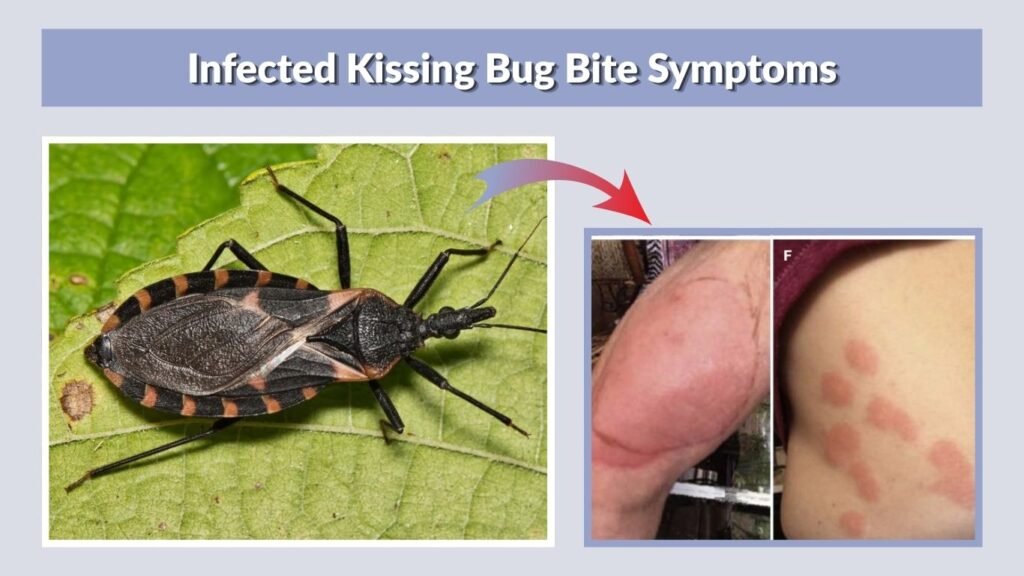
People commonly use the phrase “infected kissing bug bite” to describe two different problems: a bacterial skin infection caused by scratching or possible infection with the parasite that causes Chagas disease.
Bacterial Skin Infection
Scratching can break the skin and allow bacteria to enter. Signs of a skin infection include:
- Redness that continues spreading
- Increasing pain or tenderness
- Pus or cloudy drainage
- A warm, firm area around the bite
- Red streaks extending from the wound
- Fever accompanying worsening skin symptoms
Do not squeeze, cut, or repeatedly scratch the area.
Possible Acute Chagas Disease
Chagas disease is not usually transmitted directly through kissing bug saliva. The parasite is found in the feces of infected bugs. Infection can occur when contaminated feces are rubbed into a bite wound, another break in the skin, the mouth, or the eyes.
During the first weeks or months after infection, acute Chagas disease may cause:
- Fever
- Fatigue
- Headache
- Body aches
- Skin rash
- Loss of appetite
- Vomiting
- Diarrhea
- Swelling at the parasite’s entry site
- Swelling of one eyelid
Many infected people experience mild symptoms or no obvious illness during the acute stage. A blood test is necessary to diagnose Chagas disease.
Long-Term Chagas Disease Symptoms
After the acute phase, the infection can enter a chronic stage that may last for years or remain for life. Most infected people have no symptoms during this period.
However, some eventually develop serious heart or digestive complications, including:
- Irregular heartbeat
- Heart enlargement
- Heart failure
- Fainting
- Difficulty swallowing
- Severe constipation
- Enlargement of the esophagus or colon
The CDC reports that approximately 20% to 30% of infected people develop serious chronic complications. Early diagnosis and treatment may reduce the risk of disease progression.
Arizona Kissing Bug Bite Symptoms
Kissing bugs occur in several southern parts of the United States, including Arizona. The immediate bite symptoms in Arizona are generally the same as elsewhere: redness, itching, a raised bump, swelling, or an allergic reaction.
Finding a kissing bug does not mean that Chagas disease was transmitted. Infection requires contact with fecal material from a bug carrying the parasite.
People who experience fever, severe swelling, unexplained eyelid puffiness, or other concerning symptoms after possible exposure should speak with a healthcare professional. Safely photograph or contain the insect when possible, but do not crush it with bare hands.
Kissing Bug Bite Symptoms in Dogs and Cats
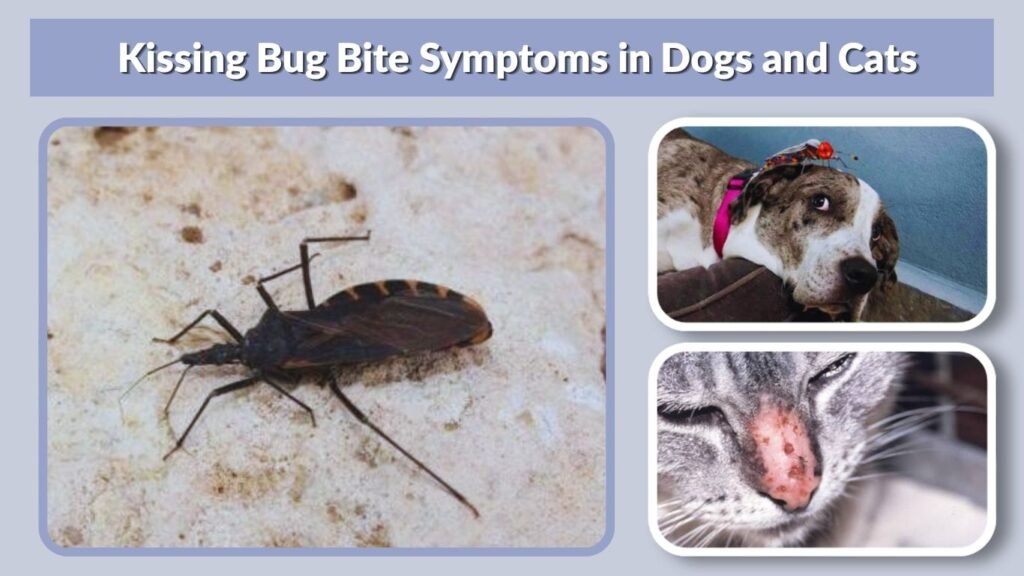
Kissing bugs can feed on pets, and dogs can also become infected by eating infected bugs. Cats may become infected as well, although serious illness appears to be less common in cats.
Symptoms in Dogs
Possible signs of Chagas disease in dogs include:
- Fever
- Tiredness or weakness
- Reduced appetite
- Swollen lymph nodes
- Vomiting or diarrhea
- Exercise intolerance
- Coughing
- Difficulty breathing
- Irregular heartbeat
- Fainting or collapse
- Abdominal swelling
Chronic infection can damage the heart and may lead to congestive heart failure or sudden death.
A small skin bump alone does not confirm that a dog has Chagas disease. Contact a veterinarian if a pet eats a kissing bug or develops unusual weakness, breathing difficulty, collapse, or heart-related symptoms.
What to Do After a Suspected Bite
Wash the bite and your hands thoroughly with soap and water. Avoid rubbing your eyes, nose, or mouth until your hands are clean.
A cold compress may help reduce mild swelling and itching. Avoid scratching, as this can damage the skin and increase the chance of bacterial infection.
Take photographs of the bite and any insect found nearby. If the bug can be collected safely, place it in a sealed container without touching it directly. Local health authorities, university extension services, or pest professionals may help identify it.
When to Seek Medical Care
Contact a healthcare professional when:
- One eyelid becomes noticeably swollen
- Fever or body aches develop after exposure
- Redness continues to spread
- The bite becomes increasingly painful
- Pus or drainage appears
- Symptoms remain or worsen
- You may have rubbed bug feces into your eye or broken skin
- You lived in or traveled through an area where Chagas disease is common
- A kissing bug was found in or near your sleeping area
Seek emergency care for difficulty breathing, throat swelling, widespread hives, fainting, or rapidly increasing facial swelling.
FAQs
What are the first symptoms of a kissing bug bite?
The first symptoms may include a small red bump, mild swelling, itching, warmth, or tenderness. Some people have no noticeable reaction. The mark may resemble a mosquito or bed bug bite, so its appearance alone cannot identify the insect.
Do kissing bug bites always cause Chagas disease?
No. A bite does not automatically cause Chagas disease. Transmission can occur when feces from an infected bug enter the bite wound, broken skin, eyes, or mouth. Not every kissing bug carries the parasite, and not every exposure causes infection.
How quickly do kissing bug bite symptoms appear?
Local itching, redness, or swelling may appear within hours or become noticeable after waking. Symptoms of acute Chagas disease can develop during the first weeks or months after infection, although many infected people experience no obvious early symptoms.
Can a kissing bug bite cause eye swelling?
A bite near the eye may cause ordinary localized swelling. Severe swelling of one eyelid can also be Romaña’s sign, which is associated with acute Chagas disease. Medical evaluation is recommended after possible exposure.
How are kissing bug bite symptoms treated?
Mild local symptoms may improve with washing, a cold compress, and avoiding scratching. Severe swelling, breathing difficulty, infection signs, fever, or possible Chagas exposure require medical care. Chagas disease cannot be diagnosed or treated based only on the bite’s appearance.
