
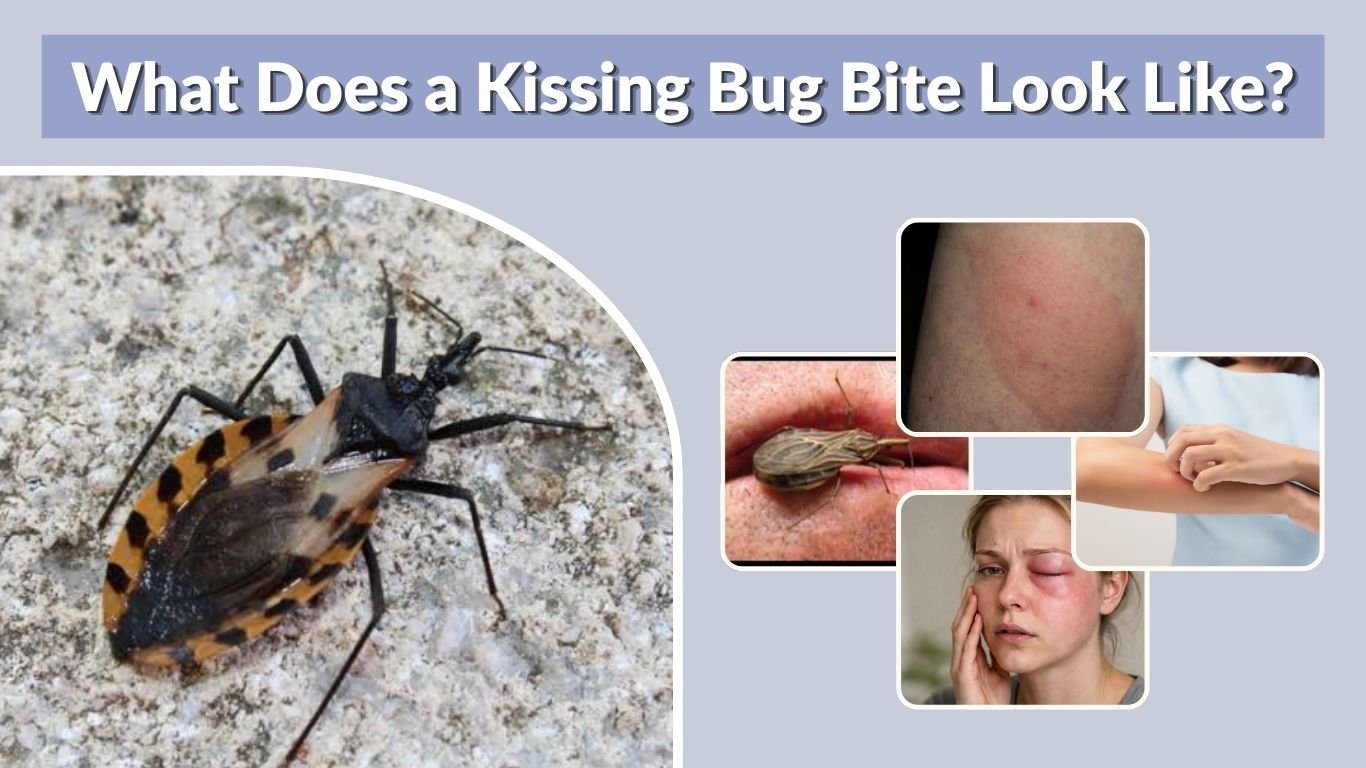
A kissing bug bite usually looks like a small, red, slightly swollen bump on the skin. It may resemble a mosquito bite, flea bite, or other common insect bite, making identification difficult from the mark alone. Some people develop itching, tenderness, or several bumps close together, while others have almost no visible reaction.
Kissing bugs often feed at night and may bite exposed areas, particularly the face. Although most bites cause only a mild skin reaction, knowing the possible signs and associated health risks can help you decide whether medical advice is necessary.
What Does a Kissing Bug Bite Look Like?
The appearance of a kissing bug bite varies according to the person’s immune response, the number of bites, and where the insect fed. There is no single bite pattern that confirms a kissing bug was responsible.
Common Appearance
A kissing bug bite may appear as:
- A small red or pink bump
- Mild swelling around the bite
- A raised, rounded welt
- An itchy or irritated area
- A tiny central puncture mark
- Several bumps in the same general area
- A warm or tender patch of skin
The redness may be more noticeable on light skin. On darker skin, the bite may appear purple, brown, deep red, or slightly darker than the surrounding area.
Some people experience very little redness and may not notice the bite until they wake up. Kissing bug bites are often painless while the insect is feeding.
Size of the Bite Mark
Most uncomplicated bites remain relatively small, ranging from a tiny spot to a welt measuring a few centimeters across. A larger swollen area does not necessarily mean that the insect transmitted an infection. It may simply indicate a stronger local allergic reaction.
The swelling should generally begin improving over several days. Increasing pain, spreading redness, pus, or worsening warmth may indicate a secondary skin infection.
What Does a Kissing Bug Bite Look Like on the Face?
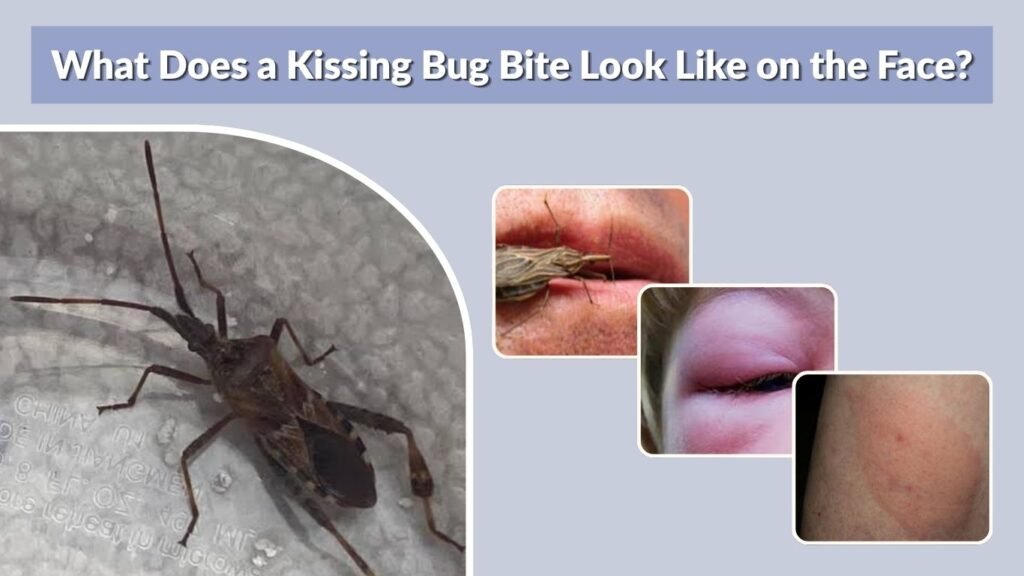
Kissing bugs received their common name because they sometimes feed around the lips, eyes, cheeks, or other exposed areas of the face. However, they can also bite the arms, hands, legs, neck, or torso.
Facial Bite Appearance
A kissing bug bite on the face may cause:
- A swollen red bump on the cheek
- Puffiness near the lips
- Itching around the jaw or forehead
- Localized swelling near one eye
- Several small marks on exposed skin
Facial tissue can swell more noticeably than other parts of the body. Therefore, even a minor bite may appear larger when it occurs near the eye or lip.
Swelling Around One Eye
Severe swelling of one eyelid can sometimes be associated with acute Chagas disease. This condition is known as Romaña’s sign. It can develop when feces from an infected kissing bug are accidentally rubbed into the eye or into a bite near the eye. Ordinary eyelid swelling can have many other causes, so medical testing is required to determine the reason.
Seek medical advice promptly when unexplained one-sided eyelid swelling develops after possible contact with a kissing bug, particularly following travel or residence in an area where Chagas disease occurs.
Kissing Bug Bite Compared With Other Bug Bites
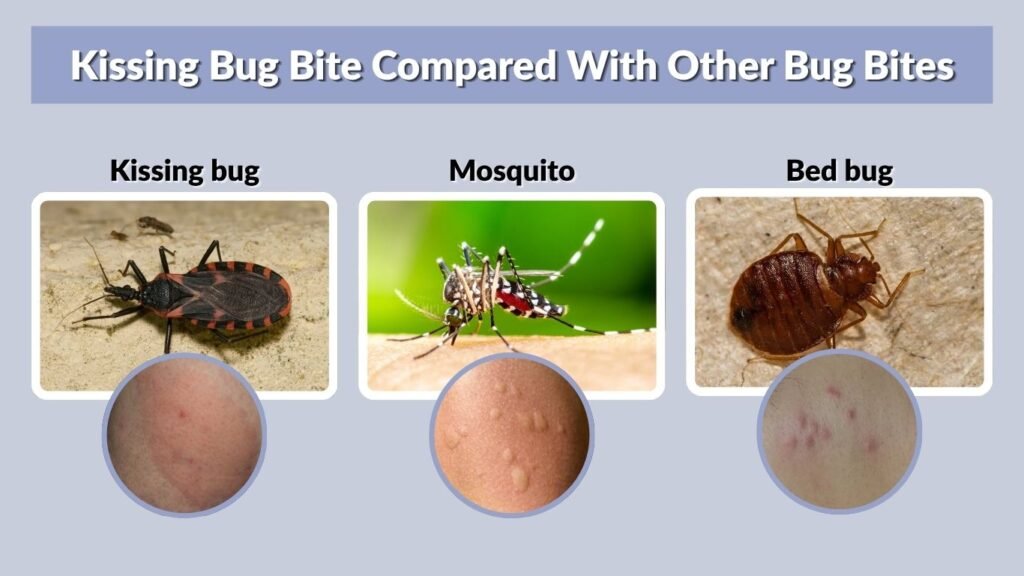
A bite mark alone is rarely enough to identify the insect. Location, timing, the number of bites, and whether an insect was found nearby are also important.
| Bite type | Typical appearance | Common pattern |
| Kissing bug | Red, raised, itchy or mildly swollen bump | One or several bites on exposed skin |
| Mosquito | Puffy, round, itchy welt | Scattered exposed areas |
| Bed bug | Small, itchy red bumps | Lines or clusters |
| Flea | Tiny red bumps with strong itching | Often around ankles and lower legs |
| Spider | Red or tender area, sometimes with puncture marks | Usually a single affected area |
These patterns can overlap. A doctor generally cannot confirm a kissing bug bite by looking at the skin alone.
Does a Kissing Bug Bite Cause Chagas Disease?
A kissing bug bite does not automatically mean that a person has Chagas disease. The disease is caused by the parasite Trypanosoma cruzi, which may be present in the feces of an infected triatomine bug.
Transmission can occur when contaminated bug feces enter the body through:
- The bite wound
- Scratched or broken skin
- The eyes
- The nose
- The mouth
The parasite is generally not transmitted directly through the insect’s saliva during feeding. Infection may happen when a person scratches the area or rubs contaminated material into the bite, eye, or mouth.
Not every kissing bug carries the parasite, and not every encounter results in infection.
Symptoms That May Develop After a Bite
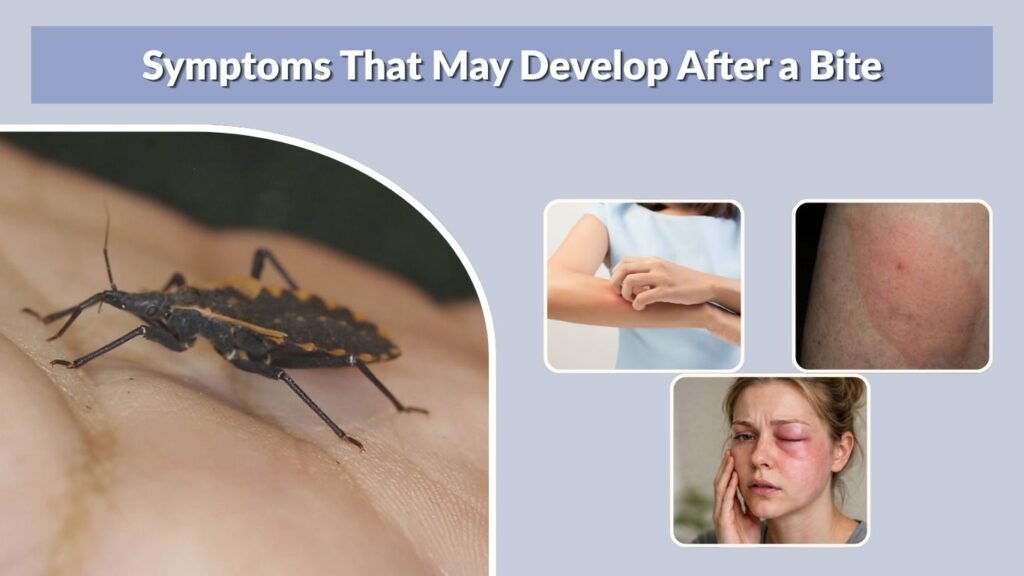
Most people bitten by kissing bugs experience only a local skin reaction. However, people exposed to the parasite that causes Chagas disease may develop additional symptoms during the acute stage.
Mild Local Reaction
A normal local reaction may include:
- Itching
- Mild redness
- Limited swelling
- Slight tenderness
- Temporary skin irritation
These symptoms may last for a few days. Scratching can prolong irritation and increase the risk of a bacterial skin infection.
Possible Acute Chagas Symptoms
Acute Chagas disease may produce no noticeable symptoms. When symptoms occur, they can include fever, fatigue, headache, body aches, rash, loss of appetite, vomiting, diarrhea, swollen lymph nodes, or swelling where the parasite entered the body.
These symptoms are not unique to Chagas disease. Blood testing and a medical evaluation are needed for diagnosis.
Allergic Reaction
Some people can experience a significant allergic response to kissing bug saliva. Warning signs include:
- Rapidly increasing facial swelling
- Widespread hives
- Wheezing
- Difficulty breathing
- Tightness in the throat
- Dizziness or fainting
Difficulty breathing, throat swelling, or fainting requires immediate emergency medical assistance.
What to Do After a Suspected Kissing Bug Bite
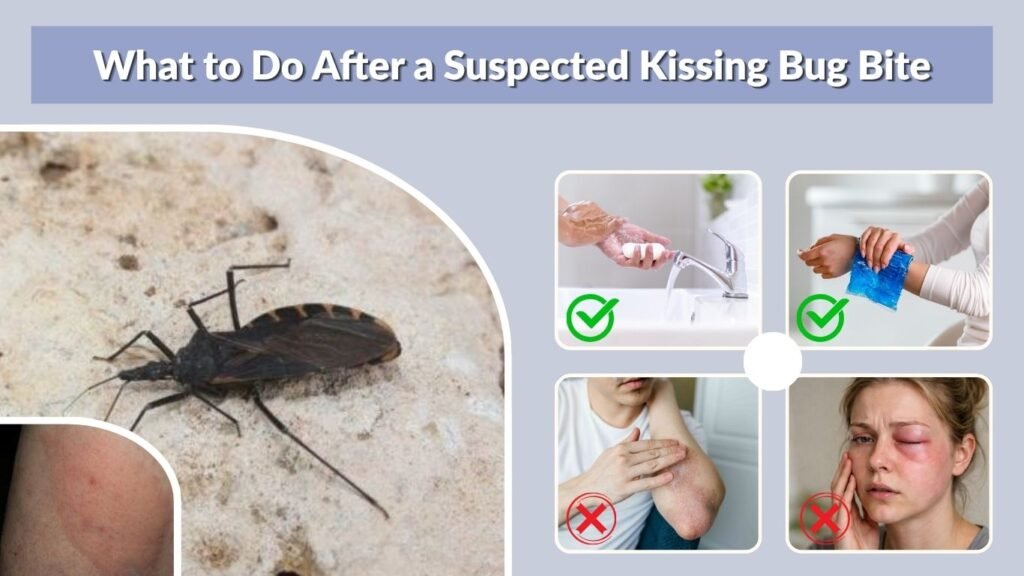
Wash the affected area carefully with soap and water. This may help remove irritants or contaminated material from the skin. Avoid touching your eyes, nose, or mouth before washing your hands.
Apply a clean cold compress for approximately 10 to 15 minutes to reduce swelling and discomfort. Avoid scratching the bite because broken skin can become infected.
When possible, take clear photographs of the bite and any insect found nearby. Do not crush a suspected kissing bug with bare hands. Place it in a sealed container without directly touching it so that a qualified local authority or pest professional may be able to identify it.
When Should You See a Doctor?
Contact a healthcare professional when:
- One eyelid becomes significantly swollen
- Fever or body aches develop after the bite
- The redness continues spreading
- The area becomes increasingly painful or warm
- Pus or drainage appears
- Symptoms do not improve
- You found a suspected kissing bug in your sleeping area
- Exposure occurred in Mexico, Central America, South America, or another affected region
- You may have rubbed bug feces into your eye, mouth, or broken skin
Testing for Chagas disease involves blood tests rather than examination of the bite mark alone. Early evaluation is important when genuine exposure is suspected because antiparasitic treatment is generally most effective during the early stage of infection.
How to Prevent Kissing Bug Bites
Reduce possible exposure by sealing cracks around doors, windows, walls, roofs, and foundations. Repair damaged screens and remove piles of wood, rocks, or debris located close to the home.
Keep pet sleeping areas clean because kissing bugs may feed on dogs and other mammals. Outdoor lights can attract various insects, so reducing unnecessary lighting near doors and open windows may also help.
In areas where kissing bugs are common, use intact mosquito netting around beds and avoid sleeping directly against unfinished walls. Currently, there is no vaccine or preventive medicine for Chagas disease, making insect avoidance particularly important.
FAQs
Can you identify a kissing bug bite from a picture?
Usually not. A kissing bug bite can look very similar to a mosquito, flea, bed bug, or other insect bite. A photograph may document the reaction, but identifying the insect itself and considering the exposure circumstances are more useful than examining the bite alone.
Do kissing bug bites always appear on the face?
No. Kissing bugs may bite the face because it is often uncovered during sleep, but they can feed on any exposed skin. Bites may also occur on the arms, hands, neck, legs, shoulders, or torso.
How long does a kissing bug bite last?
A mild bite reaction may improve within several days, although itching or discoloration can sometimes last longer. Seek medical care if swelling worsens, redness spreads, the area becomes painful, or fever and other general symptoms develop.
Does every kissing bug carry Chagas disease?
No. Not every kissing bug is infected with Trypanosoma cruzi. Even when a bug carries the parasite, transmission requires infected fecal material to enter the body. Laboratory testing is needed to determine whether a person has become infected.
Is a kissing bug bite painful?
The bite is often painless while the bug is feeding, so many people do not wake up or notice it immediately. Itching, redness, swelling, or tenderness may develop later as the skin reacts to the bite.
