
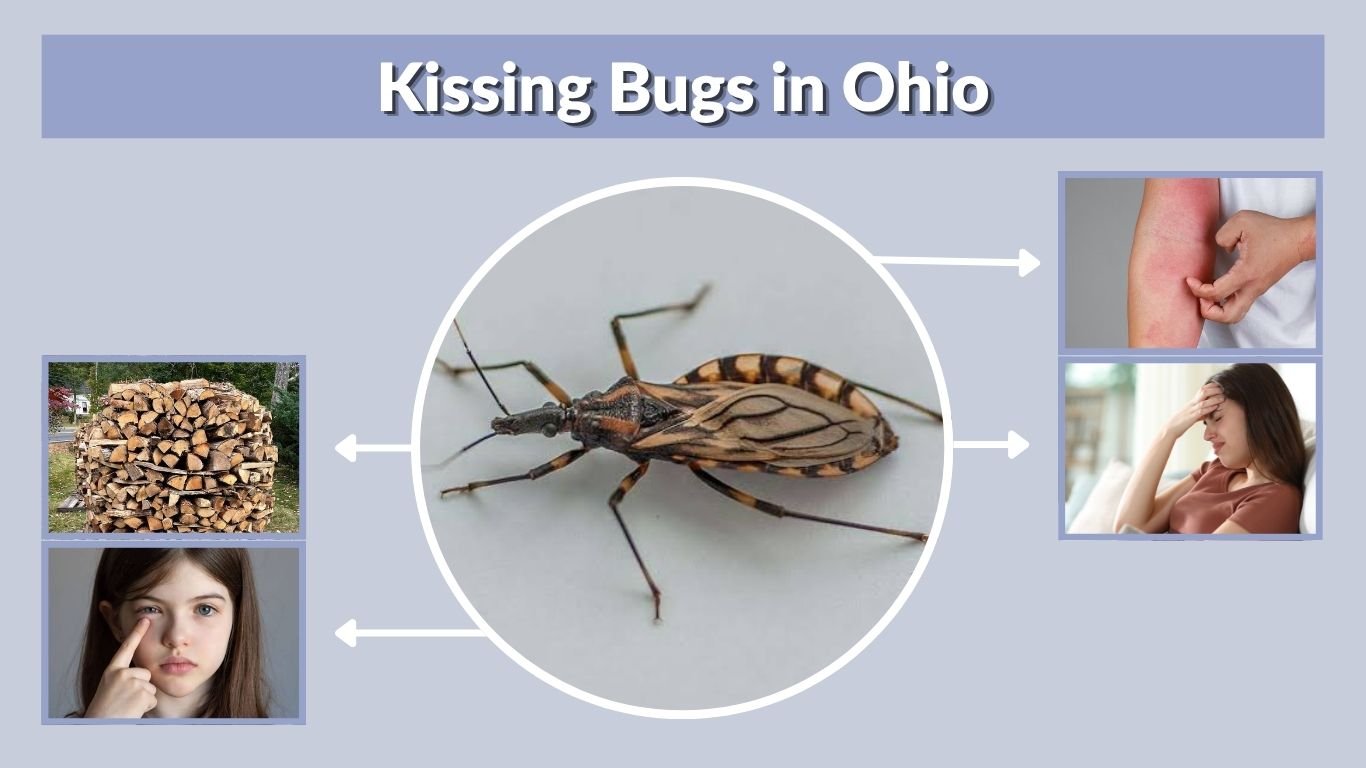
Kissing bugs are present in Ohio, but they are not among the state’s most commonly encountered household insects. Ohio’s native kissing bug is generally associated with wildlife nests and sheltered outdoor locations, particularly in warmer parts of the state. Because this blood-feeding insect may carry the parasite that causes Chagas disease, a suspected sighting should be handled carefully. However, finding one does not mean that you have been infected. Correct identification is essential because several common Ohio insects closely resemble kissing bugs.
Are There Kissing Bugs in Ohio?
Yes, kissing bugs have been found in Ohio. The species most closely associated with the state is the bloodsucking conenose, Triatoma sanguisuga. Ohio State University Extension describes kissing bugs as native to Ohio rather than newly introduced insects.
Their presence is not limited to one recent year. Searches for “kissing bug Ohio 2025” or reports of a newly arriving “deadly bug” can create the impression that the insect has suddenly invaded the state. In reality, kissing bugs have existed in parts of the eastern United States for a long time.
Ohio lies near the northern portion of the insect’s broader range. Kissing bugs are generally more abundant in southern and southwestern states, where warmer conditions support more activity. A recent CDC review notes that kissing bug species have been identified across numerous U.S. states, although the risk of locally acquired human Chagas disease remains low compared with many endemic areas of Latin America.
Are Kissing Bugs Common in Ohio?
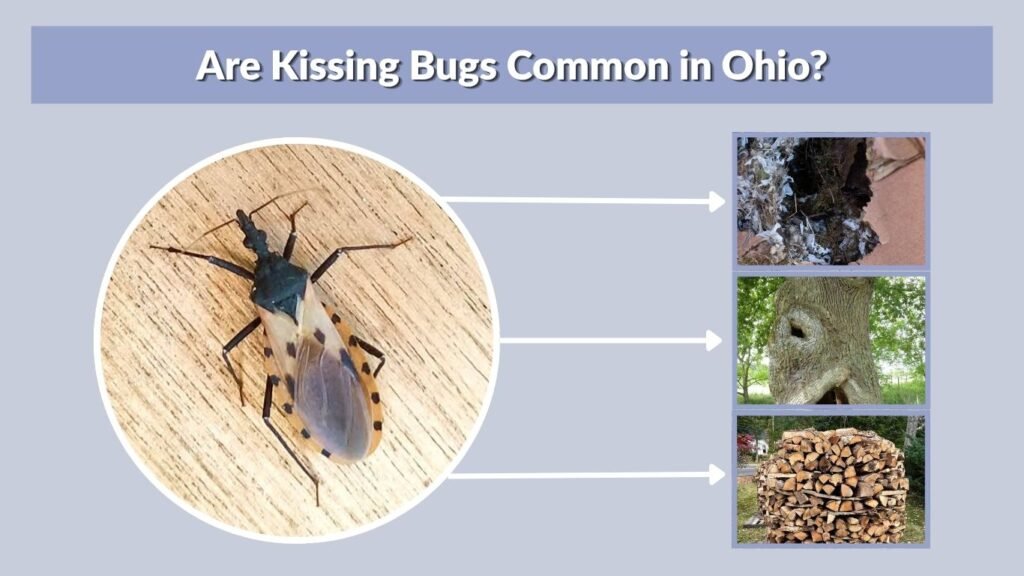
Kissing bugs are not considered common household pests throughout Ohio. Most residents are far more likely to encounter a stink bug, western conifer seed bug, leaf-footed bug, wheel bug, or another similar-looking insect.
Ohio kissing bugs usually live outdoors near animals that can provide blood meals. They may occasionally enter houses, especially when attracted to nighttime lights or when nearby wildlife nests place them close to a building.
Their apparent rarity indoors means there is no reliable public count showing exactly how many kissing bugs live in Ohio. Individual reports do not necessarily indicate an infestation or a statewide increase.
Where in Ohio Are They Found?
Kissing bugs may occur in southern, central, northern, and northeastern Ohio, but they are expected to be more likely in warmer southern areas. Possible reports may come from communities around Cincinnati, Columbus, Dayton, Toledo, or Cleveland, yet a photograph or specimen is needed to confirm each sighting.
Suitable outdoor hiding places include:
- Raccoon and opossum dens
- Rodent nests
- Hollow trees
- Woodpiles
- Rock piles
- Brush and yard debris
- Dog houses and animal shelters
- Spaces beneath porches
- Barns and outbuildings
- Cracks around foundations
The bugs are nocturnal and usually remain hidden during the day. They emerge after dark to feed on mammals, birds, pets, and occasionally humans.
What Does an Ohio Kissing Bug Look Like?
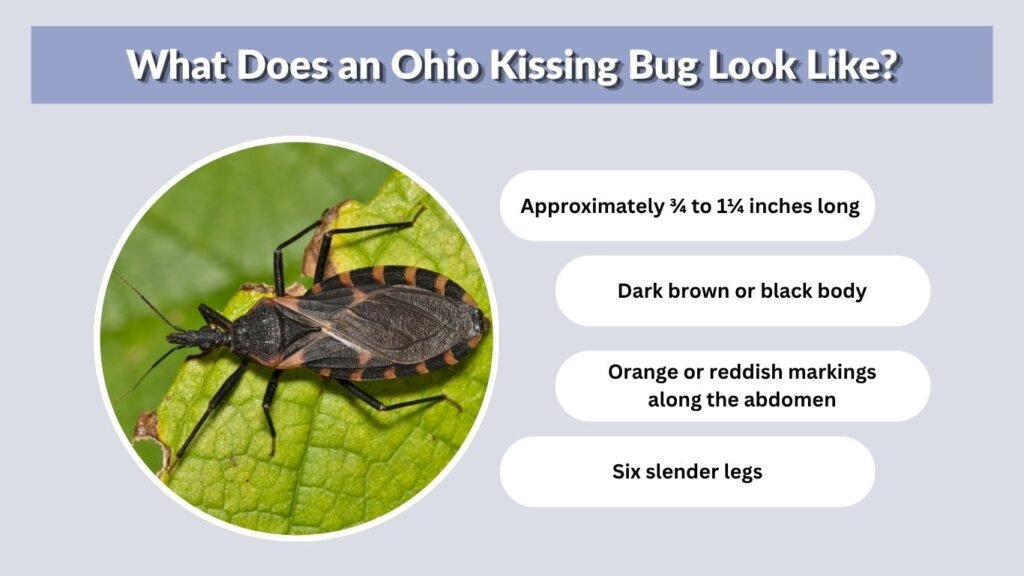
An adult kissing bug has a long, flattened body and a narrow, cone-shaped head. Its overall appearance is very different from the broad shield shape of a typical stink bug.
Important identification features include:
- Approximately ¾ to 1¼ inches long
- Dark brown or black body
- Orange or reddish markings along the abdomen
- Long, thin antennae
- Six slender legs
- Narrow head with a pointed appearance
- Wings folded flat over the back
- Piercing mouthparts tucked beneath the head
Young kissing bugs, called nymphs, do not have fully developed wings. They may have a rounded abdomen but still display the narrow head and dark coloration associated with adults.
Identification should not be based on size or color alone. Several Ohio insects have orange markings and elongated bodies.
Ohio Kissing Bug Look-Alikes
Misidentification is common, particularly during autumn when many insects enter buildings to overwinter.
Western Conifer Seed Bug
The western conifer seed bug is one of the insects most frequently mistaken for a kissing bug. It has a long brown body, expanded leaf-like sections on its hind legs, and a pale zigzag marking across its wings.
It feeds on plant material rather than human blood. Extension specialists have identified many supposed kissing bugs as conifer seed bugs instead.
Brown Marmorated Stink Bug
A brown marmorated stink bug has a wide, shield-shaped body and light bands on its antennae. These insects commonly enter Ohio homes to overwinter.
Stink bugs do not feed on people or pets. They are mainly nuisance and agricultural pests and may release a strong odor when disturbed or crushed.
Wheel Bug
The wheel bug is a large assassin bug with a distinctive gear-shaped crest on its back. It hunts other insects and can deliver a painful defensive bite when handled, but it is not a blood-feeding kissing bug.
Masked Hunter
Masked hunters are dark assassin bugs that may enter houses while hunting insects. Young masked hunters cover themselves with dust and debris for camouflage. Although they can bite defensively, they do not normally seek humans for blood meals.
Do Kissing Bugs Bite People in Ohio?
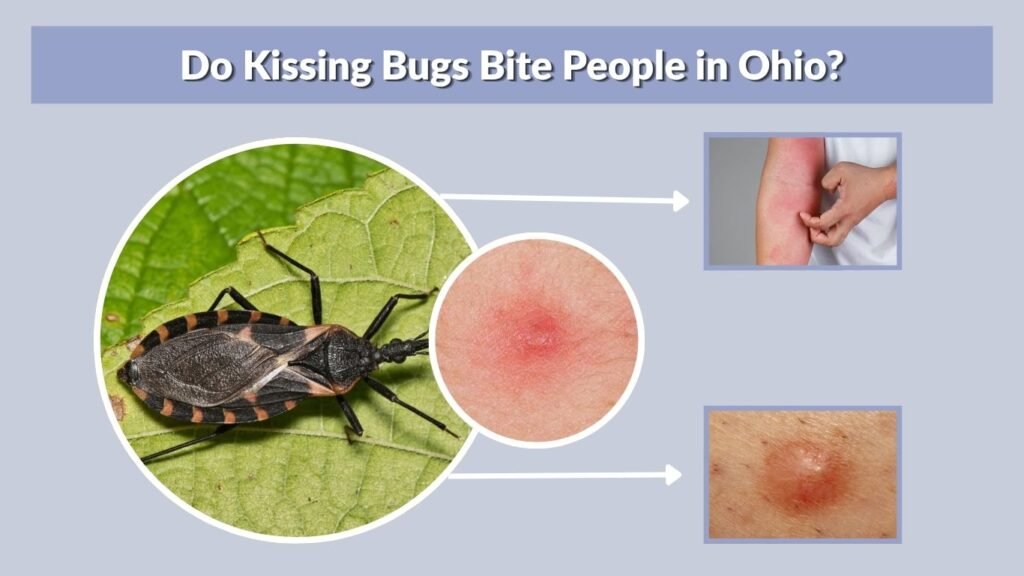
Kissing bugs can bite people, although human encounters in Ohio are considered uncommon. They generally feed at night while a person or animal is sleeping.
The name “kissing bug” comes from their tendency to feed on exposed skin, sometimes near the face. However, bites may occur on the arms, legs, neck, or other uncovered areas.
A kissing bug bite may cause:
- A small red bump
- Mild itching
- Local swelling
- A raised welt
- Several nearby marks
- Redness or irritation
Some people have little or no visible reaction. Others can develop a significant allergic response.
Seek emergency help for trouble breathing, facial or throat swelling, widespread hives, faintness, or rapidly worsening symptoms.
Do Ohio Kissing Bugs Carry Chagas Disease?
Some kissing bugs can carry Trypanosoma cruzi, the parasite that causes Chagas disease. However, not every bug is infected, and a bite does not automatically transmit the disease.
The parasite is generally found in an infected insect’s feces rather than its saliva. After feeding, the bug may leave feces on the skin. Infection can occur when contaminated material is rubbed into:
- The bite wound
- A cut or scratch
- The eyes
- The mouth
- Another mucous membrane
The CDC explains that people may become infected when they unknowingly scratch or rub contaminated feces into a wound, eye, or mouth.
Locally acquired Chagas disease is possible in the United States, but documented vector-borne human cases remain uncommon. The presence of a kissing bug in Ohio therefore represents a reason for careful identification, not a reason to assume infection.
Kissing Bug Disease Symptoms
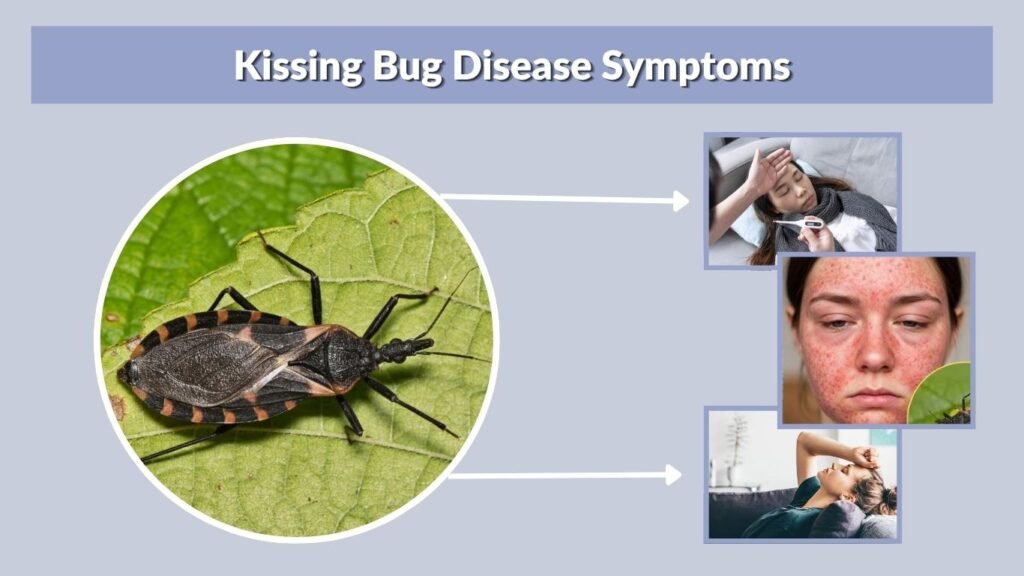
Early Chagas disease often produces no noticeable illness. When symptoms develop, they may appear within weeks of exposure and resemble a mild viral infection.
Possible early symptoms include:
- Fever
- Fatigue
- Headache
- Body aches
- Rash
- Swollen lymph nodes
- Loss of appetite
- Swelling near the entry site
- Swelling of one eyelid
The infection may later enter a chronic phase. Some people never develop additional problems, while others can experience heart or digestive complications years later. These may include abnormal heart rhythms, heart enlargement, heart failure, difficulty swallowing, or severe constipation.
A bite mark cannot diagnose Chagas disease. Blood testing and medical evaluation are necessary.
What to Do If You Find a Kissing Bug in Ohio
Do not crush a suspected kissing bug with your bare hand. Crushing it may expose you to feces or body fluids and can also make identification difficult.
Follow these steps:
- Place a cup or container over the insect.
- Slide stiff paper beneath the container.
- Transfer it into a sealed jar or plastic bag.
- Avoid touching it directly.
- Take clear photographs of its back, head, and sides.
- Record the date and exact place it was found.
- Clean the surface and wash your hands.
- Contact an Ohio extension office, health department, entomologist, or qualified pest professional.
Keep the specimen intact until an expert advises whether it should be submitted. A photograph may be enough for preliminary identification, but a physical specimen can provide greater certainty.
When Should You Contact a Doctor?
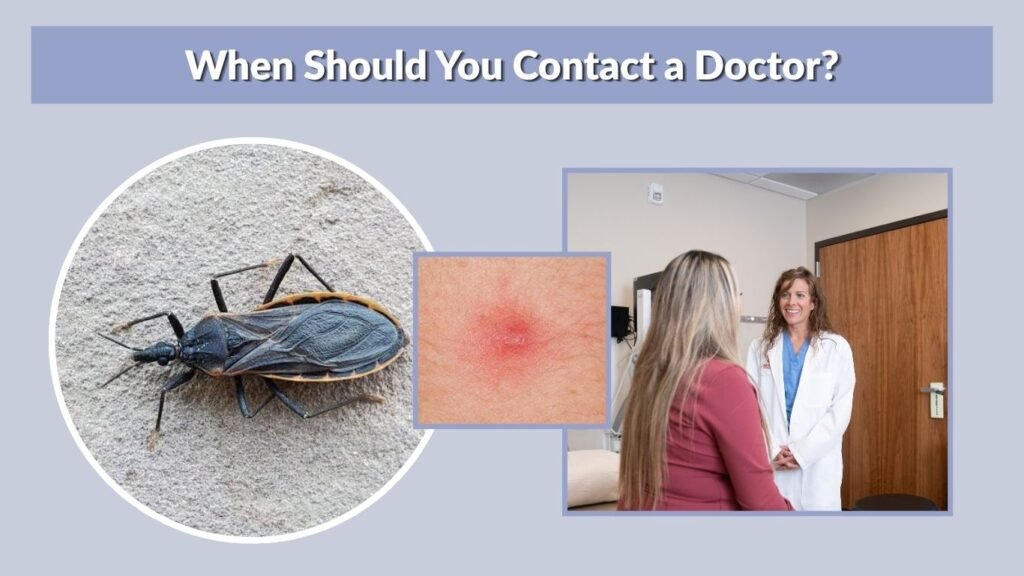
Medical advice may be appropriate when:
- A confirmed or strongly suspected kissing bug bit you
- You crushed the insect with bare skin
- Bug material entered your eye or mouth
- Feces contacted an open wound
- You develop fever, unexplained rash, or unusual swelling
- One eyelid becomes swollen after possible exposure
- You have a weakened immune system
- A child may have been exposed
Tell the healthcare provider that the possible exposure occurred in Ohio and bring photographs or identification results when available.
How to Prevent Kissing Bugs Around an Ohio Home
The best prevention strategy is to block insect entry and reduce wildlife nesting areas near the house. There is currently no vaccine or preventive medication for Chagas disease.
Seal the House
Inspect and repair:
- Torn window screens
- Gaps beneath exterior doors
- Cracks in the foundation
- Openings around pipes and cables
- Damaged siding
- Roof and attic gaps
- Unscreened vents
- Spaces around window frames
Remove Outdoor Shelter
Move firewood and lumber away from exterior walls. Clear piles of stones, leaves, brush, and unused materials. Prevent raccoons, opossums, rodents, and other wildlife from nesting beneath porches, inside sheds, or near sleeping areas.
Keep outdoor kennels and pet bedding clean. Bringing pets indoors at night may further reduce exposure where suspected kissing bugs have been found.
Reduce Light Attraction
Adult kissing bugs can fly and may be drawn toward outdoor lights. Turn off unnecessary lights near doors and windows, close curtains after dark, and position essential lights away from entrances.
FAQs
Are kissing bugs native to Ohio?
Yes. Ohio State University Extension identifies the bloodsucking conenose, Triatoma sanguisuga, as a kissing bug native to Ohio. Its presence is not evidence of a newly introduced tropical invasion, although sightings inside homes are relatively unusual.
Are kissing bugs found in Columbus, Cleveland, or Cincinnati?
They may occur in different parts of Ohio, including areas surrounding major cities. However, many reported sightings are actually stink bugs, conifer seed bugs, or other look-alikes. A photograph or captured specimen is necessary to confirm the identification.
How dangerous is a kissing bug bite in Ohio?
The bite may cause itching, swelling, or an allergic reaction. Chagas disease transmission is possible only under particular circumstances involving an infected bug’s feces. A single bite does not mean that the person has contracted the disease.
Can kissing bugs fly into Ohio homes?
Adult kissing bugs can fly and may approach lights after dark. They can also crawl through gaps around doors, windows, roofs, vents, and foundations. Nymphs do not have functional wings but can enter through structural openings.
Should I kill a kissing bug found in my house?
Avoid crushing it with bare hands. Capture it in a sealed container so that an expert can identify it. Clean the area, wash your hands, and contact a local extension office, health department, or pest professional for guidance.
