
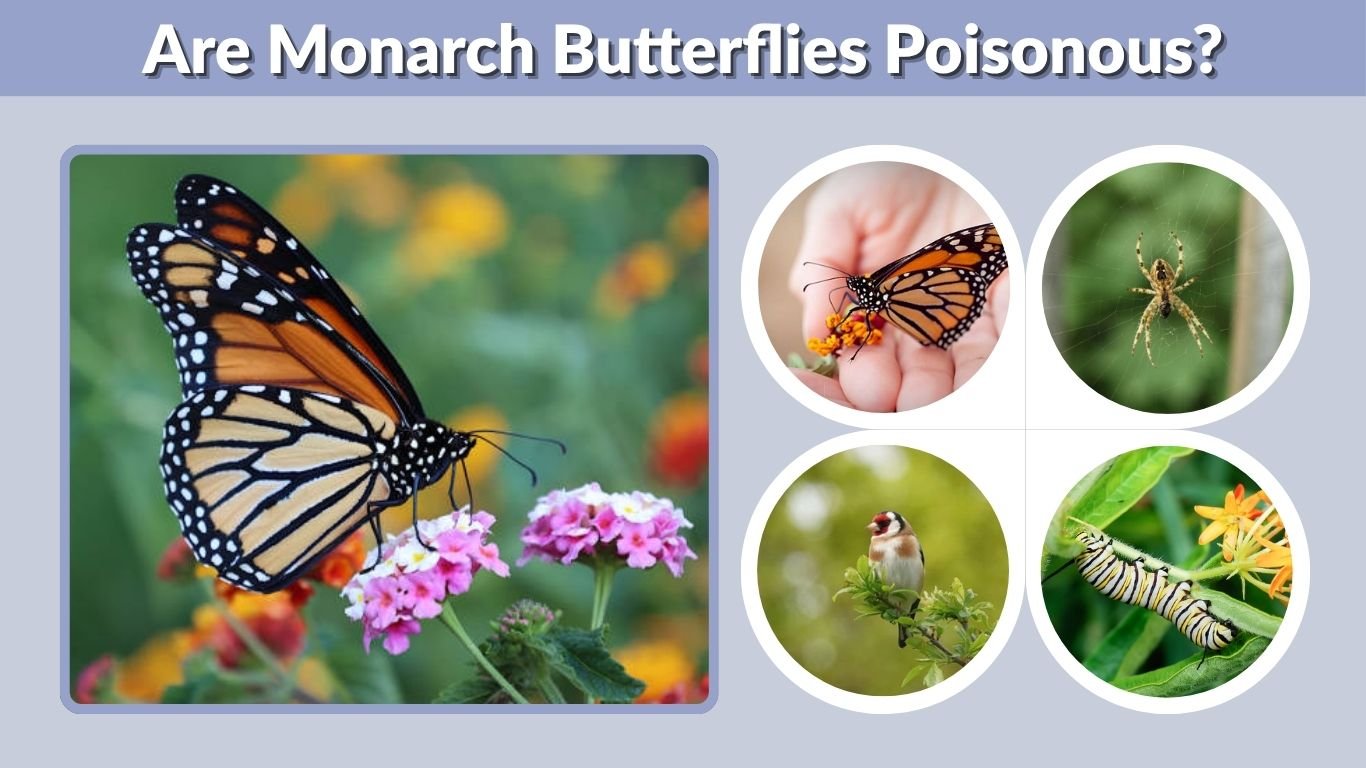
Are monarch butterflies poisonous? Yes, monarch butterflies contain toxic chemicals called cardenolides, which they acquire as caterpillars by eating milkweed. These compounds make monarchs unpleasant or potentially harmful for many predators to eat. However, monarch butterflies are not dangerous to humans through ordinary touching, and they do not bite, sting, or inject venom. Their bright orange-and-black wings actually serve as a warning to predators. Understanding how monarchs become poisonous explains their relationship with milkweed and why many birds learn to avoid them.
Why Are Monarch Butterflies Poisonous?
Monarch butterflies do not manufacture all of their defensive chemicals themselves. Instead, the process begins during the caterpillar stage. Monarch larvae specialize in eating milkweed plants, which contain naturally occurring defensive compounds. The caterpillars can tolerate and store some of these substances, carrying their chemical protection through metamorphosis into the adult butterfly.
Milkweed Provides Their Chemical Defense
Milkweed contains compounds called cardenolides, also known as cardiac glycosides. These substances discourage many animals from eating milkweed because they can interfere with normal physiological functions.
Monarch caterpillars have evolved adaptations that allow them to consume milkweed and retain some of its cardenolides. When the caterpillar becomes an adult, many of these chemicals remain stored in its body, making the butterfly distasteful or toxic to numerous predators.
How the Defense Works
The process can be summarized as:
- A monarch egg hatches on or near milkweed.
- The caterpillar begins feeding on milkweed leaves.
- It consumes cardenolides contained in the plant.
- Some of these chemicals are stored in its tissues.
- The caterpillar remains chemically defended.
- The chemicals persist after metamorphosis.
- The adult monarch becomes unpleasant or toxic to many predators.
The concentration can vary because different milkweed species contain different levels and combinations of defensive chemicals.
Are Monarch Butterflies Poisonous to Humans?
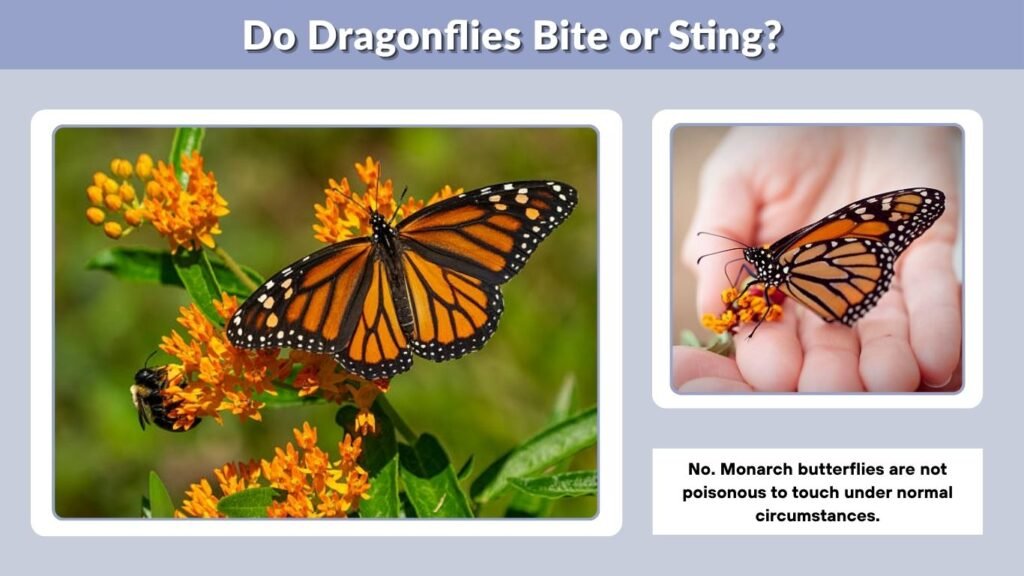
Although monarchs contain toxic compounds, simply encountering one is not considered dangerous to people. The toxins are primarily relevant when the butterfly is eaten. Monarchs cannot inject cardenolides through their legs or wings, and they lack the venom-delivery system associated with animals such as venomous spiders or snakes.
Are Monarch Butterflies Poisonous to Touch?
No. Monarch butterflies are not poisonous to touch under normal circumstances.
Touching a monarch does not cause its stored cardenolides to be injected into your body. However, butterflies are delicate, and unnecessary handling can damage the tiny scales covering their wings or stress the animal.
If you are observing monarchs outdoors, watching without handling is generally best for the butterfly.
Are Monarch Butterflies Poisonous to Eat?
Their chemical defense is specifically designed to discourage animals from eating them.
Cardenolides can cause unpleasant or toxic effects in susceptible vertebrates. The amount present in an individual monarch varies according to factors such as the milkweed species it consumed during larval development.
People should therefore never intentionally eat monarch butterflies or caterpillars.
Are Monarch Butterfly Caterpillars Poisonous?
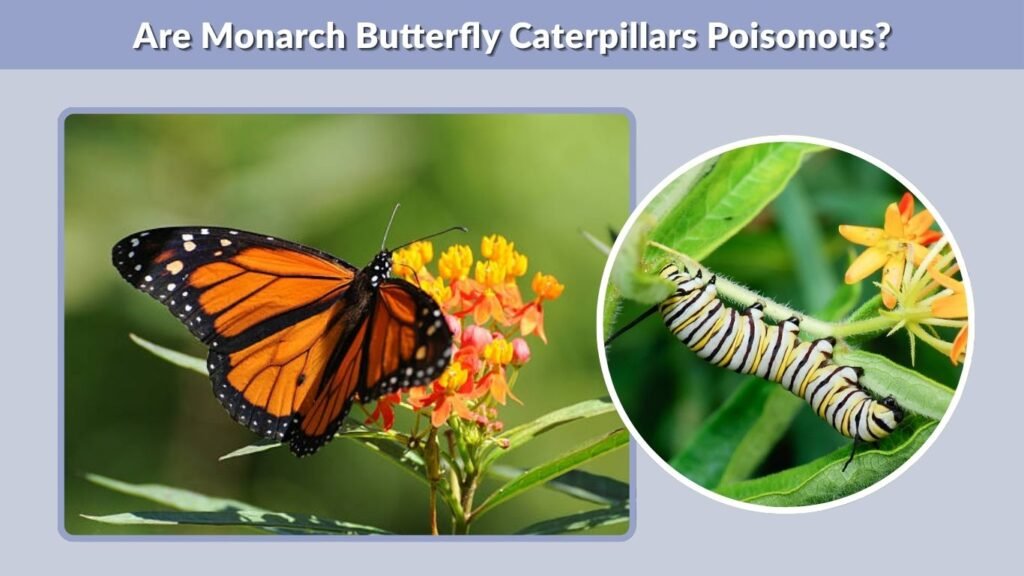
Monarch caterpillars are also chemically defended. In fact, this is the stage during which monarchs obtain their cardenolides. Caterpillars consume milkweed continuously as they grow and store some of the plant’s toxins rather than completely eliminating them from their bodies.
Are Monarch Caterpillars Poisonous to Humans?
Monarch caterpillars are not dangerous to people through ordinary contact. They do not possess stingers or venomous spines.
The greater concern around their host plants is milkweed sap. Milkweed itself contains biologically active compounds, and its milky latex should not be intentionally ingested. Avoid getting milkweed sap into the eyes, and wash your hands after extensively handling cut milkweed plants.
Caterpillar Warning Colors
Monarch caterpillars have conspicuous black, white, and yellow bands rather than camouflage.
Their coloration contributes to a defensive strategy known as aposematism, in which conspicuous colors can signal that an animal is distasteful or chemically defended. Adult monarchs continue this strategy with their distinctive bright orange-and-black wings.
Are Monarch Butterflies Poisonous to Birds?
Many birds find monarchs unpleasant or toxic because of their cardenolides. A predator that eats a chemically well-defended monarch may experience an unpleasant reaction and subsequently learn to associate orange-and-black coloration with unsuitable prey. However, monarch defenses are not perfect, and certain birds can still feed on them.
How Birds Learn to Avoid Monarchs
Monarch protection involves several factors:
- Bright orange-and-black warning coloration
- Bitter or unpleasant taste
- Stored milkweed cardenolides
- Negative experiences after ingestion
- Learned avoidance by some predators
This creates an effective deterrent against many potential predators.
Some Birds Still Eat Monarchs
Not every bird responds to monarch toxins in the same way.
At monarch overwintering sites in Mexico, species such as black-headed grosbeaks and black-backed orioles are important monarch predators. Some predators have behavioral or physiological adaptations that allow them to avoid the most toxic tissues or tolerate the chemicals better than other animals.
The amount of chemical protection can also decline as an adult monarch ages.
Are Monarch Butterflies Poisonous to Other Animals?
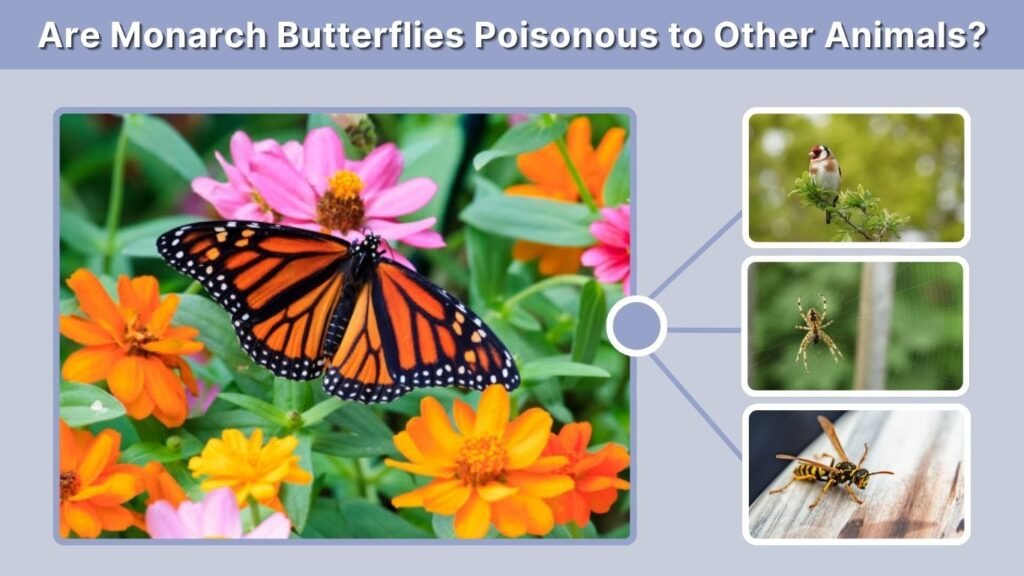
Cardenolides are primarily useful against vertebrate predators, but monarchs still face many natural enemies. Their toxic reputation should not create the impression that nothing can eat them. Eggs, caterpillars, pupae, and adult monarchs all become food for various predators and parasitoids.
Animals That May Attack Monarchs
Natural monarch enemies can include:
- Birds
- Spiders
- Wasps
- Ants
- Predatory insects
- Parasitoid flies
- Other small predators
Monarch Joint Venture notes that spiders and wasps can attack monarch larvae, while various invertebrate predators consume monarch eggs and caterpillars.
Are Monarch Butterflies Poisonous to Spiders?
Monarch chemicals do not provide complete protection against spiders. Some spiders can capture and consume monarch caterpillars or other life stages.
This highlights an important difference between being chemically defended and being completely immune to predation. Monarch toxins work better against certain predators than others, and many invertebrate predators continue to play an important role in monarch mortality.
Are Monarch Butterflies Poisonous to Cats and Dogs?
Pets occasionally investigate or eat insects, so owners may wonder whether monarchs are dangerous. Because monarchs contain cardenolides obtained from milkweed, allowing dogs or cats to intentionally consume them is not advisable. The underlying milkweed plants themselves also contain cardiac glycosides and deserve particular caution around pets and livestock.
What If a Pet Eats a Monarch?
A single accidental encounter does not automatically mean severe poisoning will occur because toxin levels and the amount consumed can vary considerably.
However, prevent pets from repeatedly eating monarch caterpillars, butterflies, or milkweed. If an animal consumes milkweed or monarchs and develops vomiting, weakness, abnormal heart rate, or other concerning symptoms, contact a veterinarian promptly.
Are All Monarch Butterflies Equally Poisonous?
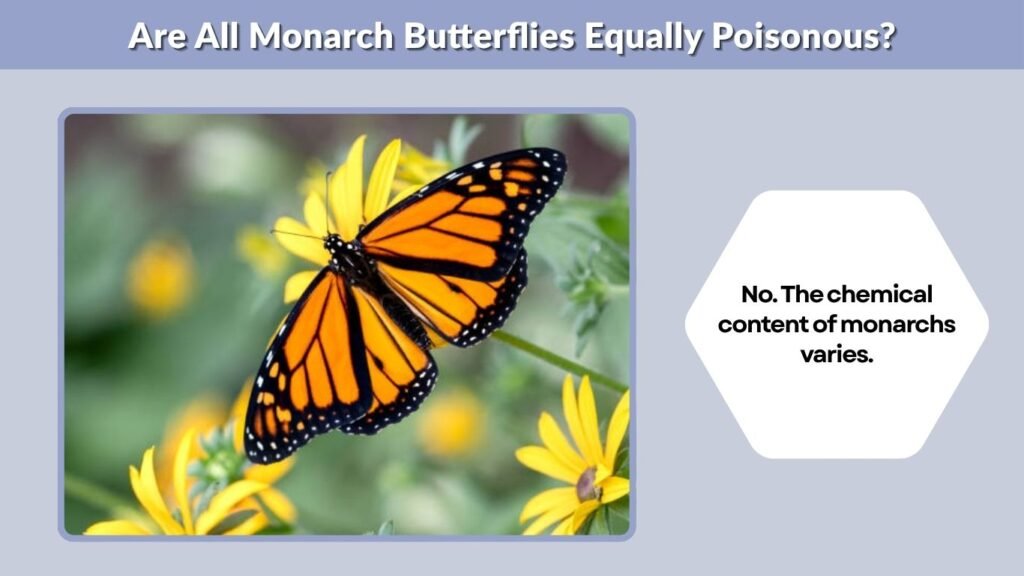
No. The chemical content of monarchs varies. One important reason is that milkweed species differ in cardenolide concentration, and individual plants can also contain different amounts. Therefore, two monarch caterpillars feeding on different milkweeds may accumulate different levels of chemical defense.
Toxicity Changes With Diet and Age
A monarch’s chemical defense is influenced by the milkweed consumed during larval development.
Research has also found that cardenolides can decline during an adult monarch’s life. Older monarchs may consequently become more palatable to certain predators than younger adults carrying higher toxin concentrations.
This variation explains why describing every monarch as equally poisonous would be inaccurate.
Why Are Monarchs Bright Orange and Black?
A monarch’s famous coloration is more than decoration. Bright orange wings crossed with black veins provide a highly visible signal that predators can learn to recognize. This warning system works together with the butterfly’s stored chemical defenses rather than physically protecting it from attack.
Warning Coloration Protects Monarchs
The strategy is called aposematic coloration.
When susceptible predators associate the monarch’s recognizable appearance with an unpleasant feeding experience, they may avoid similarly colored butterflies later.
This combination of color and chemistry is one of the classic examples scientists use to explain defensive adaptation in insects.
FAQs
Are monarch butterflies poisonous to people?
Monarch butterflies contain cardenolides derived from milkweed, but they are not considered dangerous to people through ordinary contact. The chemicals primarily matter when the butterfly is eaten. Monarchs do not sting or inject venom, so simply observing or briefly touching one does not cause poisoning.
Are monarch butterflies poisonous to touch?
No. Touching a monarch normally does not poison a person because the butterfly does not inject its stored toxins through its wings or legs. However, unnecessary handling should still be avoided because monarch wings are delicate and handling can potentially damage their scales or stress the butterfly.
Why are monarch butterflies poisonous?
Monarchs become chemically defended because their caterpillars eat milkweed containing cardenolides. Instead of completely breaking down these compounds, the insects store some in their tissues. The toxins remain through metamorphosis, helping make adult monarch butterflies bitter, distasteful, or toxic to many predators.
Are monarch butterfly caterpillars poisonous?
Yes, monarch caterpillars contain defensive chemicals acquired from the milkweed they eat. These cardenolides help discourage many predators. However, caterpillars are not venomous and do not have stinging hairs designed to poison people. Ordinary contact with a monarch caterpillar is therefore not generally considered dangerous.
Are monarch butterflies poisonous to birds?
Monarchs are toxic or highly distasteful to many birds because they store milkweed cardenolides. Their bright orange-and-black coloration warns potential predators. However, the defense is not universal. Some bird species have developed ways to tolerate monarch toxins or selectively feed on the butterflies despite their chemical protection.
