
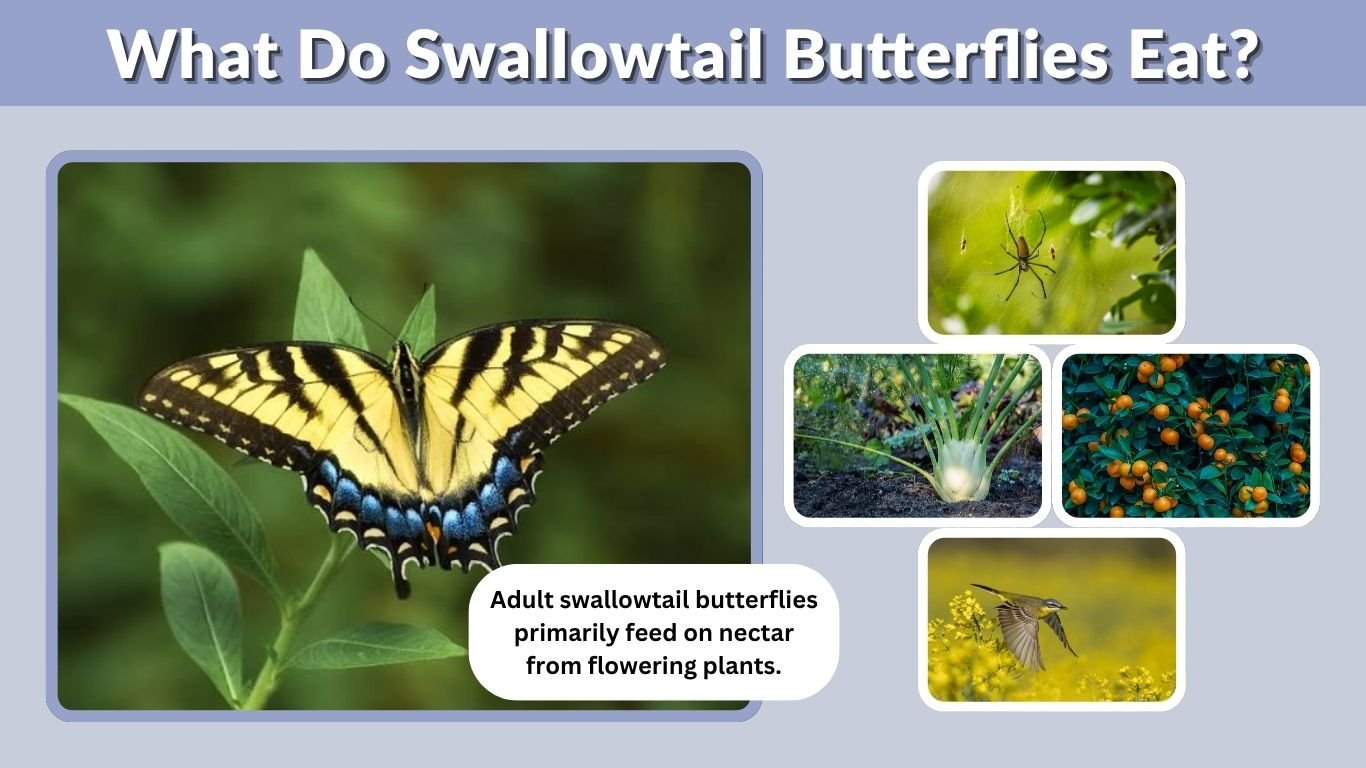
Swallowtail butterflies are beautiful insects known for their colorful wings, distinctive tails, and fascinating feeding habits. But what do swallowtail butterflies eat, and how does their diet change throughout their lives? Adult swallowtails primarily drink flower nectar, while their caterpillars feed on specific host plants such as parsley, dill, citrus, and pawpaw leaves. Different swallowtail species have different food preferences, making their diets especially interesting. This guide explores what adult swallowtail butterflies and caterpillars eat, their favorite flowers, feeding behavior, natural predators, and ways to attract them.
What Do Adult Swallowtail Butterflies Eat?
Adult swallowtail butterflies primarily feed on nectar from flowering plants. Nectar contains sugars that provide energy for flying, mating, and other daily activities. Unlike caterpillars, adult butterflies cannot chew leaves because they have a long, flexible feeding tube called a proboscis. Their preferred nectar sources vary by species, geographic location, flowering season, and the availability of suitable plants.
Favorite Flowers of Swallowtail Butterflies
Common nectar-producing flowers that attract swallowtails include:
- Milkweed: Provides nectar for several swallowtail species.
- Coneflowers: Offer nectar and convenient landing surfaces.
- Thistles: Attract various adult swallowtails.
- Phlox: Particularly attractive to pipevine swallowtails.
- Ironweed: Produces nectar-rich purple flowers.
- Joe-Pye Weed: Supports large butterflies during summer.
- Zinnias: Popular garden flowers visited by adult butterflies.
- Blazing Star: Provides nectar through clusters of small flowers.
How Do Swallowtail Butterflies Drink Nectar?
Swallowtail butterflies use their proboscis to drink nectar from flowers. This flexible structure remains coiled when not in use.
When feeding, the butterfly extends its proboscis into a flower to reach the nectar.
While moving between flowers, swallowtails may transfer pollen, contributing to plant pollination.
What Do Swallowtail Butterfly Caterpillars Eat?
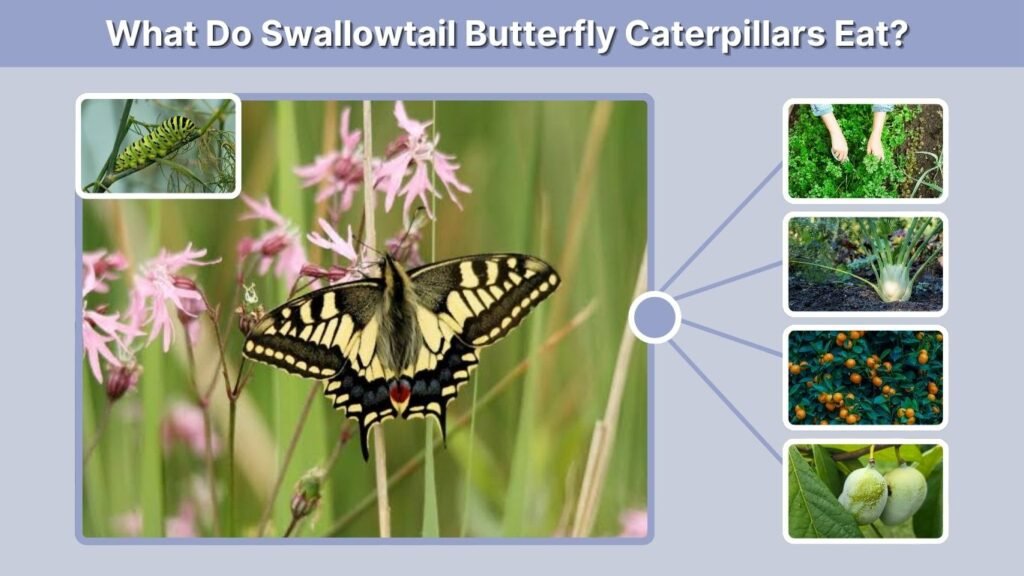
Swallowtail butterfly caterpillars have very different diets from adults. Instead of drinking nectar, they consume leaves and sometimes other tender parts of particular host plants. These plants supply nutrients needed for growth and development. Most swallowtail species cannot survive on just any greenery because their caterpillars are adapted to specific plant groups. Correctly identifying these plants is essential when protecting or observing swallowtail larvae.
Common Swallowtail Caterpillar Host Plants
- Parsley: A common food source for black swallowtail caterpillars.
- Dill: Frequently eaten by black swallowtail larvae.
- Fennel: Supports black and some anise swallowtail caterpillars.
- Carrot leaves: Another host for black swallowtails.
- Citrus leaves: Important for giant and several tropical swallowtails.
- Pawpaw leaves: Essential for zebra swallowtail caterpillars.
- Spicebush: A primary host of spicebush swallowtails.
- Tulip tree leaves: Used by eastern tiger swallowtail caterpillars.
- Pipevine leaves: Support pipevine swallowtail larvae.
Why Do Caterpillars Need Specific Plants?
Female swallowtails generally deposit eggs on plants suitable for their developing caterpillars.
After hatching, larvae begin feeding on nearby foliage. Plant chemistry plays an important role in determining which leaves they can digest.
Some caterpillars also acquire defensive chemicals from their host plants, making them less attractive to certain predators.
What Do Different Swallowtail Butterfly Species Eat?
Swallowtail butterflies belong to a diverse family containing hundreds of species worldwide. Although most adults consume flower nectar, their caterpillars often depend on different plant families. Understanding these dietary differences helps gardeners select suitable plants and distinguish feeding damage caused by various larvae. Several familiar North American swallowtails illustrate how specialized their caterpillar feeding requirements can be.
What Do Black Swallowtail Butterflies Eat?
Adult black swallowtails primarily feed on nectar from flowers such as milkweed, thistles, and other flowering plants.
Their caterpillars eat parsley, dill, fennel, celery, carrot foliage, and several wild carrot-family plants.
This explains why black swallowtail caterpillars frequently appear in herb gardens during warmer months.
What Do Tiger Swallowtail Butterflies Eat?
Adult eastern tiger swallowtails drink nectar from various flowering plants, including coneflowers and other summer wildflowers.
Their caterpillars feed on leaves from trees such as tulip trees, black cherry, and sweetbay magnolia.
Western tiger swallowtail caterpillars use somewhat different host plants, including willow and cottonwood.
What Do Giant Swallowtail Butterflies Eat?
Giant swallowtail adults obtain energy mainly from flower nectar.
Their caterpillars, commonly called orangedogs, feed on citrus leaves and other plants in the citrus family, including hoptree and prickly ash.
Young larvae resemble bird droppings, helping conceal them from predators.
What Do Zebra and Spicebush Swallowtails Eat?
Adult zebra swallowtails visit flowers with accessible nectar because their proboscis is relatively short. Their caterpillars feed on pawpaw plants.
Spicebush swallowtail adults also drink flower nectar, while their caterpillars primarily consume spicebush, sassafras, and certain related trees.
Both species depend on suitable native host plants for successful reproduction.
Do Swallowtail Butterflies Eat Fruit or Other Foods?
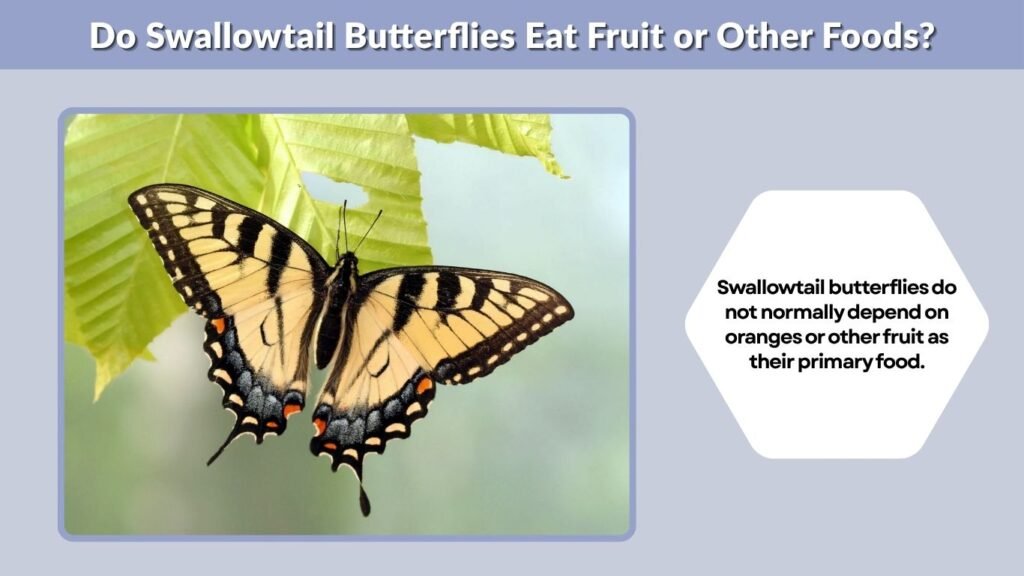
Flower nectar is the primary energy source for most adult swallowtail butterflies, but their feeding behavior extends beyond flowers. Some obtain dissolved minerals from wet soil and other moist materials. These nutrients are particularly important for reproduction. Butterflies may also investigate fruit juices or other sugary liquids, although fruit feeding is not equally common among all swallowtail species.
Do Swallowtail Butterflies Eat Oranges?
Swallowtail butterflies do not normally depend on oranges or other fruit as their primary food.
Some individuals may investigate exposed fruit juices, but nectar remains their main energy source.
Importantly, giant swallowtail caterpillars eat citrus leaves rather than the oranges themselves.
Why Do Swallowtails Gather on Mud?
Swallowtails sometimes gather on damp ground in a behavior known as mud-puddling.
They absorb moisture and dissolved minerals, particularly sodium, from wet soil. This behavior is especially common among males.
Some swallowtails may also obtain minerals from animal droppings or other moist organic materials. They do not consume solid animal flesh like carnivorous insects.
What Eats Swallowtail Butterflies?
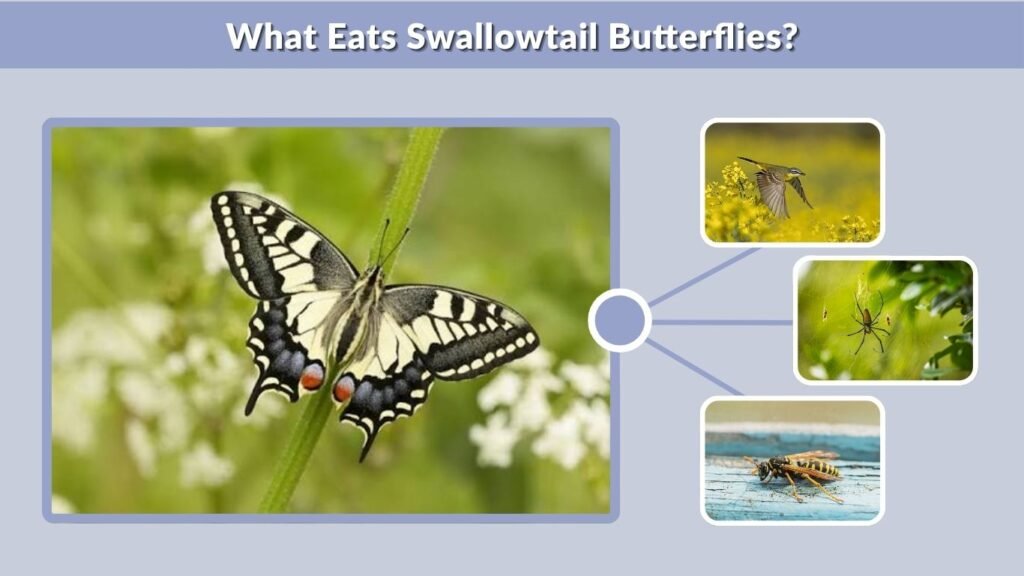
Swallowtail butterflies are both nectar-feeding insects and important components of natural food webs. Their eggs, caterpillars, chrysalises, and adults face different predators throughout their development. Birds, spiders, and predatory insects may attack swallowtails, although some species possess effective defensive adaptations. Their survival depends partly on camouflage, chemical protection, and behavioral strategies that help reduce predation.
Natural Predators of Swallowtail Butterflies
- Birds: Some insect-eating birds capture adult butterflies or caterpillars.
- Spiders: Web-building spiders may trap adult swallowtails.
- Wasps: Certain predatory wasps attack butterfly caterpillars.
- Praying mantises: These insects may capture butterflies visiting flowers.
- Predatory bugs: Some species feed on swallowtail larvae.
- Parasitoid wasps and flies: Their developing young can kill swallowtail caterpillars or pupae.
How Do Swallowtails Protect Themselves?
Many swallowtail caterpillars possess a defensive organ called an osmeterium. When threatened, it releases chemicals that discourage some predators.
Other species rely on camouflage, false eyespots, or toxic substances acquired from their host plants.
Pipevine swallowtails, for example, contain defensive chemicals that make them unpalatable to certain predators.
How to Attract Swallowtail Butterflies With Food
Creating a butterfly-friendly garden requires understanding the different nutritional needs of adults and caterpillars. Nectar-rich flowers attract visiting butterflies, while host plants encourage females to lay eggs. A combination of native flowering plants, suitable trees, and protected vegetation can support multiple life stages. Gardeners should also consider local growing conditions and avoid practices that unnecessarily harm beneficial insects.
Best Ways to Provide Swallowtail Food
- Plant nectar flowers: Grow native milkweed, coneflowers, phlox, and other suitable flowering plants.
- Include host plants: Select plants required by swallowtail species found in your region.
- Offer seasonal variety: Grow flowers that bloom during spring, summer, and fall.
- Preserve native trees: Protect pawpaw, tulip trees, and other valuable caterpillar hosts.
- Avoid insecticides: Reduce pesticide exposure around butterfly feeding and breeding areas.
Do Swallowtails Need Sugar Water?
Wild swallowtails generally obtain sufficient energy from naturally available flowers.
Sugar water is not necessary in a properly planted butterfly garden and does not replace the nutritional diversity of nectar sources.
Providing healthy flowering plants and suitable larval hosts is a more reliable long-term approach.
FAQs
Swallowtail butterfly feeding habits often raise questions because adults and caterpillars consume different foods. Many gardeners discover caterpillars eating their herbs and wonder whether these insects are harmful. Others want to know which flowers attract adult swallowtails or whether butterflies can survive without nectar. These frequently asked questions explain common feeding behaviors and dietary preferences.
1. What Do Swallowtail Butterflies Like to Eat Most?
Adult swallowtails primarily drink flower nectar. Caterpillars prefer specific host plants, depending on their species.
2. Do Black Swallowtail Butterflies Eat Parsley?
Adult black swallowtails do not eat parsley leaves. Their caterpillars commonly feed on parsley, dill, fennel, and related plants.
3. Do Swallowtail Butterflies Eat Fruit?
Some swallowtails may investigate fruit juices, but most primarily depend on flower nectar for energy.
4. What Do Baby Swallowtail Butterflies Eat?
Newly hatched swallowtail caterpillars eat suitable host plant material. Many also consume their eggshell shortly after hatching.
5. Do Birds Eat Swallowtail Butterflies?
Yes. Some birds prey on swallowtail butterflies and their caterpillars. However, chemical defenses and camouflage help protect certain species.
