
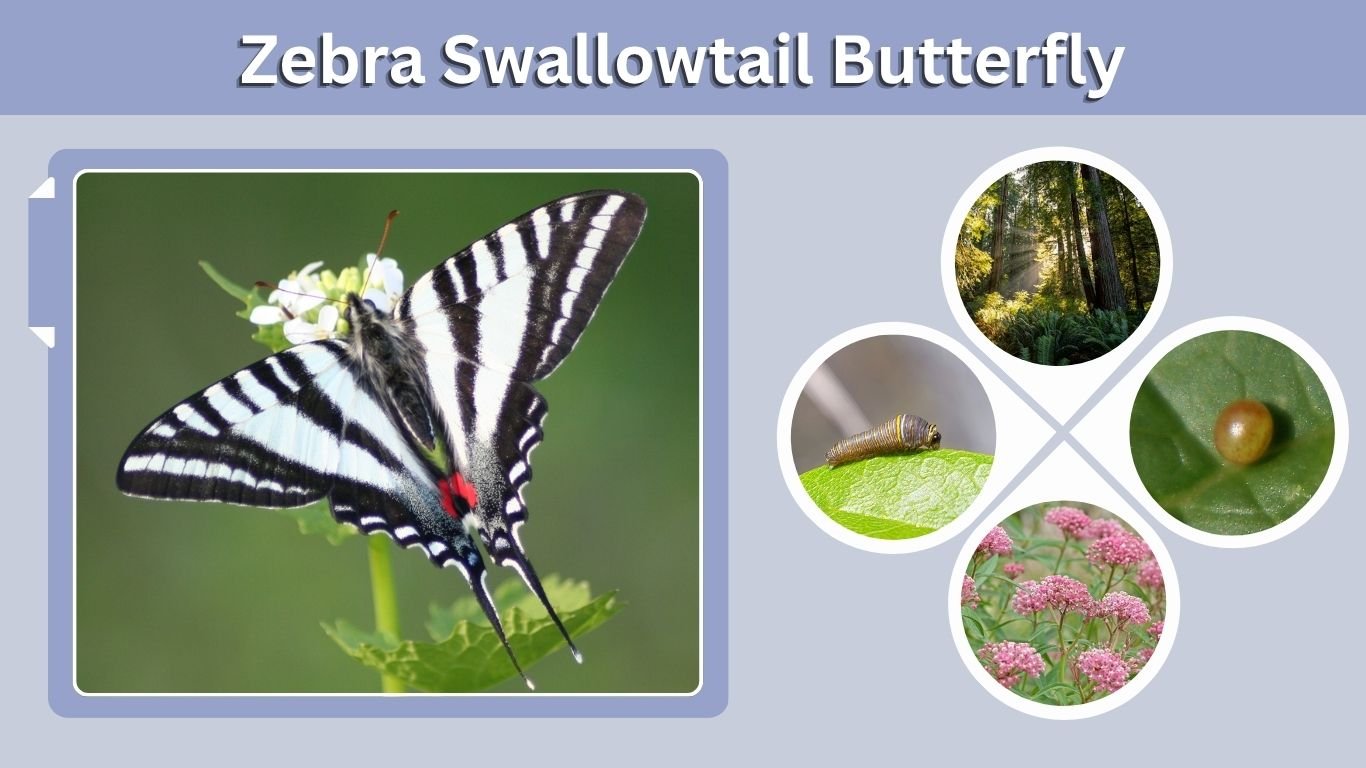
The zebra swallowtail butterfly is one of North America’s most distinctive butterflies, recognized by its striking black-and-white striped wings and long, elegant tails. Scientifically known as Eurytides marcellus, this beautiful species commonly inhabits woodlands, riverbanks, and areas where pawpaw trees grow. Its fascinating life cycle, unusual caterpillar appearance, and close relationship with native host plants make it particularly interesting to butterfly enthusiasts. This guide explores zebra swallowtail butterfly identification, habitat, diet, male and female differences, caterpillar development, and interesting facts about this remarkable insect.
What Is a Zebra Swallowtail Butterfly?
The zebra swallowtail butterfly belongs to the swallowtail family, Papilionidae, and is native to eastern North America. Its name comes from the prominent black stripes decorating its pale wings. Unlike many other swallowtails, this species has exceptionally long, narrow hindwing tails. Its graceful appearance, distinctive markings, and association with pawpaw trees make it relatively easy to recognize in natural habitats.
Zebra Swallowtail Butterfly Identification
- Scientific name: Eurytides marcellus, also classified as Protographium marcellus or Neographium marcellus by some authorities.
- Family: Papilionidae.
- Wingspan: Approximately 2.5–4 inches.
- Wing color: Pale white or greenish-white with bold black stripes.
- Hindwing tails: Long, slender extensions resembling pointed ribbons.
- Distinctive markings: Small blue and reddish-orange markings near the hindwing tails.
Blue, Yellow, and White Zebra Swallowtails
Zebra swallowtails exhibit seasonal differences in appearance. Spring butterflies are generally smaller, paler, and have shorter tails, while summer individuals often have broader black stripes and longer tails.
Bluish markings may appear near the hindwings, but a blue zebra swallowtail is not a separate recognized species. Likewise, yellowish or creamy wing coloration generally reflects natural variation rather than a distinct species.
Zebra Swallowtail Caterpillar and Host Plants
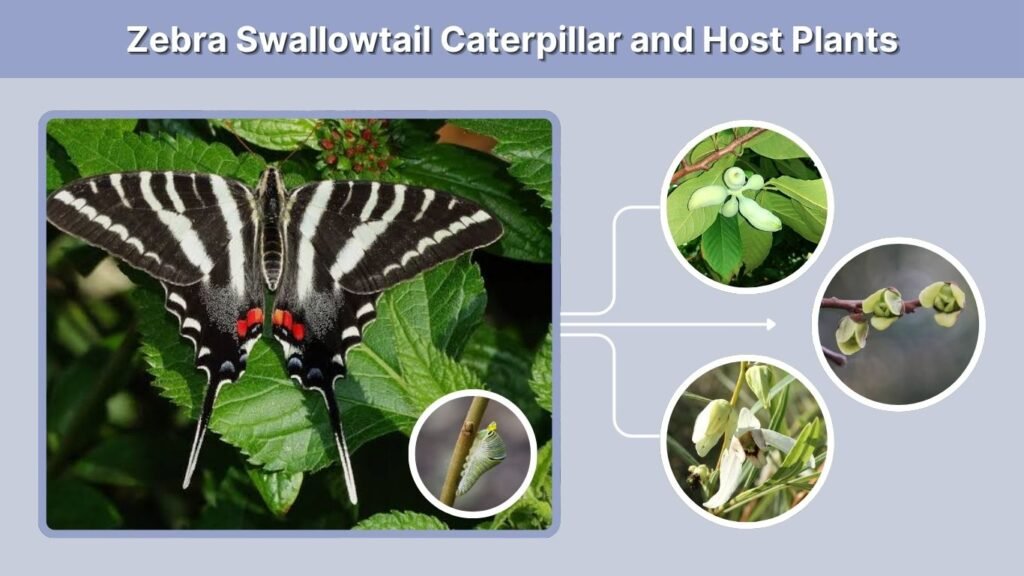
The zebra swallowtail butterfly caterpillar has a specialized relationship with pawpaw plants. Unlike generalist caterpillars that feed on numerous plant families, this species depends primarily on plants belonging to the genus Asimina. Female butterflies carefully select suitable foliage for egg-laying, ensuring newly hatched larvae have access to food. Understanding this relationship is essential for identifying caterpillars and supporting their survival.
What Does a Zebra Swallowtail Caterpillar Look Like?
Young zebra swallowtail caterpillars are often dark with contrasting lighter bands. As they develop, many become green with narrow yellow and pale stripes.
A prominent black, yellow, and bluish band near the front of the body is particularly distinctive. Some mature caterpillars remain dark instead of becoming green.
Like other swallowtail larvae, they possess an osmeterium, a forked defensive organ that releases an unpleasant odor when threatened.
Zebra Swallowtail Butterfly Host Plants
Important host plants include:
- Common pawpaw (Asimina triloba): The primary host throughout most of its range.
- Smallflower pawpaw (Asimina parviflora): An important host in parts of the southeastern United States.
- Slimleaf pawpaw (Asimina angustifolia): Another regional host species.
- Other native pawpaws: Additional Asimina species may support larvae within their natural ranges.
Female butterflies often favor young plants or tender leaves when laying eggs.
Zebra Swallowtail Butterfly Life Cycle
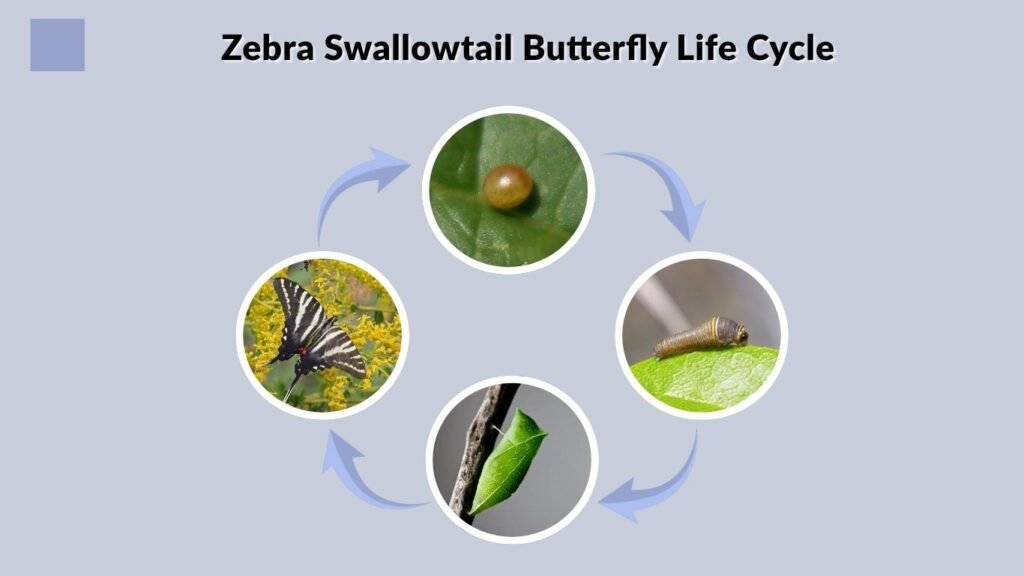
The zebra swallowtail undergoes complete metamorphosis, passing through four developmental stages: egg, larva, pupa, and adult. Development depends on temperature, seasonal conditions, and available food. Multiple generations may occur during warmer months, especially throughout the southern United States. In colder regions, the species survives winter primarily in the pupal stage before emerging as an adult butterfly when favorable conditions return.
Four Stages of the Zebra Swallowtail Life Cycle
- Egg: Females typically lay individual greenish eggs on young pawpaw foliage. Eggs hatch after a development period influenced by temperature.
- Caterpillar: Newly hatched larvae feed on pawpaw leaves and grow through several molts.
- Chrysalis: Mature caterpillars form green or brown pupae, secured to vegetation by silk.
- Adult butterfly: A fully developed butterfly emerges, expands its wings, and eventually begins feeding and reproducing.
How Long Do Zebra Swallowtail Butterflies Live?
Under favorable conditions, development from egg to adult can take approximately one month, although timing varies.
Adult butterflies generally survive for days to a few weeks, depending on weather, predation, and environmental conditions.
The overwintering chrysalis may remain dormant for several months, making the complete seasonal life cycle considerably longer.
Male vs. Female Zebra Swallowtail Butterfly
Male and female zebra swallowtail butterflies share nearly identical black-and-white wing patterns, making visual identification challenging. Unlike some butterfly species with dramatic sexual color differences, zebra swallowtails exhibit relatively subtle differences between sexes. Body shape and behavior provide more useful clues than wing coloration alone. Observing adults near pawpaw plants or damp soil can help distinguish their activities.
Male Zebra Swallowtail Butterfly
Male zebra swallowtails frequently patrol woodland trails and areas near pawpaw trees while searching for females.
They also commonly participate in mud-puddling, gathering on damp sand or soil to absorb moisture and dissolved minerals.
Their active, searching flight behavior can provide an important identification clue, although it is not exclusive to males.
Female Zebra Swallowtail Butterfly
Female zebra swallowtails often have fuller abdomens, particularly when carrying eggs, but body size and wing markings overlap with males.
Females can be observed inspecting young pawpaw leaves before depositing eggs individually.
Watching egg-laying behavior is generally more reliable for identifying females than comparing the black stripes or hindwing colors.
Zebra Swallowtail Butterfly Habitat, Range, and Diet
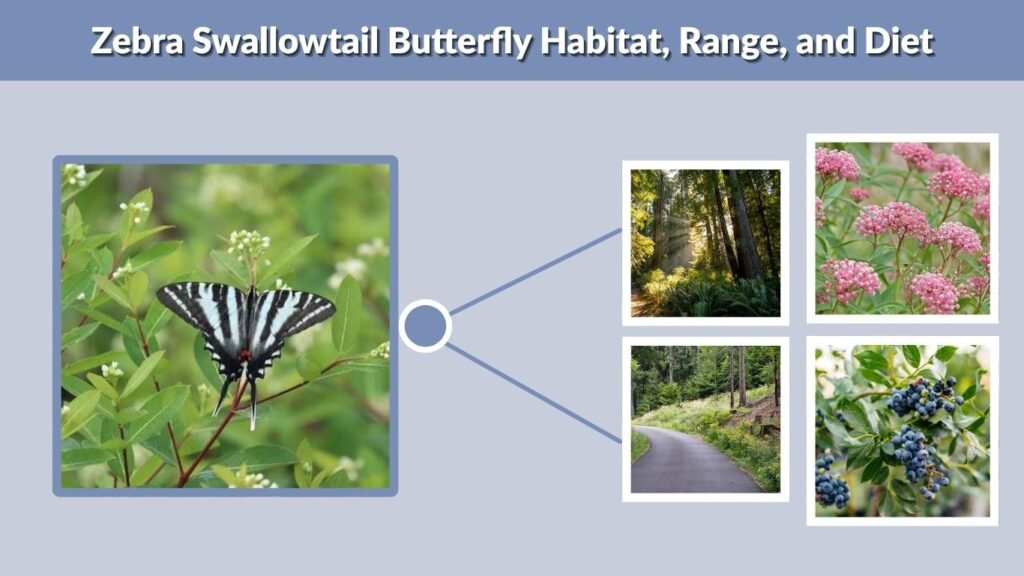
Zebra swallowtail butterflies are closely associated with moist forests where native pawpaw plants naturally occur. Their distribution extends across much of the eastern United States, although abundance varies geographically. Adults may travel into nearby open spaces to obtain nectar and minerals. Understanding their preferred environments, seasonal activity, and feeding habits helps butterfly watchers locate them and recognize their ecological importance.
Where Do Zebra Swallowtail Butterflies Live?
These butterflies inhabit bottomland forests, wooded riverbanks, stream corridors, and moist woodland edges.
They occur in states including Tennessee, Georgia, Florida, Missouri, and many other eastern regions. Occasional individuals reach farther north, where suitable breeding habitat may be limited.
Adults are generally active from spring through summer, with longer flight seasons and additional generations in warmer southern areas.
What Do Zebra Swallowtail Butterflies Eat?
Adult zebra swallowtails feed primarily on flower nectar. Their relatively short proboscis makes flowers with accessible nectar especially useful.
They visit plants such as milkweed, blackberry, blueberry, redbud, and various native wildflowers.
Adults also obtain moisture and minerals from damp soil, particularly along muddy trails and streambanks. Caterpillars, however, depend on pawpaw foliage rather than flower nectar.
How to Attract Zebra Swallowtail Butterflies
Attracting zebra swallowtail butterflies requires more than planting colorful flowers. Their caterpillars depend on suitable pawpaw host plants, while adults need nectar and protected habitats. Gardens that combine native trees, flowering plants, and minimal pesticide use may provide valuable breeding and feeding resources. Creating a supportive environment can encourage visiting butterflies and help protect local populations over time.
Tips for Creating a Zebra Swallowtail Habitat
- Plant native pawpaw trees: Choose Asimina species naturally suited to your region.
- Grow nectar-rich flowers: Include native milkweeds, flowering shrubs, and seasonal wildflowers.
- Protect young pawpaw leaves: Avoid removing caterpillars or destroying their feeding sites.
- Limit pesticide use: Insecticides can harm eggs, caterpillars, and adult butterflies.
- Preserve woodland vegetation: Maintain sheltered areas with native trees and shrubs.
Are Zebra Swallowtail Butterflies Rare?
Zebra swallowtails are not considered globally endangered, but they may be uncommon in places lacking pawpaw plants.
They are more regularly encountered in suitable southeastern habitats and can be rare toward the northern edges of their range.
The butterfly is also Tennessee’s official state butterfly, reflecting its cultural and natural significance.
Some people associate zebra swallowtails with transformation, beauty, and renewal. These are symbolic interpretations rather than scientifically established meanings.
FAQs
Zebra swallowtail butterflies attract considerable interest because of their unusual wing patterns, specialized host plants, and remarkable transformation from caterpillar to adult. People frequently ask whether these butterflies are rare, how to distinguish their sexes, and which plants support their development. The following answers address five common questions about zebra swallowtail identification, behavior, lifespan, and habitat requirements.
1. What Is the Scientific Name of the Zebra Swallowtail Butterfly?
The zebra swallowtail is commonly called Eurytides marcellus. Some scientific classifications use Protographium marcellus or Neographium marcellus for the same species.
2. What Is the Zebra Swallowtail Butterfly Host Plant?
Pawpaw plants belonging to the genus Asimina are its primary hosts. Common pawpaw (Asimina triloba) is especially important throughout much of its range.
3. Are Zebra Swallowtail Butterflies Endangered?
No, the species is not globally classified as endangered. However, local populations may be uncommon where suitable pawpaw habitat is scarce.
4. How Can You Tell a Male From a Female Zebra Swallowtail?
Males frequently patrol near host plants and gather on damp ground. Females inspect pawpaw foliage and lay eggs. Their wing patterns are too similar for consistently reliable visual identification.
5. Where Do Zebra Swallowtail Butterflies Lay Their Eggs?
Females typically deposit individual eggs on young pawpaw leaves or other suitable parts of their host plants. The caterpillars begin feeding after hatching.
