
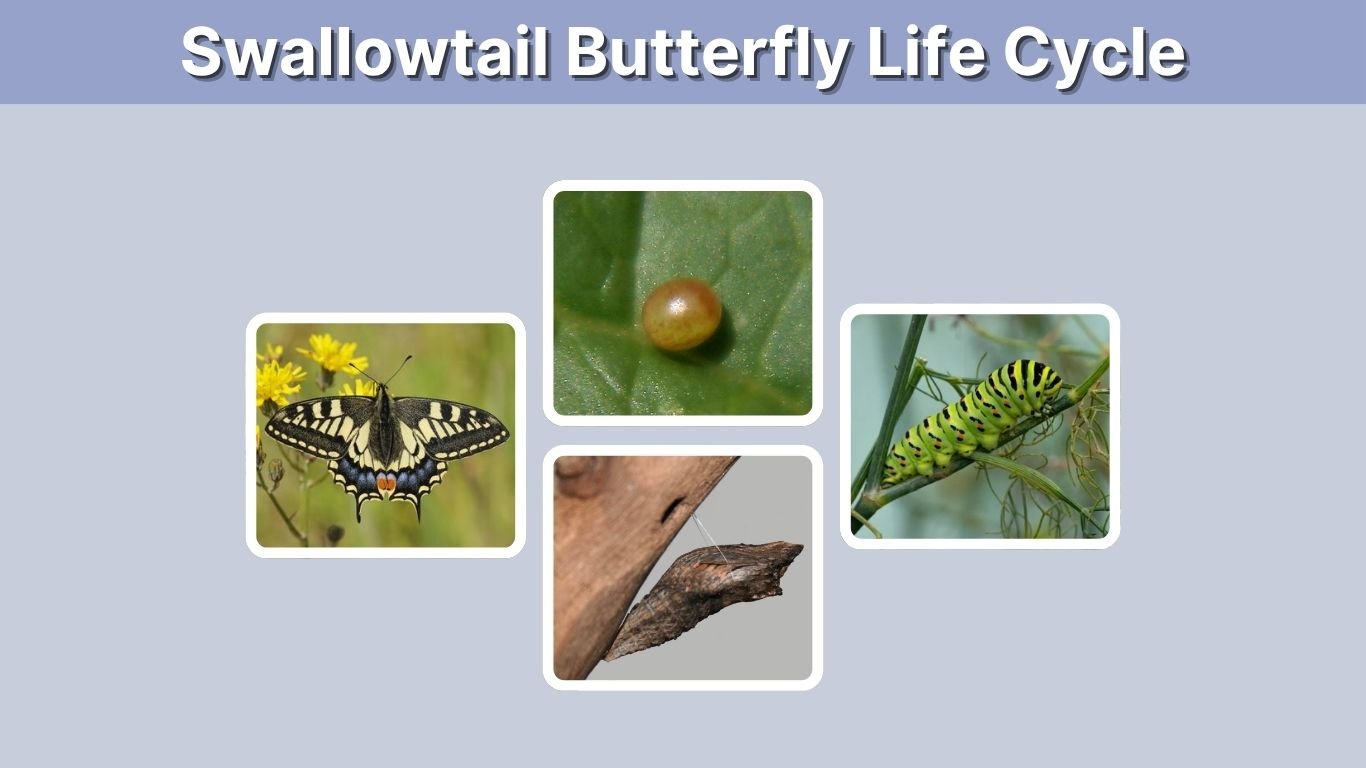
The swallowtail butterfly life cycle is a fascinating example of complete metamorphosis, transforming a tiny egg into a colorful adult butterfly. Like other butterflies, swallowtails develop through four distinct stages: egg, caterpillar, chrysalis, and adult. The length of each stage varies depending on the species, temperature, food availability, and environmental conditions. From black swallowtails to giant and tiger swallowtails, these beautiful insects follow similar developmental patterns. This guide explains each stage, the typical life cycle timeline, lifespan, host plants, and how swallowtail butterflies survive different seasons.
What Are the Four Stages of the Swallowtail Butterfly Life Cycle?
Swallowtail butterflies belong to the family Papilionidae and undergo complete metamorphosis. Their development involves four separate stages, each with a specific biological purpose. The egg protects the developing embryo, the caterpillar grows by consuming plant material, the chrysalis supports transformation, and the adult reproduces. Although their colors, sizes, and host plants differ, swallowtail species share this basic developmental process.
The Four Main Life Cycle Stages
- Egg Stage: A female butterfly lays eggs on suitable host plants, usually individually.
- Caterpillar Stage: The larva hatches and feeds on plant leaves while growing through several instars.
- Chrysalis Stage: The mature caterpillar becomes a pupa and undergoes extensive internal transformation.
- Adult Butterfly Stage: The butterfly emerges, develops functional wings, feeds, mates, and reproduces.
Why Is Complete Metamorphosis Important?
Complete metamorphosis allows caterpillars and adult butterflies to occupy different ecological roles.
Caterpillars primarily consume plant foliage, while adults generally feed on nectar. This separation reduces direct competition for food between immature and mature butterflies.
It also allows each developmental stage to specialize in growth, protection, or reproduction.
Swallowtail Butterfly Life Cycle Timeline
The time required for a swallowtail butterfly to develop varies considerably among species. Warm temperatures generally accelerate development, while cooler weather slows growth. Host plant quality and seasonal changes can also influence development. Under favorable conditions, many swallowtails complete their immature stages within several weeks. However, individuals entering winter dormancy may remain inside their chrysalises for months.
How Long Does Each Stage Last?
The following timeline is based mainly on the black swallowtail and provides a useful example rather than a universal schedule.
- Egg: Approximately 4–9 days before hatching.
- Caterpillar: Around 10–30 days of feeding and growth.
- Chrysalis: Approximately 9–18 days during active development.
- Adult: Commonly several days to a few weeks, depending on species and conditions.
How Long Is the Complete Life Cycle?
A black swallowtail may develop from egg to adult in approximately three to eight weeks during favorable weather.
This period excludes the adult’s remaining lifespan. It also does not apply to individuals that enter diapause, a dormant developmental state.
Swallowtails that overwinter as pupae may take several additional months before emerging.
Life Cycle of Different Swallowtail Butterfly Species
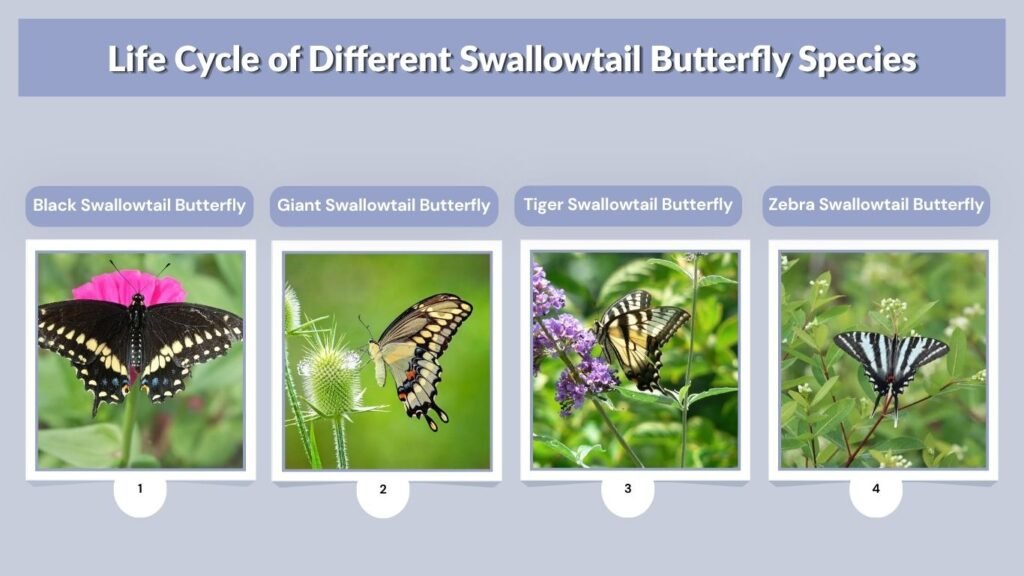
Although swallowtail butterflies share four developmental stages, their appearance, preferred host plants, and seasonal behavior differ. Some species produce multiple generations annually, while others have fewer generations in cooler regions. Understanding these differences helps identify caterpillars and recognize how different swallowtails develop. The black, giant, tiger, zebra, and spicebush swallowtails provide useful examples of this diversity.
Black Swallowtail Butterfly Life Cycle
The black swallowtail (Papilio polyxenes) commonly lays eggs on plants in the carrot family, including dill, parsley, and fennel.
Young caterpillars are dark with pale markings. Mature larvae develop green bodies with black bands and yellow spots.
They eventually form green or brown chrysalises. In colder climates, the species commonly overwinters in the pupal stage.
Giant Swallowtail Butterfly Life Cycle
The giant swallowtail (Papilio cresphontes) lays eggs on plants in the citrus family.
Its caterpillars, commonly called orangedogs, resemble bird droppings. This appearance helps conceal them from some predators.
After completing their larval development, they form brownish chrysalises that resemble small pieces of bark or twigs.
Tiger Swallowtail Butterfly Life Cycle
The eastern tiger swallowtail (Papilio glaucus) uses trees such as tulip trees, wild black cherry, and sweetbay magnolia as host plants.
Young larvae resemble bird droppings, while older caterpillars become green with large false eyespots.
The species survives winter as a chrysalis in colder parts of its range.
Zebra Swallowtail Butterfly Life Cycle
The zebra swallowtail (Protographium marcellus) depends on pawpaw plants for caterpillar development.
Its larvae have distinctive colored bands, while the adults display black-and-white striped wings and exceptionally long tails.
This species may produce several generations in warm climates, while some pupae remain dormant through winter.
Spicebush Swallowtail Butterfly Life Cycle
The spicebush swallowtail (Papilio troilus) primarily uses spicebush and sassafras as larval host plants.
Its caterpillars develop conspicuous false eyespots and often construct shelters by folding leaves with silk.
The species generally overwinters as a chrysalis in temperate regions.
How Does a Swallowtail Caterpillar Become a Butterfly?
The transformation from caterpillar to butterfly is one of the most remarkable parts of the swallowtail life cycle. During the larval stage, the insect accumulates nutrients necessary for development. When fully grown, it stops feeding and searches for a suitable place to pupate. Inside the chrysalis, extensive tissue remodeling produces the specialized structures of the adult butterfly.
Caterpillar Growth and Molting
Swallowtail caterpillars typically pass through five larval instars, shedding their outer skin as they grow.
Their appearance often changes dramatically between early and late instars.
Many swallowtail caterpillars possess an osmeterium, a retractable fork-shaped defensive organ that releases an unpleasant odor when threatened.
Chrysalis Formation and Adult Emergence
A mature caterpillar generally attaches itself to a stable surface using a silk pad and supporting silk girdle.
After pupation, internal tissues reorganize into adult structures, including wings and reproductive organs.
When development is complete, the butterfly emerges with soft, folded wings. It pumps fluid into the wing veins and waits until the wings become firm enough for flight.
Swallowtail Butterfly Host Plants and Food Sources
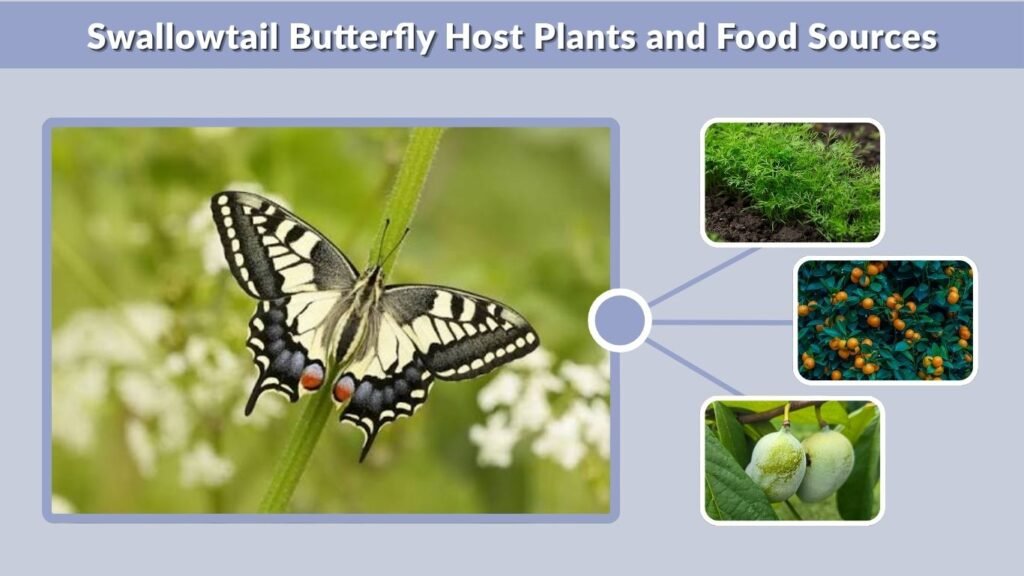
Host plants are essential to the swallowtail butterfly life cycle because newly hatched caterpillars depend on suitable leaves for survival. Different swallowtail species use different plant families, making plant identification important for understanding their development. Adult butterflies have different dietary requirements, typically obtaining energy from flower nectar. Providing appropriate plants helps support both reproduction and healthy caterpillar growth.
Common Swallowtail Caterpillar Host Plants
- Black swallowtail: Parsley, dill, fennel, and other carrot-family plants.
- Giant swallowtail: Citrus, hoptree, and prickly ash.
- Eastern tiger swallowtail: Tulip tree, black cherry, and sweetbay magnolia.
- Zebra swallowtail: Pawpaw species.
- Spicebush swallowtail: Spicebush and sassafras.
- Pipevine swallowtail: Suitable native pipevine species.
What Do Adult Swallowtail Butterflies Eat?
Adult swallowtails primarily feed on nectar from flowering plants.
Depending on the species, they may visit milkweed, thistles, coneflowers, and other nectar-producing flowers.
Some adults, especially males, also gather on damp soil to absorb moisture and dissolved minerals through a behavior called mud-puddling.
Swallowtail Butterfly Lifespan and Winter Survival
Swallowtail butterfly lifespan depends on the species, climate, and developmental conditions. Adults usually live much shorter lives than the entire egg-to-adult development period might suggest. In temperate regions, many swallowtails survive unfavorable seasons through a dormant pupal stage. This adaptation allows them to avoid periods when temperatures are low and suitable host plants are unavailable.
How Long Do Swallowtail Butterflies Live?
Many adult swallowtails live approximately one to three weeks, although individual lifespans vary.
Predation, weather conditions, food availability, and physical damage influence survival.
The complete lifespan may extend much longer when the egg, caterpillar, pupal, and adult stages are considered together.
How Do Swallowtail Butterflies Survive Winter?
Many temperate swallowtails enter diapause as pupae.
During dormancy, development slows dramatically until environmental conditions become suitable.
Changes in daylight and temperature help regulate seasonal development. When spring arrives, the surviving pupae complete development and emerge as adult butterflies.
How to Support the Swallowtail Butterfly Life Cycle
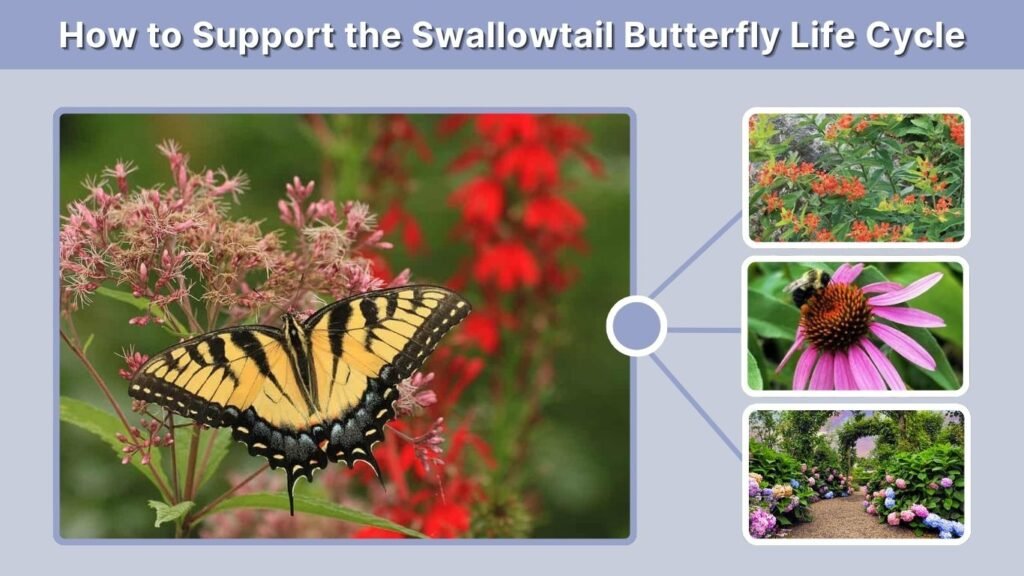
Creating a butterfly-friendly garden can provide valuable habitat throughout the swallowtail life cycle. Adult butterflies need nectar sources, while caterpillars require suitable host plants. Sheltered vegetation also supports pupation and overwintering. Gardeners can encourage swallowtails by growing appropriate native plants and reducing activities that destroy eggs, caterpillars, or chrysalises during their development.
Tips for Supporting Swallowtail Development
- Grow suitable host plants: Select plants used by swallowtail species native to your area.
- Provide nectar flowers: Include flowering plants that bloom throughout the growing season.
- Avoid unnecessary insecticides: Chemicals may harm eggs, caterpillars, and adult butterflies.
- Protect chrysalises: Avoid disturbing vegetation where pupae may be attached.
- Preserve natural habitat: Maintain native shrubs, trees, and sheltered garden areas.
Why Are Swallowtail Butterflies Important?
Adult swallowtails contribute to pollination when visiting flowers.
Their caterpillars and adults also serve as food for birds and other wildlife, making them part of complex ecological food webs.
Protecting swallowtail habitats supports native plant communities and broader insect biodiversity.
FAQs
The swallowtail butterfly life cycle raises many questions about how quickly caterpillars grow, how long chrysalises remain dormant, and when adults emerge. Because developmental timing differs between species and climates, no single schedule applies to every swallowtail. These frequently asked questions explain important details about metamorphosis, lifespan, caterpillar development, and seasonal survival.
1. What Are the Four Stages of a Swallowtail Butterfly?
The four stages are egg, caterpillar (larva), chrysalis (pupa), and adult butterfly. This process is called complete metamorphosis.
2. How Long Does a Swallowtail Butterfly Stay in a Chrysalis?
An actively developing black swallowtail generally spends about 9–18 days as a chrysalis. Overwintering pupae can remain dormant for several months.
3. How Long Does a Swallowtail Caterpillar Live?
Black swallowtail caterpillars typically spend approximately 10–30 days in the larval stage. Other species have different developmental periods.
4. Do Swallowtail Butterflies Survive Winter?
Yes. Many temperate swallowtail species survive winter as dormant pupae, emerging when favorable conditions return.
5. How Long Does a Swallowtail Butterfly Live After Emerging?
Many adult swallowtails survive about one to three weeks, although lifespan varies depending on species, temperature, food availability, and environmental conditions.
