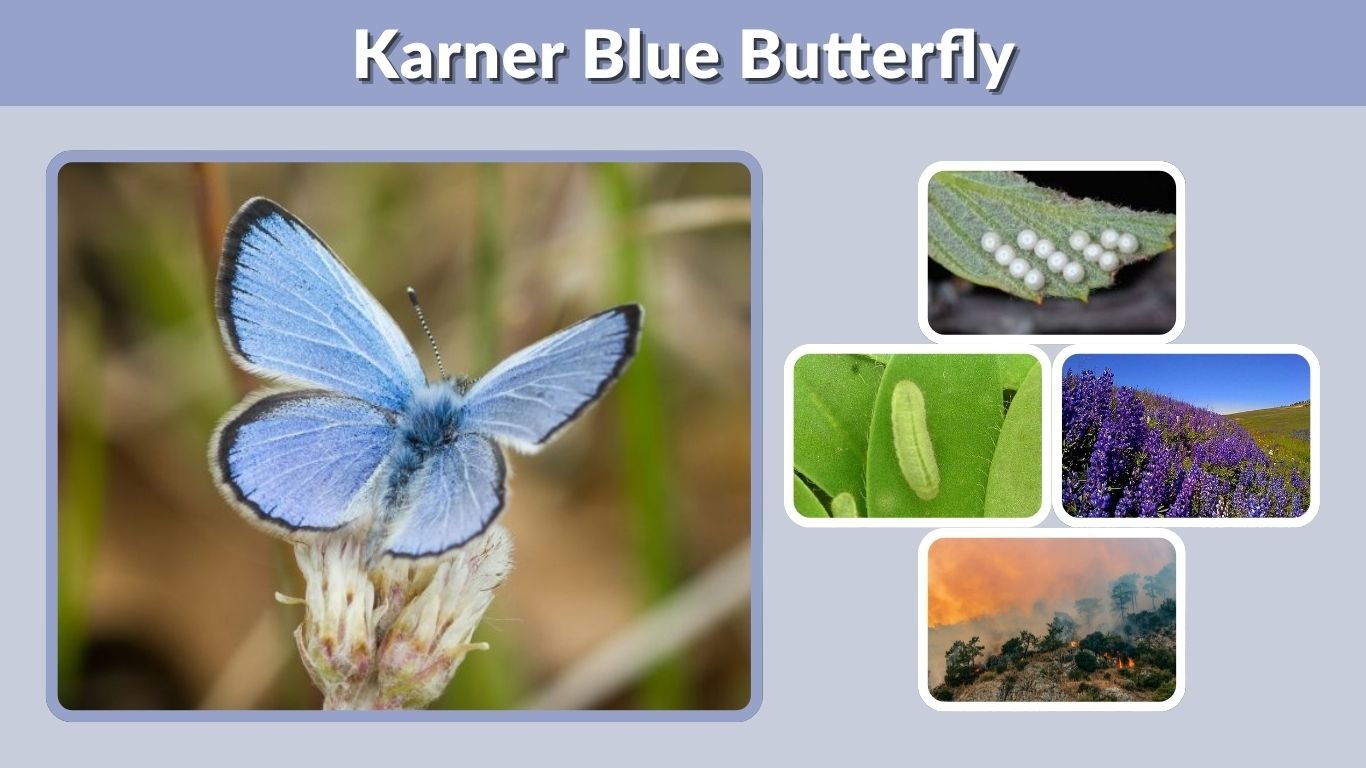
The Karner Blue Butterfly is a small, endangered butterfly recognized for its beautiful blue wings and close relationship with wild lupine plants. Native to parts of the northern United States, this rare butterfly inhabits sandy grasslands, oak savannas, and pine barrens. Its scientific name is Lycaeides melissa samuelis, and it is especially important in wildlife conservation because its caterpillars depend on a single host plant. Understanding its identification, habitat, life cycle, food sources, and endangered status helps explain why protecting this butterfly is essential.
What Is a Karner Blue Butterfly?
The Karner Blue Butterfly is a small subspecies of the Melissa blue butterfly belonging to the Lycaenidae family.
It was described by the famous novelist and butterfly researcher Vladimir Nabokov in 1944. Its name comes from Karner, a locality near Albany, New York.
The butterfly is best known for its striking blue coloration and specialized dependence on wild blue lupine.
Unlike widespread butterfly species that can survive in many environments, the Karner Blue requires particular habitats and breeding conditions.
It was federally listed as endangered in the United States in 1992 and remains the focus of several conservation and habitat restoration programs.
Karner Blue Butterfly Identification
The Karner Blue Butterfly can be identified by its small size, delicate wings, and distinctive color patterns.
Physical Characteristics
- Scientific Name: Lycaeides melissa samuelis
- Family: Lycaenidae
- Wingspan: Approximately 1 inch (2.5 cm).
- Male Wing Color: Bright silvery-blue with thin black borders.
- Female Wing Color: Bluish-brown with orange crescent markings.
- Wing Undersides: Gray with black spots surrounded by white and orange markings near the edges.
- Body: Small, slender, and covered with fine scales.
- Antennae: Thin with slightly clubbed tips.
The butterfly’s appearance can vary depending on sex, lighting, and individual characteristics.
Karner Blue Butterfly Male vs. Female
Male and female Karner Blue Butterflies look noticeably different when their wings are open.
Male Karner Blue Butterfly
Males have bright, silvery-blue upper wings with narrow black margins. Their vivid coloration makes them particularly noticeable in sunlight.
Female Karner Blue Butterfly
Females are generally brown or grayish-brown with blue coloring toward the wing bases. They have distinctive orange crescent-shaped markings along the hindwing edges.
Both sexes have similar grayish undersides decorated with black spots and orange crescents.
Where Do Karner Blue Butterflies Live?
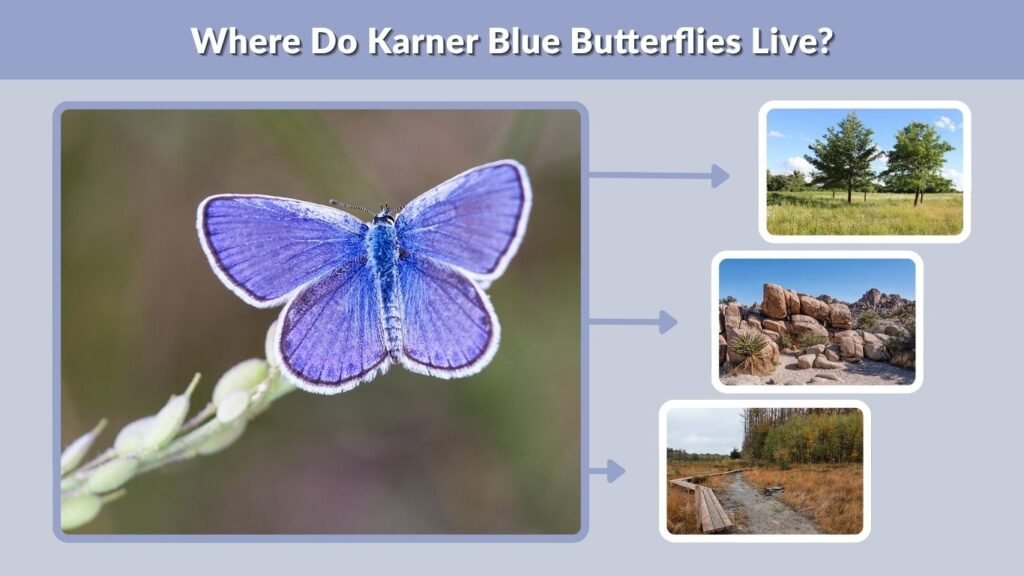
Karner Blue Butterflies inhabit open environments containing wild blue lupine and suitable nectar-producing plants.
Their survival depends on sunny habitats with relatively sparse tree cover and well-drained soils.
Common habitats include:
- Oak Savannas: Open woodlands with scattered oak trees and grassy vegetation.
- Pine Barrens: Sandy environments containing pine trees and native wildflowers.
- Sand Prairies: Open grasslands with dry, sandy soil.
- Forest Openings: Sunny areas supporting wild lupine.
- Managed Rights-of-Way: Some roadside and utility corridors provide suitable habitat.
Excessive tree and shrub growth can reduce sunlight reaching lupine plants, eventually making these areas unsuitable for butterfly reproduction.
Karner Blue Butterfly Range
Historically, Karner Blue Butterflies inhabited a much larger area extending from Minnesota through the Great Lakes region to parts of the northeastern United States and Ontario, Canada.
Today, their distribution is considerably smaller.
According to the U.S. Fish and Wildlife Service, remaining populations occur in portions of:
- Wisconsin: Supports the largest remaining populations.
- Michigan: Contains important populations in suitable savanna and barrens habitats.
- New York: Includes protected populations in the Albany Pine Bush region.
- New Hampshire: Supports populations through ongoing reintroduction and conservation efforts.
- Ohio: Contains populations maintained through conservation programs.
The butterfly has disappeared from several parts of its former range, including Ontario.
Karner Blue Butterfly in Wisconsin
Wisconsin is especially important for Karner Blue conservation because it supports the largest remaining population concentrations.
The state’s sandy barrens, prairies, and oak savannas provide suitable conditions for wild lupine.
Wisconsin also operates a Habitat Conservation Plan that combines butterfly protection with carefully managed land-use activities.
Karner Blue Butterfly Caterpillar Identification
Karner Blue caterpillars are small, pale-green larvae that blend into the leaves of their host plants.
Unlike brightly patterned caterpillars, they rely heavily on camouflage.
Caterpillar Characteristics
- Color: Light green to yellowish-green.
- Body Shape: Short, somewhat flattened, and slug-like.
- Texture: Covered with fine hairs.
- Markings: Subtle darker green lines may appear along the body.
- Host Plant: Wild blue lupine.
- Behavior: Frequently associated with ants that help protect them.
Relationship Between Caterpillars and Ants
One remarkable characteristic of Karner Blue caterpillars is their relationship with certain ant species.
The caterpillars secrete a sugary substance that attracts ants.
In exchange, some ants protect the larvae from predators and parasitic insects.
This mutually beneficial interaction is known as mutualism and can increase caterpillar survival.
What Do Karner Blue Butterflies Eat?
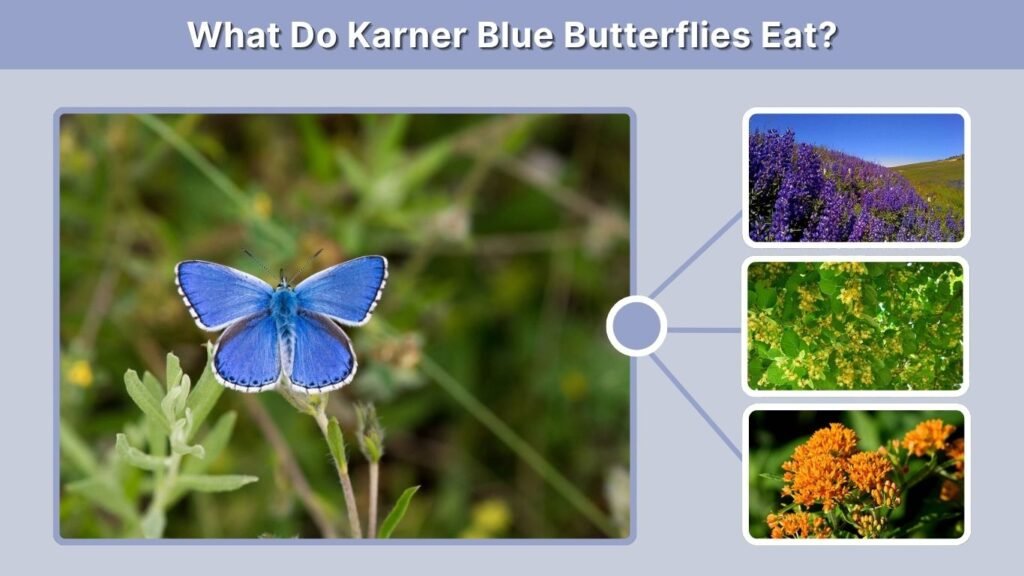
Karner Blue Butterflies have different food requirements during their caterpillar and adult stages.
Karner Blue Butterfly Host Plant
The only established natural host plant for Karner Blue caterpillars is wild blue lupine (Lupinus perennis).
Females lay eggs on or near these plants, ensuring newly hatched caterpillars can find suitable food.
The larvae feed mainly on lupine leaves, making the plant essential for successful reproduction.
Without wild blue lupine, the butterfly cannot complete its natural life cycle.
Adult Butterfly Food
Adult Karner Blue Butterflies consume nectar from various flowering plants.
Common nectar sources include:
- Wild blue lupine
- New Jersey tea
- Butterfly milkweed
- Goldenrods
- Other native flowering plants
Nectar provides energy for flight, mating, and egg production.
Karner Blue Butterfly Life Cycle
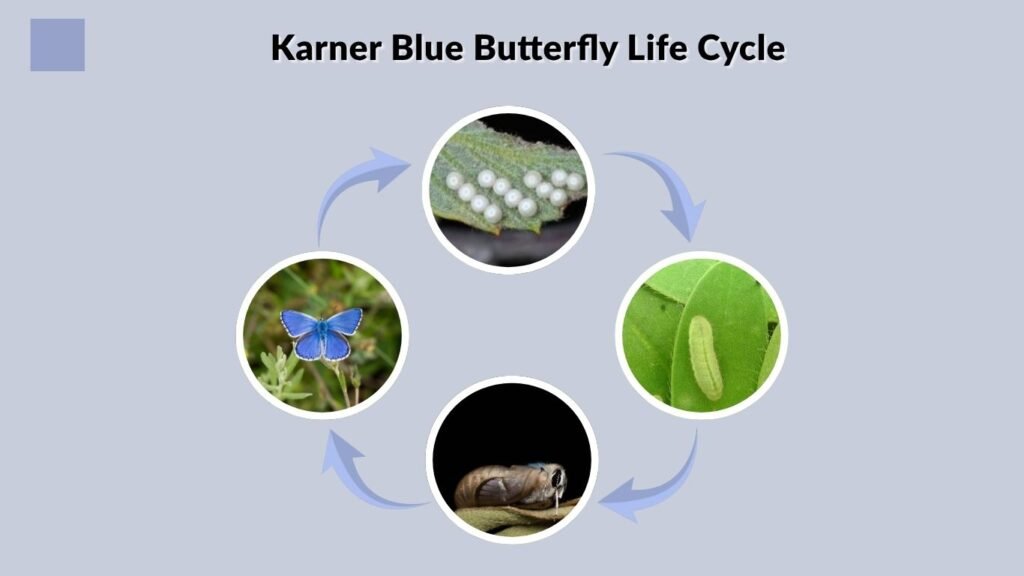
The Karner Blue Butterfly undergoes complete metamorphosis through four developmental stages: egg, larva, pupa, and adult.
It generally produces two generations each year.
1. Egg Stage
Female butterflies deposit tiny eggs on or near wild lupine plants.
Eggs laid by the summer generation survive the winter and hatch the following spring.
Eggs from the spring generation usually hatch after approximately one week.
2. Caterpillar Stage
Newly hatched caterpillars begin feeding on wild lupine.
They undergo several molts while gradually increasing in size.
The larval stage generally lasts around three weeks, although temperature and other environmental conditions influence development.
3. Chrysalis Stage
Once fully developed, the caterpillar transforms into a chrysalis.
Inside the chrysalis, its body undergoes major changes as adult structures develop.
4. Adult Butterfly Stage
Adults from the first generation usually emerge around late May or early June.
The second generation generally appears in July, although timing varies by region.
These adults reproduce and lay eggs that overwinter until the following spring.
Why Is the Karner Blue Butterfly Endangered?
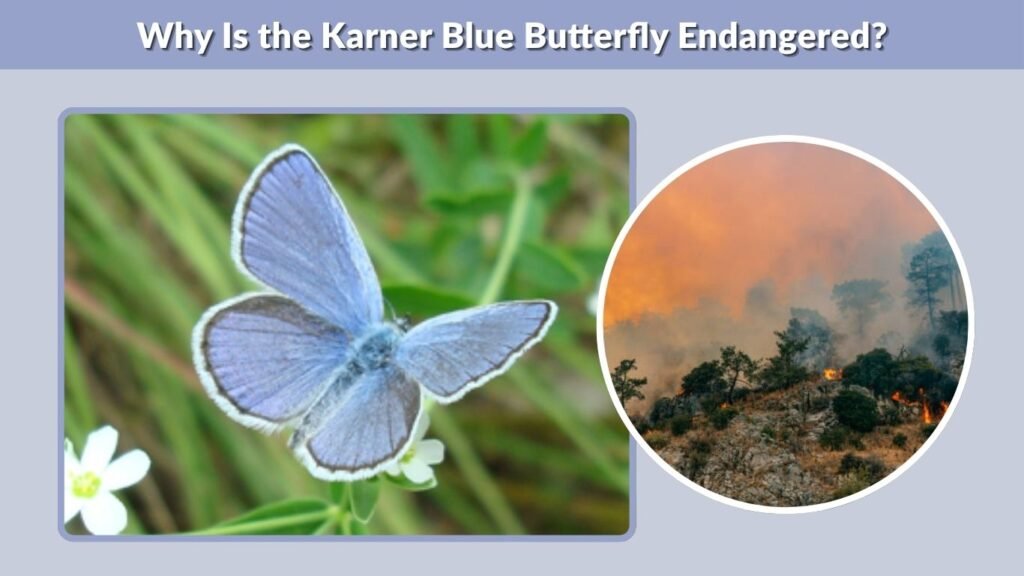
The Karner Blue Butterfly is endangered mainly because of habitat destruction, fragmentation, and environmental changes.
Its specialized dependence on wild lupine makes it particularly vulnerable.
Major Threats
- Habitat Loss: Urban development and agriculture have destroyed suitable breeding areas.
- Habitat Fragmentation: Isolated populations have difficulty maintaining connections with other colonies.
- Fire Suppression: Without periodic disturbance, shrubs and trees can replace open lupine habitats.
- Climate Change: Rising temperatures and changing weather patterns threaten remaining populations.
- Invasive Plants: Non-native vegetation can compete with wild lupine and nectar sources.
How Many Karner Blue Butterflies Are Left?
There is no single reliable current worldwide population count.
Population sizes fluctuate between generations and years, while surveys cover different locations and use different counting methods.
Wisconsin contains the largest remaining populations, but conservation agencies continue monitoring the butterfly across its surviving range.
Although restoration efforts have improved conditions in some locations, the species remains federally endangered.
How to Protect Karner Blue Butterflies
Protecting Karner Blue Butterflies requires maintaining suitable habitats and conserving native wild lupine.
Wildlife agencies and conservation organizations use several approaches.
These include restoring sandy grasslands, removing invasive vegetation, planting locally appropriate wild lupine, and maintaining native nectar-producing flowers.
Carefully planned prescribed burns and vegetation management can prevent open habitats from becoming overcrowded with shrubs and trees.
Conservationists also monitor butterfly populations and restore connections between isolated habitats.
Because the species is federally protected, habitat management and any handling of butterflies should follow applicable conservation regulations.
Interesting Karner Blue Butterfly Facts
The Karner Blue has several distinctive biological characteristics.
- It was named by Vladimir Nabokov in 1944.
- It belongs to the same butterfly family as many other small blue butterflies.
- Its caterpillars depend exclusively on wild blue lupine.
- Males and females have noticeably different wing colors.
- Some caterpillars exchange sugary secretions for protection from ants.
- It typically produces two generations each year.
- It is nonmigratory and generally remains near suitable breeding habitat.
These characteristics make the Karner Blue an important species for understanding habitat specialization, butterfly ecology, and endangered wildlife conservation.
FAQs
1. Is the Karner Blue Butterfly Extinct?
No. The Karner Blue Butterfly is not extinct. It survives in portions of five U.S. states, although many historical populations have disappeared. It remains federally endangered.
2. What Is the Scientific Name of the Karner Blue Butterfly?
Its scientific name is Lycaeides melissa samuelis. It is generally classified as a subspecies of the Melissa blue butterfly.
3. Why Is Wild Lupine Important to Karner Blue Butterflies?
Wild blue lupine is the only established natural food plant for Karner Blue caterpillars. Without it, larvae cannot survive and develop into adult butterflies.
4. How Long Does a Karner Blue Butterfly Live?
Adults generally live for only several days, although longevity varies with environmental conditions. The species completes two generations annually, with eggs from the second generation surviving through winter.
5. Do Karner Blue Butterflies Migrate?
No. Karner Blue Butterflies are not long-distance migratory butterflies. They generally remain near suitable habitat containing wild blue lupine and nectar-producing plants.