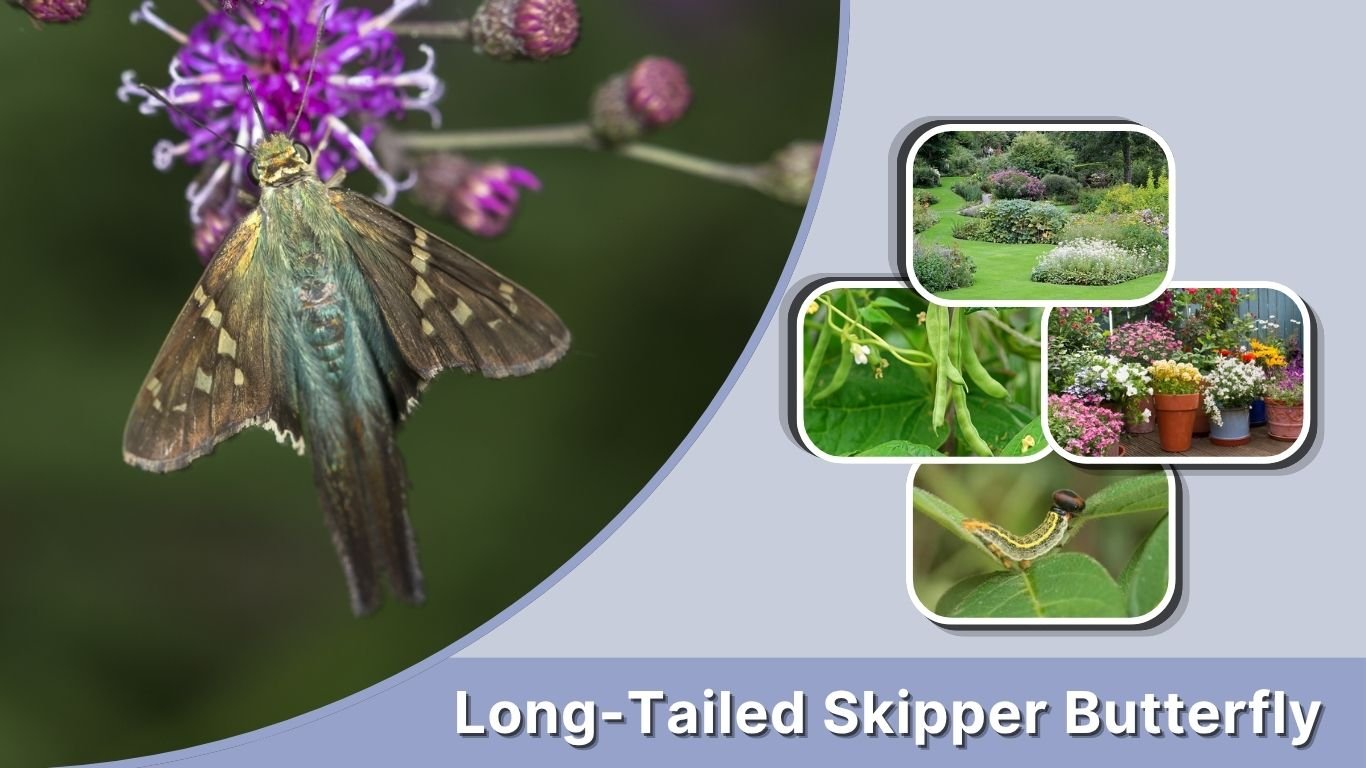
The Long-Tailed Skipper Butterfly is a fascinating insect recognized by its unusually long hindwing tails, dark brown wings, and beautiful blue-green iridescent markings. Scientifically known as Urbanus proteus, this butterfly is commonly found in warm regions of North, Central, and South America. Unlike many other butterflies, it has a distinctive, quick flight pattern and an unusual caterpillar that rolls leaves for protection. Learning about its physical appearance, habitat, food sources, caterpillar, and life cycle can help nature enthusiasts identify this remarkable butterfly.
What Is a Long-Tailed Skipper Butterfly?
The Long-Tailed Skipper (Urbanus proteus) is a butterfly belonging to the Hesperiidae family, commonly known as skippers.
It is also called the bean leafroller because its caterpillar folds and rolls leaves to construct protective shelters.
The species is widespread in tropical and subtropical parts of the Americas. Its adult form is particularly recognizable for its metallic blue-green coloration and extended hindwing tails.
Long-tailed skippers are active during daylight hours and frequently visit flowers for nectar. They are commonly observed in gardens, open fields, woodland edges, and disturbed habitats.
Although their bodies resemble moths in some ways, long-tailed skippers are true butterflies.
Long-Tailed Skipper Butterfly Identification
Identifying a Long-Tailed Skipper Butterfly is relatively straightforward when its distinctive wing shape and coloration are visible.
Physical Appearance
- Scientific Name: Urbanus proteus
- Family: Hesperiidae
- Wingspan: Approximately 1.75–2.35 inches (4.5–6 cm).
- Wing Color: Dark chocolate brown with lighter, translucent spots.
- Body Color: Dark brown with metallic blue-green iridescence.
- Hindwing Tails: Two long, narrow extensions projecting from the hindwings.
- Antennae: Slender antennae with characteristic hooked tips.
- Flight Behavior: Fast, darting movements with occasional short glides.
Why Does the Long-Tailed Skipper Have Blue-Green Wings?
The striking blue-green appearance results from iridescent scales on the butterfly’s body and wing bases.
These scales interact with light, producing a metallic appearance that changes depending on the viewing angle.
Under direct sunlight, the blue-green markings can appear especially vibrant.
However, the butterfly’s wings remain predominantly brown, making the metallic areas particularly noticeable.
Where Do Long-Tailed Skipper Butterflies Live?
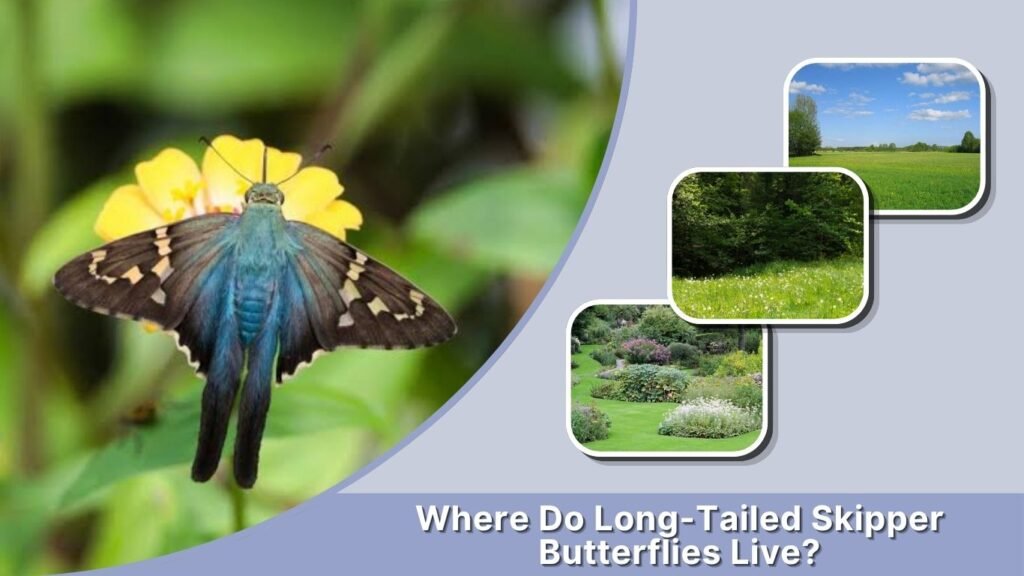
Long-tailed skippers inhabit warm environments across much of the Americas, from South America through Central America and Mexico into the United States.
In the United States, they are especially common in Florida and parts of the southern coastal regions.
Their preferred habitats include:
- Gardens and Parks: Provide nectar-rich flowers and host plants.
- Woodland Edges: Offer sunlight, shelter, and suitable vegetation.
- Open Fields: Support flowering plants used by adults.
- Roadsides: Provide accessible nectar sources and breeding vegetation.
- Agricultural Areas: Bean plants and other legumes support caterpillar development.
Long-Tailed Skipper Butterflies in Texas
Long-tailed skippers occur in Texas, particularly in warmer southern and eastern regions.
They are frequently seen visiting flowers in gardens and natural areas. Caterpillars may also appear on cultivated beans and other legumes.
Are Long-Tailed Skipper Butterflies Found in Oklahoma and Wisconsin?
Long-tailed skippers can reach Oklahoma as seasonal visitors, particularly during warmer months when suitable conditions allow northward movement.
Wisconsin is well outside their usual breeding range. Sightings there would be exceptional rather than typical, and suspected individuals should be carefully identified.
Because this butterfly cannot tolerate prolonged freezing temperatures, it generally does not establish permanent populations in colder northern regions.
What Do Long-Tailed Skipper Butterflies Eat?
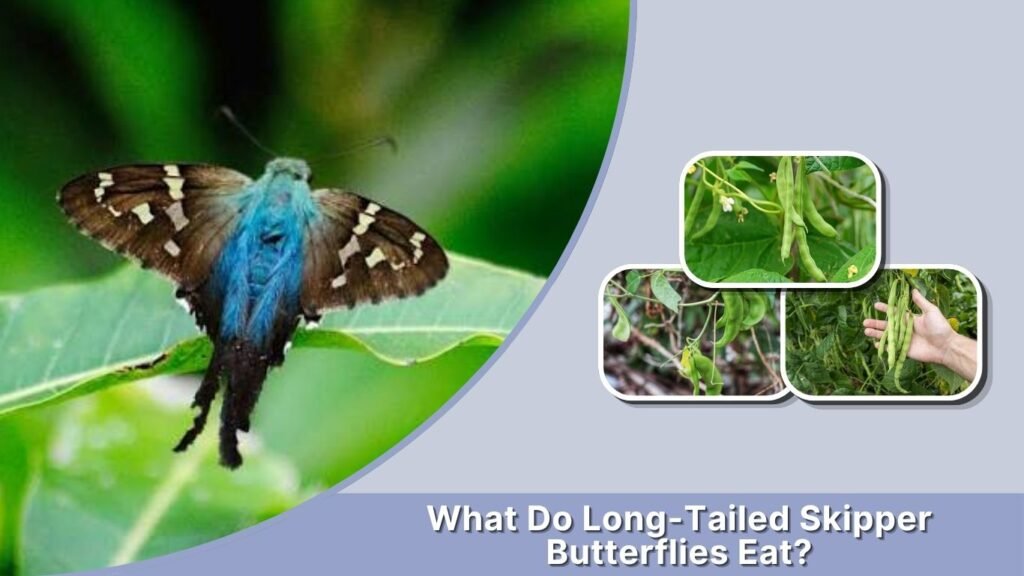
Adult long-tailed skippers primarily feed on flower nectar, which provides the carbohydrates needed for flight and daily activity.
They visit various flowering plants throughout gardens and natural habitats.
Common nectar sources include lantana, bougainvillea, shepherd’s needle, and other nectar-rich flowers.
Using their long proboscis, adults extract nectar from blossoms while occasionally transferring pollen between flowers.
Long-Tailed Skipper Butterfly Host Plants
Long-tailed skipper caterpillars mainly feed on plants belonging to the pea family, Fabaceae.
Common host plants include:
- Snap Beans: Frequently used by developing caterpillars.
- Lima Beans: Provide suitable foliage for larvae.
- Cowpeas: Another cultivated host plant.
- Soybeans: Occasionally support caterpillar development.
- American Wisteria: A recognized natural host plant.
- Butterfly Pea: Used by larvae in suitable habitats.
- Ticktrefoils: Important wild host plants.
- Hog Peanut: Another documented legume host.
These plants provide the nutrients caterpillars need before transforming into adult butterflies.
Long-Tailed Skipper Butterfly Caterpillar Identification
The long-tailed skipper caterpillar has a distinctive appearance that makes it different from many ordinary garden caterpillars.
It is commonly known as the bean leafroller because of its habit of constructing shelters from folded leaves.
Caterpillar Physical Characteristics
- Body Color: Yellowish-green with small dark spots.
- Head: Large, rounded, and dark reddish-brown or black.
- Body Markings: Yellow lines and darker markings along the body.
- Body Shape: Soft, elongated, and slightly tapered.
- Shelter: Folded or rolled leaves held together with silk.
Young caterpillars are generally pale-colored with disproportionately large, dark heads.
As they mature, their yellow stripes and other body markings become increasingly noticeable.
The caterpillars usually hide inside their leaf shelters when they are not feeding.
Why Do Long-Tailed Skipper Caterpillars Roll Leaves?
Leaf rolling is an important defensive behavior.
The caterpillar cuts or folds part of a leaf and secures the edges with silk, creating a small protective chamber.
This shelter helps conceal the larva from predators and protects it from some environmental disturbances.
As the caterpillar grows, it often constructs larger shelters using additional leaf material.
Because caterpillars feed on cultivated beans, heavy infestations may sometimes cause noticeable foliage damage.
Long-Tailed Skipper Butterfly Life Cycle
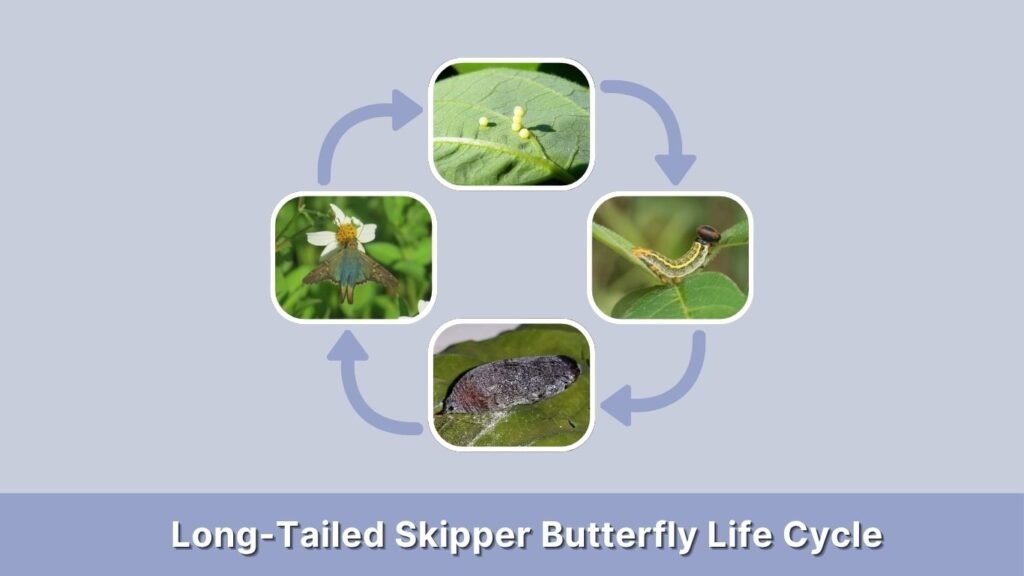
The Long-Tailed Skipper Butterfly undergoes complete metamorphosis, passing through four developmental stages: egg, caterpillar, pupa, and adult.
1. Egg Stage
Female butterflies deposit small eggs on the undersides of suitable host plant leaves.
The eggs are initially whitish and gradually become yellowish.
Under favorable conditions, they generally hatch within three to four days.
2. Caterpillar Stage
After hatching, the young caterpillar begins feeding on its host plant.
It develops through five larval stages, known as instars, shedding its skin between each stage.
The caterpillar stage typically lasts approximately 15–20 days, depending on temperature and environmental conditions.
3. Chrysalis Stage
When fully grown, the caterpillar transforms into a pupa within a leaf shelter.
The chrysalis is generally yellowish-brown to brown and may have a pale, waxy coating.
This developmental stage commonly lasts seven to twenty days.
4. Adult Butterfly Stage
After metamorphosis, the adult butterfly emerges from its chrysalis.
Its wings gradually expand and harden before flight becomes possible.
Under favorable conditions, the entire life cycle can be completed in approximately one month.
Long-Tailed Skipper vs. Long-Tailed Blue Butterfly
Despite their similar common names, the long-tailed skipper and long-tailed blue are different butterfly species.
| Feature | Long-Tailed Skipper | Long-Tailed Blue |
| Scientific name | Urbanus proteus | Lampides boeticus |
| Family | Hesperiidae | Lycaenidae |
| Wing color | Brown with blue-green iridescence | Often blue above with patterned undersides |
| Tail shape | Long, prominent tails | Short, thin tails |
| Distribution | Mainly the Americas | Africa, Europe, Asia, and Australia |
The Long-Tailed Blue is generally smaller and belongs to a completely different butterfly family.
Interesting Long-Tailed Skipper Butterfly Facts
The Long-Tailed Skipper has several unusual characteristics that distinguish it from many other butterflies.
- Fast Flight: It moves quickly between flowers and resting places.
- Metallic Coloration: Its blue-green iridescent scales create a striking appearance.
- Leaf-Rolling Larvae: Caterpillars construct protective shelters from leaves.
- Seasonal Movement: Adults can migrate or disperse between southern and northern regions.
- Agricultural Importance: Caterpillars sometimes feed on cultivated beans.
- Flower Visitors: Adults regularly feed on nectar and may contribute to pollination.
These characteristics make the Long-Tailed Skipper an interesting species for butterfly watchers, gardeners, and insect researchers.
How to Attract Long-Tailed Skipper Butterflies
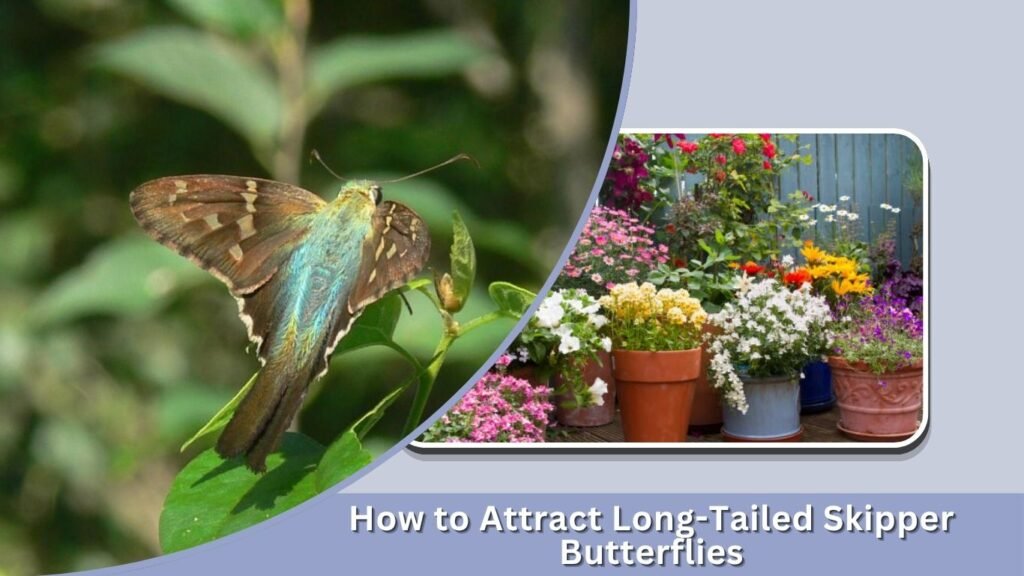
Attracting long-tailed skippers requires providing both nectar-producing flowers and appropriate host plants.
Planting butterfly pea, native ticktrefoils, or American wisteria can support caterpillar development where these species grow naturally.
Flowering plants such as lantana and other locally suitable nectar sources may attract adults.
Avoiding unnecessary pesticide applications also helps protect butterflies and their developing larvae.
A sunny garden with sheltered areas, varied flowering plants, and appropriate host vegetation offers suitable conditions for visiting skippers.
FAQs
1. Is a Long-Tailed Skipper a Butterfly or a Moth?
The Long-Tailed Skipper is a butterfly belonging to the Hesperiidae family. Although its stout body and rapid flight may resemble those of some moths, it is classified as a butterfly.
2. What Does a Long-Tailed Skipper Caterpillar Look Like?
The caterpillar generally has a yellowish-green body, dark spots, yellow stripes, and a large reddish-brown or black head. It often hides inside folded leaves.
3. How Long Does a Long-Tailed Skipper Take to Become a Butterfly?
Under favorable conditions, its complete development from egg to adult may take approximately 30 days. Cooler temperatures can extend the developmental period.
4. What Is the Scientific Name of the Long-Tailed Skipper Butterfly?
The scientific name of the Long-Tailed Skipper Butterfly is Urbanus proteus. It belongs to the family Hesperiidae and is also known as the bean leafroller.
5. Are Long-Tailed Skipper Butterflies Rare?
Long-tailed skippers are common in parts of their southern range, particularly Florida. However, they are uncommon or exceptional visitors in colder northern areas where they cannot survive prolonged freezing weather.