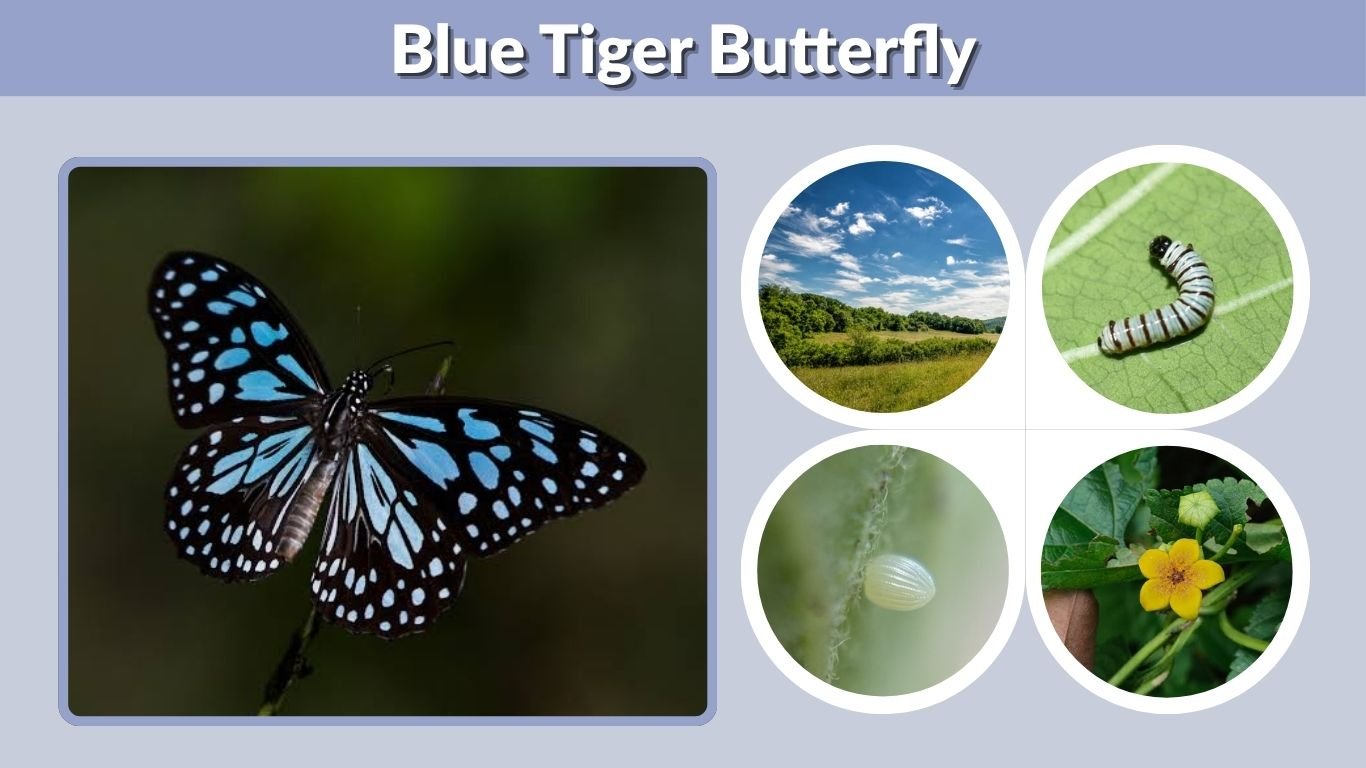
The Blue Tiger Butterfly is a beautiful insect recognized by its striking blue-white markings against dark brown or black wings. Commonly found across parts of South and Southeast Asia, this butterfly is admired for its graceful flight, distinctive appearance, and seasonal migrations. Its scientific name is Tirumala limniace, and it belongs to the brush-footed butterfly family. Understanding its identification features, habitat, food plants, caterpillar development, and life cycle can help butterfly enthusiasts recognize this fascinating species in nature.
What Is a Blue Tiger Butterfly?
The Blue Tiger Butterfly (Tirumala limniace) is a member of the Nymphalidae family and Danainae subfamily. It belongs to a group commonly called milkweed butterflies, which includes several other tiger and crow butterflies.
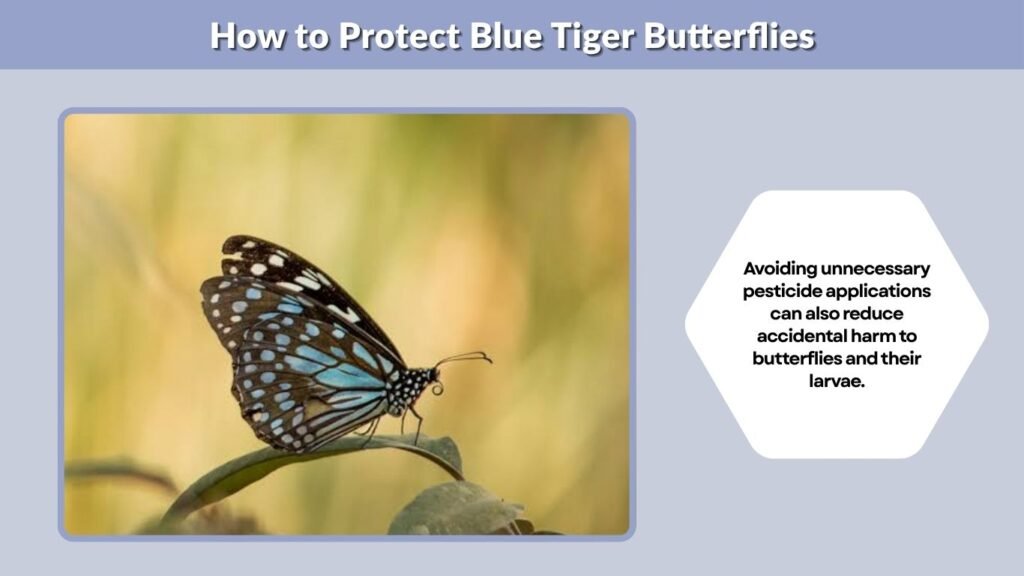
Its wings feature pale blue or bluish-white streaks and spots, creating a striking contrast against the dark background. Unlike many brightly colored butterflies, the Blue Tiger is particularly recognizable by its intricate wing patterns.
It inhabits warm regions where flowering plants, suitable breeding habitats, and caterpillar host plants are available. The butterfly also participates in seasonal movements, sometimes gathering in large numbers with related species.
Blue Tiger Butterfly Identification
Identifying a Blue Tiger Butterfly becomes easier when examining its wing markings, body structure, and flight behavior. The species has several distinctive characteristics that separate it from other butterflies.
Physical Appearance
- Wingspan: Generally around 90–100 mm, although individual sizes vary.
- Wing Color: Dark brown to black with light blue or bluish-white markings.
- Wing Pattern: Elongated streaks and rounded spots arranged across the wings.
- Body: Slender, dark-colored body with small pale markings.
- Antennae: Long, narrow antennae with club-shaped tips.
- Flight Pattern: Typically smooth, gliding flight with occasional wingbeats.
- Male Characteristics: Males have specialized scent-producing structures associated with courtship.
Blue Tiger Butterfly Caterpillar Identification
The Blue Tiger caterpillar has a pale yellowish-white body decorated with black transverse bands and yellow markings along its sides.
Its most distinctive features are two pairs of long, fleshy filaments positioned near the front and rear of the body. These structures make the caterpillar easy to distinguish from many ordinary garden caterpillars.
As it develops, the caterpillar sheds its skin several times before entering the pupal stage.
Where Do Blue Tiger Butterflies Live?
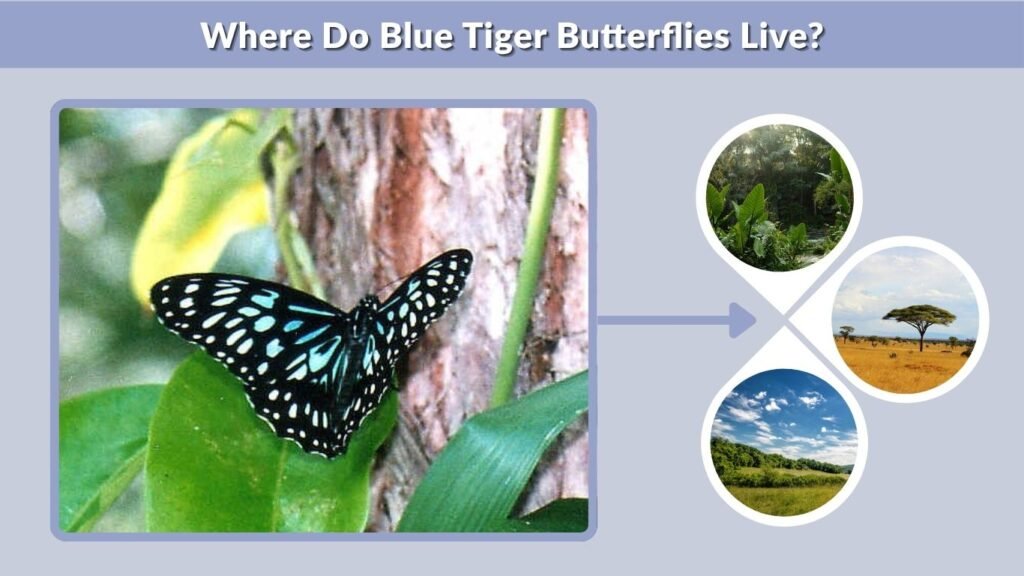
Blue Tiger Butterflies are distributed across South and Southeast Asia, including India, Sri Lanka, Bangladesh, and neighboring regions.
They inhabit tropical and subtropical environments that provide suitable vegetation and favorable temperatures.
Common habitats include:
- Tropical Forests: Offer shelter, moisture, and breeding plants.
- Forest Edges: Provide sunlight and accessible nectar sources.
- Grasslands: Support flowering plants used by adults.
- Gardens and Parks: Attract butterflies when appropriate plants are present.
- Wooded Hillsides: Offer seasonal feeding and resting locations.
Blue Tigers often move between habitats as weather conditions and food availability change.
Although they prefer warm environments, their local abundance varies considerably with seasonal rainfall, vegetation, and suitable host plants.
What Do Blue Tiger Butterflies Eat?
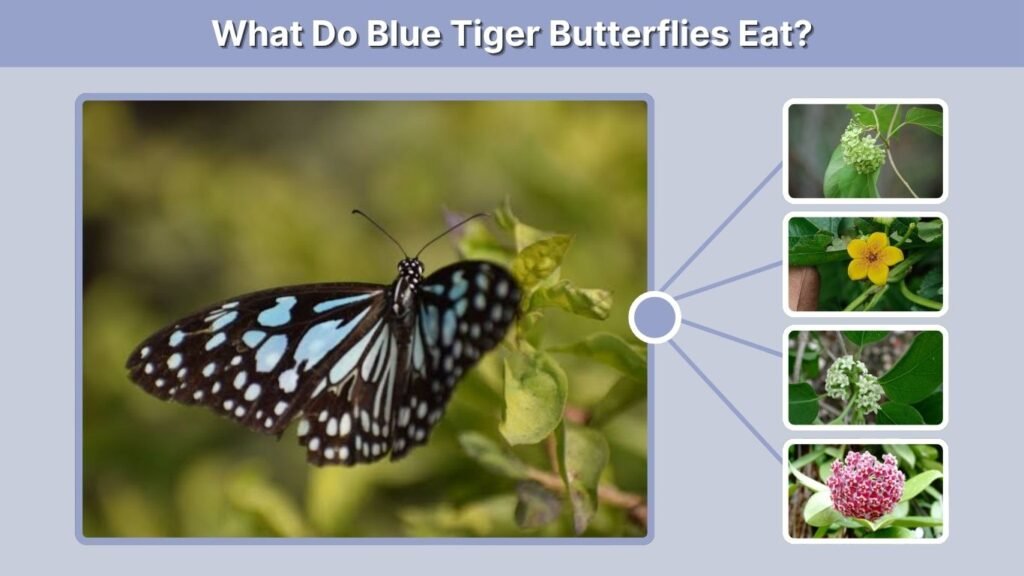
Adult Blue Tiger Butterflies mainly consume nectar from flowers. They use a long, flexible feeding tube called a proboscis to reach nectar inside blossoms.
Nectar supplies the carbohydrates needed for daily activity and extended flight.
Adults may visit many flowering species, including wildflowers and garden plants. Some danaine butterflies also obtain additional chemicals from particular plants that contribute to reproduction and chemical defenses.
Blue Tiger Butterfly Host Plants
The caterpillars have different dietary requirements from adults. They feed on the leaves of particular host plants, especially vines associated with the dogbane family, Apocynaceae.
Recorded host plants include:
- Wattakaka volubilis
- Heterostemma cuspidatum
- Marsdenia tenacissima
- Certain Hoya species
- Certain milkweed-related plants
The availability of these plants is important because females must locate suitable vegetation for egg-laying.
Blue Tiger Butterfly Life Cycle
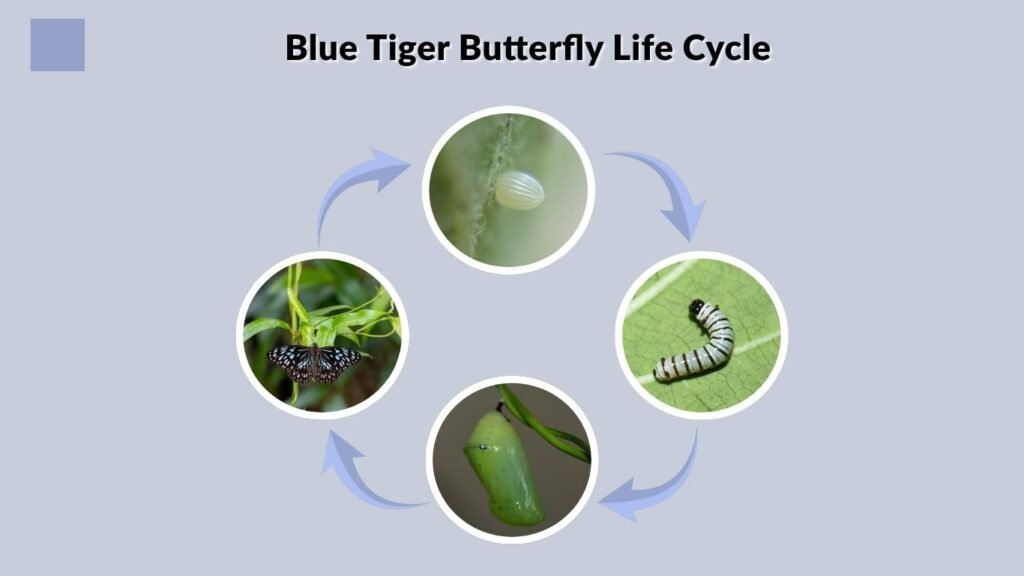
The Blue Tiger Butterfly undergoes complete metamorphosis, developing through four stages: egg, larva, pupa, and adult.
1. Egg Stage
Female Blue Tigers deposit small eggs individually on suitable host plants, often on young leaves.
The eggs are pale-colored and develop under favorable temperature and humidity conditions. After approximately three to four days in some studied populations, young caterpillars emerge.
2. Caterpillar Stage
The newly hatched caterpillar begins feeding on its host plant. As it grows, its characteristic black bands and fleshy filaments become more noticeable.
The larva passes through several growth stages called instars, shedding its outer skin as its body increases in size.
3. Pupa Stage
Once fully grown, the caterpillar finds a suitable location and transforms into a hanging chrysalis.
The Blue Tiger pupa is generally green with small metallic-looking spots or markings. During this stage, the caterpillar’s body is reorganized into the adult butterfly.
4. Adult Butterfly Stage
After development is complete, the butterfly emerges from the chrysalis. Its wings initially appear soft and folded before expanding and hardening.
Research on Tirumala limniace in India’s Eastern Ghats recorded approximately 21–28 days from egg to adult emergence. Actual development times depend on environmental conditions.
Blue Tiger Butterfly Migration
Blue Tiger Butterflies are known for seasonal movement, particularly in parts of southern India.
During certain periods, large numbers travel between different habitats in response to environmental conditions and breeding opportunities.
These migrations may involve other members of the danaine butterfly group, including dark blue tigers and crow butterflies.
Their movements are influenced by seasonal rainfall, temperature, flowering vegetation, and the availability of larval host plants.
Blue Tiger Butterfly Migration in Australia
Australia also has a butterfly commonly called the Blue Tiger, but its scientific name is Tirumala hamata.
This species occurs in Queensland and other parts of northern and eastern Australia.
Australian Blue Tigers sometimes undertake spectacular migrations. They may travel southward in large numbers and later gather in sheltered areas during cooler or drier periods.
These movements are especially associated with Australia’s seasonal tropical climate.
Blue Tiger vs. Dark Blue Tiger vs. Glassy Tiger
Several butterflies have similar names and wing patterns, making identification confusing.
| Butterfly | Scientific Name | Main Difference |
| Blue Tiger | Tirumala limniace | Bluish-white spots and streaks |
| Dark Blue Tiger | Tirumala septentrionis | Different arrangement of pale wing streaks |
| Blue Glassy Tiger | Ideopsis vulgaris | More translucent, glassy-looking wing markings |
| Australian Blue Tiger | Tirumala hamata | Similar pattern but a different species |
The Dark Blue Tiger closely resembles the common Blue Tiger, but the arrangement of markings on the forewings helps distinguish them.
The Blue Glassy Tiger belongs to a different genus, Ideopsis, even though its pale wing markings look somewhat similar.
Geographical location also helps determine which species is being observed.
Interesting Blue Tiger Butterfly Facts
The Blue Tiger Butterfly has several interesting biological and behavioral characteristics.
- Chemical Defense: Like other milkweed butterflies, it may acquire defensive chemicals from its food plants.
- Distinctive Markings: Its pale blue wing patterns help distinguish it from many other butterfly groups.
- Seasonal Migrations: Some populations travel in large groups during particular seasons.
- Complete Metamorphosis: The butterfly undergoes four major developmental stages.
- Pollination: Adults visit flowers and may transfer pollen while feeding.
- Sexual Communication: Males possess specialized structures involved in releasing courtship scents.
These characteristics make Blue Tigers valuable subjects for studying butterfly development, ecology, and migration.
How to Protect Blue Tiger Butterflies
Supporting Blue Tiger populations requires protecting the habitats and plants they depend on.
Maintaining native flowering vegetation provides food for adults, while conserving appropriate host plants supports caterpillar development.
Avoiding unnecessary pesticide applications can also reduce accidental harm to butterflies and their larvae.
Gardeners should select locally appropriate native plants rather than introducing unfamiliar species.
Preserving forest edges, natural vegetation, and seasonal migration habitats helps support the butterfly throughout its life cycle.
FAQs
1. What is the scientific name of the Blue Tiger Butterfly?
The Blue Tiger Butterfly commonly found in South Asia is scientifically known as Tirumala limniace. The Australian species commonly called Blue Tiger is Tirumala hamata.
2. How long does a Blue Tiger Butterfly live?
Adult lifespan depends on temperature, food availability, and environmental conditions. There is no single reliable lifespan that applies to every Blue Tiger population. Its complete life cycle includes the egg, caterpillar, pupa, and adult stages.
3. Is the Blue Tiger Butterfly poisonous?
Blue Tigers belong to a group of butterflies that can be distasteful to predators because of chemicals associated with their host plants. They are not venomous and do not sting humans.
4. What does a Blue Tiger Butterfly caterpillar eat?
Blue Tiger caterpillars feed on particular host plants, including Wattakaka volubilis and other suitable vines. Adult butterflies primarily consume flower nectar.
5. Is the Blue Tiger Butterfly found in Australia?
Yes. The Australian Blue Tiger, Tirumala hamata, occurs in Queensland and other parts of Australia. It is a different species from the Asian Blue Tiger, Tirumala limniace.