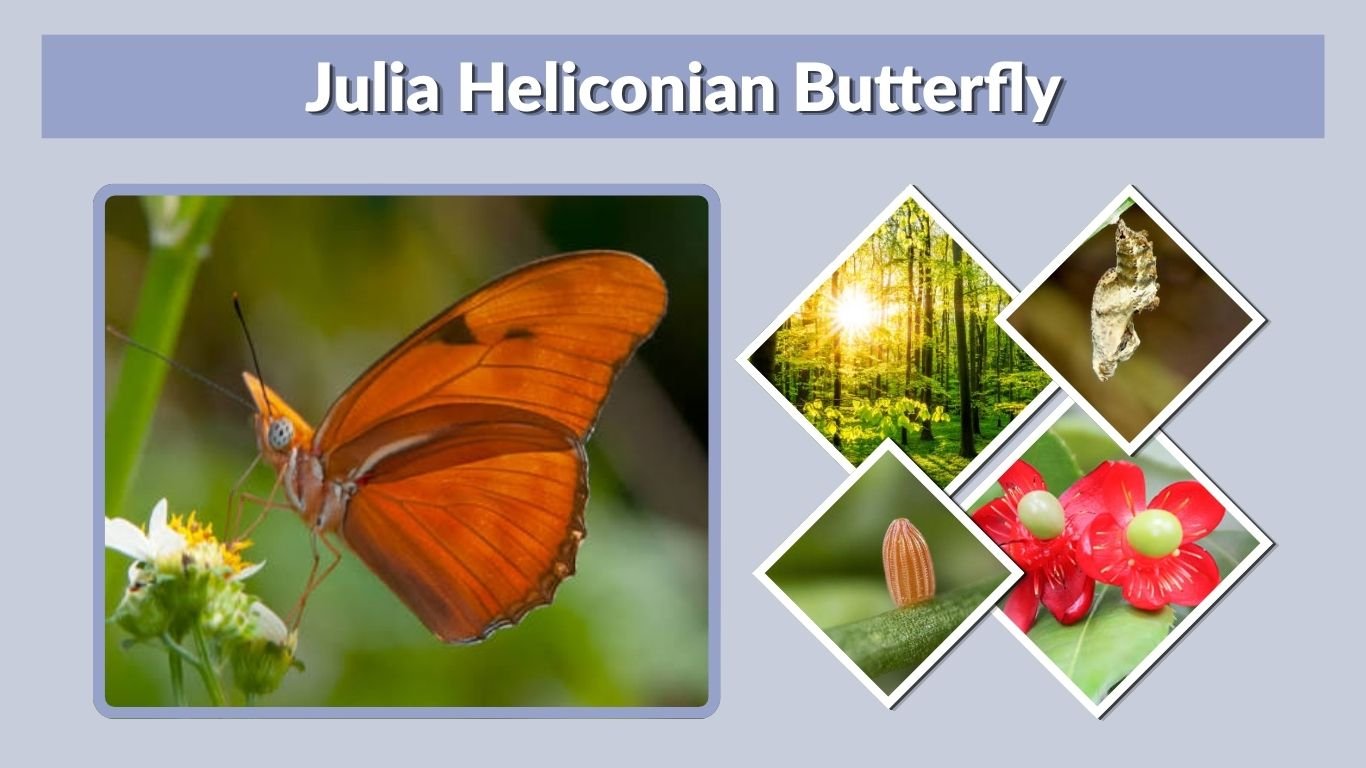
The Julia heliconian butterfly (Dryas iulia) is a beautiful tropical butterfly recognized by its bright orange wings, elegant shape, and rapid flight. Commonly called the Julia butterfly or orange longwing, this species naturally inhabits tropical and subtropical regions of the Americas. Its caterpillars feed on passionflower vines, while adults visit colorful flowers for nectar. From its distinctive appearance to its fascinating life cycle, the Julia heliconian butterfly has several interesting characteristics worth exploring.
What Is a Julia Heliconian Butterfly?
The Julia heliconian is a member of the Nymphalidae family, which includes many colorful brush-footed butterflies. Its scientific name is Dryas iulia, although Dryas julia appears in older publications and some identification resources. The butterfly belongs to the heliconian group and is closely related to other passionflower-feeding species.
Scientific Classification
- Common name: Julia Heliconian Butterfly
- Scientific name: Dryas iulia
- Family: Nymphalidae
- Subfamily: Heliconiinae
- Genus: Dryas
- Species: D. iulia
- Other common names: Julia Butterfly, Orange Longwing, Flambeau Butterfly
This butterfly is particularly recognizable because of its elongated wings and graceful movement. Unlike many smaller butterflies, Julia heliconians often fly quickly and directly through sunny forest clearings and gardens.
What Does a Julia Heliconian Butterfly Look Like?
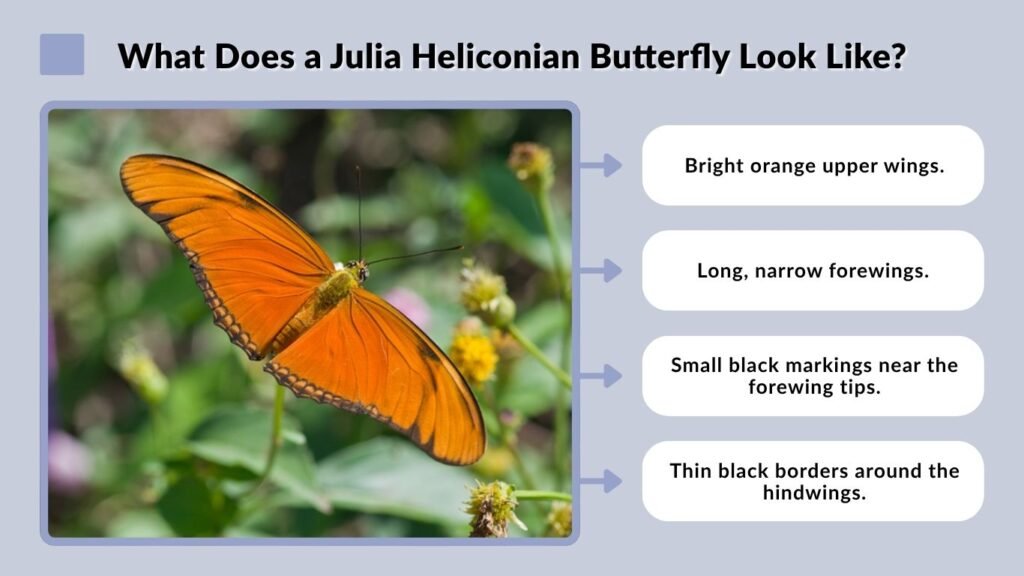
The Julia heliconian butterfly is easily identified by its elongated orange wings and narrow dark markings. Both males and females share a similar body shape, although their wing colors and patterns differ noticeably. These differences help butterfly enthusiasts identify the sexes while observing them in natural habitats.
Male Julia Heliconian Butterfly
Male Julia heliconians have brilliant orange wings with relatively limited black markings.
Their most recognizable features include:
- Bright orange upper wings.
- Long, narrow forewings.
- Small black markings near the forewing tips.
- Thin black borders around the hindwings.
- A slender orange-brown body.
Males frequently patrol open areas searching for females. Their bright coloration makes them particularly noticeable when flying through sunlight.
Female Julia Heliconian Butterfly
Female Julia heliconians are generally duller orange than males and display more extensive dark markings.
Their forewings contain prominent black bands or bars, while the wing margins remain dark.
Adults typically have wingspans of approximately 3–3.6 inches (7.5–9.2 cm), depending on the individual and population.
Although females are less brightly colored, their elongated wing shape remains a reliable identification feature.
Julia Heliconian Butterfly Habitat and Distribution
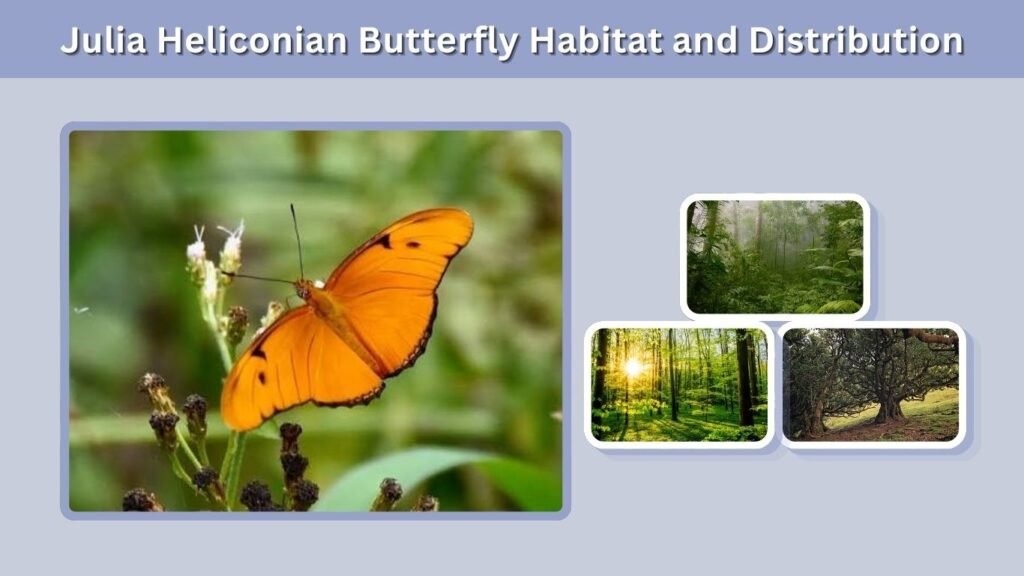
Julia heliconian butterflies prefer warm environments with abundant flowering plants and suitable caterpillar host vines. They are frequently observed along woodland edges, tropical forest openings, parks, and gardens. Their distribution extends across tropical America, with established populations also occurring in some introduced regions.
Where Do Julia Heliconian Butterflies Live?
The Julia heliconian naturally occurs throughout parts of Central America, South America, Mexico, and the Caribbean.
Its North American distribution includes southern Florida and southern Texas. Individual butterflies occasionally wander farther north during warmer months.
Common habitats include tropical forests, subtropical woodlands, sunny clearings, and cultivated gardens.
These habitats provide both nectar-producing flowers and passionflower vines essential for reproduction.
Julia Heliconian Butterfly in Thailand
Interestingly, the Julia heliconian butterfly has also established populations in Thailand, despite not being native to Southeast Asia.
Researchers documented wild populations beginning in 2007. A scientific investigation linked their introduction to butterfly breeding and release activities associated with a butterfly facility in Phuket.
These introduced butterflies successfully reproduced in natural environments using passionflower plants, particularly Passiflora foetida.
Their establishment illustrates how introduced butterfly species can spread when suitable host plants and favorable environmental conditions are available.
Julia Heliconian Butterfly Life Cycle
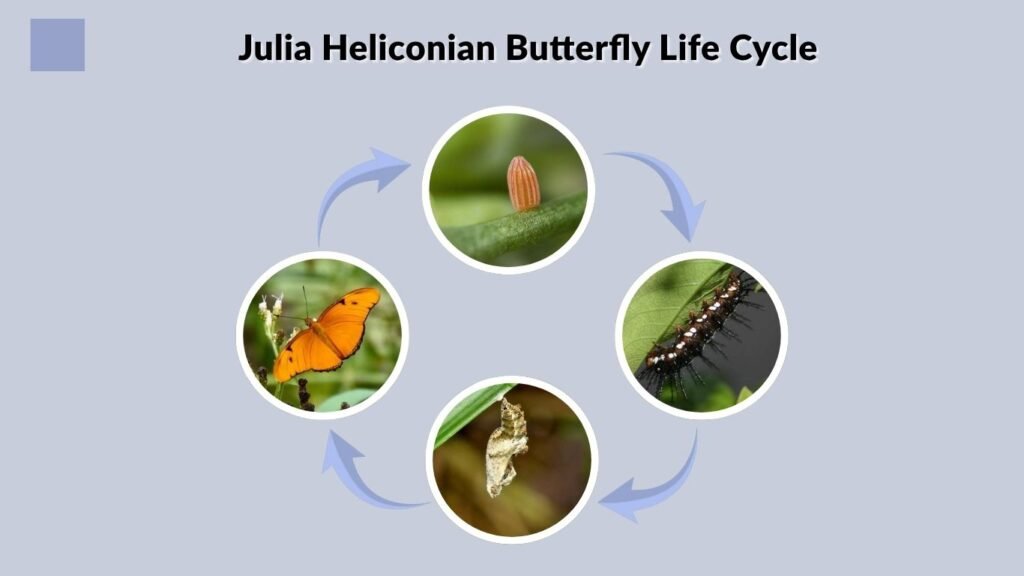
Like other butterflies, the Julia heliconian undergoes complete metamorphosis. Its development consists of four stages: egg, caterpillar, chrysalis, and adult butterfly. Environmental temperatures and food availability influence how quickly individuals develop, allowing multiple generations in warm climates.
1. Julia Heliconian Butterfly Egg
Female Julia heliconian butterflies lay small yellow eggs individually on young passionflower leaves, shoots, or other tender growth.
The eggs are elongated rather than perfectly round and may become darker as they mature.
Females carefully select host plants because newly hatched caterpillars require suitable leaves immediately after emerging.
Warm temperatures support embryo development, and caterpillars hatch after completing the egg stage.
2. Julia Heliconian Caterpillar
The Julia heliconian caterpillar has a distinctive appearance, with a brown body, pale markings, and numerous branched black spines.
Mature larvae typically display:
- Brown or reddish-brown body coloration.
- Small white spots and pale markings.
- Long, dark, branched spines.
- A lighter brown head.
- An elongated, segmented body.
These caterpillars primarily eat passionflower leaves.
As they grow, they molt several times, gradually increasing in size before reaching the pupal stage.
Although their spines appear intimidating, Julia heliconian caterpillars are not considered dangerous to humans.
3. Julia Heliconian Chrysalis
After completing its caterpillar stage, the Julia heliconian forms a chrysalis.
The chrysalis usually appears brown or grayish with irregular markings that resemble dried vegetation.
This camouflage helps protect the developing butterfly from predators.
Inside the chrysalis, the caterpillar undergoes extensive physical transformation, developing wings and other adult structures.
Eventually, the adult butterfly emerges and allows its wings to expand and harden before flying.
4. Adult Julia Heliconian Butterfly
The adult butterfly begins searching for nectar and potential mates shortly after becoming capable of flight.
Males actively patrol territories and flight routes while looking for receptive females.
After mating, females locate suitable passionflower vines where they can deposit their eggs.
This completes the reproductive cycle, allowing new generations to develop in favorable conditions.
What Do Julia Heliconian Butterflies Eat?
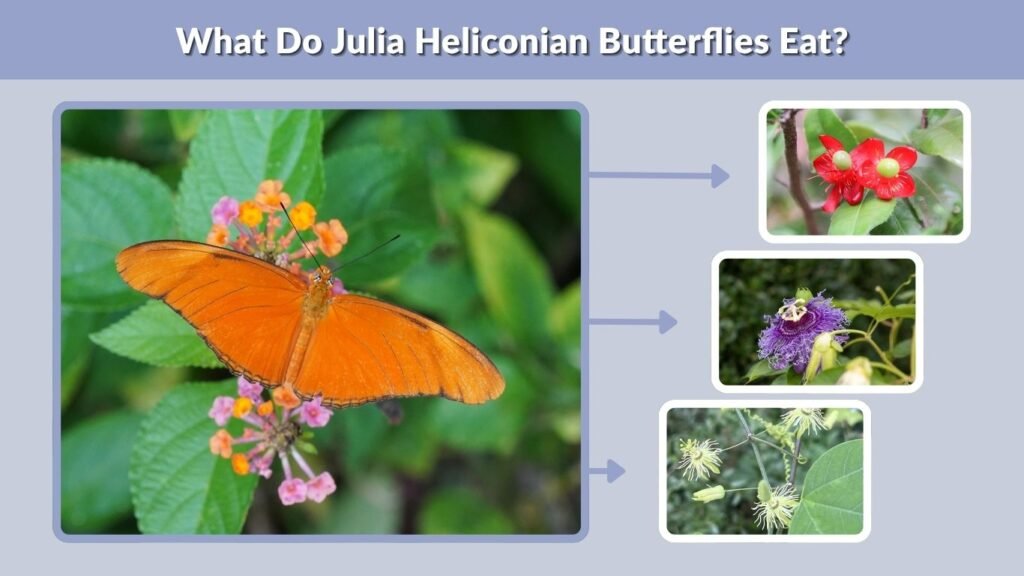
Julia heliconian butterflies have different dietary requirements depending on their developmental stage. Caterpillars feed almost exclusively on suitable passionflower foliage, while adults obtain energy from nectar and other liquid food sources. These feeding habits help determine where butterflies establish breeding populations.
Julia Heliconian Caterpillar Food
Julia heliconian caterpillars rely on plants belonging to the genus Passiflora.
Important host plants include:
- Corkystem passionflower (Passiflora suberosa).
- Manyflower passionflower (Passiflora multiflora).
- Yellow passionflower (Passiflora lutea).
- Stinking passionflower (Passiflora foetida) introduced Southeast Asian populations.
Different populations may prefer particular passionflower species.
Without suitable host plants, Julia heliconians cannot successfully complete their reproductive cycle.
What Do Adult Julia Heliconian Butterflies Eat?
Adult Julia heliconians primarily consume flower nectar.
They commonly visit lantana, shepherd’s needle, and other nectar-rich flowering plants.
Adults sometimes follow repeated feeding routes between familiar flower patches, a behavior known as trap-lining.
Another unusual behavior involves obtaining moisture and minerals from damp soil or other natural sources.
Some individuals have even been documented drinking tears from reptiles, including caimans and turtles.
How Long Do Julia Heliconian Butterflies Live?
Adult Julia heliconian butterflies generally live for several weeks, although their exact lifespan depends on environmental conditions and individual circumstances.
Temperature, food availability, predators, and habitat quality can affect survival.
Warm environments with continuous access to flowers and passionflower vines support repeated reproduction.
Unlike the closely related zebra longwing butterfly, which can survive for several months under favorable conditions, Julia heliconians usually have shorter adult lives.
Their ability to produce multiple generations throughout the year helps maintain populations in tropical regions.
Julia Heliconian vs. Gulf Fritillary Butterfly
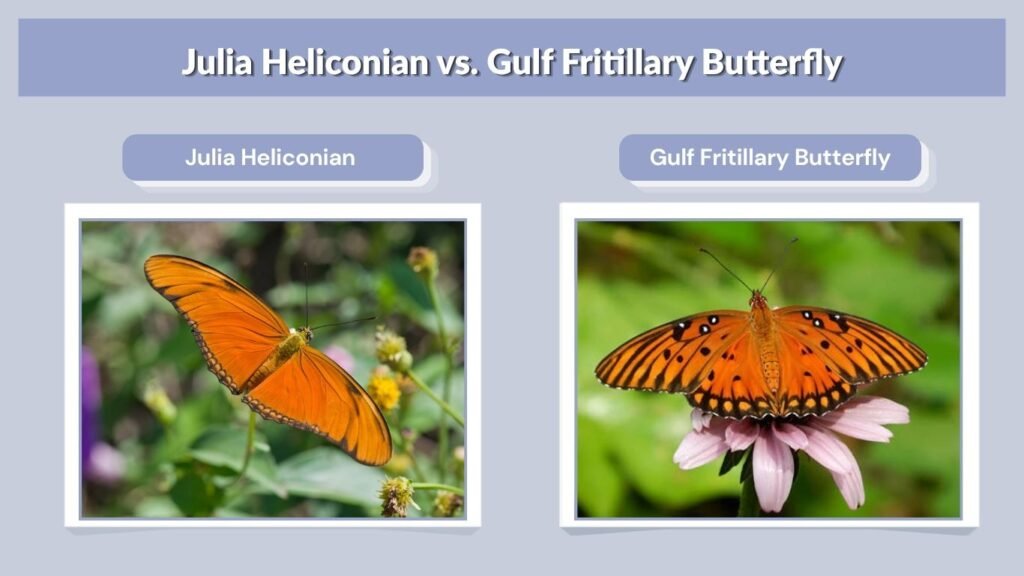
The Julia heliconian and Gulf fritillary are closely related butterflies that share orange coloration and passionflower host plants.
However, they have several distinguishing characteristics.
The Julia heliconian typically has longer, narrower wings with relatively simple black markings. Males are particularly bright orange.
The Gulf fritillary has broader wings with more extensive dark markings and distinctive silvery-white spots on the underside.
Both butterflies commonly occur in southern Florida, where they may visit the same flowering plants.
Examining wing shape and underside markings is one of the easiest ways to distinguish them.
FAQs
1. Is the Julia heliconian butterfly rare?
The Julia heliconian is relatively common in suitable tropical habitats, particularly in parts of Central and South America. It is also regularly observed in southern Florida, although abundance varies depending on the region and environmental conditions.
2. What is the Julia heliconian butterfly’s host plant?
Julia heliconian caterpillars feed on passionflower vines belonging to the genus Passiflora. Common host plants include corkystem passionflower, manyflower passionflower, and yellow passionflower. Suitable host plants are essential for egg laying and caterpillar development.
3. Are Julia heliconian caterpillars poisonous?
Julia heliconian caterpillars have intimidating branched spines, but they are not generally considered dangerous to humans. Because their host plants contain defensive chemicals, it is best to avoid handling caterpillars unnecessarily and allow them to develop naturally.
4. Can Julia heliconian butterflies be found in Florida?
Yes. Julia heliconian butterflies occur in southern Florida, particularly around woodland margins, subtropical hammocks, parks, and gardens. Adults may fly throughout the year in warm southern areas where nectar sources and passionflower vines remain available.
5. What is the difference between Dryas iulia and Dryas julia?
Dryas iulia is the accepted scientific name of the Julia heliconian butterfly. Dryas julia is an alternative spelling encountered in older references and some publications. Both names are used for the same butterfly species.