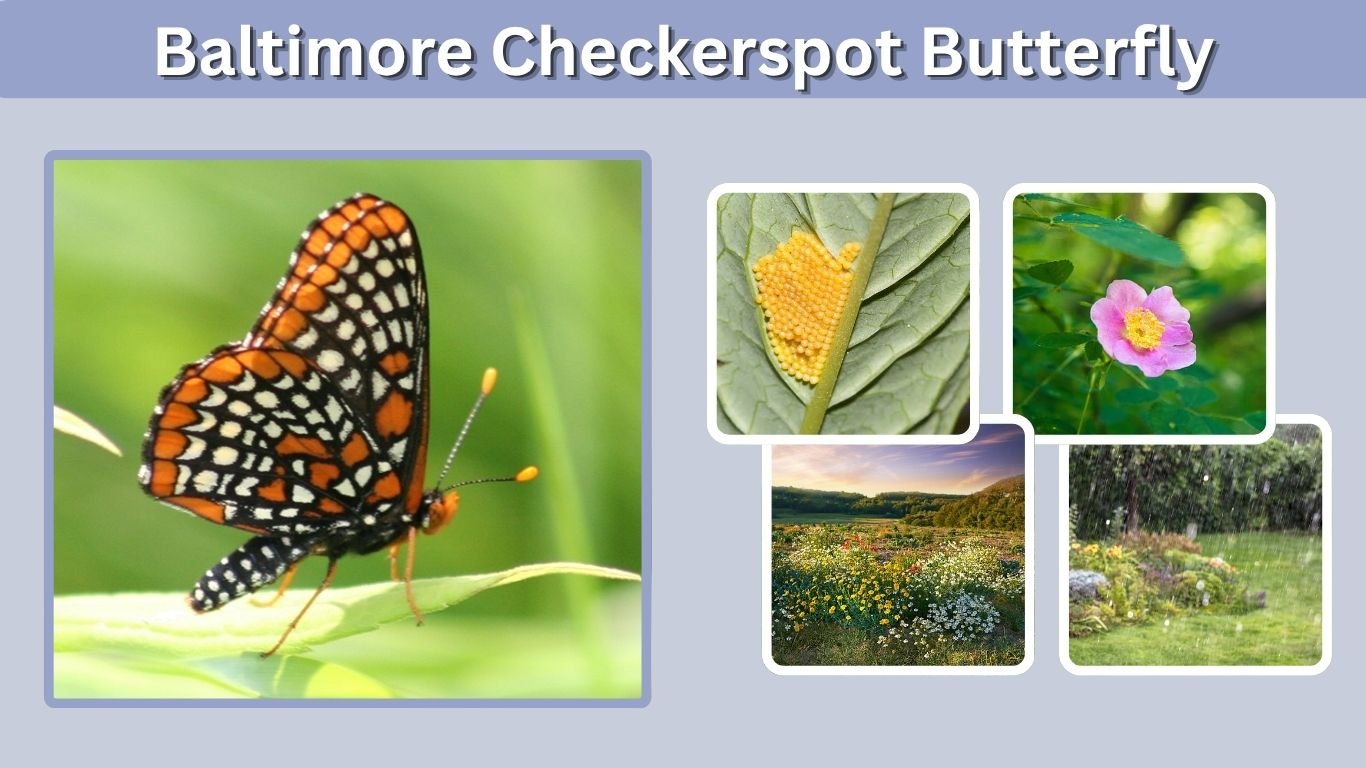
The Baltimore checkerspot butterfly (Euphydryas phaeton) is a beautiful North American butterfly recognized by its striking black wings decorated with orange and white markings. Commonly found in wet meadows, marshes, and other natural habitats, this butterfly plays an important role in local ecosystems. Its fascinating life cycle, colorful caterpillars, and close relationship with turtlehead plants make it particularly interesting to butterfly enthusiasts. However, habitat destruction has caused populations to decline in several regions. This guide explores Baltimore checkerspot identification, habitat, host plants, diet, life cycle, and conservation.
Baltimore Checkerspot Butterfly Identification
The Baltimore checkerspot is a medium-sized butterfly belonging to the Nymphalidae family, commonly called brush-footed butterflies. Its distinctive checkered wing pattern makes identification relatively easy. Both males and females display similar coloration, although individual butterflies may vary slightly in size and appearance.
Adult Butterfly Appearance
The Baltimore checkerspot has several recognizable physical characteristics:
- Wingspan: Approximately 1.75–2.75 inches (4.5–7 cm).
- Wing color: Predominantly black with creamy white spots.
- Orange markings: Bright orange or reddish-orange crescents along the wing edges.
- Body: Dark-colored with lighter markings.
- Antennae: Slender, club-shaped antennae with orange tips.
When resting with its wings spread, the butterfly displays an attractive arrangement of contrasting colors. Its checkered pattern helps distinguish it from many other North American butterflies.
Baltimore Checkerspot Caterpillar Identification
Baltimore checkerspot caterpillars have black bodies decorated with bright orange stripes and bands. Numerous short, branching black spines cover their bodies, giving them a prickly appearance.
Young caterpillars frequently gather together on host plants and build communal silk webs. Older caterpillars become more independent, particularly after surviving winter.
These distinctive markings make the caterpillars recognizable during their feeding stages.
Baltimore Checkerspot Habitat and Range
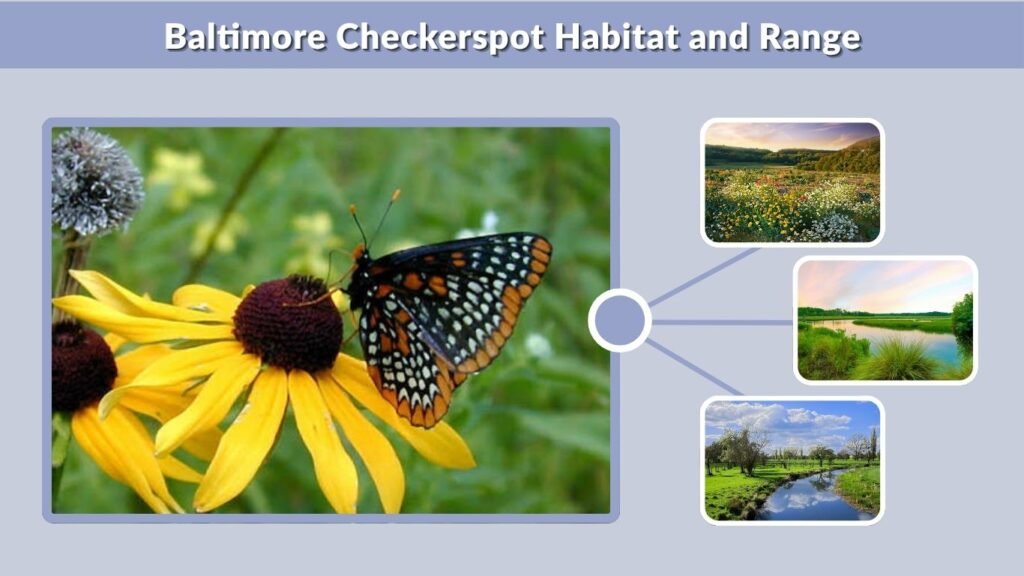
Baltimore checkerspot butterflies inhabit different environments depending on their geographical location. They generally prefer areas containing suitable larval host plants, flowering vegetation, and favorable moisture conditions. Their distribution is often localized because successful breeding depends on the availability of appropriate plants.
Preferred Natural Habitat
In northeastern North America, these butterflies primarily occupy wet meadows, marshes, bogs, and streamside grasslands.
These habitats typically provide abundant white turtlehead plants, which support developing caterpillars. Open areas with plenty of sunlight also encourage the growth of nectar-producing flowers.
However, populations in parts of the southwestern range, particularly the Ozarks, may inhabit relatively dry wooded hillsides and open ridges.
Baltimore Checkerspot Geographic Range
The Baltimore checkerspot occurs across portions of eastern North America, from southeastern Canada through the Great Lakes region and eastern United States.
Its range includes states such as Maryland, Pennsylvania, Ohio, Michigan, Wisconsin, and Massachusetts, along with parts of Ontario and other Canadian provinces.
Although the species has a broad geographic distribution, individual colonies are often isolated. Finding suitable host plants and habitat is usually more important than searching a particular state.
Baltimore Checkerspot Host Plants
Host plants are essential for Baltimore checkerspot reproduction and caterpillar development. Female butterflies select suitable plants for laying eggs, ensuring newly hatched larvae have immediate access to food. The preferred host plants can vary geographically, but white turtlehead is especially important in northeastern populations.
White Turtlehead (Chelone glabra)
White turtlehead is the primary larval host plant in many eastern populations. This moisture-loving perennial grows naturally in wetlands and damp meadows.
Female butterflies lay clusters of eggs on its leaves. After hatching, young caterpillars feed together on the foliage.
Because white turtlehead supports early caterpillar development, protecting established patches is important for maintaining breeding colonies.
Other Baltimore Checkerspot Host Plants
Depending on location and developmental stage, caterpillars may also feed on:
- English plantain (Plantago lanceolata): An alternative host used by certain populations.
- Beardtongue (Penstemon species): Supports caterpillars in some regions.
- False foxglove (Aureolaria species): Particularly important to some southwestern populations.
- Arrowwood viburnum: May provide food for caterpillars after overwintering.
These plants are not equally important everywhere. Local butterfly populations often have specific host preferences.
Baltimore Checkerspot Butterfly Life Cycle
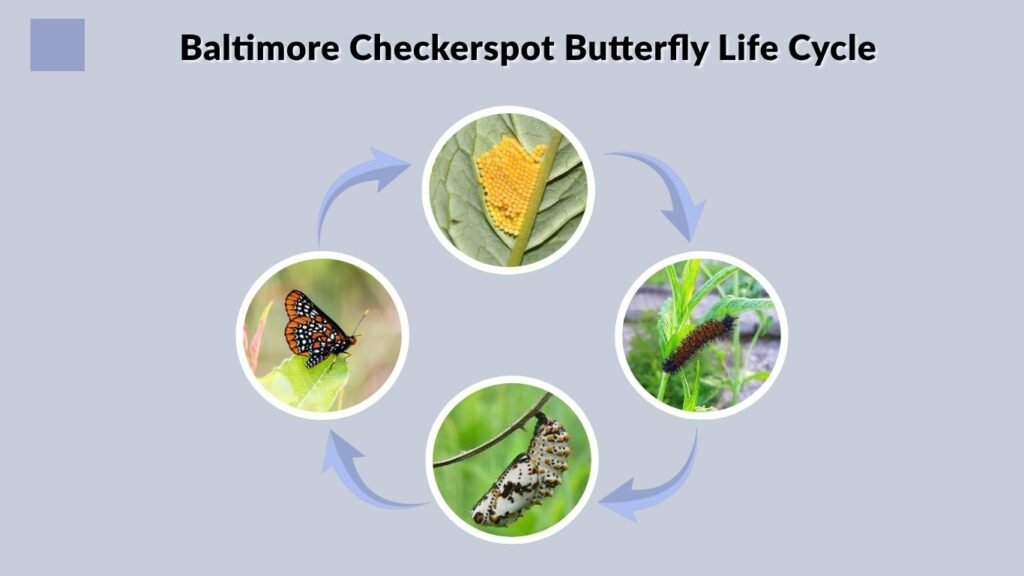
The Baltimore checkerspot completes one generation annually and passes through four developmental stages: egg, caterpillar, chrysalis, and adult butterfly. Unlike many butterflies, this species survives winter as a partially developed caterpillar. Its seasonal development is closely connected to temperature and plant availability.
1. Egg Stage
Female Baltimore checkerspots usually deposit clusters containing approximately 100–700 eggs on the undersides of suitable host plant leaves.
The eggs initially appear yellowish and gradually become reddish as they develop.
In Maryland, hatching may occur around 20 days after the eggs are laid, although temperature and environmental conditions influence development.
2. Caterpillar Stage
Newly hatched larvae begin feeding on host plant leaves while remaining together in protective silk webs.
As they grow, the caterpillars repeatedly shed their outer skin through a process called molting.
During late summer, the larvae stop feeding and enter a period of suspended development called diapause. They eventually move into leaf litter, where they survive the winter.
When temperatures rise in spring, the caterpillars resume feeding and continue growing until they are ready to pupate.
3. Chrysalis Stage
A mature caterpillar attaches itself to a suitable surface and transforms into a chrysalis.
The Baltimore checkerspot chrysalis is generally pale, with contrasting dark and orange markings.
Inside the chrysalis, the insect undergoes metamorphosis, developing the wings and other structures of an adult butterfly. This stage commonly lasts approximately two weeks.
4. Adult Butterfly Stage
Adult butterflies emerge during late spring or summer, depending on geographical location.
In Maryland, adults generally fly from June into early July. Northern populations may remain active later in the summer.
After mating, females lay eggs on suitable plants, beginning the next generation.
What Do Baltimore Checkerspot Butterflies Eat?
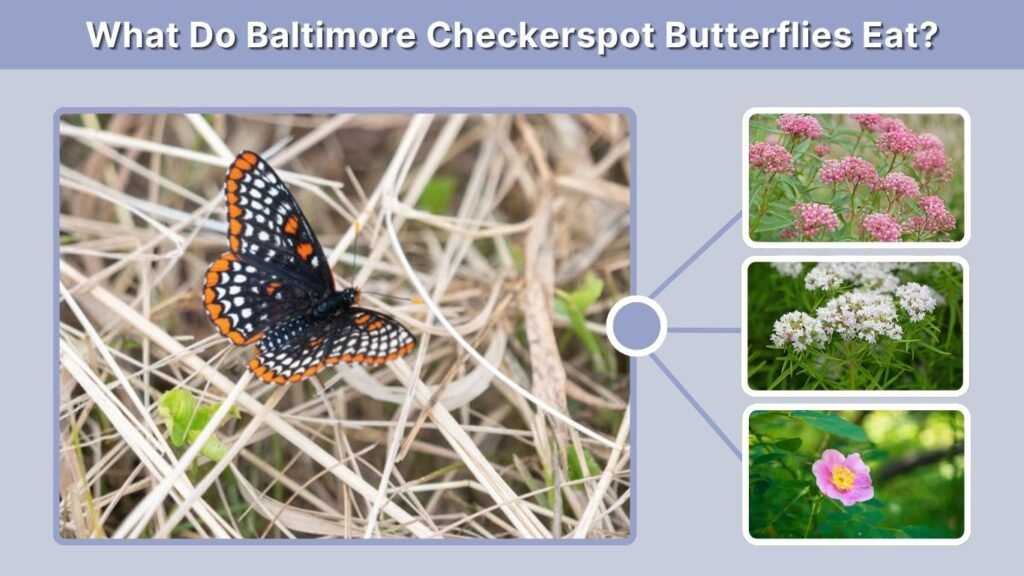
Baltimore checkerspots have different feeding requirements during their caterpillar and adult stages. Caterpillars consume plant foliage for growth, while adult butterflies primarily obtain energy from flower nectar. Both food sources are necessary for maintaining healthy butterfly populations.
Adult Butterfly Food Sources
Adult Baltimore checkerspots visit several flowering plants, including milkweed, mountain mint, dogbane, viburnum, and wild roses.
Using their long, tube-like proboscis, they extract nectar from flowers.
Adults may also obtain moisture and minerals from damp soil. Providing flowering plants throughout their flight season can help support them in suitable habitats.
Is the Baltimore Checkerspot Endangered?
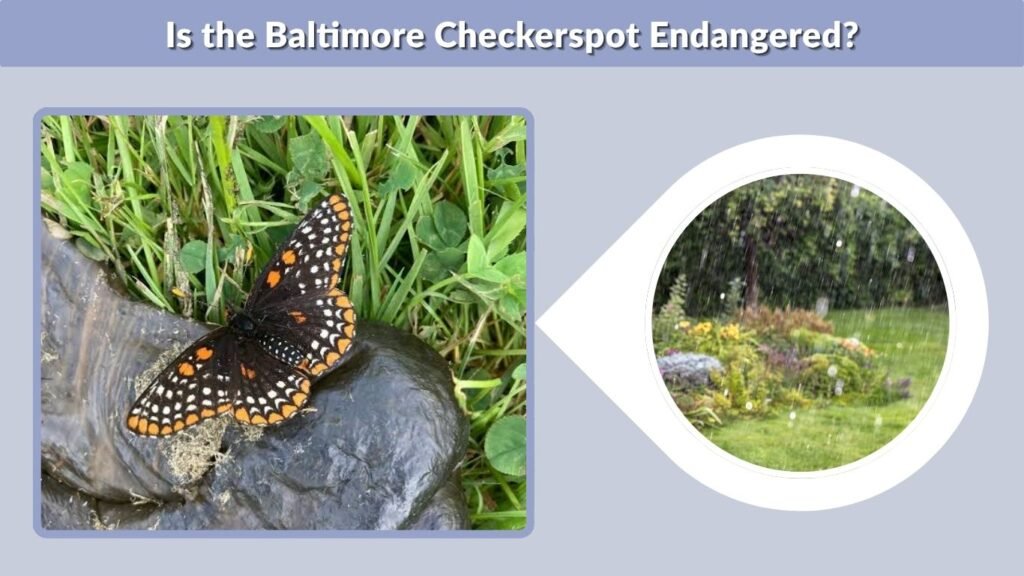
The Baltimore checkerspot is not considered globally endangered, but some regional populations have experienced serious declines. In Maryland, the species is ranked S2, meaning it is considered imperiled within the state. Its conservation status demonstrates how a butterfly can remain widespread overall while becoming rare in particular locations.
Why Are Baltimore Checkerspot Populations Declining?
Several environmental pressures threaten local colonies:
- Habitat loss: Development and wetland destruction eliminate breeding areas.
- Host plant reduction: Deer browsing and vegetation changes reduce turtlehead availability.
- Habitat succession: Trees and dense shrubs gradually replace open wet meadows.
- Climate change: Changing temperature and rainfall patterns may affect suitable habitat.
Small, isolated colonies are particularly vulnerable because butterflies may have difficulty reaching other breeding locations.
How to Protect Baltimore Checkerspot Butterflies
Conservation efforts focus on preserving natural wetlands, maintaining host plant populations, and protecting breeding habitats.
Landowners can help by planting locally appropriate native flowers, avoiding unnecessary pesticide applications, and allowing suitable vegetation to remain undisturbed.
Protecting leaf litter during winter is especially important because developing caterpillars shelter there until spring.
Existing wild colonies should be observed without collecting butterflies, eggs, or caterpillars.
Interesting Baltimore Checkerspot Butterfly Facts
The Baltimore checkerspot has several unusual characteristics that distinguish it from other butterflies.
Unique Features and Behavior
The butterfly was designated Maryland’s official state insect in 1973. Its name refers to the orange-and-black heraldic colors associated with Lord Baltimore.
Its caterpillars display cooperative behavior by feeding together inside communal webs during early development.
Adult males often perch close to the ground while searching for females. The butterfly’s distinctive coloration may also discourage certain predators from attacking.
FAQs
1. Are Baltimore Checkerspot Butterflies Rare?
They can be locally common in suitable habitats, but many colonies are small and isolated. Their populations have declined significantly in certain regions, including Maryland.
2. What Is the Main Baltimore Checkerspot Host Plant?
White turtlehead (Chelone glabra) is the primary host plant for many eastern populations. Other host plants are used in different regions or developmental stages.
3. When Can You See Baltimore Checkerspot Butterflies?
Adults usually appear between late spring and summer. In Maryland, their main flight season typically occurs during June and early July.
4. Where Do Baltimore Checkerspot Caterpillars Spend Winter?
The caterpillars overwinter in leaf litter and sheltered vegetation near their feeding areas. They become active again when warmer spring temperatures arrive.
5. Can Baltimore Checkerspot Butterflies Live in Gardens?
They may visit gardens near established populations, particularly where suitable native nectar flowers and larval host plants grow. Their specialized habitat requirements make them uncommon garden visitors.