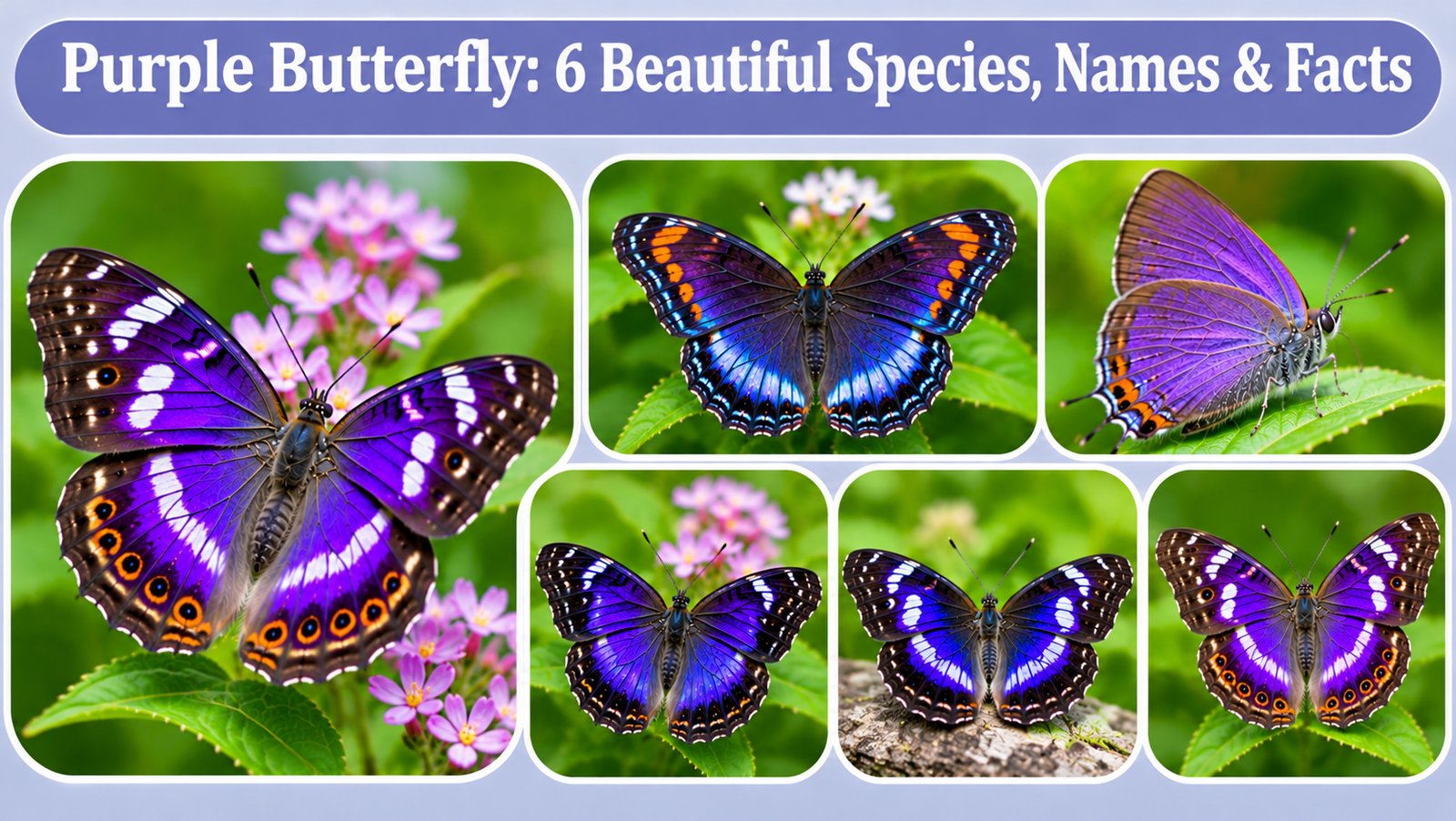
Purple butterflies are among the most fascinating insects in nature, admired for their shimmering wings and unusual colors. Although bright purple butterflies may seem rare, several real species display beautiful violet, lavender, and purple-blue markings. From the magnificent Purple Emperor to the colorful Red-spotted Purple Butterfly, each species has distinctive features, habitats, and behaviors. This guide explores six beautiful purple butterfly species, explains how to identify them, and reveals interesting facts about their colors, feeding habits, and symbolism.
Are Purple Butterflies Real?
Yes, real purple butterflies exist in different parts of the world. However, most do not have completely purple wings. Instead, they display shimmering violet, blue-purple, or metallic-purple patterns that change depending on lighting conditions.
The Purple Emperor, Purple Hairstreak, and Great Purple Emperor are excellent examples. Their wing colors are produced partly by microscopic structures that reflect light, creating a beautiful iridescent appearance.
6 Beautiful Types of Purple Butterflies
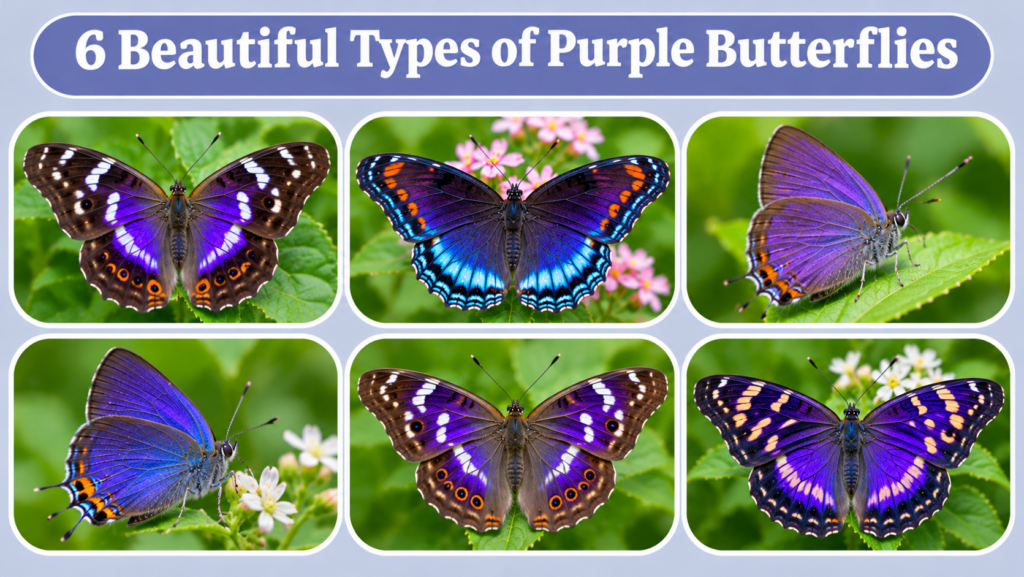
Several butterfly species are famous for their beautiful purple wings. Some have dark purple markings with black borders, while others display vibrant blue-purple patches. Here are six real purple butterfly species and their identifying characteristics.
1. Purple Emperor Butterfly (Apatura iris)
The Purple Emperor Butterfly is a magnificent woodland butterfly found across Europe and parts of Asia. Males have dark brown wings with brilliant purple reflections and distinctive white markings. Females lack the same intense purple coloration.
This butterfly prefers mature deciduous woodlands containing willow trees. Its caterpillars feed mainly on willow leaves, while adults obtain nutrients from tree sap and other natural liquids.
Purple Emperors are powerful flyers that spend much of their time high in the forest canopy.
2. Red-spotted Purple Butterfly (Limenitis arthemis astyanax)
The Red-spotted Purple Butterfly is a beautiful North American species recognized by its dark wings, shimmering blue-purple patches, and reddish-orange spots underneath.
It inhabits forests, woodland edges, parks, and wooded residential neighborhoods. Caterpillars feed on trees such as wild cherry, willow, and poplar, depending on the region.
Interestingly, the Red-spotted Purple resembles the chemically defended Pipevine Swallowtail. This resemblance helps discourage predators, even though the Red-spotted Purple lacks the same protective toxins.
3. Purple Hairstreak Butterfly (Favonius quercus)
The Purple Hairstreak Butterfly is a small purple butterfly native to Europe. Males display brilliant violet-purple upper wings with dark borders, while females have smaller purple patches against a darker background.
This species is closely associated with oak trees, which provide food and shelter for its caterpillars. Adults frequently remain high in oak canopies, making them difficult to observe.
Purple Hairstreaks are most noticeable during warm summer afternoons when males chase each other around treetops. Their beautiful purple coloration becomes visible when sunlight strikes their open wings.
4. Great Purple Hairstreak (Atlides halesus)
The Great Purple Hairstreak is an attractive butterfly native to parts of North and Central America. It features dark wings with extensive metallic blue-purple coloration and delicate hindwing tails.
This species inhabits woodlands, forest edges, and areas containing mistletoe. Its caterpillars feed on mistletoe plants, while adults obtain nectar from flowers.
Great Purple Hairstreaks are relatively small, with wingspans measuring approximately 3.2–5.1 centimeters. Their reflective wings and colorful abdominal markings make them distinctive among hairstreak butterflies.
5. Lesser Purple Emperor (Apatura ilia)
The Lesser Purple Emperor is another beautiful purple butterfly found across parts of Europe and Asia. Male butterflies possess dark wings with striking violet-purple reflections, white markings, and small eyespots.
These butterflies inhabit damp deciduous woodlands, particularly near rivers and streams. Their caterpillars feed on willow and poplar trees, while adults visit moist soil, tree sap, and other nutrient sources.
The Lesser Purple Emperor is particularly fascinating because its wings appear brown from certain angles but shimmer purple when sunlight reflects off their microscopic structures.
6. Great Purple Emperor (Sasakia charonda)
The Great Purple Emperor is a spectacular butterfly native to East Asia, particularly Japan, China, and neighboring regions. It is recognized for its large wings, dark borders, and shimmering purple-blue coloration in males.
This butterfly lives in broadleaf forests and wooded landscapes. Caterpillars feed on hackberry trees, while adults obtain nutrients from tree sap and fermented fruits.
The Great Purple Emperor is also celebrated as Japan’s national butterfly. Its impressive wing patterns and strong flight make it one of the most recognizable purple butterflies in Asia.
How to Identify a Purple Butterfly
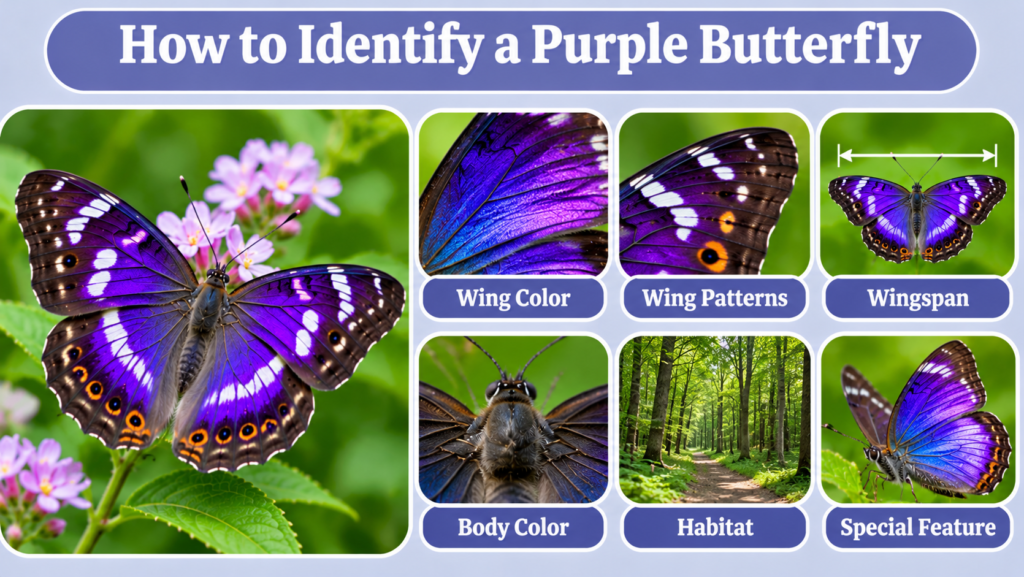
Identifying a purple butterfly requires observing its wing patterns, size, habitat, and flight behavior. Some species appear entirely purple in sunlight, while others display purple patches against dark wings.
Common Identification Features
- Wing Color: Violet, lavender, blue-purple, or metallic purple.
- Wing Patterns: Dark borders, white markings, or colorful spots.
- Wingspan: Varies considerably depending on the species.
- Body Color: Usually dark brown, black, or gray.
- Habitat: Woodlands, forests, gardens, and tree canopies.
- Special Feature: Iridescent coloration that changes with viewing angle.
Black and Purple Butterfly Identification
A black and purple butterfly may be a Purple Emperor, Red-spotted Purple, or another iridescent species. The Red-spotted Purple has dark wings with prominent blue reflections, while male Purple Emperors display violet-purple coloration with white markings.
Photographs showing both the upper and lower wing surfaces can help distinguish similar species.
Why Do Some Butterflies Have Purple Wings?
Purple butterfly wings often get their unusual appearance from structural coloration. Tiny structures on their wing scales interact with incoming light, reflecting particular wavelengths and creating shimmering blue or violet colors.
This explains why certain butterflies appear purple from one angle and brown or black from another. Pigments also contribute to their overall appearance.
The colorful patterns may help butterflies communicate, recognize potential mates, or interact with their surroundings.
What Does a Purple Butterfly Mean?
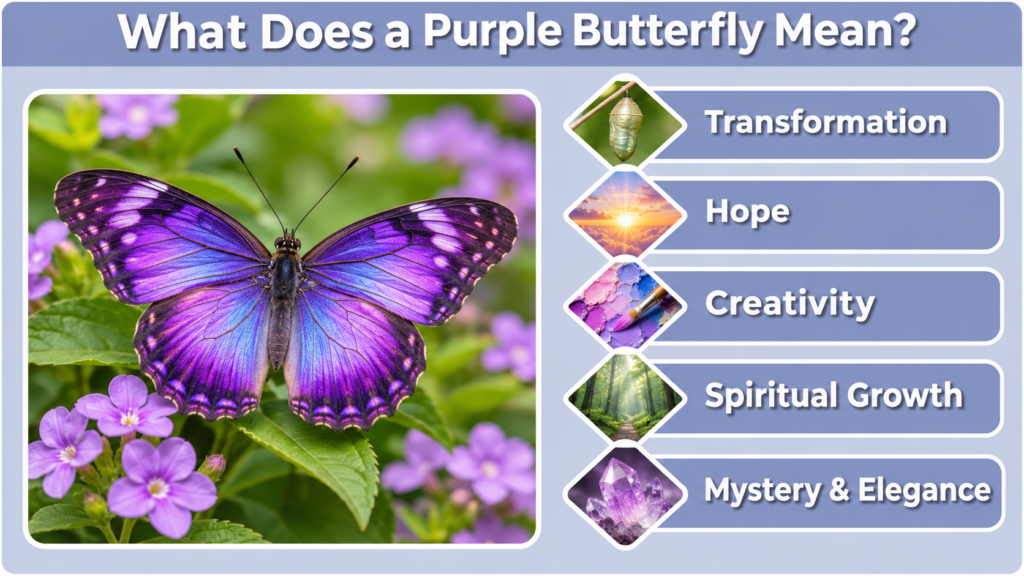
The purple butterfly meaning is often associated with transformation, hope, creativity, and spiritual growth. Because butterflies undergo metamorphosis, many cultures and individuals connect them with personal change and new beginnings.
Purple is also commonly associated with mystery, elegance, and imagination. Consequently, purple butterflies frequently appear in artwork, jewelry, tattoos, and symbolic designs.
However, these interpretations are cultural and personal beliefs rather than established biological meanings.
Are Purple Monarch Butterflies Real?
A naturally purple Monarch Butterfly is not a recognized color form of the familiar Monarch species, Danaus plexippus.
Monarchs normally have orange wings with black veins, dark borders, and white spots. Pictures showing bright purple monarchs are often digitally recolored or artistic illustrations.
People searching for a real purple butterfly should look for species such as Purple Emperors, Purple Hairstreaks, or Red-spotted Purples instead.
FAQs
1. What Is the Most Beautiful Purple Butterfly?
The Purple Emperor is often admired for its brilliant violet reflections, white markings, and impressive appearance. The Great Purple Emperor and Purple Hairstreak are also beautiful examples. Personal preferences vary, but these species are particularly well known for their striking purple coloration.
2. Are Purple Butterflies Rare?
Some purple butterfly species are uncommon or difficult to observe, while others are relatively widespread. Purple Emperors can be challenging to spot because they spend considerable time in woodland canopies. Purple Hairstreaks may also go unnoticed despite being present in suitable oak habitats.
3. Where Do Purple Butterflies Live?
Purple butterflies live in various habitats across Europe, Asia, and the Americas. Their environments include deciduous forests, tropical woodlands, oak canopies, and gardens. Distribution depends on the species and the availability of suitable caterpillar host plants.
4. Can Purple Butterflies Be Blue and Purple?
Yes. Some butterflies display blue-purple coloration because their wing scales reflect light differently depending on the viewing angle. Red-spotted Purples, Purple Emperors, and Great Purple Emperors may appear blue, violet, or almost black under different lighting conditions.
5. What Is the Smallest Purple Butterfly?
The Purple Hairstreak is one of the smaller well-known purple butterfly species, with a wingspan of approximately 3–4 centimeters. Its compact size and preference for oak treetops make it difficult to notice, despite the brilliant purple coloration of males.