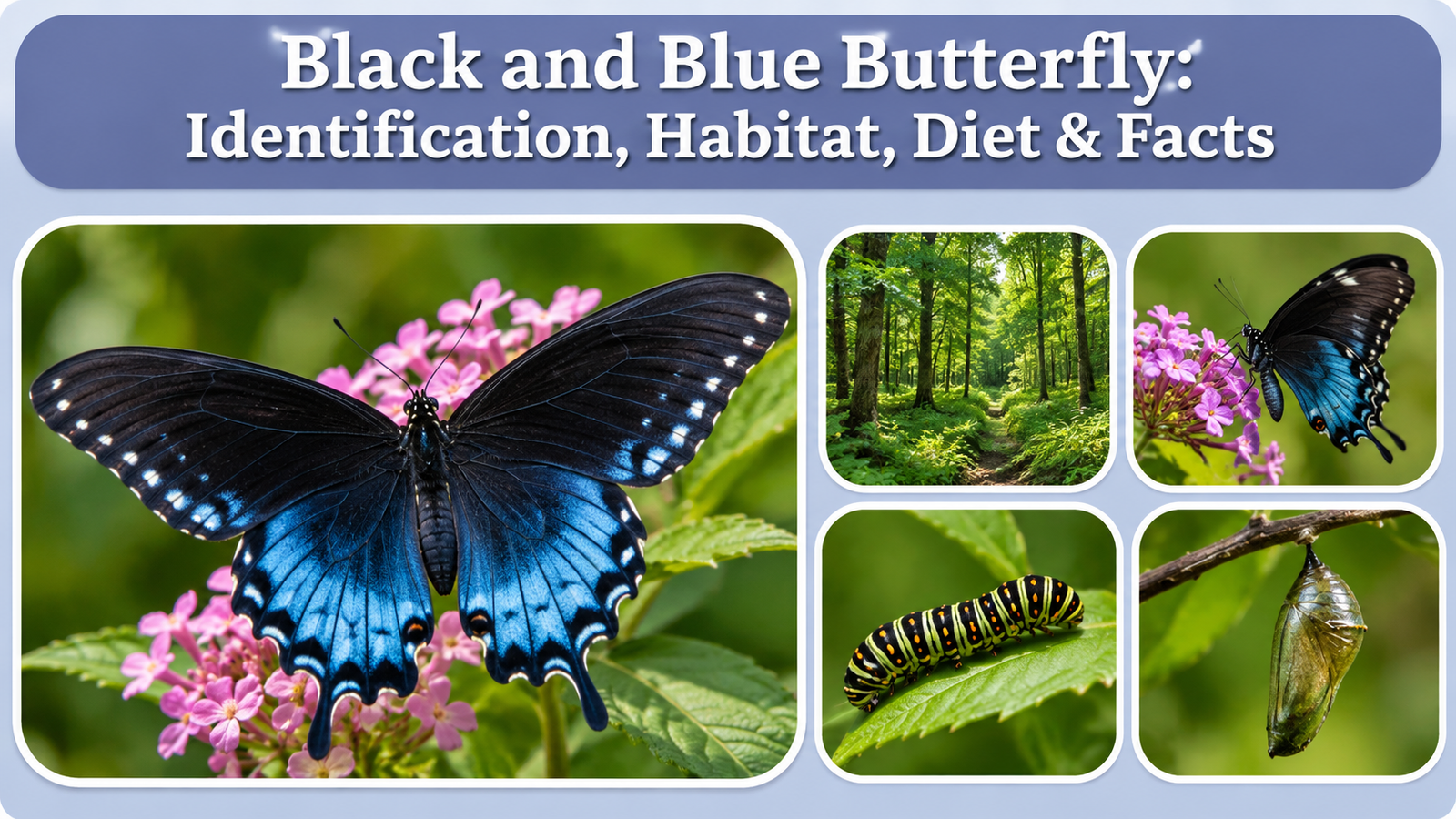
A black and blue butterfly is a fascinating insect recognized for its dark wings, shimmering blue markings, and distinctive appearance. These butterflies belong to several species, including the Pipevine Swallowtail, Blue Morpho, and Red-Spotted Purple. They inhabit tropical forests, grasslands, woodlands, and gardens worldwide. Their beautiful wing colors play important roles in attracting mates, avoiding predators, and species recognition. Understanding their physical characteristics, natural habitat, feeding habits, and life cycle can help you identify different black and blue butterfly species and appreciate their ecological importance.
How to Identify a Black and Blue Butterfly
Identifying a black and blue butterfly involves examining its wing coloration, body structure, size, and distinctive markings. Some species have predominantly black wings with blue patches, while others display brilliant blue wings surrounded by black borders. Observing both the upper and lower wing surfaces can help distinguish between similar-looking butterfly species.
- Wing color: Black combined with metallic blue, turquoise, or violet-blue.
- Wing patterns: Blue patches, colored bands, eyespots, or contrasting borders.
- Wing shape: Rounded, elongated, triangular, or tail-like extensions.
- Wingspan: Varies considerably depending on the species.
- Body color: Usually black, dark brown, or gray.
- Antennae: Slender antennae with club-shaped tips.
- Flight behavior: Rapid flying, graceful gliding, or frequent resting.
7 Common Types of Black and Blue Butterflies
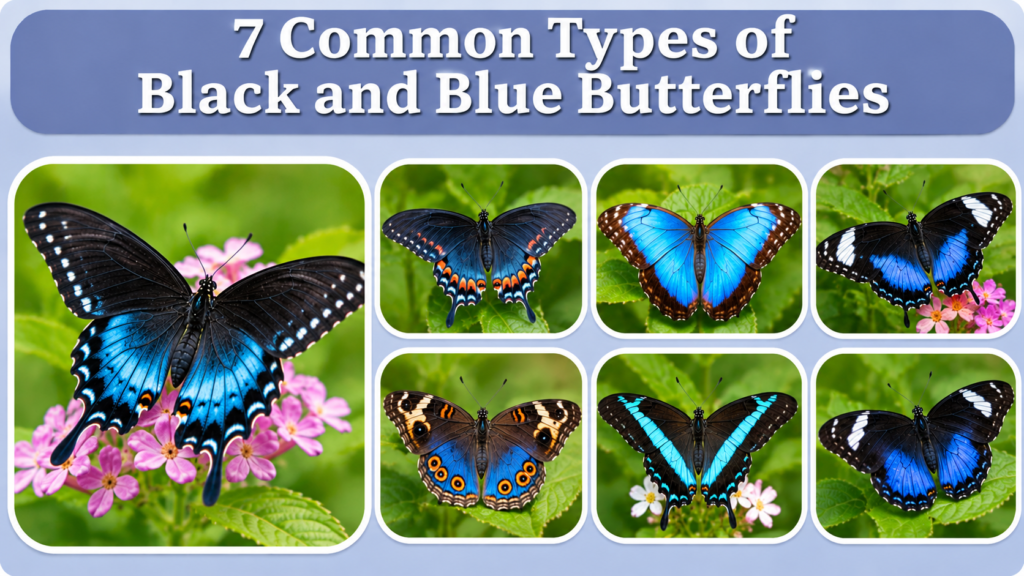
Black and blue butterflies occur in different regions worldwide and belong to several butterfly families. Although they share similar colors, their wing patterns, physical characteristics, and environmental preferences vary considerably. The following species are among the most recognizable examples of butterflies featuring attractive combinations of black and blue coloration.
1. Pipevine Swallowtail Butterfly
The Pipevine Swallowtail (Battus philenor) features black forewings and shimmering blue-green hindwings. Orange spots on the underside of its hindwings provide additional identification clues.
It inhabits woodlands, gardens, and open fields throughout parts of North and Central America. Its caterpillars obtain defensive toxins by feeding on pipevine plants. Florida’s Wildflowers & Butterflies+1
2. Red-Spotted Purple Butterfly
The Red-Spotted Purple (Limenitis arthemis astyanax) displays dark wings with metallic blue coloration and reddish-orange markings. Unlike many swallowtail butterflies, it lacks prominent hindwing tails.
This butterfly commonly inhabits deciduous forests and woodland edges throughout eastern North America. Adults often feed on tree sap and fermenting fruits.
3. Blue Morpho Butterfly
The Blue Morpho (Morpho peleides) is recognized by its brilliant metallic blue wings with dark outer borders. Its brown underwings feature distinctive eyespots that provide camouflage.
This tropical butterfly inhabits forests across Central America and parts of South America. Adults primarily consume fruit juices, tree sap, and other liquid foods.
4. Ulysses Butterfly
The Ulysses Butterfly (Papilio ulysses) features electric-blue wings surrounded by broad black borders. Its striking appearance makes it particularly noticeable during flight.
This species inhabits tropical rainforests in Australia, New Guinea, and surrounding islands. Its caterpillars feed on plants belonging to the citrus family.
5. Blue Pansy Butterfly
The Blue Pansy (Junonia orithya) has dark forewings, bright blue hindwings, and distinctive eyespots. Males generally display more vibrant blue coloration than females.
It inhabits sunny grasslands, gardens, and open environments across parts of Africa, Asia, and Australia. Adults commonly feed on flower nectar.
6. Common Bluebottle Butterfly
The Common Bluebottle (Graphium sarpedon) features black wings crossed by prominent turquoise-blue bands. Its distinctive wing shape and rapid flight make it relatively easy to recognize.
This butterfly inhabits tropical and subtropical forests across Asia and parts of Australia. Adults frequently visit flowers and damp soil to obtain nutrients.
7. Great Eggfly Butterfly
The Great Eggfly (Hypolimnas bolina) displays distinctive black wings with white patches surrounded by iridescent blue or violet markings in males. Females have considerably more variable wing patterns.
This species occurs throughout parts of Asia, Australia, and the Pacific Islands. It commonly inhabits gardens, forest edges, and open areas with abundant vegetation.
Black and Blue Butterfly Habitat and Distribution
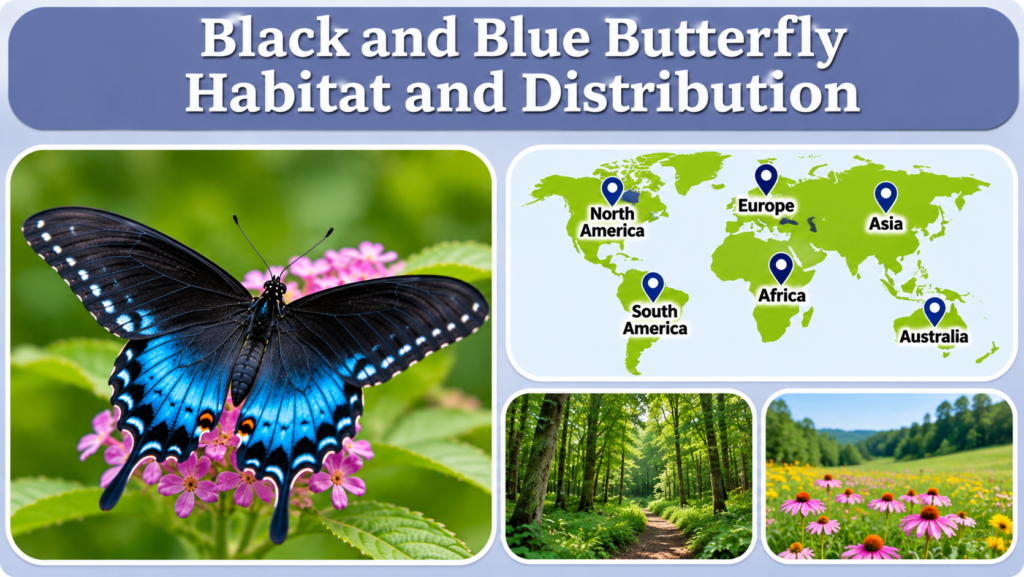
Black and blue butterflies occupy diverse habitats depending on their species, climate preferences, and food availability. Some thrive in humid tropical rainforests, while others prefer temperate woodlands and sunny gardens. Suitable vegetation, moisture, shelter, and caterpillar host plants are essential factors influencing their geographic distribution and long-term survival.
Natural Habitat
These butterflies commonly inhabit tropical forests, flowering meadows, grasslands, woodland edges, and suburban gardens. Some species prefer shaded environments, while others remain active in sunny locations with abundant flowering plants.
Geographic Distribution
Black and blue butterfly species occur across North America, South America, Europe, Africa, Asia, and Australia. Their distribution depends on environmental conditions, seasonal temperatures, and the availability of suitable host plants.
What Do Black and Blue Butterflies Eat?
The diet of black and blue butterflies varies according to their species and developmental stage. Adult butterflies use a specialized feeding tube called a proboscis to consume liquid foods. Caterpillars primarily consume plant material, obtaining the nutrients necessary for growth and development before entering the chrysalis stage.
Common food sources include:
- Flower nectar: Provides carbohydrates for flight and daily activities.
- Overripe fruits: Supply natural sugars and moisture.
- Tree sap: Contains sugars and other nutrients.
- Damp soil: Provides essential minerals through puddling behavior.
- Decaying organic matter: Supplies nutrients to certain butterfly species.
- Host plant leaves: Serve as the primary food source for caterpillars.
Black and Blue Butterfly Life Cycle
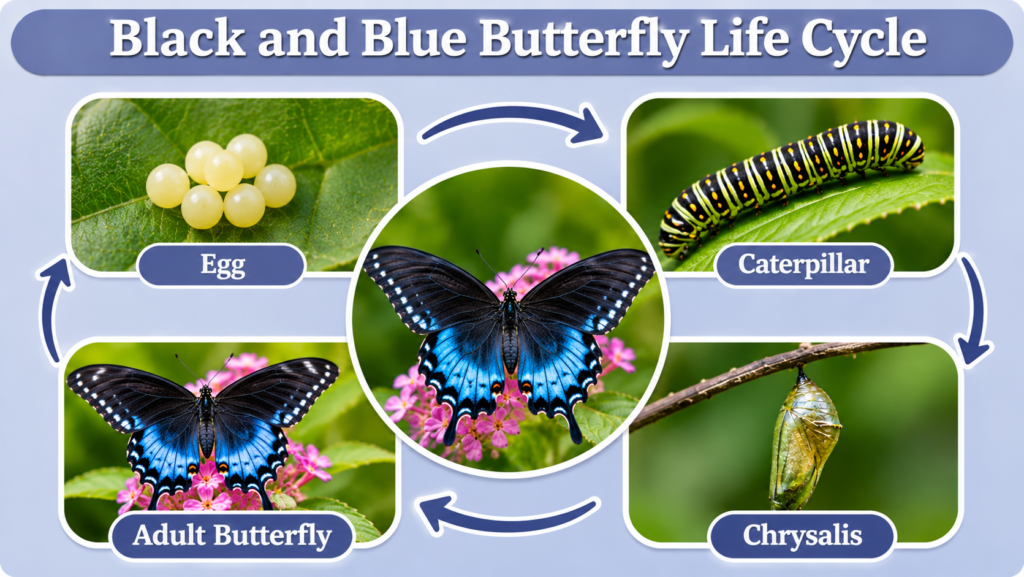
Black and blue butterflies undergo complete metamorphosis, consisting of four major developmental stages. Each stage involves physical and behavioral changes that prepare the insect for its next phase of development. The duration of this process depends on the species, environmental temperature, food availability, and seasonal conditions.
Egg
Female butterflies deposit their eggs on suitable host plants. These plants provide an immediate food source for newly hatched caterpillars.
Caterpillar
The caterpillar feeds actively on suitable vegetation and grows rapidly. It sheds its outer skin several times as its body increases in size.
Chrysalis
The mature caterpillar develops into a chrysalis, where significant physical transformation occurs. During this stage, adult structures such as wings, antennae, and reproductive organs develop.
Adult Butterfly
The adult butterfly emerges from the chrysalis and expands its wings. Once its wings become firm enough for flight, it begins feeding, searching for mates, and continuing the reproductive cycle.
7 Interesting Facts About Black and Blue Butterflies
Black and blue butterflies possess remarkable physical adaptations that contribute to their survival and reproduction. Their attractive coloration is more than a decorative feature, as it can influence predator interactions, communication, and mate recognition. These fascinating insects also contribute to biodiversity and the ecological balance of their natural habitats.
- Many brilliant blue wing colors result from microscopic light-reflecting structures.
- Some species appear to change color depending on the viewing angle.
- Certain butterflies imitate toxic species to discourage predator attacks.
- Male butterflies often display brighter blue coloration than females.
- Butterflies possess taste receptors on their feet.
- Some species absorb essential minerals from moist soil.
- Nectar-feeding butterflies contribute to flower pollination.
Are Black and Blue Butterflies Dangerous?
Black and blue butterflies are generally harmless to humans because they do not sting or possess biting mouthparts capable of injuring people. However, certain species contain defensive chemicals that make them unpleasant or toxic to predators. Their distinctive wing patterns may also serve as warning signals or imitate chemically defended species.
The Pipevine Swallowtail is a well-known example of a chemically defended butterfly. Other butterflies mimic its appearance to gain protection from potential predators.
Watching these insects from a distance is the best approach. Avoid handling their delicate wings because physical contact can damage their scales and interfere with normal activities.
How to Attract Black and Blue Butterflies to Your Garden

Creating a butterfly-friendly garden requires suitable food sources, protective vegetation, and favorable environmental conditions. Planting native flowers and appropriate caterpillar host plants can help attract local butterfly species. Maintaining a pesticide-free environment also supports their reproduction, feeding activities, and long-term survival throughout different growing seasons.
- Plant native nectar-producing flowers.
- Grow suitable caterpillar host plants.
- Avoid harmful chemical pesticides.
- Provide sunny areas for basking.
- Create sheltered spaces protected from strong winds.
- Maintain small areas of damp, mineral-rich soil.
- Grow flowers with different blooming periods.
Frequently Asked Questions
1. What is a black and blue butterfly called?
Several butterfly species feature black and blue wings, including the Pipevine Swallowtail, Blue Morpho, Ulysses Butterfly, and Red-Spotted Purple. Their scientific names, wing patterns, physical characteristics, and geographic distribution help distinguish them from one another.
2. Are black and blue butterflies rare?
Not all black and blue butterflies are rare. Some species are widespread throughout their natural habitats, while others have limited geographic distributions. Their population sizes depend on climate, habitat quality, food availability, and conservation conditions.
3. How long do black and blue butterflies live?
The adult lifespan of black and blue butterflies varies by species, ranging from several days to several weeks or longer. Environmental temperature, food availability, predators, and seasonal conditions significantly influence their overall lifespan.
4. Why are black and blue butterflies blue?
Many black and blue butterflies obtain their brilliant blue appearance from microscopic structures on their wing scales that reflect light. This phenomenon, known as structural coloration, can create metallic or iridescent effects under different lighting conditions.
5. What does a black and blue butterfly symbolize?
In popular symbolism, black and blue butterflies represent transformation, freedom, strength, peace, and personal growth. However, these interpretations vary according to cultural traditions and individual beliefs and have no scientifically established spiritual significance.