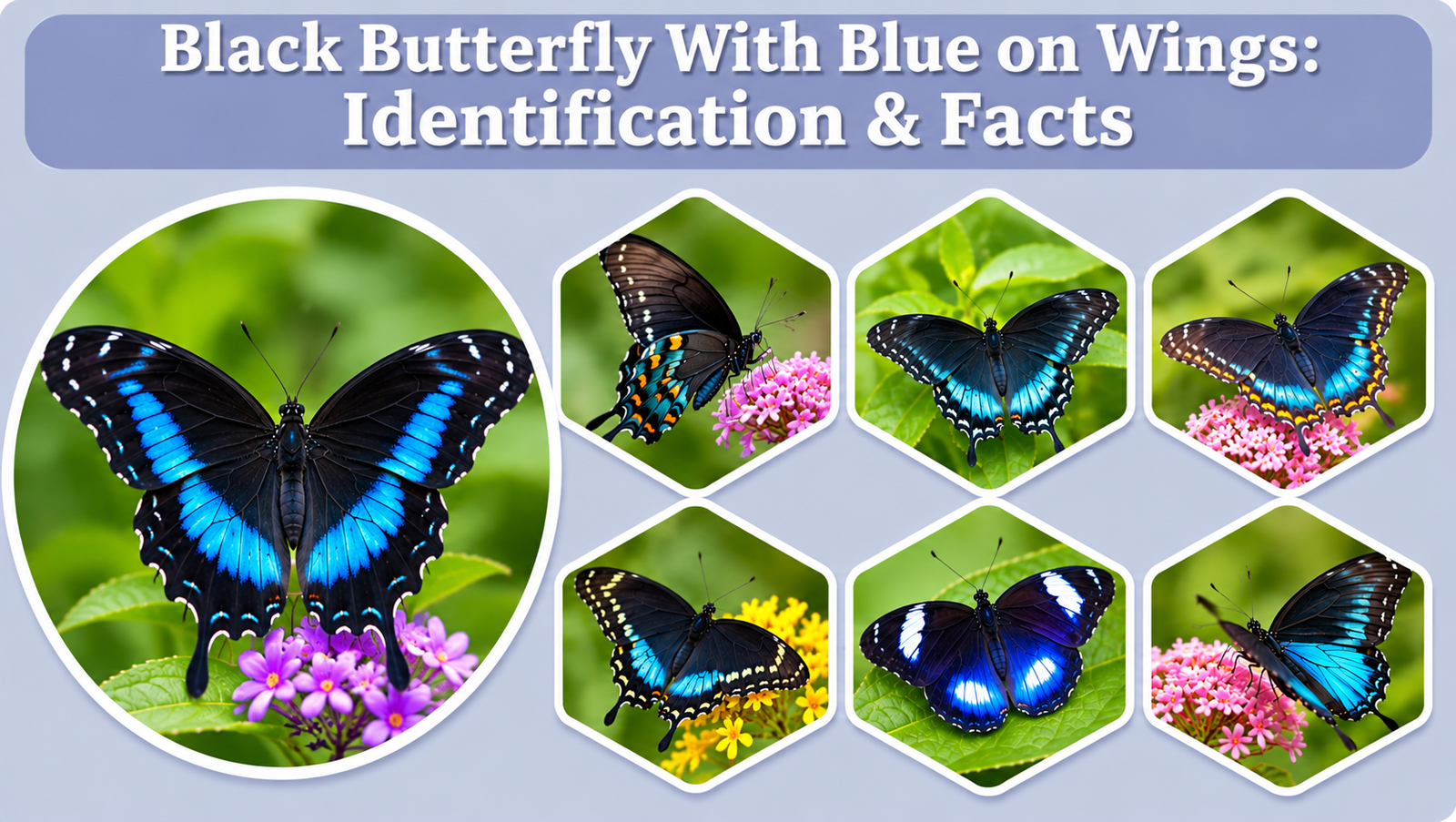
A black butterfly with blue on its wings is a beautiful insect recognized for its dark coloration and shimmering blue markings. Several butterfly species share this distinctive appearance, including the Pipevine Swallowtail, Spicebush Swallowtail, and Red-Spotted Purple. These butterflies inhabit forests, gardens, grasslands, and tropical environments worldwide. Their striking wing patterns play important roles in mate recognition, communication, and predator protection. Understanding their physical characteristics, habitat, diet, and behavior can help you identify these fascinating butterflies and appreciate their ecological importance.
How to Identify a Black Butterfly With Blue on Wings
Identifying a black butterfly with blue markings requires observing its wing patterns, body structure, and distinctive physical features. Some species display metallic blue hindwings, while others have scattered blue spots or colorful bands. Their geographic location and natural habitat also provide valuable identification clues.
- Wing color: Black with iridescent blue or turquoise markings.
- Wing pattern: Blue patches, pale spots, or colored bands.
- Wing shape: Rounded, triangular, or elongated with tails.
- Body color: Black or dark brown.
- Antennae: Slender with club-shaped tips.
- Wingspan: Varies according to species.
7 Types of Black Butterflies With Blue on Their Wings
Several butterfly species feature black and blue wing patterns. Although their coloration appears similar, these butterflies differ in size, habitat, physical characteristics, and feeding preferences. The following seven species represent recognizable examples of this attractive color combination.
1. Pipevine Swallowtail Butterfly
The Pipevine Swallowtail (Battus philenor) features black forewings and metallic blue hindwings. Males usually display brighter blue coloration than females.
These butterflies inhabit gardens, woodlands, and meadows. Their caterpillars feed on pipevine plants, which provide chemical defenses against predators.
2. Spicebush Swallowtail Butterfly
The Spicebush Swallowtail (Papilio troilus) has black wings decorated with blue or greenish hindwing markings. Females typically display more noticeable blue coloration.
This species inhabits forests and gardens throughout eastern North America. Its caterpillars primarily consume spicebush and sassafras leaves.
3. Red-Spotted Purple Butterfly
The Red-Spotted Purple (Limenitis arthemis astyanax) displays dark wings with shimmering blue markings and reddish-orange spots. Unlike swallowtails, it lacks prominent hindwing tails.
These butterflies prefer deciduous forests and woodland edges. Adults frequently consume tree sap and fermenting fruits.
4. Black Swallowtail Butterfly
The Black Swallowtail (Papilio polyxenes) features black wings with yellow spots and blue hindwing patches. Females generally have more extensive blue markings.
This butterfly inhabits gardens, agricultural fields, and grasslands. Its caterpillars feed on parsley, dill, fennel, and other related plants.
5. Eastern Tiger Swallowtail Butterfly
The dark female form of the Eastern Tiger Swallowtail (Papilio glaucus) displays black wings with attractive blue markings. Its appearance resembles the chemically defended Pipevine Swallowtail.
These butterflies inhabit forests, parks, and riverside areas. Their caterpillars consume leaves from several deciduous tree species.
6. Diana Fritillary Butterfly
Female Diana Fritillary butterflies (Speyeria diana) feature dark wings with distinctive blue markings. Males have contrasting orange and brown coloration.
This species inhabits mountainous forests and woodland openings. Its caterpillars primarily feed on violet plants.
7. Great Eggfly Butterfly
Male Great Eggfly butterflies (Hypolimnas bolina) display black wings with white patches surrounded by iridescent blue or violet markings. Females exhibit more variable coloration.
These butterflies inhabit gardens, grasslands, and forest edges across parts of Asia, Australia, and the Pacific Islands.
Black Butterfly With Blue Wings: Habitat and Distribution

Black butterflies with blue markings inhabit diverse environments worldwide. Their distribution depends on climate, vegetation, food availability, and suitable breeding conditions. Some species prefer humid tropical environments, while others thrive in temperate regions.
Natural Habitat
These butterflies commonly inhabit tropical rainforests, deciduous woodlands, gardens, and flowering meadows. Areas containing abundant nectar-producing flowers and caterpillar host plants provide favorable conditions for survival.
Geographic Distribution
Different black and blue butterfly species occur across North America, South America, Asia, Africa, and Australia. Their populations vary according to seasonal temperatures, habitat quality, and local vegetation.
What Do Black Butterflies With Blue Wings Eat?

The feeding habits of black and blue butterflies depend on their species and developmental stage. Adults consume liquid foods using a specialized feeding tube called a proboscis. Caterpillars primarily consume leaves from suitable host plants.
Common food sources include:
- Flower nectar: Provides energy for daily activities.
- Fermenting fruits: Supply natural sugars and moisture.
- Tree sap: Contains carbohydrates and other nutrients.
- Damp soil: Provides essential minerals.
- Host plant leaves: Support caterpillar growth and development.
Why Do Black Butterflies Have Blue on Their Wings?
Many butterflies develop iridescent blue coloration through microscopic structures within their wing scales. These structures interact with light, producing shimmering colors that may change depending on the viewing angle.
Blue markings can also contribute to mate recognition and predator protection. Some harmless butterflies imitate chemically defended species, reducing their chances of being attacked by predators.
What Does a Black Butterfly With Blue Wings Mean?
Black butterflies with blue markings are often associated with transformation, mystery, freedom, and emotional balance in popular symbolism. Black commonly represents strength and change, while blue symbolizes peace and tranquility.
Common symbolic meanings include:
- Transformation: Personal growth and new beginnings.
- Peace: Emotional balance and calmness.
- Strength: Resilience during challenging circumstances.
- Freedom: Independence and new opportunities.
- Hope: Positive changes and expectations.
These interpretations depend on cultural traditions and personal beliefs. They have no scientifically established supernatural significance.
How to Attract Black Butterflies With Blue Wings

Creating a butterfly-friendly garden encourages native butterfly species to visit your outdoor space. Providing appropriate food sources, protective vegetation, and favorable environmental conditions supports feeding and reproduction.
- Grow native nectar-producing flowers.
- Plant suitable caterpillar host plants.
- Avoid broad-spectrum chemical pesticides.
- Provide sunny locations for basking.
- Maintain sheltered areas with vegetation.
- Create shallow patches of moist soil.
Frequently Asked Questions
1. What is a black butterfly with blue on its wings called?
Several species feature black wings with blue markings, including the Pipevine Swallowtail, Spicebush Swallowtail, and Red-Spotted Purple. Wing patterns and geographic location help determine the correct species.
2. Are black butterflies with blue wings rare?
Many black and blue butterfly species are relatively common within their natural habitats. Their abundance depends on geographic distribution, environmental conditions, seasonal temperatures, and food availability.
3. Are black butterflies with blue wings poisonous?
Certain species contain defensive chemicals that discourage predators from eating them. However, these butterflies generally pose no danger to humans when observed without handling or ingestion.
4. How long do black and blue butterflies live?
Adult lifespans vary depending on the species, ranging from several days to several weeks or longer. Food availability, temperature, and predators influence their survival.
5. Why do black butterflies have shiny blue wings?
Microscopic structures on their wing scales reflect particular wavelengths of light, producing iridescent blue coloration. This natural phenomenon is scientifically known as structural coloration.