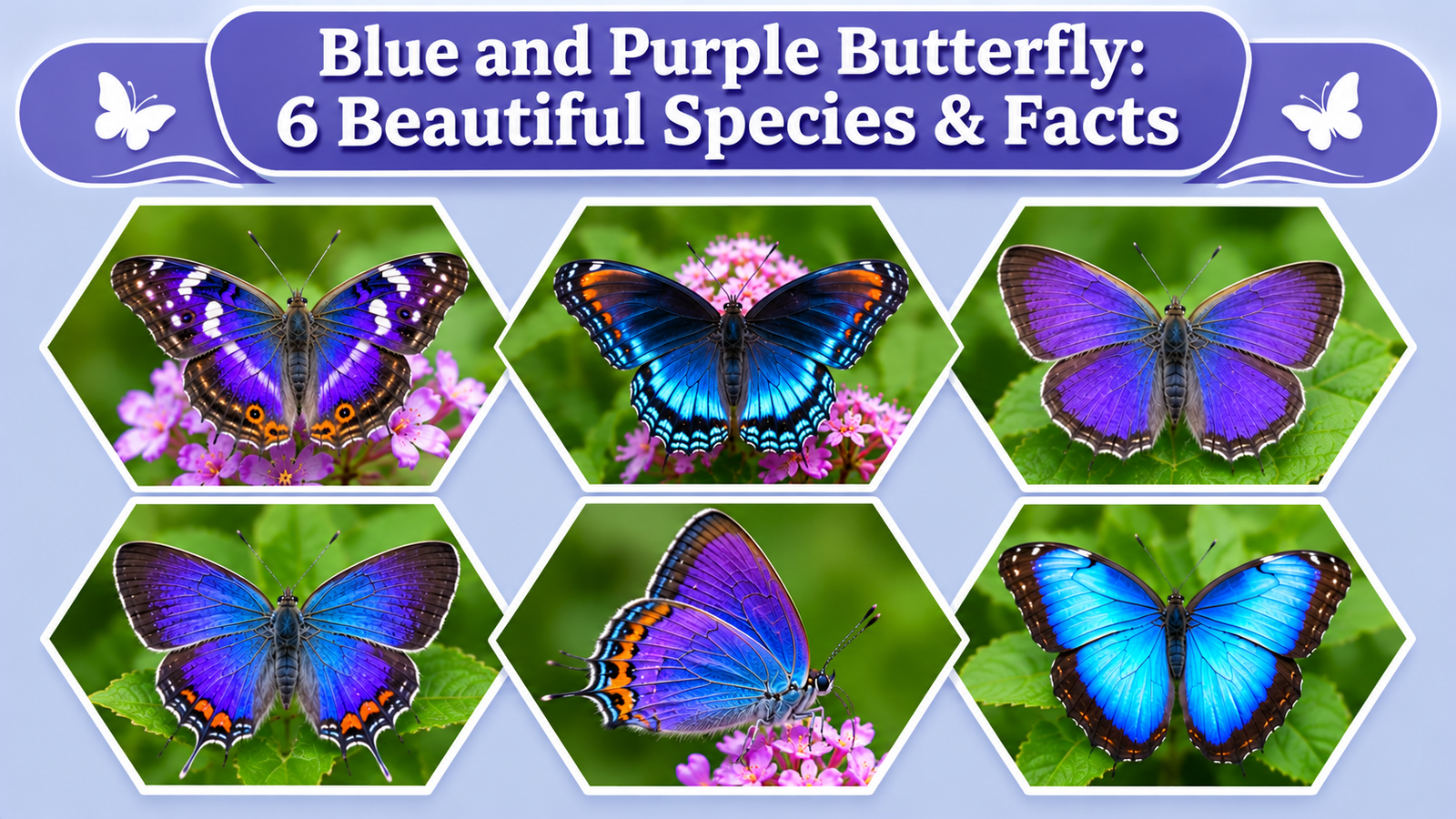
Blue and purple butterflies are among the most beautiful insects in nature, admired for their shimmering wings and fascinating colors. Some species display brilliant metallic blue mixed with violet, while others have dark wings with striking purple reflections. From the Purple Emperor to the colorful Red-spotted Purple, these butterflies inhabit forests, gardens, and tropical environments worldwide. This guide explores six beautiful blue and purple butterfly species, including their identification, habitats, diets, and unique characteristics. You’ll also learn what causes their unusual colors and what these butterflies symbolize.
Are Blue and Purple Butterflies Real?
Yes, real blue and purple butterflies exist, although not every species displays both colors simultaneously. Some have naturally iridescent wings that appear blue, violet, or purple depending on how sunlight reflects from their surfaces.
The Purple Emperor and Great Purple Emperor are particularly impressive examples. Their wings contain microscopic structures that reflect light and produce brilliant blue-purple coloration. The Blue Morpho is another famous butterfly with intense structural coloration, although its wings are primarily blue rather than purple.
6 Beautiful Types of Blue and Purple Butterflies
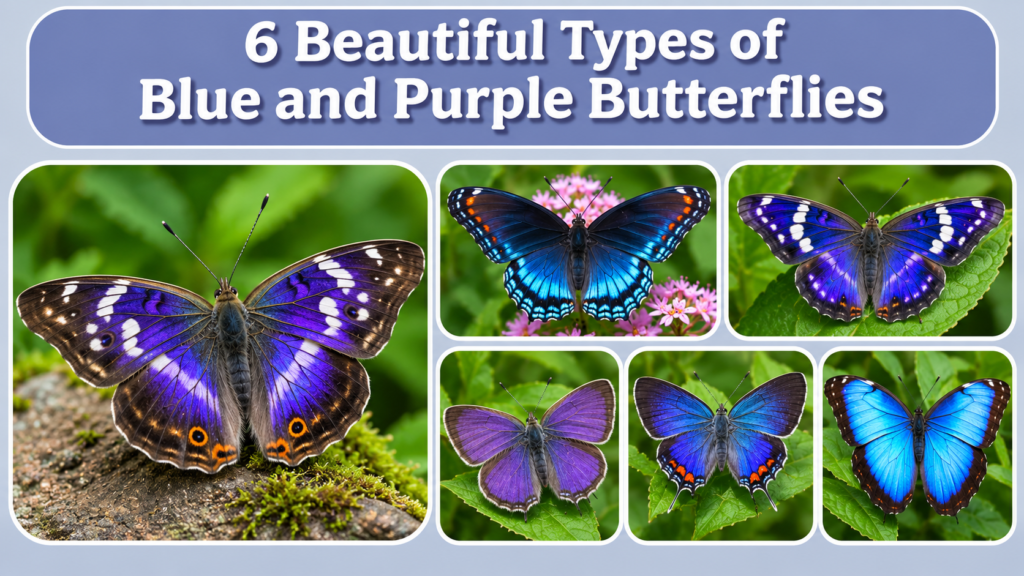
Several butterfly species display stunning combinations of blue, purple, and black. Their appearances vary depending on their sex, geographical location, and lighting conditions. Here are six fascinating species and their distinguishing characteristics.
1. Purple Emperor Butterfly (Apatura iris)
The Purple Emperor Butterfly is a spectacular butterfly recognized for its dark wings with brilliant violet-blue reflections. Male butterflies display shimmering purple coloration, while females have predominantly brown wings.
Identification:
- Scientific Name: Apatura iris
- Family: Nymphalidae
- Wingspan: 7–9.2 cm
- Wing Color: Dark brown with purple-blue iridescence
- Distinctive Feature: White wing bands and orange-ringed eyespots
Purple Emperors inhabit mature deciduous woodlands across Europe and parts of Asia. Their caterpillars primarily feed on willow leaves, while adults obtain nutrients from tree sap, honeydew, and other natural sources.
These butterflies spend considerable time in forest canopies, making them challenging to observe.
2. Red-spotted Purple Butterfly (Limenitis arthemis astyanax)
The Red-spotted Purple Butterfly is a beautiful North American butterfly known for its shimmering blue-black wings and reddish-orange markings. Although its name includes purple, its wings often appear more blue than violet.
Identification:
- Scientific Name: Limenitis arthemis astyanax
- Family: Nymphalidae
- Wingspan: Approximately 6–9 cm
- Wing Color: Iridescent blue-black
- Distinctive Feature: Orange-red spots underneath the wings
Red-spotted Purples live in deciduous forests, woodland edges, gardens, and wooded residential areas.
Adults primarily feed on tree sap, fermenting fruits, and other nutrient-rich liquids. Their caterpillars consume leaves from various host trees, including wild cherry and willow.
Interestingly, this species resembles the chemically protected Pipevine Swallowtail, helping discourage predators.
3. Great Purple Emperor (Sasakia charonda)
The Great Purple Emperor is one of Asia’s most impressive blue and purple butterflies. Male butterflies display brilliant blue-purple wings surrounded by dark brown borders and contrasting pale markings.
Identification:
- Scientific Name: Sasakia charonda
- Family: Nymphalidae
- Wing Color: Metallic blue-purple with dark borders
- Body: Dark and robust
- Distinctive Feature: Large wings with shimmering purple-blue patches
Great Purple Emperors inhabit forests and wooded landscapes across East Asia, including Japan, China, and surrounding regions.
Their caterpillars feed on hackberry trees, while adults consume tree sap and other natural liquids.
The Great Purple Emperor is particularly notable as Japan’s national butterfly. Its wing coloration results from microscopic structures that interact with light, producing remarkable iridescence.
4. Purple Hairstreak Butterfly (Favonius quercus)
The Purple Hairstreak Butterfly is a small, beautiful butterfly recognized for its violet-blue upper wings. Males display extensive purple coloration, while females have darker wings with smaller purple patches.
Identification:
- Scientific Name: Favonius quercus
- Family: Lycaenidae
- Wing Color: Violet-purple with dark borders
- Underside: Silvery gray
- Distinctive Feature: Small hindwing tails and purple upper wings
Purple Hairstreaks inhabit oak woodlands throughout much of Europe. Their caterpillars depend on oak trees for food and development.
Adults frequently remain high in tree canopies, making them difficult to photograph.
During warm summer afternoons, these butterflies may fly around oak branches, occasionally revealing their shimmering purple wings.
5. Great Purple Hairstreak (Atlides halesus)
The Great Purple Hairstreak is a striking blue and purple butterfly found in parts of North and Central America. Despite its name, its upper wings are primarily metallic blue, while the undersides may display a purplish-brown sheen.
Identification:
- Scientific Name: Atlides halesus
- Family: Lycaenidae
- Wing Color: Iridescent blue with dark edges
- Underside: Dark brown with colorful markings
- Distinctive Feature: Delicate tails and orange-red spots
These butterflies inhabit woodlands, gardens, and areas where mistletoe plants grow.
Adults feed on flower nectar, while caterpillars depend on mistletoe as their host plant.
Their beautiful blue wings and contrasting orange markings make them especially noticeable when resting with their wings partially open.
6. Blue Morpho Butterfly (Morpho peleides)
The Blue Morpho Butterfly is one of the world’s most recognizable blue butterflies. Although predominantly electric blue, its wings can appear violet-blue under certain lighting conditions, making it relevant when identifying blue and purple butterflies.
Identification:
- Scientific Name: Morpho peleides
- Family: Nymphalidae
- Wing Color: Bright iridescent blue with dark borders
- Underside: Brown with circular eyespots
- Distinctive Feature: Large, reflective blue wings
Blue Morphos inhabit tropical forests throughout Central and South America.
Adults obtain nutrients mainly from fermenting fruits and other natural liquids. Their caterpillars feed on suitable tropical host plants.
The brilliant appearance of their wings is created by microscopic structures that reflect blue light. This coloration produces striking flashes when they fly through sunlit forests.
How to Identify a Blue and Purple Butterfly
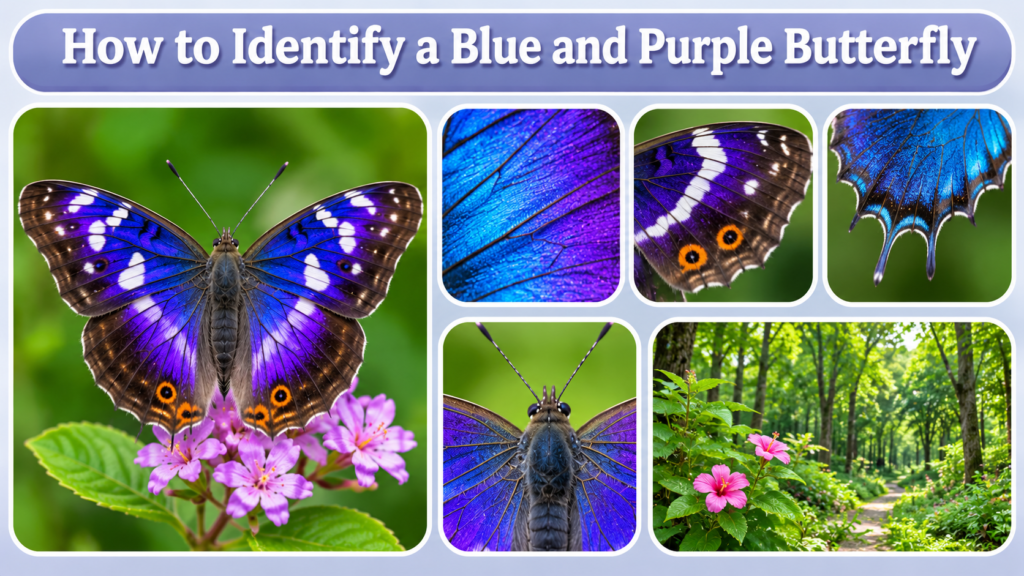
Identifying a blue and purple butterfly involves examining its wing colors, markings, size, and habitat. Some species look distinctly purple, while others appear blue with violet reflections.
Common Identification Features
- Wing Colors: Metallic blue, violet, purple, or blue-black.
- Wing Patterns: Dark borders, white bands, spots, or eyespots.
- Wing Shape: Rounded, elongated, or decorated with small tails.
- Body Color: Usually black, brown, or dark gray.
- Habitat: Forests, woodlands, gardens, and tropical areas.
Black, Blue, and Purple Butterfly Identification
Butterflies with black, blue, and purple wings often display iridescent patterns against dark backgrounds. The Purple Emperor has distinctive white bands, while the Red-spotted Purple displays metallic-blue wings with reddish-orange markings underneath.
Some swallowtails, including the Pipevine Swallowtail, also have dark wings with brilliant blue reflections.
Why Are Some Butterflies Blue and Purple?
Many butterflies develop their unusual blue and purple appearance through structural coloration.
Microscopic structures within their wing scales reflect selected wavelengths of light, producing vivid colors without requiring corresponding blue or purple pigments.
As the viewing angle changes, these wings may appear violet, electric blue, or nearly black. This phenomenon is particularly noticeable in Purple Emperors and Blue Morphos.
Structural coloration contributes to the remarkable diversity of butterfly wing patterns.
What Does a Blue and Purple Butterfly Mean?
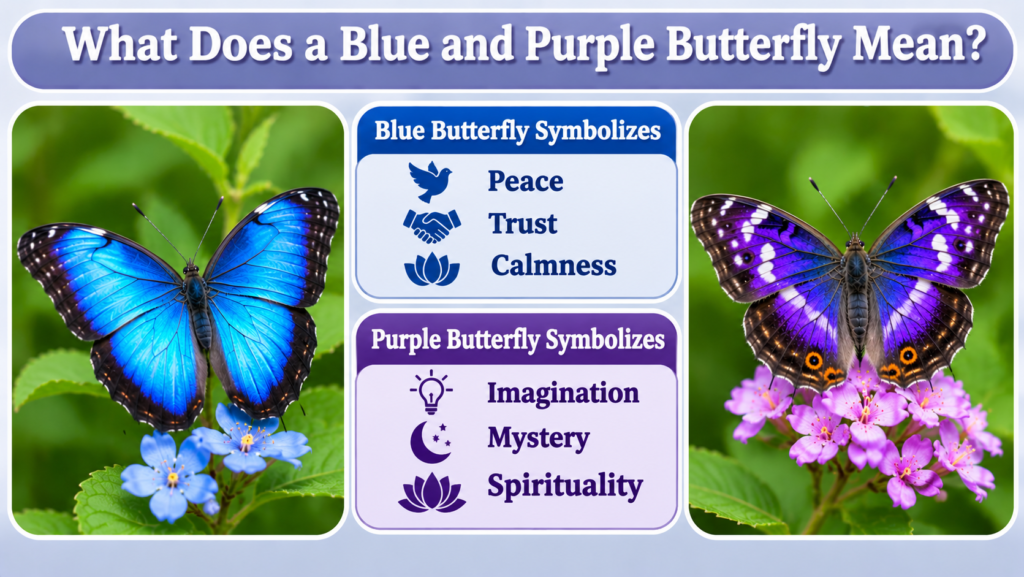
The blue and purple butterfly meaning is commonly associated with transformation, creativity, hope, and personal growth.
In popular symbolism, blue often represents peace, trust, and calmness, while purple is associated with imagination, mystery, and spirituality.
Together, these colors may symbolize positive change, emotional healing, or a new beginning.
Blue and purple butterfly tattoo designs frequently use these interpretations. However, their symbolic meanings are personal and cultural rather than scientifically established characteristics of the insects.
Are Blue and Purple Monarch Butterflies Real?
A naturally blue and purple Monarch Butterfly is not a recognized color form of Danaus plexippus.
Real monarchs have orange wings with black veins, black borders, and small white spots. Images showing purple or electric-blue monarch butterflies are often artistic illustrations or digitally altered photographs.
Some naturally blue-black butterflies may resemble monarchs or other large butterfly species, but they should not be confused with true monarchs.
FAQs
1. What Is the Most Beautiful Blue and Purple Butterfly?
The Purple Emperor and Great Purple Emperor are among the most admired butterflies displaying blue-purple coloration. Their iridescent wings create beautiful shimmering effects in sunlight. Blue Morphos are also widely admired for their brilliant electric-blue appearance.
2. Are Blue and Purple Butterflies Rare?
Some blue and purple butterfly species are uncommon or difficult to observe, while others are widespread. Their abundance depends on geographical location, habitat conditions, and food availability. Purple Emperors, for example, may be challenging to spot because they spend considerable time in treetops.
3. Where Do Blue and Purple Butterflies Live?
Blue and purple butterflies inhabit tropical rainforests, deciduous woodlands, gardens, and forest edges. They occur across Europe, Asia, Africa, and the Americas, depending on the species. Most require suitable host plants for their caterpillars.
4. What Is a Small Blue and Purple Butterfly Called?
The Purple Hairstreak is a small butterfly known for its beautiful violet-purple upper wings. The Great Purple Hairstreak is another relatively small species with metallic-blue coloration. Both belong to the Lycaenidae family.
5. Do Real Blue and Purple Butterflies Change Color?
Many blue and purple butterflies appear to change color depending on lighting conditions and viewing angles. Their microscopic wing structures reflect light differently as they move. However, the wings are not actively changing pigments; the visible color changes because of optical effects.