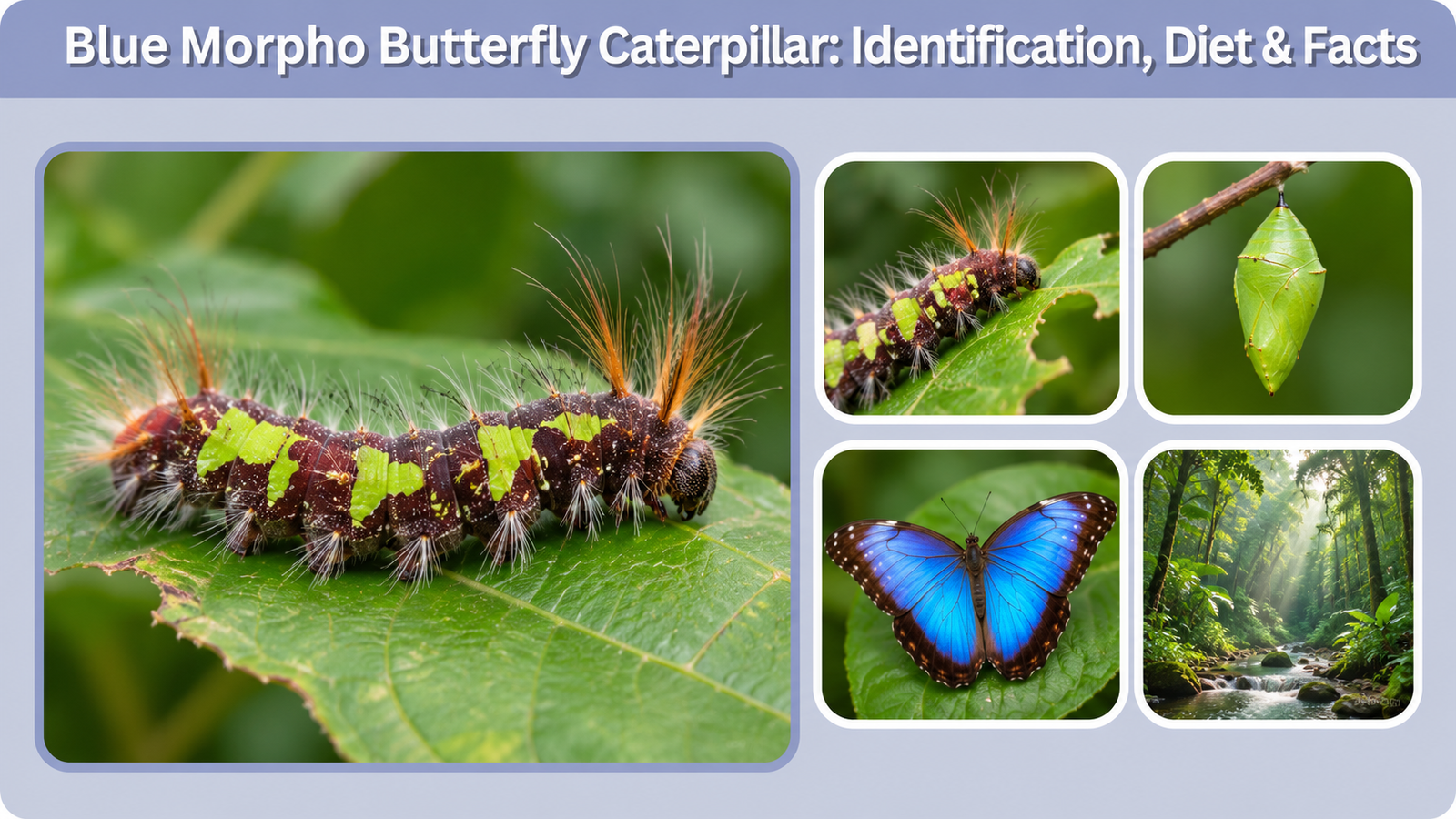
The blue morpho butterfly caterpillar is the larval stage of one of the world’s most recognizable tropical butterflies. Unlike the adult butterfly’s brilliant metallic blue wings, its caterpillar has a reddish-brown or greenish body with distinctive markings and protective hairs. These caterpillars primarily inhabit tropical forests, where they feed on suitable host plants and undergo several developmental stages. Understanding their appearance, habitat, diet, behavior, and life cycle provides valuable insight into how these remarkable insects transform into beautiful blue morpho butterflies.
How to Identify a Blue Morpho Butterfly Caterpillar
Blue morpho caterpillars have distinctive physical characteristics that separate them from many other tropical butterfly larvae. Their body colors, hair tufts, and markings change throughout development. Although several species belong to the Morpho genus, the following characteristics primarily describe the commonly encountered Morpho helenor peleides, also known as Morpho peleides.
- Scientific name: Morpho helenor peleides
- Family: Nymphalidae
- Body color: Reddish-brown, maroon, green, or yellowish-green.
- Body markings: Contrasting green or yellow patches.
- Body hairs: Prominent reddish and white hair tufts.
- Size: Mature caterpillars can reach approximately 7 cm.
- Body shape: Elongated and segmented.
- Chrysalis color: Typically bright green.
Blue Morpho Butterfly Caterpillar Habitat and Distribution
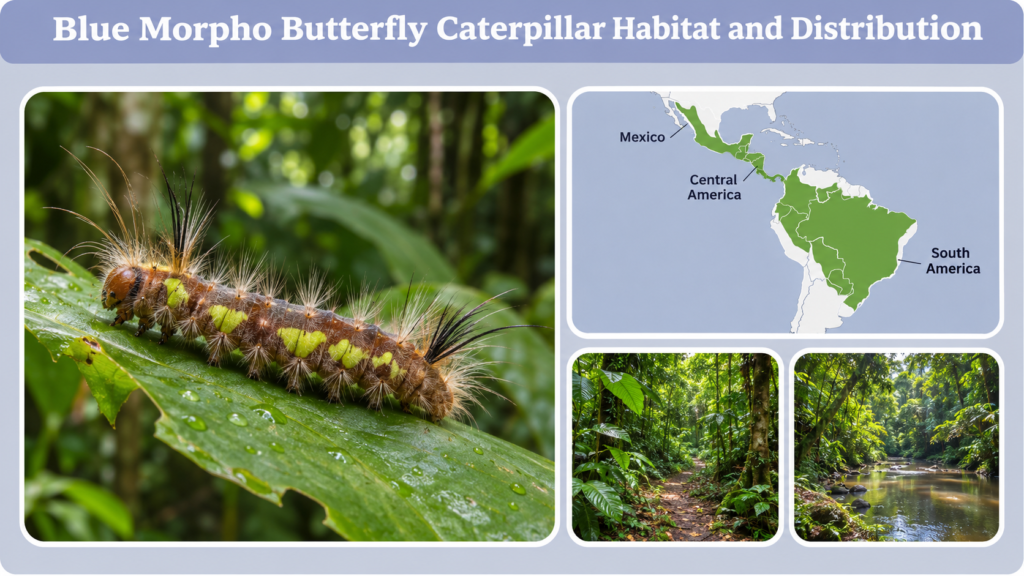
Blue morpho caterpillars primarily inhabit tropical environments with abundant vegetation, warm temperatures, and suitable host plants. Their survival depends heavily on the availability of nutritious leaves and favorable environmental conditions. Unlike adult butterflies, caterpillars spend most of their time on or near their food plants.
Natural Habitat
These caterpillars commonly inhabit lowland forests, tropical rainforests, mountain forests, and areas of secondary vegetation. Dense plant growth provides food, shelter, and protection from environmental disturbances.
Geographic Distribution
Blue morpho butterflies occur from Mexico through Central America and into South America. Their caterpillars can be found in suitable habitats across countries such as Costa Rica, Panama, Colombia, Ecuador, and Brazil. Ask IFAS+1
What Do Blue Morpho Butterfly Caterpillars Eat?
Blue morpho caterpillars are primarily herbivorous insects that consume leaves from suitable host plants. They possess chewing mouthparts that allow them to break down plant tissue and obtain essential nutrients. Many of their preferred host plants belong to the pea and bean family, scientifically known as Fabaceae.
Common Host Plants
Blue morpho caterpillars feed on several tropical plant species. Commonly reported host plant genera include:
- Machaerium
- Pterocarpus
- Dalbergia
- Lonchocarpus
- Inga
- Erythrina
- Swartzia
Host plant preferences vary depending on the butterfly species and geographic location.
Caterpillar Feeding Behavior
Young caterpillars initially consume small amounts of leaf material before increasing their food intake as they grow. Mature larvae require considerably more nutrients to support their physical development and prepare for metamorphosis.
Blue Morpho Butterfly Caterpillar Life Cycle
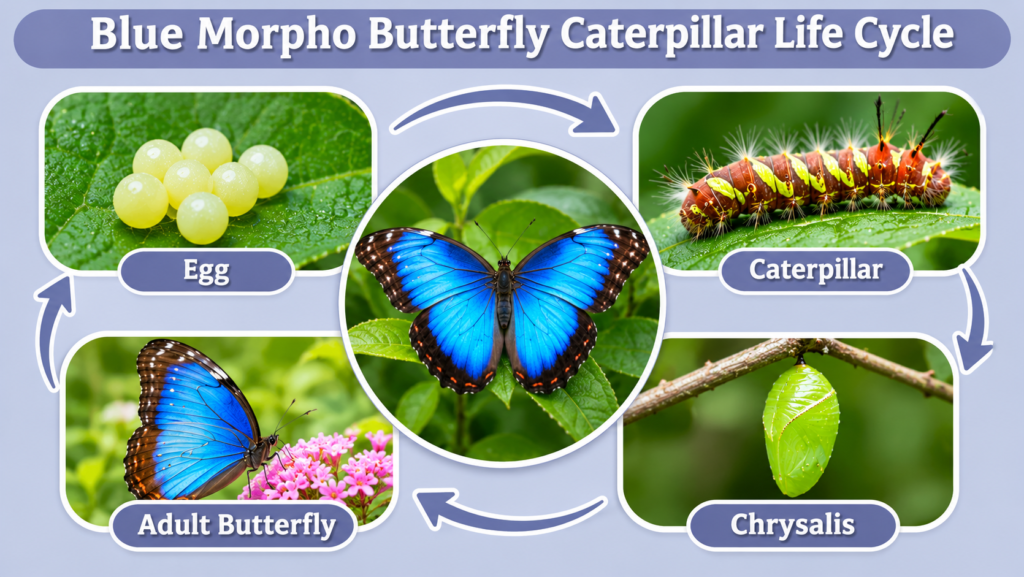
The blue morpho butterfly undergoes complete metamorphosis through four major developmental stages. Each stage involves significant changes in physical appearance, feeding behavior, and body structure. Temperature, humidity, host plant availability, and environmental conditions influence the duration and success of its development.
1. Egg Stage
Female blue morpho butterflies deposit small, pale green eggs on suitable host plants. These eggs are rounded and may develop noticeable brown markings before hatching.
2. Caterpillar Stage
After hatching, the young caterpillar begins feeding on plant material. It progresses through several growth stages called instars, shedding its outer skin as its body increases in size.
During development, its body coloration and hair patterns gradually change. The caterpillar stores nutrients that support its transformation into an adult butterfly.
3. Chrysalis Stage
Once fully developed, the caterpillar stops feeding and prepares for pupation. Its body becomes greener before forming a chrysalis in a sheltered location.
The green chrysalis provides camouflage among surrounding vegetation. Inside this protective structure, the caterpillar undergoes metamorphosis and develops adult butterfly characteristics.
4. Adult Butterfly Stage
The mature butterfly emerges from its chrysalis with soft, folded wings. After expanding and strengthening its wings, it begins flying, feeding, and searching for potential mates.
Unlike the caterpillar, the adult blue morpho primarily consumes liquid foods such as fermenting fruit juices and tree sap.
Are Blue Morpho Butterfly Caterpillars Poisonous?
Blue morpho butterfly caterpillars possess protective features that help discourage potential predators. Their conspicuous hair tufts and distinctive markings may contribute to their natural defense strategies. However, having protective hairs does not necessarily mean that a caterpillar is poisonous or venomous.
Direct contact with caterpillar hairs may cause skin irritation in sensitive individuals. It is advisable to observe these insects without touching them, especially when their species has not been confirmed.
Blue Morpho Butterfly Caterpillar Behavior and Defense Mechanisms
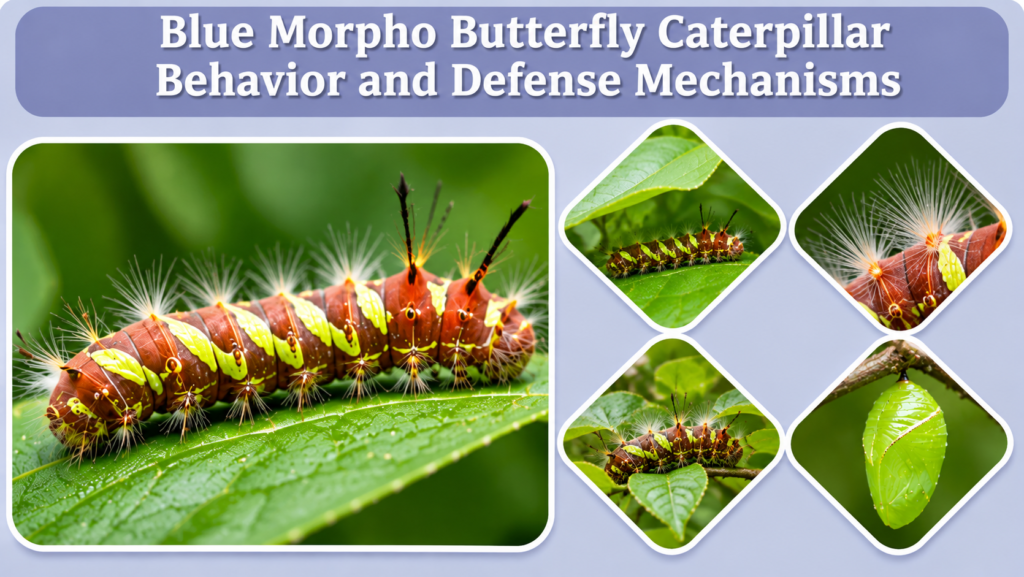
Blue morpho caterpillars rely on several physical and behavioral adaptations to survive in tropical forests. Birds, predatory insects, and other animals can threaten them throughout their development. Their coloration, resting behavior, and protective body structures help reduce their vulnerability.
Natural Camouflage
The combination of brown, green, and yellow markings helps disrupt the caterpillar’s outline. This coloration can make it more difficult for predators to distinguish the insect from surrounding leaves and branches.
Protective Hairs
The caterpillar’s prominent hair tufts may discourage certain predators from attacking. These structures also contribute to its distinctive physical appearance throughout development.
7 Interesting Blue Morpho Butterfly Caterpillar Facts
Blue morpho caterpillars possess fascinating characteristics that make them distinctive among tropical butterfly larvae. Their appearance differs dramatically from that of adult blue morpho butterflies, and their developmental process demonstrates the remarkable complexity of insect metamorphosis.
- Their bodies do not have the brilliant metallic blue coloration of adult butterflies.
- Caterpillars undergo multiple molts before reaching maturity.
- Their preferred host plants frequently belong to the legume family.
- Body coloration changes throughout their development.
- Their hair tufts may help deter potential predators.
- Their diet changes dramatically after metamorphosis.
- Their green chrysalis helps them blend into surrounding vegetation.
Frequently Asked Questions
1. What does a blue morpho butterfly caterpillar look like?
A blue morpho caterpillar typically has a segmented body with reddish-brown, green, or yellow markings and noticeable hair tufts. Its appearance changes during different developmental stages, making younger larvae look different from fully mature caterpillars.
2. How long does a blue morpho stay a caterpillar?
The caterpillar stage generally lasts several weeks, depending on temperature, food availability, and environmental conditions. During this period, the larva feeds actively and progresses through multiple growth stages before forming a chrysalis.
3. Can you touch a blue morpho butterfly caterpillar?
Touching a blue morpho caterpillar is not recommended because its hairs may irritate sensitive skin. Observing it without direct contact also helps protect the caterpillar from accidental injury, stress, and physical damage.
4. What color is a blue morpho butterfly caterpillar?
Blue morpho caterpillars commonly display reddish-brown, maroon, yellow, and green coloration. Their body patterns change as they mature, and they typically develop greener coloration shortly before entering the chrysalis stage.
5. Where can you find blue morpho butterfly caterpillars?
Blue morpho caterpillars inhabit tropical forests throughout Mexico, Central America, and parts of South America. They are usually found on suitable host plants, particularly certain tropical trees and shrubs belonging to the legume family.