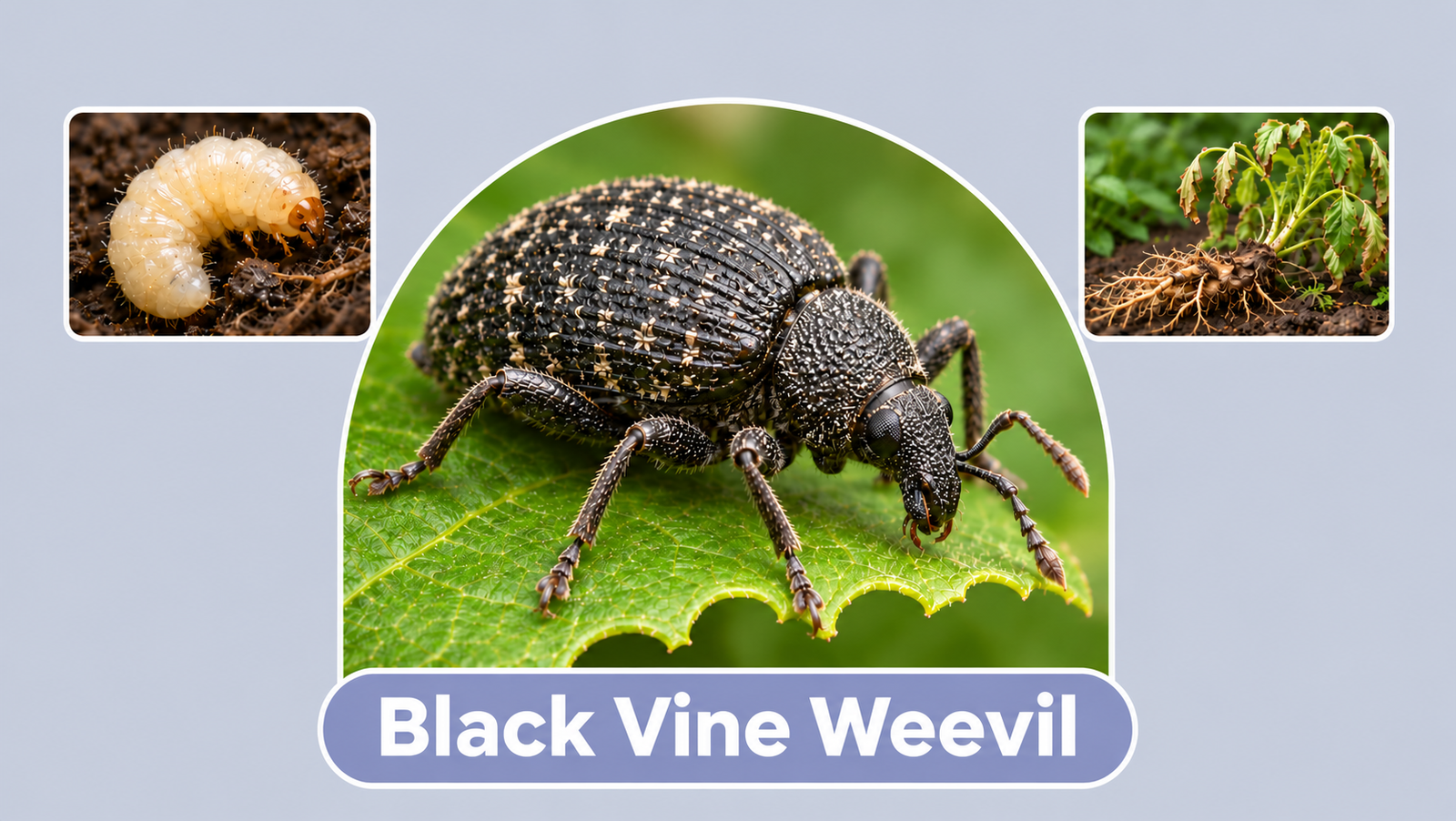
Black vine weevils are small, flightless beetles that can cause serious trouble for garden plants. Adults leave uneven notches along leaf edges, but the greater danger often stays hidden underground: their pale, C-shaped larvae feed on roots and can leave plants weak, wilted, or dead. Because root damage may look like drought or disease, an infestation can be difficult to spot at first. This guide explains how to identify black vine weevils, recognize their damage, understand their life cycle, and protect vulnerable plants using practical control methods.
What Is a Black Vine Weevil?
The black vine weevil (Otiorhynchus sulcatus) is a beetle in the broad-nosed weevil family, Curculionidae. It is also called the vine weevil or taxus weevil. Native to Europe, it has spread to other regions, including parts of North America, and can damage ornamental plants, fruit crops, nursery stock, and container-grown plants.
Both adults and larvae feed on plants, but they cause different kinds of injury. Adult beetles chew notches along leaf edges, while the pale, soil-dwelling larvae eat roots and sometimes damage the plant crown near the soil line. Root feeding can weaken or kill a plant, particularly when the plant is young, growing in a pot, or already under stress.
Black vine weevils are flightless and most active at night. They hide during the day in leaf litter, mulch, dense foliage, or other dark places near host plants. Because the adults are inconspicuous and root damage happens underground, an infestation may go unnoticed until a plant begins to wilt.
How to Identify a Black Vine Weevil
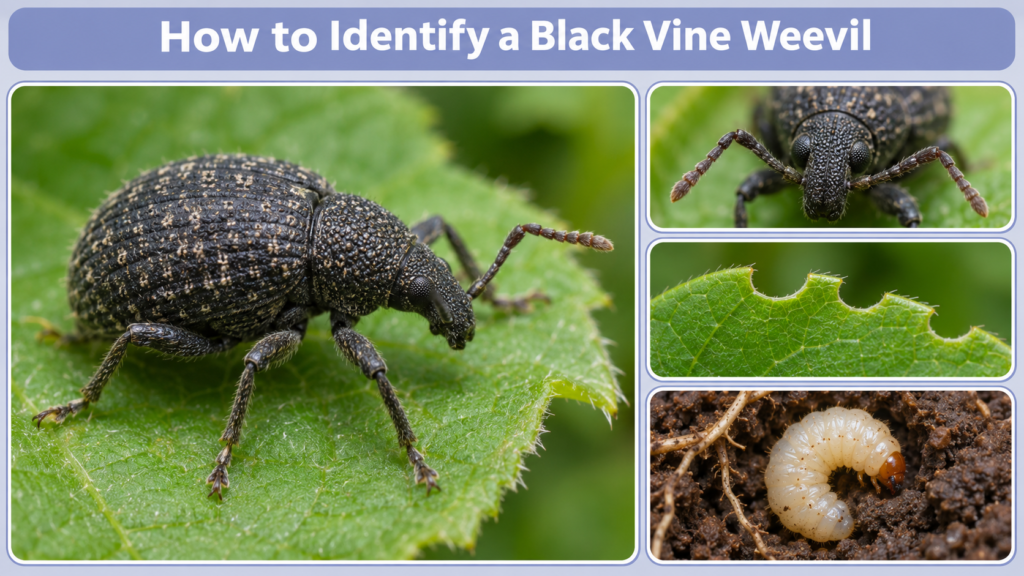
Adult black vine weevils are usually dark gray, brownish-black, or nearly black. They have an oval body, a short, broad snout, and elbowed antennae. Small pale or golden flecks may appear on their wing covers. Adults are commonly around 9–13 mm long, though size and markings can vary.
The larvae are cream-white, legless grubs with brown heads. They often curl into a C shape when uncovered and may reach roughly 10–15 mm when mature. Finding a grub among a plant’s roots is a stronger clue than its appearance alone, since other weevil larvae can look similar.
Adult Weevils and Leaf Notches
Look for irregular, rounded notches cut into the outer edges of leaves. The notches may appear on lower foliage first because adult weevils crawl up from the ground. They feed at night, so check plants after dark with a flashlight. If disturbed, an adult may drop from the plant and remain still.
Leaf-edge notching is often more noticeable than harmful. It can spoil the appearance of a plant, but serious decline usually points to root-feeding larvae. Fresh notches can be an early warning that adults are present and may lay eggs in the nearby soil.
Larvae and Root Damage
To inspect for grubs, gently remove a plant from its pot or carefully loosen soil around the roots. Look for white, legless larvae with brown heads, along with chewed or missing fine roots. In containers, larvae may be found within the root ball or near the bottom of the pot.
Avoid pulling apart healthy roots unnecessarily. If the plant is already loose, wilting, or declining, inspect the root zone and the crown—the area where the stem meets the roots. Larvae may also feed on the outer tissues of larger roots or girdle the plant near the soil surface.
Plants Black Vine Weevils Attack
Black vine weevils feed on a wide range of cultivated and wild plants. Commonly affected hosts include rhododendron, yew, euonymus, hemlock, strawberry, cyclamen, and other ornamentals. The exact host plants can differ by region and growing conditions.
Container plants are especially vulnerable because larvae can remain hidden in the growing medium and feed within a limited root space. Nursery plants can also introduce the pest into a garden if eggs or larvae are already present in the potting mix. Examine the leaves, root ball, and potting medium when buying plants, especially if nearby plants show notching or unexplained wilting.
Adult feeding tends to affect broad-leaved evergreens visibly, but the larvae may damage a wider range of plants. A plant with no obvious leaf notches can still have root injury, so consider other signs such as poor growth, yellowing, or a loose root ball.
What Does Black Vine Weevil Damage Look Like?
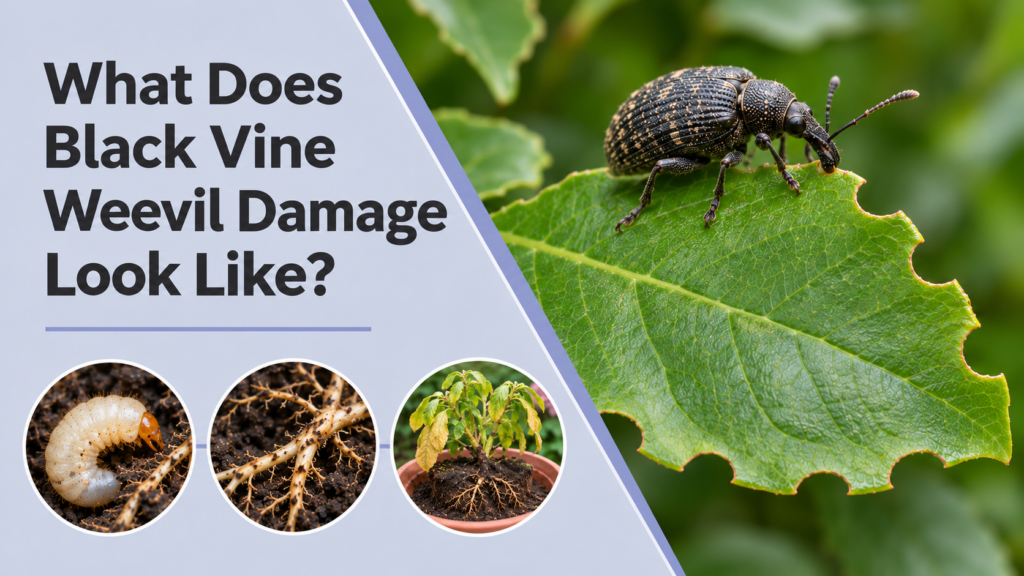
Adult feeding creates shallow, rounded notches along leaf margins. The edges may look scalloped or ragged, especially on lower leaves. This damage is a useful clue, but it does not confirm that larvae are already harming the roots.
Larval feeding is more serious. Early symptoms can include slow growth, yellowing leaves, wilting, or branches that die back. A plant may wilt even when the soil is moist because damaged roots cannot take up enough water. In advanced infestations, the roots may be severely reduced, and the plant may pull easily from the soil. Larvae can also chew around the crown, interrupting the plant’s connection between roots and stems.
These symptoms can resemble drought, waterlogged soil, root disease, or transplant shock. Check the roots before assuming that weevils are the cause. The combination of leaf-edge notches, grubs in the root zone, and chewed roots gives a stronger diagnosis than any one symptom alone. Root-feeding larvae can cause severe injury, particularly in container plants and young plants.
Black Vine Weevil Life Cycle
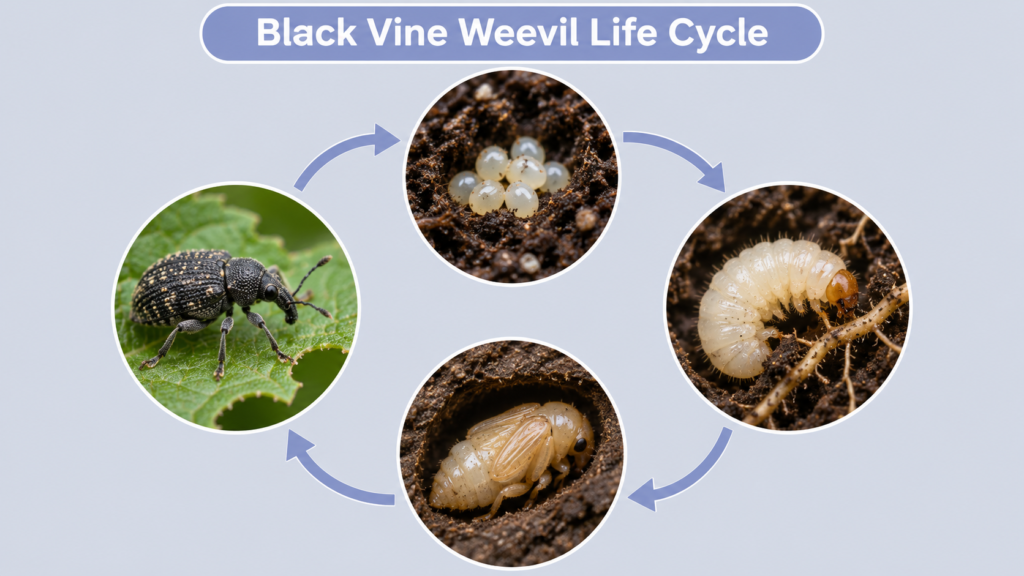
Black vine weevils develop through four stages: egg, larva, pupa, and adult. In many populations, reproduction occurs without mating, and the adults are female. Seasonal timing varies with climate, location, and growing conditions, but many regions have one generation each year.
Adults usually emerge during the warmer part of the growing season. After feeding for a period of time, females lay eggs in or on the soil near host plants. The tiny eggs are difficult to see. When they hatch, the larvae move into the soil and begin feeding on roots.
Larvae grow through summer and fall, then may remain in the soil during winter. Feeding can resume when conditions become favorable in spring. Mature larvae pupate in the soil before emerging as adults. Because several life stages are hidden in the soil, inspecting foliage alone may miss a developing infestation.
How to Monitor for Black Vine Weevils
Check susceptible plants regularly during the growing season. Examine leaf edges for fresh notches and look beneath pots, mulch, and dense foliage for hiding adults. After dark, inspect plants with a flashlight when the beetles are more likely to be feeding.
A folded piece of burlap placed around the base of a plant can provide a daytime hiding place for adults. Check it regularly and remove any weevils you find. Boards or similar shelters can also be checked during the day. Monitoring several plants helps show whether the problem is isolated or spreading.
If a plant is wilting or declining, inspect its root zone for grubs and root injury. Record which plants are affected and when symptoms appear. This helps you choose a treatment aimed at the life stage causing the damage.
How to Control Black Vine Weevils
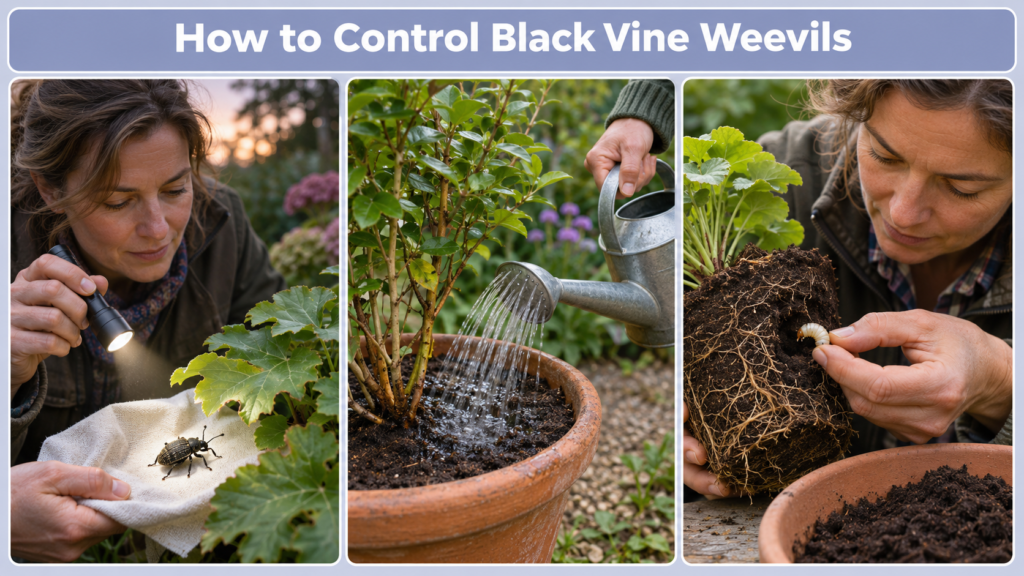
The most effective approach combines monitoring, plant care, and a treatment suited to the pest’s life stage.
Remove Adults by Hand
Since adults feed at night and cannot fly, you can collect them after dark using a flashlight. Place a light-colored sheet beneath the plant and gently shake the foliage so the beetles fall onto it. Remove and dispose of the beetles. Repeat checks because some adults may be missed, and new ones may emerge later.
This method works best for a small number of plants or a light infestation. It can reduce egg-laying adults, but it will not remove larvae already feeding underground.
Inspect and Treat Container Plants
If a potted plant contains larvae, remove it carefully and inspect the root ball. Pick out visible grubs and discard severely infested growing medium. Clean the pot before replanting in fresh, suitable compost. If the roots are badly damaged, the plant may not recover.
Do not reuse infested compost around susceptible plants. Check nearby pots too, since adults can crawl between containers and lay eggs in the growing medium.
Consider Beneficial Nematodes
Some beneficial nematodes can infect vine weevil larvae in soil or compost. They are living organisms, so the right species, timing, temperature, moisture, and application method matter. Follow the product label closely. The growing medium generally needs to be moist, and it may need to remain moist after application for the nematodes to work.
Nematodes are often used against larvae in containers and garden soil, but effectiveness can vary with conditions. They will not remove adult weevils or repair existing root damage. Check product guidance to make sure the nematode species is appropriate for your local conditions.
Use Insecticides Carefully
If the infestation is severe, a locally approved insecticide may be an option. Products and permitted uses vary by country and may change over time. Use only a product labeled for the plant and pest, and follow all directions and safety precautions. Avoid treating flowering plants when pollinators may be exposed, and do not apply a product in a way that could contaminate water or harm beneficial insects.
Where possible, identify whether adults or larvae are the main target before choosing a treatment. An adult treatment will not necessarily address grubs in the soil, and a soil treatment may not prevent adult leaf feeding. For valuable plants or widespread damage, ask a local horticultural or pest-management professional for advice.
How to Prevent Future Infestations
Inspect new plants before bringing them into the garden. Look for notched leaves, unhealthy roots, or grubs in the potting medium. Keep susceptible container plants spaced so you can inspect their foliage and the area around their pots.
Remove leaf litter and debris close to affected plants where adults might hide during the day. Keep plants healthy with suitable watering, soil, and growing conditions; vigorous plants may tolerate some feeding better than stressed plants. Continue monitoring even after treatment, because hidden larvae and staggered adult emergence can make a single check unreliable.
Frequently Asked Questions
Do black vine weevils bite people?
Black vine weevils feed on plants and are not known for biting people. If you find one indoors, it may have crawled inside while seeking shelter. Remove it and check nearby plants for signs of feeding.
Are black vine weevils harmful to plants?
Adults create notches in leaves, which are often mainly cosmetic. The larvae can cause more serious harm by feeding on roots and the crown. Severe root injury can lead to wilting, dieback, or plant death.
When are black vine weevils active?
Adults are generally active at night during the warmer months, while larvae feed in the soil during parts of the growing season and may overwinter there. Exact timing varies by climate and location.
Can a plant recover from vine weevil damage?
A plant may recover if enough healthy roots remain and the larvae are controlled. Severely damaged plants, especially those with a girdled crown or few remaining roots, may not survive.
What is the fastest way to find adult vine weevils?
Inspect susceptible plants after dark with a flashlight. During the day, check under pots, in folded burlap, beneath boards, and among dense foliage near the base of the plant.