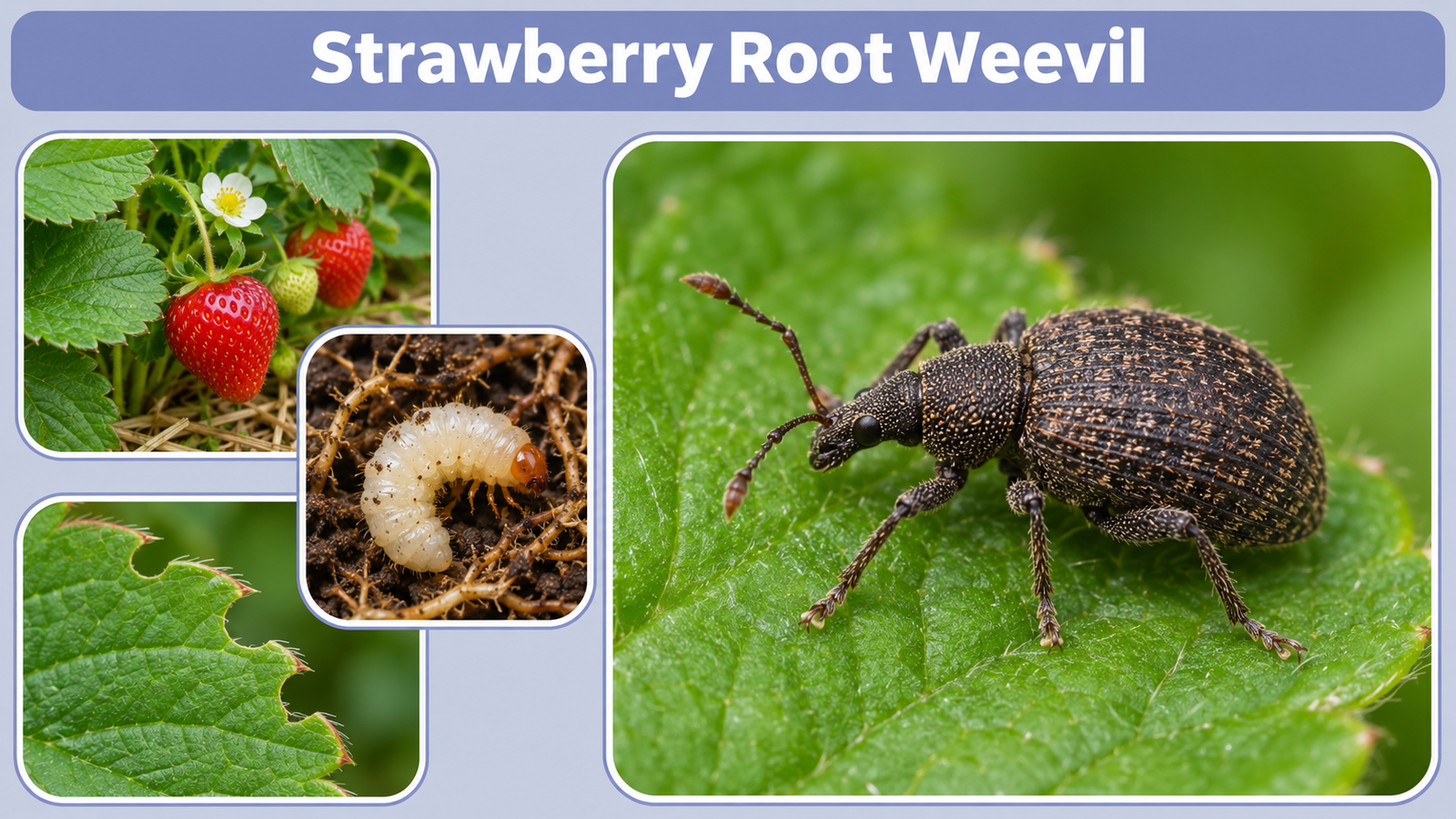
The strawberry root weevil (Otiorhynchus ovatus) is a small, flightless beetle whose larvae feed on plant roots. Adults may leave notches along leaf edges, but the more serious injury often happens out of sight beneath the soil. Infested strawberry plants can become weak, stunted, or unproductive, and young plants may die when root damage is severe. Learn how to identify strawberry root weevils, recognize their damage, follow their life cycle, and protect plants with practical monitoring and control methods.
What Is a Strawberry Root Weevil?
The strawberry root weevil is a snout beetle in the family Curculionidae. Its scientific name is Otiorhynchus ovatus. It is one of several root weevils that can feed on strawberries and other plants. The similar black vine weevil (Otiorhynchus sulcatus) can also infest strawberry beds, so the common name alone may not confirm which species is present.
Adult strawberry root weevils feed above ground, while their larvae live in the soil and feed on roots. The beetles are flightless and usually active at night. During the day, they hide in soil cracks, plant debris, mulch, or other sheltered places near host plants.
The larvae are usually the more damaging stage. They feed on fine roots and may injure the root collar—the area where the roots meet the plant crown. This can disrupt water and nutrient uptake, weakening the plant even when the soil appears moist.
How to Identify a Strawberry Root Weevil
Adult strawberry root weevils are small, dark beetles, usually shiny black or dark brown. They are commonly about 4–6 mm long, with a compact oval body, a short snout, and elbowed antennae. Their wing covers have rows of small pits. Because they cannot fly, they crawl between plants or arrive in infested plant material, soil, or debris.
The larvae are pale, legless grubs with light brown heads. They curl into a C or comma shape when disturbed and can grow to around 6 mm long. They are usually found in the soil around roots rather than on leaves.
Adult Beetles
Look for small notches along the margins of strawberry leaves. Adults feed at night, so inspect plants after dark with a flashlight. If disturbed, a beetle may drop to the ground and become difficult to see among soil or plant litter.
Several root weevil species look alike. Adult size and color can help, but they are not always enough for reliable identification. When the exact species matters for farm management, compare specimens with local extension guidance or ask a horticultural specialist.
Larvae
To look for larvae, gently lift a weak plant with a spade and inspect the soil around its roots. Check for C-shaped, cream-colored grubs with brown heads, as well as chewed roots or damage around the crown. Avoid disturbing healthy plants without reason; inspection is most useful when a patch shows poor growth, wilting, or reduced fruit production.
Root weevil grubs can resemble larvae of other insects. Their presence near damaged roots, together with adult leaf notching, makes a root weevil infestation more likely.
Which Plants Do Strawberry Root Weevils Attack?

Despite the name, strawberry root weevils feed on more than strawberries. Their hosts include some raspberries, blackberries, blueberries, conifers, and ornamental plants. They may be found in gardens, berry plantings, nurseries, or landscapes where suitable host plants grow.
Strawberry beds can be vulnerable when plants remain in the same area for several seasons or when adult weevils have nearby hiding places. Weeds may provide alternate food or shelter, while plant debris can offer cover during the day. New infestations can also be brought in with plants or growing medium that already contain eggs, larvae, or adults.
What Does Strawberry Root Weevil Damage Look Like?
Adult weevils chew shallow notches from the edges of leaves. The leaf margins can look scalloped or ragged, but adult feeding usually causes less harm than larval feeding. Notches are still useful as an early warning because they indicate adults are present and may lay eggs near the plants.
Larvae feed on roots and sometimes damage the crown. Affected strawberry plants may grow slowly, wilt, appear stunted, or produce fewer berries. In autumn, plants with weakened roots may turn orange-red earlier than healthy plants. Severe infestations can kill plants, and damage may appear in scattered patches rather than evenly across a bed.
Poor growth can also result from drought, root disease, nutrient problems, or other pests. If leaves are notched but plants remain vigorous, monitor them. If plants are declining, inspect the root zone before deciding that weevils are the cause.
Strawberry Root Weevil Life Cycle

Strawberry root weevils develop through four stages: egg, larva, pupa, and adult. They generally produce one generation per year, although timing varies by climate and location.
Adults become active during the warmer part of the year and feed at night. Females lay eggs in or on soil near host plants. The eggs hatch in about ten days under suitable conditions, and the young larvae move through the soil to feed on roots.
Larvae may continue feeding through fall and winter when conditions allow, then resume feeding as soil warms in spring. They pupate in the soil, and adults commonly emerge in late spring or early summer. In some places, different stages may overwinter, so the timing can vary.
How to Check Strawberry Plants for Weevils
Inspect strawberry leaves for fresh notches, especially in early summer. Because adults are nocturnal, check plants after sunset on a mild evening. Look under leaves and around the base of plants, where beetles may hide during daylight.
If plants are wilting or growing poorly, examine a small section of the affected bed. Use a spade to lift plants and soil carefully, then check for grubs, chewed roots, or damage to the crown. Compare an affected patch with nearby healthy plants to see whether the root condition is different.
Keep notes on where notching and weak growth occur. Patchy symptoms can help you focus inspections and decide whether a control measure is needed.
How to Control Strawberry Root Weevils

Management works best when it targets the life stage present and reduces conditions that help the pest persist. A single action may not eliminate weevils, especially if larvae are already established in the soil.
Remove Adult Weevils
For a small garden, hand-pick adults after dark and drop them into soapy water or dispose of them securely. A flashlight can help you find beetles on leaves and around plant crowns. Repeat inspections because adults may continue emerging over several weeks.
Reduce Hiding Places and Alternate Hosts
Remove weeds from strawberry beds and nearby areas, and clear excessive plant debris that provides daytime shelter. These steps do not guarantee control, but they can make monitoring easier and reduce cover around host plants.
If a planting is heavily damaged, removing and destroying affected plants may be necessary. Avoid moving soil or plant material from an infested bed to a clean area.
Consider Beneficial Nematodes
Some entomopathogenic nematodes—microscopic organisms that infect insect larvae—can help manage root weevil grubs in soil. Their effectiveness depends on the nematode species, soil temperature, moisture, timing, and correct application. Follow the product label, including instructions for watering before and after treatment. Keep treated soil moist as directed and protect the nematodes from direct sunlight.
Research and extension recommendations describe nematodes as a possible option for root weevils, but results vary by site and treatment conditions. Check local guidance to select a product and application time suitable for your region.
Use Pesticides Only When Appropriate
If damage is extensive, consult local extension or agricultural guidance about registered products and timing. Pesticide registrations differ by region and crop, so use only products labeled for strawberry plants and the target pest. Follow all label directions, harvest intervals, and pollinator precautions.
How to Prevent Future Problems

Inspect strawberry plants before planting, including the leaves, crown, roots, and growing medium. Avoid moving plants or soil from infested areas into clean beds. Keep weeds and excessive debris under control, and monitor plants during the growing season for leaf notches and declining growth.
When establishing a new bed, choose a site with good drainage and avoid placing it directly beside a heavily infested planting. Continue checking the root zone when plants show unexplained decline. Early detection makes it easier to remove affected plants or apply a suitable treatment before the pest spreads.
Frequently Asked Questions
Do strawberry root weevils fly?
No. Adult strawberry root weevils are flightless. They crawl between plants and can also be moved in plant material, soil, or debris.
Are the leaf notches dangerous to strawberry plants?
Adult feeding notches are usually less harmful than root feeding by larvae. However, the notches can signal adult activity and possible egg-laying nearby.
What do strawberry root weevil grubs look like?
The grubs are pale, legless, C-shaped or comma-shaped, and have light brown heads. They live in soil near plant roots.
Can strawberry root weevils kill plants?
Yes. Severe larval feeding can damage roots and crowns enough to weaken or kill strawberry plants, particularly young plants or those already under stress.
Are strawberry root weevils the same as black vine weevils?
No. They are different species in the same genus. Both can damage strawberries, and their larvae and feeding symptoms are similar, so close identification may require local expert guidance.