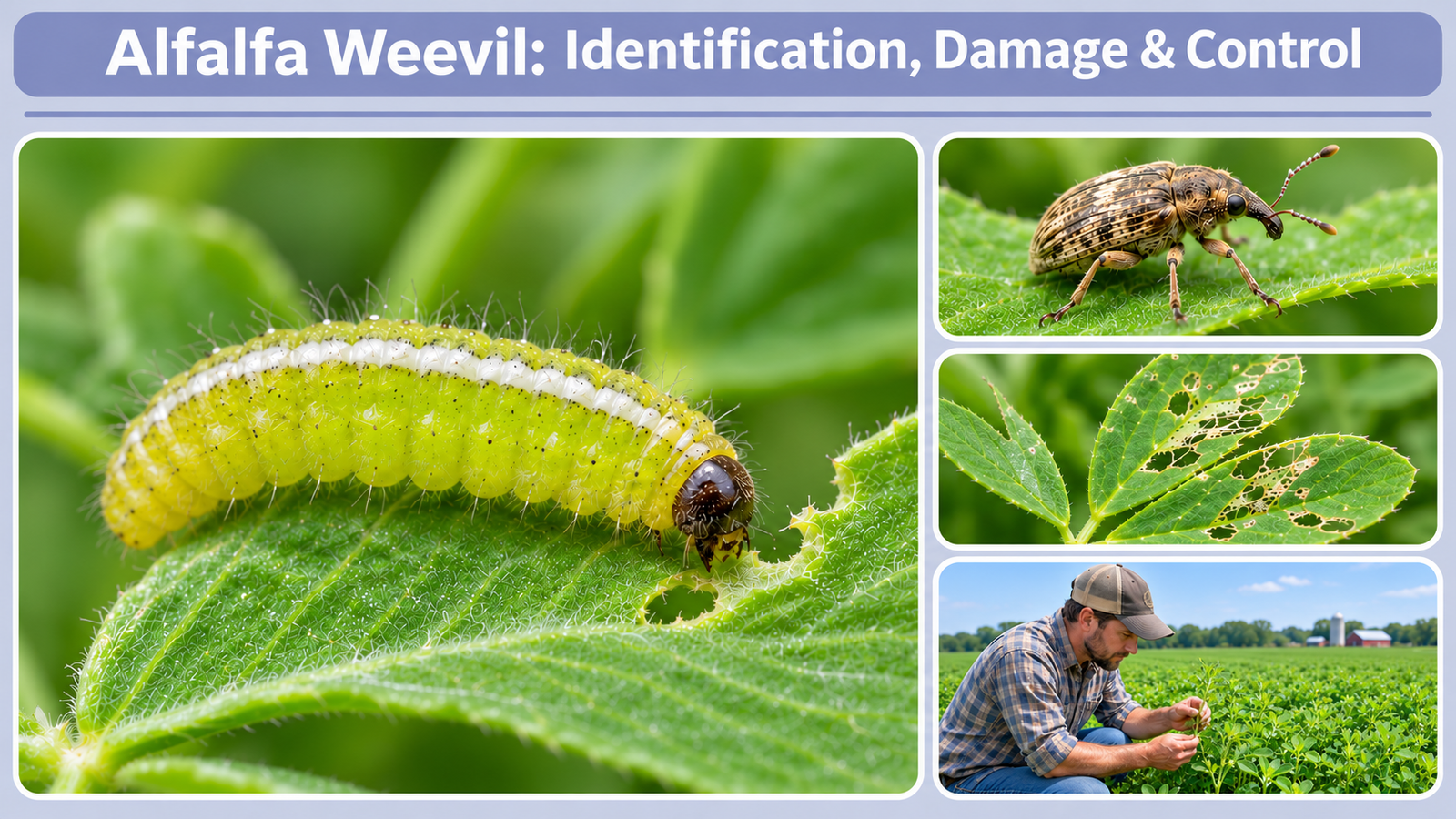
Alfalfa weevils are leaf-feeding beetles whose larvae can damage alfalfa fields, especially during spring growth before the first cutting. Their feeding may leave leaves skeletonized and give a field a gray, frosted appearance. Learning to identify alfalfa weevil larvae, recognize early feeding signs, and scout plants at the right time can help growers decide whether action is needed. This guide covers the pest’s appearance, life cycle, crop damage, monitoring, and practical management options.
What Is an Alfalfa Weevil?
The alfalfa weevil (Hypera postica) is a small snout beetle in the weevil family. It feeds mainly on alfalfa, a perennial forage legume grown for hay, silage, pasture, and seed. The larvae usually cause more noticeable crop injury than the adults because they feed on tender leaves and growing tips.
Alfalfa weevils are found in many alfalfa-growing regions. Their seasonal timing and overwintering habits vary with climate and local populations. In many areas, the main concern is larval feeding in spring, when the crop is growing toward its first harvest.
The related Egyptian alfalfa weevil can also infest alfalfa in some regions. The two pests have similar names and can be difficult to distinguish without examining their biology and local distribution. For field decisions, growers should consult regional extension guidance or an agricultural specialist.
How to Identify Alfalfa Weevils

Recognizing both the larval and adult stages helps distinguish alfalfa weevils from other insects in the crop.
Alfalfa weevil larvae
Larvae are legless, green to yellowish green, and have a dark head. A pale white stripe often runs down the middle of the back. As larvae grow, they may reach about ⅜ inch long. They feed on leaves near the plant tips and may hide within folded or partly opened growth.
The larvae’s feeding pattern can help with identification. Young larvae make small holes or pinholes in developing leaves. Larger larvae chew more of the leaf tissue, leaving the veins behind and creating a lace-like or skeletonized look.
Adult alfalfa weevils
Adults are small brown beetles, usually about ¼ inch long. They have a narrow snout and often show a darker stripe along the middle of the back. Adults also feed on alfalfa, but their feeding generally causes less crop loss than larval feeding.
Eggs and pupae
Eggs are laid in alfalfa stems or plant material and are difficult to notice during routine scouting. After feeding, mature larvae spin a loose, net-like cocoon on the plant or in nearby leaf litter. The insect then develops into a pupa before emerging as an adult. For most field scouting, finding larvae and fresh feeding damage is more useful than searching for eggs or pupae.
Alfalfa Weevil Life Cycle

The alfalfa weevil’s life cycle is closely tied to temperature and alfalfa growth. In many regions, adults survive winter in plant debris or sheltered places near fields. They become active as temperatures rise and may lay eggs in alfalfa stems. Depending on the region and weather, some populations can also overwinter as eggs.
Eggs hatch when conditions are warm enough. The larvae move to the growing parts of the plant and feed for several weeks, passing through multiple stages as they grow. Mature larvae then spin cocoons and pupate. New adults emerge later in the season and may feed briefly before entering a period of summer dormancy or moving to sheltered locations.
Many areas have one main generation per year, though regional differences occur. Mild winters and warm springs can shift the timing of activity and bring larvae into fields earlier. Because seasonal development varies, local growing-degree-day guidance and extension alerts can help growers time scouting.
What Damage Do Alfalfa Weevils Cause?
Alfalfa weevil larvae feed on the terminal leaves and developing foliage. Early injury may look like small holes in the tips of leaves. As larvae grow and feeding increases, leaves can become ragged, skeletonized, or partly consumed.
A heavily damaged field may look gray or frosted from a distance. Close inspection often reveals larvae and chewed leaves in the upper part of the plants. Damage tends to be most important before the first cutting, but a large population can also feed on regrowth and slow the next crop cycle.
The consequences may include reduced forage yield, lower hay quality, delayed regrowth, and stress to the stand. Short plants may be less able to tolerate feeding than tall, vigorous alfalfa. Still, visible injury alone does not tell a grower whether treatment will be worthwhile; crop height, larval counts, harvest timing, weather, and treatment costs all matter.
How to Scout for Alfalfa Weevils
Regular field checks are the foundation of alfalfa weevil management. Begin scouting when local recommendations indicate larvae may be active, then continue as the crop develops toward harvest. Check multiple locations across the field because pest numbers and plant growth can vary from one area to another.
At each location, examine several stems for larvae and signs of fresh feeding. Record the crop’s average height and growth stage, the number of larvae, and the percentage of stems showing recent tip injury. A sweep net can help collect insects, but stem-by-stem inspection is useful for seeing where larvae are feeding.
Look for small holes in new leaves, chewed growing tips, larvae with dark heads, and more extensive leaf skeletonization. Separate fresh feeding from older damage, which may remain visible after larvae have moved or died. Continue checking after harvest if larvae are present or regrowth appears stressed.
When is an infestation serious?
There is no single threshold that applies everywhere. Recommended action levels differ by state or region and may depend on plant height, the number of larvae per stem, the percentage of damaged tips, expected yield, and how close the field is to harvest. For example, some extension guidance uses a combination of larval counts and feeding injury rather than a single visual sign.
Use the current threshold from your local extension service or crop adviser. Avoid treating solely because a few larvae or damaged leaves are present.
How to Manage Alfalfa Weevils
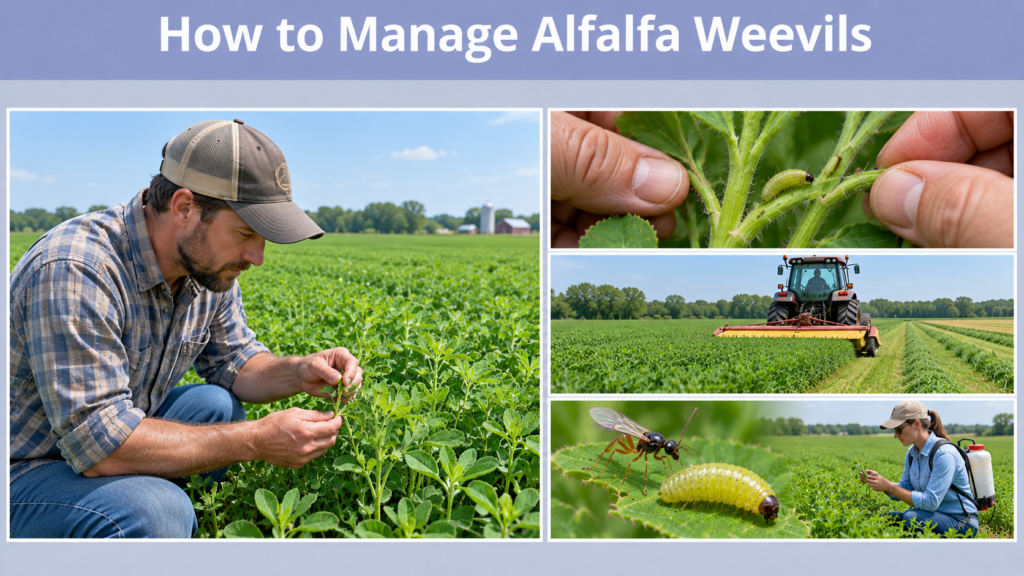
An integrated approach helps growers respond to the actual risk in a field. The right choice depends on crop stage, pest pressure, harvest plans, weather, and local recommendations.
Harvest timing
If the crop is close to harvest, cutting may be a practical way to remove infested foliage and interrupt larval feeding. Harvest timing must still account for forage quality, crop maturity, and field conditions. After cutting, check regrowth and stubble for surviving larvae, since feeding can continue on new shoots.
Biological control
Natural enemies, including parasitoid wasps and insect-killing pathogens, can help reduce alfalfa weevil populations. Their impact varies, and they may not prevent economic damage in every field. Avoid unnecessary broad-spectrum insecticide applications, which can harm beneficial insects and other organisms that help suppress pest populations.
Insecticides
An insecticide may be considered when scouting shows that a local action threshold has been reached and other options are unsuitable. Product choice and timing must follow the current label and local agricultural guidance. Check restrictions related to harvest intervals, grazing, pollinators, water, and worker safety before use.
A crop adviser or extension specialist can help assess whether treatment is likely to protect the crop. Applications made without confirming active larvae, crop stage, and timing may provide poor value or disrupt natural controls.
Dormant-season practices
Some growers use grazing or other field practices to reduce overwintering eggs or larvae. The results are not consistent across regions, and these practices should not be treated as a guaranteed control method. Follow local recommendations and consider effects on stand health and future yield.
How to Tell Alfalfa Weevils From Similar Pests
Several insects can be found in alfalfa, and not all cause the same type of injury. Clover leaf weevil larvae, for example, can also occur in alfalfa, but may differ in coloration and size. Other pests may cause stippling, yellowing, or stunting rather than the characteristic chewing injury associated with weevil larvae.
Check the insect itself as well as the damage. Alfalfa weevil larvae are legless, green, and dark-headed, while the plant’s fresh growth often shows pinholes or skeletonized leaves. If identification is uncertain, collect a sample or take clear photos and consult a local extension office or crop specialist before choosing a control measure.
Preventing Severe Alfalfa Weevil Damage
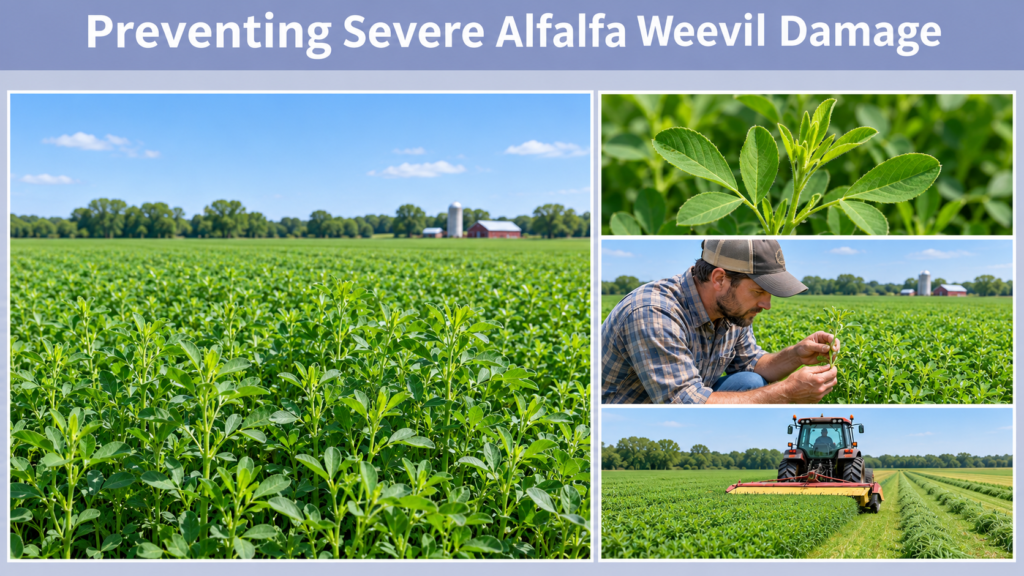
Prevention starts with timely monitoring rather than a single treatment. Keep records of when larvae first appear, which parts of the field are affected, crop height, and what happened after harvest. Past field history can help prioritize scouting, but populations change with weather and should be checked each season.
Use regionally adapted alfalfa varieties and maintain a vigorous stand through sound fertility, harvest, and weed-management practices. Healthy plants may tolerate some feeding better, though crop vigor does not eliminate the need to monitor for larvae.
Plan harvests and any pest management around crop development and local guidance. By identifying the pest early and responding to measured risk, growers can protect forage while limiting unnecessary treatments.
FAQs
Are alfalfa weevils harmful to people?
Alfalfa weevils are agricultural pests that feed on alfalfa. They are not known for attacking people or causing typical household infestations. Their main significance is crop injury, particularly when larvae feed on young leaves and growing tips in forage fields.
What does alfalfa weevil damage look like?
Early damage may appear as small holes in the newest leaves. As larvae grow, they chew more tissue and can leave leaves skeletonized. Severe feeding may make an alfalfa field look gray or frosted, especially before the first cutting.
When should I scout for alfalfa weevils?
Scout when local guidance indicates larvae may be active in spring and continue until the first cutting. Check several areas of the field for larvae, fresh tip feeding, and crop height. Monitor regrowth after harvest if larvae or feeding damage remain.
Do alfalfa weevil adults damage plants?
Adults feed on alfalfa, but larval feeding is usually the more important source of crop injury. Adult weevils are brown beetles with a narrow snout. Finding adults can be a reason to keep monitoring, but their presence alone does not determine whether control is needed.
What is the best way to control alfalfa weevils?
There is no single best method for every field. Scout first, then compare larval numbers and feeding injury with current local thresholds. Harvest timing, beneficial insects, or a labeled insecticide may be options depending on crop stage, pest pressure, and regional advice.