Acorn weevils are small beetles whose larvae develop inside acorns. A tiny hole in a fallen acorn or a pale grub inside one can be surprising, but it usually points to damage to the seed rather than a threat to the oak tree. Several related weevil species infest acorns, and their appearance and timing can vary by region. This guide explains how to identify acorn weevils, recognize their life cycle and damage, and decide what to do with affected acorns.
What Is an Acorn Weevil?
“Acorn weevil” is a common name for beetles in the genus Curculio that lay eggs in developing acorns. Their larvae feed inside the acorn, using the seed as food while they grow. Different Curculio species occur in different regions and may use different oak species, so the name does not always refer to one exact beetle.
Adult acorn weevils are part of a much larger group of beetles called snout beetles. They are adapted to finding and feeding on nuts and seeds. In the case of acorn weevils, the oak’s developing acorn provides a place for the female to lay eggs and for the young larvae to develop.
Acorn weevils are not the same as pantry weevils that infest stored grains. Finding a larva in an acorn outdoors generally means the acorn was infested while it was developing on the oak. It does not usually mean the insect is spreading through a home or damaging furniture, food, or the oak’s branches.
How to Identify an Acorn Weevil
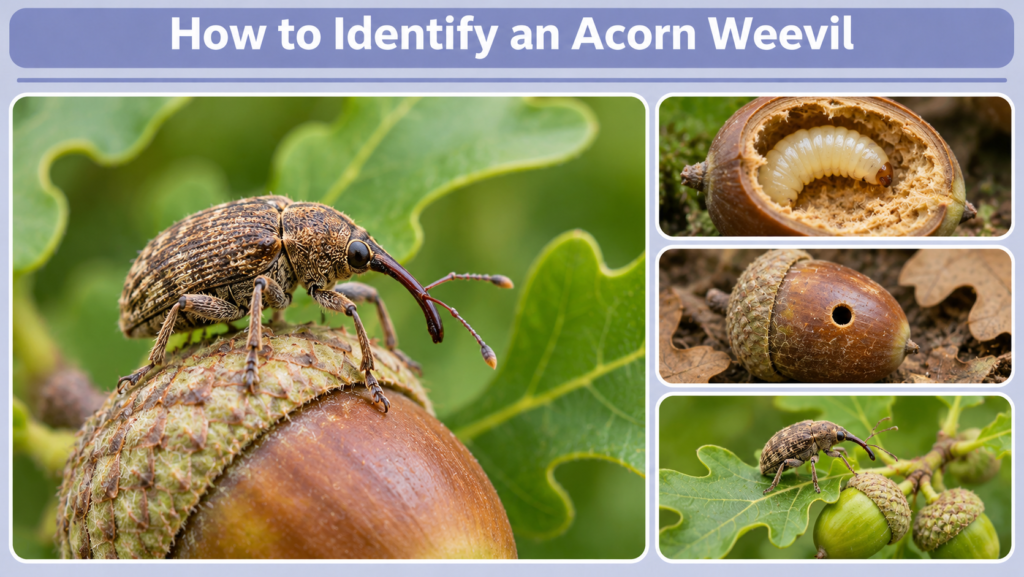
The adult beetle, larva, and damage each provide clues. The small holes in acorns are often easier to notice than the weevils themselves.
Adult acorn weevils
Adult acorn weevils are brown beetles, commonly around ⅜ inch long, with a long, narrow snout. Females may have a particularly long snout, which they use to reach and lay eggs inside acorns. The adult’s size and coloring can vary among species.
Adults may be found on oak foliage, twigs, or acorns. They can be difficult to spot because they blend with bark and leaf litter. If you find a beetle with a long, slender snout on an oak, it may be a weevil, but confirming the exact species often requires a close look.
Acorn weevil larvae
The larva is a pale, cream-colored or whitish grub with a curved, plump body. It has no obvious legs and may be found inside a damaged acorn. When mature, the larva chews a round exit hole through the shell and leaves the acorn to enter the soil.
A larva found in an acorn may be an acorn weevil, but other insects can also develop in acorns. If you need a precise identification, take a clear photo or preserve a sample and ask a local university extension or forestry specialist.
Holes in acorns
A round hole in an acorn can mark the exit route made by a mature larva. The larva may have already left by the time the acorn is found. Some infested acorns also show internal feeding damage when opened, even if the outside does not clearly reveal what happened.
Acorn Weevil Life Cycle

The acorn weevil life cycle follows the seasonal development of oak acorns. Adults become active, mate, and lay eggs in developing acorns. A female may use her snout to make an opening in an acorn and deposit an egg inside. The details, including timing and egg-laying behavior, differ among species and local conditions.
After the egg hatches, the larva feeds within the acorn. It consumes some of the seed as it grows, often staying concealed until the acorn drops or the larva is mature. In late summer or fall, a mature larva chews through the shell and drops to the ground. It then burrows into the soil, where it may remain until pupating and emerging as an adult in a later season.
The period spent underground varies. Some individuals may remain in the soil for an extended time before emerging, so adults do not necessarily appear immediately after larvae leave the acorns. Weather, soil conditions, oak species, and weevil species can all affect timing. In general, the key sign for homeowners and acorn collectors is the sequence of developing acorns, larvae inside them, and exit holes in fallen nuts.
What Damage Do Acorn Weevils Cause?
Acorn weevil larvae damage the acorn itself by feeding on its interior. This can destroy or weaken the seed and reduce its ability to germinate successfully. If you are collecting acorns to grow oak seedlings, infested nuts may fail to sprout or produce weaker seedlings.
The impact on wildlife food also depends on how many acorns are affected. Acorns are an important food source for birds, squirrels, deer, and other animals. In years when many acorns are infested, weevil feeding can reduce the number of sound seeds available. However, acorn crops naturally vary from year to year, and weevils are only one of several factors that affect how many viable acorns remain.
Acorn weevils generally do not damage the whole oak tree. Their larvae feed inside individual seeds; they do not bore into the trunk or consume the tree’s leaves. Seeing a few affected acorns is not, by itself, a reason to treat or remove a healthy oak.
How to Check Acorns for Weevils
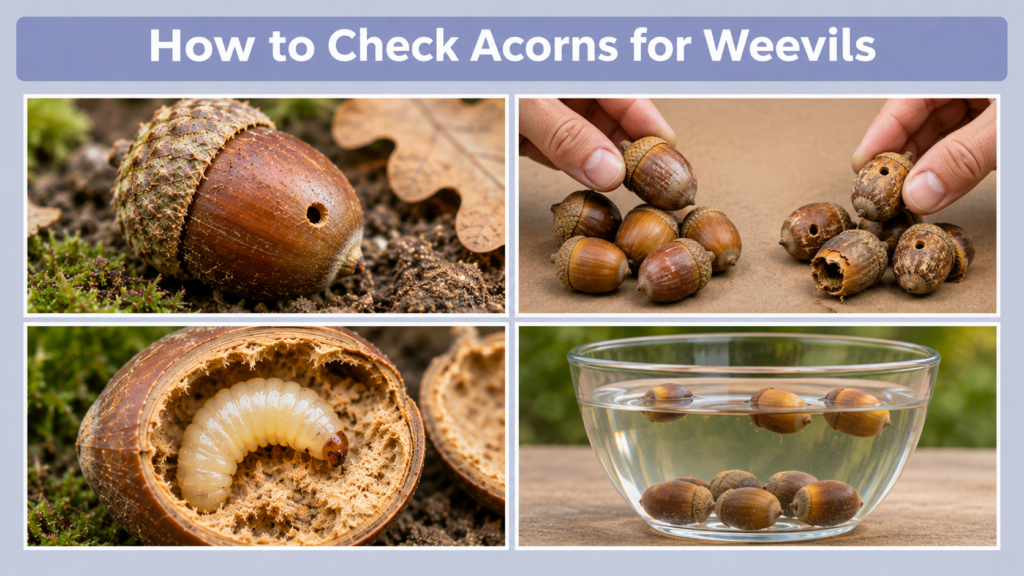
If you want to know whether fallen acorns are infested, inspect them closely. Look for round holes, cracks, soft or discolored areas, and signs of feeding beneath the shell. A hole may mean a larva has already left, while an acorn without an obvious hole may still have internal damage.
To check acorns for planting, sort through the collection and remove nuts with exit holes or obvious decay. You can also open a small sample to look for larvae or feeding damage. A quick float test is sometimes used to separate lighter, damaged acorns from heavier ones, but it is not a perfect diagnostic method: an acorn’s ability to sink or float does not identify the cause of damage or guarantee that it will germinate.
When selecting acorns for growing, prioritize firm, intact nuts from healthy trees. Planting more than you need can help account for natural losses to insects, fungi, and poor germination.
How to Manage Acorn Weevils
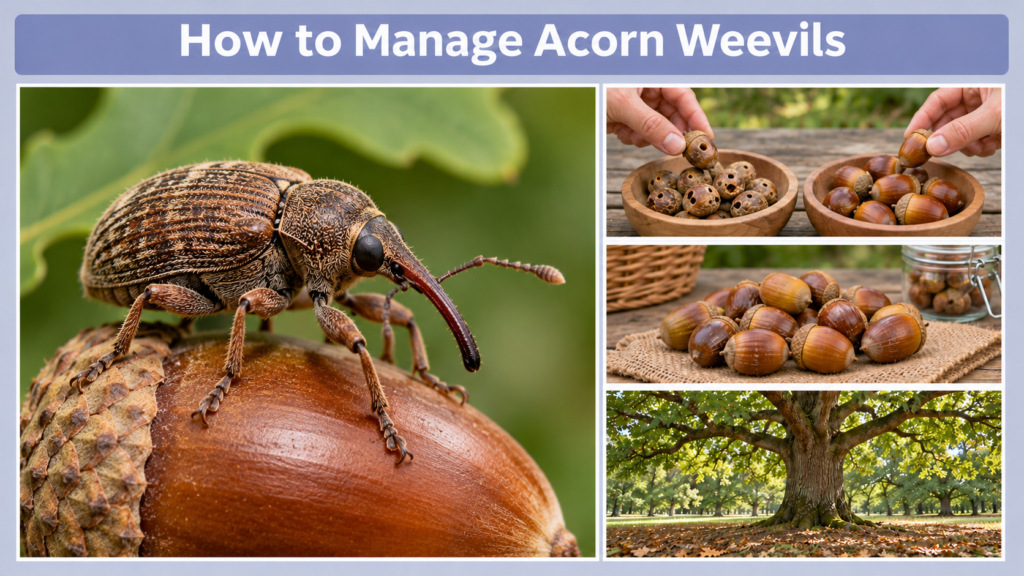
For most homeowners, acorn weevils do not require chemical control. The insects affect seeds rather than threatening the health of a mature oak, and spraying a large tree is unlikely to be practical or necessary for a few damaged acorns.
Remove or sort infested acorns
If you are collecting acorns for propagation, sort the nuts and discard those with holes or visible damage. This helps reduce the chance of bringing larvae into a storage area and improves the quality of the acorns you plant. For ordinary yard cleanup, collect fallen acorns as you normally would.
Protect acorns intended for planting
Choose healthy, firm acorns and store them according to the needs of the oak species. If you are preparing a large seed collection for restoration or nursery use, ask a local forestry or extension specialist about regional storage and pest-management practices. Methods suitable for one species or purpose may not preserve another acorn’s viability.
Avoid unnecessary insecticide use
Broad insecticide applications are generally not a useful response to acorn weevils in a landscape. The larvae are protected inside acorns, and spraying may affect beneficial insects without reliably preventing damage. If you manage an oak seed orchard or nursery, consult a qualified local adviser about monitoring and options that are appropriate for that setting.
Support healthy oak trees
Maintain the oak’s growing conditions by avoiding soil compaction, protecting the root zone, and watering during prolonged drought where appropriate for the species and climate. These steps do not eliminate acorn weevils, but they support overall tree health. Remember that an oak can remain healthy even when some of its acorns are damaged.
Acorn Weevils and Oak Tree Health
An acorn with a hole or a grub inside can look alarming, but it usually represents a problem for that individual seed, not the tree. Acorn weevils are seed feeders. They do not typically make holes in oak trunks, tunnel through branches, or cause the kind of leaf damage associated with defoliating pests.
If your oak has thinning leaves, dead branches, trunk wounds, or a sudden decline, look for other possible causes and consult an arborist or local extension office. Acorn damage alone does not explain those symptoms. Oak trees naturally produce many more acorns than can grow into mature trees, and some seed loss to insects is part of the woodland food web.
FAQs
Are acorn weevils harmful to oak trees?
Acorn weevils mainly damage individual acorns. Their larvae feed inside the seeds, which can reduce the chance those acorns will germinate. They generally do not injure the trunk, branches, or leaves, so finding infested acorns does not automatically mean the oak tree is unhealthy.
What does an acorn weevil larva look like?
An acorn weevil larva is usually a pale, curved, legless grub found inside an acorn. It feeds on the seed as it grows. When mature, it chews a round hole through the acorn shell and drops to the ground.
Why do some acorns have small round holes?
A round hole may be an exit hole made by a mature larva leaving the acorn. Other insects can also damage acorns, so the hole alone may not identify the exact pest. Opening a sample can reveal internal feeding or help confirm whether larvae are present.
Can I plant acorns that may have weevils?
You can plant acorns, but damaged or infested ones may fail to germinate or grow poorly. For better results, choose firm acorns without exit holes or visible decay, and collect more than you need. A local forestry or extension service can advise on planting and storage for your region.
How do I get rid of acorn weevils?
Most homeowners do not need to treat an oak tree for acorn weevils. If you are collecting nuts, sort out acorns with holes or internal damage. Avoid spraying without expert guidance; larvae are protected inside the acorns, and treatment may not be effective or necessary.