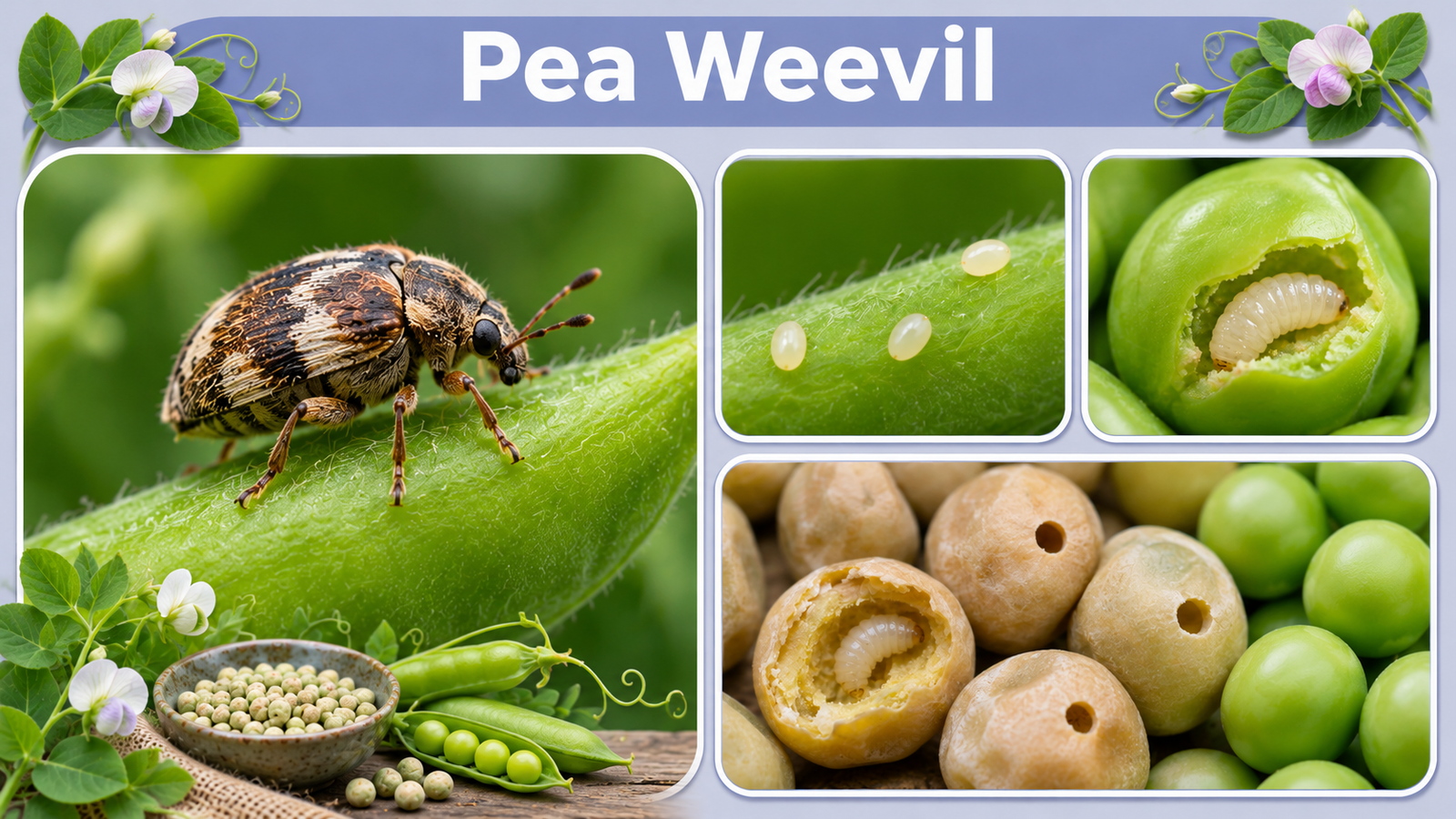
Pea weevils are small beetles whose larvae feed inside developing pea seeds. Infestation can reduce seed quality, leave holes in dried peas, and affect the next crop if infested seed is saved or planted. The adult beetle is often hard to spot, so gardeners may first notice damaged seeds or a small round exit hole. This guide covers pea weevil identification, its life cycle, common signs of damage, and practical ways to manage it.
What Is a Pea Weevil?
The pea weevil (Bruchus pisorum) is a seed-feeding beetle in the leaf beetle family. Despite its common name, it is not a true weevil and does not have the familiar long snout many people associate with weevils. It feeds mainly on peas, and its immature stage develops inside the seeds.
Pea weevils are pests of field peas and garden peas. They can damage peas while pods are developing, and infested seeds may be unsuitable for planting or storage. Adults may also emerge from seeds after harvest, which can make the insect seem like a pantry pest even though its life cycle is tied to growing peas.
How to Identify an Adult Pea Weevil
Adult pea weevils are oval, stout beetles, about a quarter-inch long. Their bodies are brown or grayish-brown with black, white, or pale mottling on the wing covers. The wing covers do not fully cover the abdomen, leaving part of the rear body exposed.
The beetles may be found on pea flowers, pods, or nearby plants during the growing season. They can be difficult to notice because their mottled coloring blends into plant surfaces. Their lack of a long, obvious snout is a useful clue when distinguishing them from many other beetles called weevils.
Pea Weevil vs. Pea Leaf Weevil
These two pests have similar names but attack peas in different ways. Pea weevil larvae feed inside pea seeds. Pea leaf weevil adults make small, U-shaped notches along leaf edges, while their larvae feed on root nodules below the soil surface.
If the main sign is holes or hollowed areas in the peas, pea weevil may be responsible. If leaves have scalloped edges and seedlings are affected, pea leaf weevil is a more likely cause. Correct identification matters because monitoring and management differ between the two insects.
Pea Weevil Life Cycle

Pea weevils generally produce one generation per year. Adults overwinter in sheltered places, including plant debris, soil litter, or infested seeds in storage. As peas begin flowering, adults become active and move to pea plants to feed and reproduce. The larvae develop inside the seeds, so much of the insect’s growth happens out of sight.
Egg Laying on Pea Pods
After feeding and mating, female pea weevils lay small eggs on the outside of developing pea pods. The eggs are usually yellow or orange and may be hard to see without close inspection. A female may lay eggs on several pods, depending on conditions and the availability of host plants.
When eggs hatch, the tiny larvae bore through the pod and enter a developing pea. The entry point can be difficult to notice, and the pod may look normal from the outside. This is why an infestation may not be obvious until peas are shelled, dried, or stored.
Larvae Develop Inside the Seed
A larva feeds within a pea, consuming part of the seed as it grows. It eventually pupates inside the seed or pod. An infested pea may have a hollowed interior or a concealed round area under the seed coat.
The adult beetle later chews its way out, leaving a neat, round exit hole. Depending on the timing and storage conditions, adults may emerge before harvest, during storage, or after infested seed is planted. This hidden development makes it especially important to inspect seed peas before saving or planting them.
Pea Weevil Damage and Symptoms

Pea weevil damage is primarily seed damage. Larvae eat the interior of developing peas, reducing seed weight and quality. A seed may look nearly intact until it is shelled or an adult exits. In severe infestations, many seeds in a crop may be hollowed or unsuitable for eating, processing, or planting.
Common Signs of an Infestation
- Small, round holes in dried or stored peas
- A hollowed or damaged area inside a pea
- Adult beetles emerging from stored seeds
- Reduced seed weight or poor seed germination
- Eggs attached to the outside of green pea pods
- Beetles present on pea plants during flowering or pod development
Not every small hole in a pea means there is an active infestation. Seed can also be damaged mechanically or by other stored-product insects. Look for the beetle, larvae, or a smooth, round emergence hole to support identification. If you are uncertain, isolate suspicious seed from healthy seed until you can inspect it.
Effects on Garden and Field Peas
For home gardeners, the most noticeable problem may be peas with damaged interiors or beetles emerging from saved seed. In commercial production, pea weevil damage can lower the market value and weight of harvested seed. Infested seed may also fail to germinate normally, making it a poor choice for planting the next season.
Pea weevils are mainly a concern for peas. They do not typically cause the leaf-edge notching associated with pea leaf weevils, nor are they general pests of household furniture or clothing. If beetles appear in a container of dried peas, inspect the seeds and keep the container separate from other stored foods.
How to Control Pea Weevil
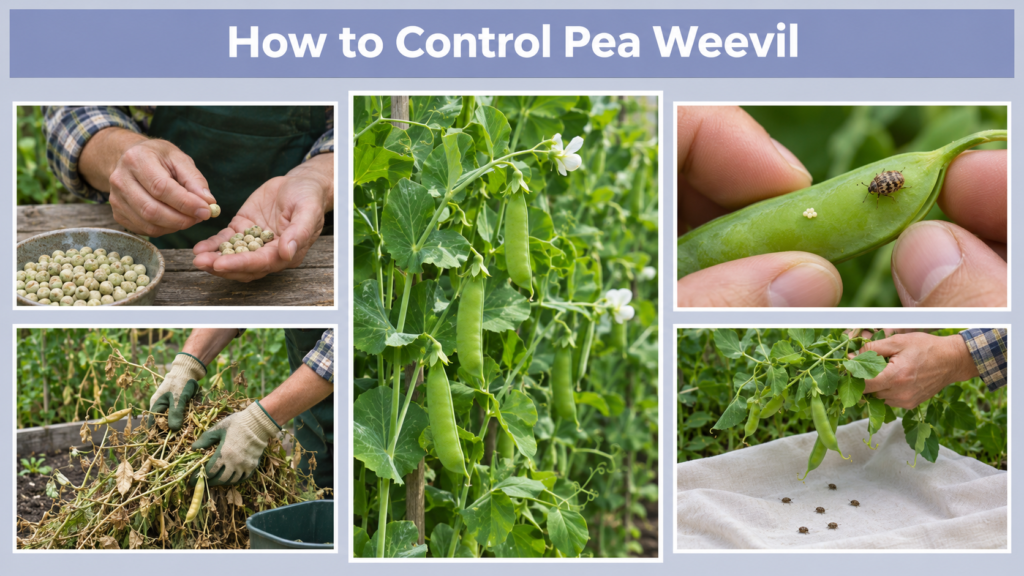
Management focuses on preventing infested seed from spreading, reducing places where adults survive, and checking pea plants and seeds at the right times. A single measure may not remove every beetle, especially where peas are grown nearby year after year. Combining good seed selection, garden sanitation, and monitoring can reduce the risk.
Start With Clean Seed
Buy pea seed from a reliable supplier and inspect saved seed before planting. Avoid planting peas that have visible holes, hollow areas, or signs of emerging beetles. Do not save seed from a crop known to be infested, since the insect may remain hidden inside the peas.
If adult beetles emerge from stored peas, keep those peas away from planting stock and dispose of infested material securely. Do not pour questionable seed into the garden or compost it where developing insects could survive. Follow any local guidance for disposing of infested seed, especially if you grow peas commercially.
Remove Crop Debris and Volunteer Peas
After harvest, remove old pea vines and leftover pods, particularly if the crop showed signs of infestation. Check for volunteer pea plants that sprout from dropped seeds. These plants can provide host material for pests and make it harder to break the cycle.
Crop rotation can help reduce the chance that new peas grow in the same area where infested plant material remained. Rotation is not a complete solution because adult beetles can move between gardens and fields, but changing the planting location and cleaning up debris are sensible parts of an integrated approach.
Monitor Plants and Pods
Watch pea plants during flowering and pod development. Check flowers and pods for adult beetles or tiny eggs. Inspect a sample of harvested peas before storing or saving seed. Early inspection can identify a problem before infested seed is mixed with healthy peas.
In larger plantings, growers may use field scouting and region-specific thresholds to decide whether additional measures are needed. Home gardeners can keep simple notes about when beetles appear and which areas show damage. This information can guide monitoring in the following season.
Use Insecticides Only With Care
Some commercial pea production programs use insecticides to target adult beetles before larvae enter the pods. The right timing and approved products depend on the crop, local regulations, and the pest’s activity. Once larvae are inside the seeds, sprays are unlikely to reach them.
Do not apply an insecticide to peas based only on a few damaged seeds. Confirm the pest and check local agricultural guidance and the product label for approved crops, timing, and pollinator precautions. For a home garden, clean seed, crop cleanup, and careful inspection are often the first steps to consider.
Can You Eat Peas With Pea Weevil Damage?
If you find a damaged pea, discard it and inspect the rest of the batch. Do not eat peas containing larvae, beetles, mold, or signs of decay. If the peas are dried or stored, separate the affected container from other food and check nearby packages for signs of insects.
For fresh garden peas, shell them and inspect the seeds before cooking. Peas that are firm and undamaged can generally be used after washing and cooking, but discard any that are hollow, discolored, or visibly infested. When in doubt, throw out the affected peas.
FAQs
What does a pea weevil look like?
An adult pea weevil is a small, oval, mottled brown beetle, about a quarter-inch long. Pale and dark markings cover its wing cases, which do not fully cover the abdomen. Unlike many true weevils, it lacks a prominent long snout.
How do pea weevils get inside peas?
Female beetles lay eggs on the outside of developing pea pods. After hatching, larvae bore through the pod and feed inside the peas. Because the larvae remain hidden, the pod may look healthy until peas are shelled or an adult beetle emerges.
Are pea weevils the same as pea leaf weevils?
No. Pea weevils develop inside pea seeds and leave round holes when adults emerge. Pea leaf weevils make notches along leaf edges as adults, and their larvae feed on root nodules underground. Their damage and management are different.
Can I plant peas that have pea weevil holes?
Avoid planting peas with holes or signs of infestation. A damaged seed may have reduced germination, and it could contain a developing pea weevil. Use clean seed from a reliable source, and do not save seed from a crop known to be infested.
How can I prevent pea weevils next year?
Plant clean seed, remove old pea vines and leftover pods after harvest, and watch for volunteer peas. Check pods and harvested seeds for eggs, beetles, or round exit holes. Rotating peas to a different garden area may also help reduce local pest pressure.