

Stink bugs are shield-shaped insects known for their foul-smelling defense and wide range of colors and habits. Found in gardens, farms, and forests worldwide, these bugs can be either pests or beneficial predators. This guide covers 25 common types of stink bugs—ranging from crop-damaging invaders like the Brown Marmorated Stink Bug to helpful predators like the Spined Soldier Bug—along with key details on their appearance, habitat, and ecological role.
1. Brown Marmorated Stink Bug (Halyomorpha halys)

The Brown Marmorated Stink Bug is one of the most recognized and invasive stink bug species, originally from East Asia and now widespread in North America and Europe. It is known for its shield-like body, mottled brown color, and the foul odor it releases when disturbed. This species is notorious for invading homes during colder months and causing serious damage to fruits and crops.
Identification
- Color: Mottled brown with faint white banding on the antennae and legs
- Size: Approximately 12–17 mm long
- Shape: Shield-shaped, broad body
- Markings: Alternating light and dark bands on the outer edges of the abdomen
- Wings: Membranous wings folded flat over the back, with dark veins visible
Habitat
Originally native to China, Japan, and Korea, it is now found across the U.S., Canada, Europe, and other regions. It prefers orchards, gardens, crop fields, and can be found indoors during fall and winter.
Behavior and Diet
Feeds on over 100 plant species, including apples, peaches, soybeans, corn, and tomatoes. It pierces plant tissue to suck sap, causing damage like distorted fruit, seed loss, and scarring.
Role in the Ecosystem
Although part of the natural insect community in its native habitat, it’s considered a major agricultural pest elsewhere. It has few natural predators in invaded regions, making population control challenging. It also becomes a nuisance pest when it invades homes for overwintering.
2. Green Stink Bug (Chinavia hilaris)

The Green Stink Bug is a widespread and easily recognizable species found throughout North America. With its bright green coloration and shield-shaped body, it often blends into foliage, making it a common garden dweller. Though not as destructive as the brown marmorated species, it can still cause crop damage.
Identification
- Color: Bright lime to emerald green
- Size: About 13–18 mm
- Shape: Shield-shaped, smooth edges
- Markings: Narrow orange-yellow border around the pronotum
- Wings: Folded flat across the back with green covering
Habitat
Found in gardens, fields, orchards, and wooded areas. Prefers warm climates with plenty of vegetation, especially crops like beans, tomatoes, and soybeans.
Behavior and Diet
Feeds on plant juices by piercing stems, fruits, and leaves. It may cause discoloration and deformities in fruit. Active in spring through fall and overwinters as adults in plant debris.
Role in the Ecosystem
Though a minor pest in small numbers, it contributes to plant pruning and serves as prey for birds, spiders, and parasitic wasps.
3. Southern Green Stink Bug (Nezara viridula)
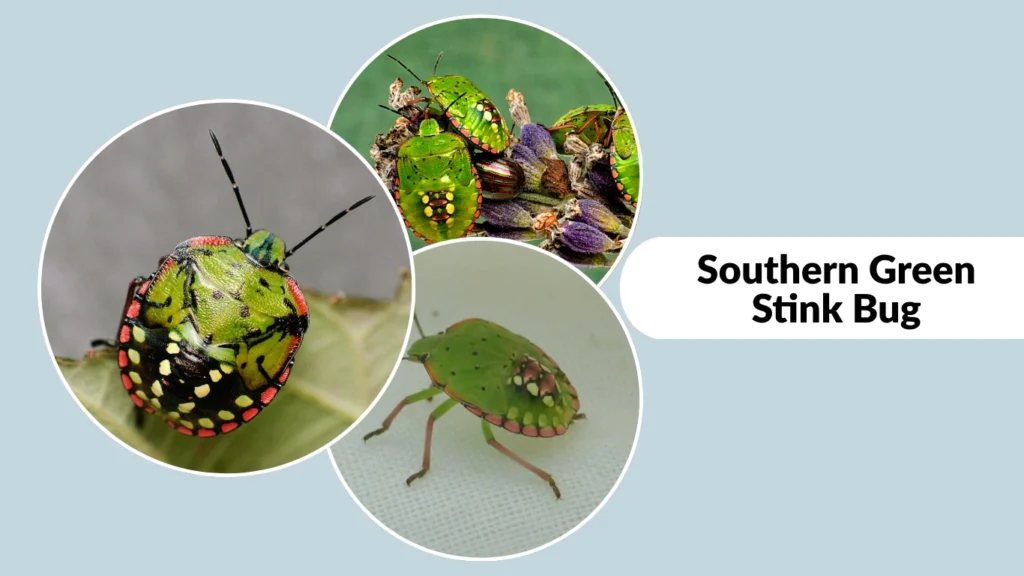
The Southern Green Stink Bug is a tropical and subtropical species that has spread globally due to trade and agriculture. It closely resembles the Green Stink Bug but can be distinguished by subtle body shape differences and behavior. It is considered a serious agricultural pest in many regions.
Identification
- Color: Bright green with a narrow pale border
- Size: 12–18 mm
- Shape: More rounded than Chinavia hilaris
- Markings: Some individuals have tiny white spots on the back
- Wings: Wing covers blend in with the green coloration
Habitat
Common in the southern United States, Central and South America, Africa, Asia, and Australia. Found in gardens, farms, and areas with legume crops.
Behavior and Diet
Feeds heavily on legumes, including beans, peas, and soybeans, by inserting a needle-like mouthpart into pods and seeds. Can also feed on cotton, tomatoes, and corn.
Role in the Ecosystem
A well-known pest species with significant economic impact. It’s targeted by natural enemies like parasitic flies and egg parasitoid wasps to control its population naturally.
4. Red-Shouldered Stink Bug (Thyanta custator)
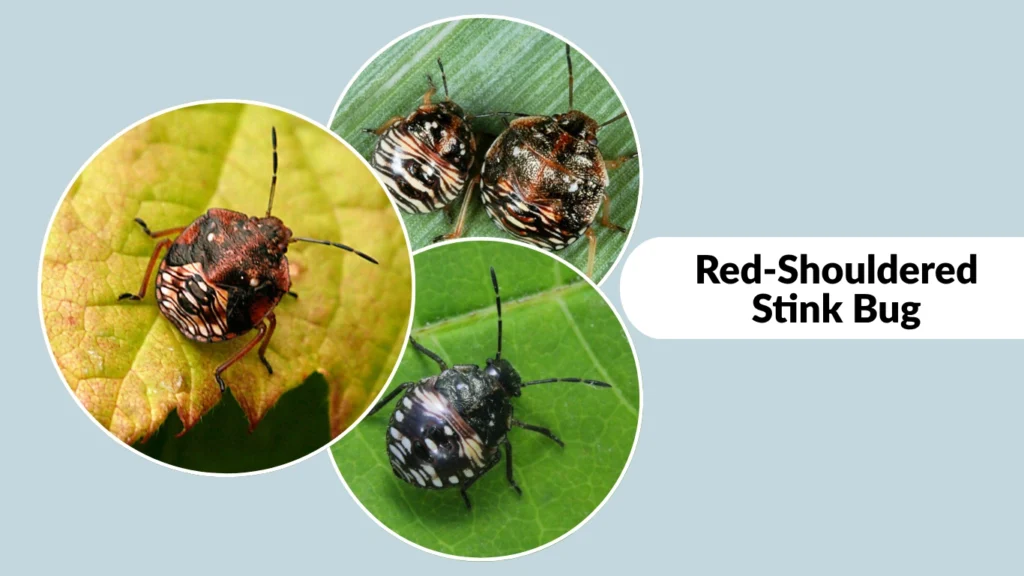
The Red-Shouldered Stink Bug is a colorful species native to North America, often found in gardens, fields, and meadows. It gets its name from the distinct reddish or pinkish markings near its “shoulders” (pronotum), making it one of the more visually striking stink bugs.
Identification
- Color: Light green or pale brown with reddish markings on the shoulders
- Size: Around 10–14 mm
- Shape: Rounded shield shape
- Markings: Red or pink “shoulder” patches on the pronotum
- Wings: Wing covers blend with the body color
Habitat
Found in open grassy areas, crop fields, gardens, and pastures across the U.S., particularly in the Midwest and Southern states.
Behavior and Diet
Feeds on a variety of plants, especially corn, sunflower, and legumes. It uses its piercing mouthparts to extract sap from stems, leaves, and seed pods.
Role in the Ecosystem
Acts as both a minor crop pest and a food source for birds and predatory insects. Its relatively low population density keeps it from causing major agricultural damage in most regions.
5. Dusky Stink Bug (Euschistus tristigmus)
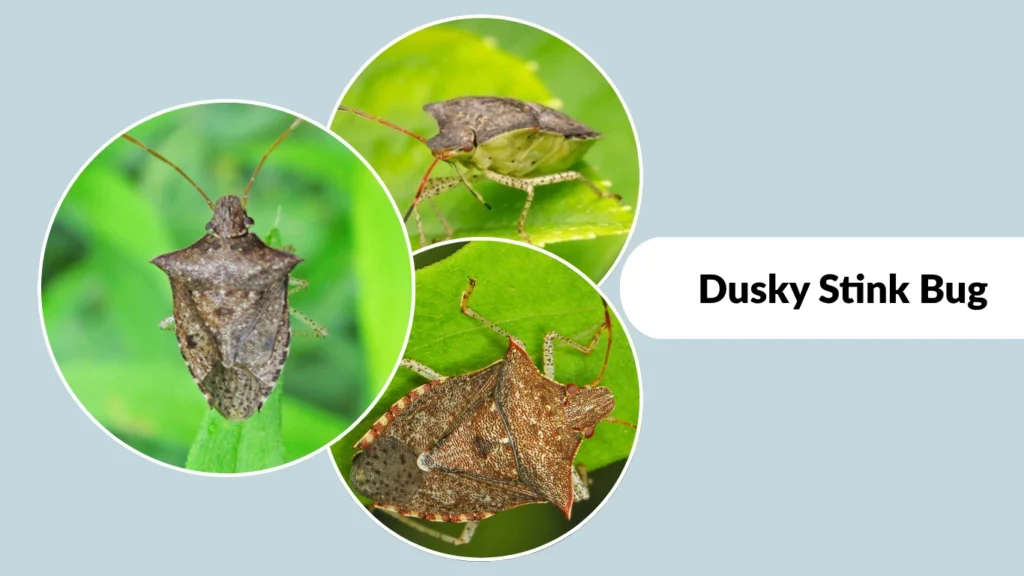
The Dusky Stink Bug is a native North American species found mostly in wooded areas and crop fields. It has a dull, brownish color that provides excellent camouflage. Though not aggressive, it can feed on both plants and insects, giving it a somewhat opportunistic diet.
Identification
- Color: Grayish-brown to dark brown
- Size: About 11–15 mm
- Shape: Broad, rounded shield shape
- Markings: May have three dark spots on the scutellum (back shield)
- Wings: Brownish with a slightly veined texture
Habitat
Prefers forest edges, woodlands, and agricultural lands. Often found under leaves, in ground cover, and along the borders of crop fields.
Behavior and Diet
Feeds on a range of plants such as fruits, vegetables, and weeds. May also scavenge dead insects or feed on soft-bodied insect pests like caterpillars.
Role in the Ecosystem
Its mixed feeding behavior can make it beneficial in pest control under certain conditions. It is also a prey species for birds, spiders, and parasitic wasps.
6. Consperse Stink Bug (Euschistus conspersus)

The Consperse Stink Bug is a western North American species commonly found in orchards, vineyards, and gardens. It is known for its mottled or speckled appearance, which helps it blend into bark and leaves. This species feeds on a wide variety of crops and wild plants.
Identification
- Color: Mottled brown with speckles and light patches
- Size: About 10–13 mm
- Shape: Broad, shield-like body
- Markings: Speckled pattern across the body and faint banding on legs
- Wings: Overlap slightly at the rear, forming a subtle X shape
Habitat
Found in the western U.S., especially in Washington, Oregon, and California. Prefers orchards, vineyards, gardens, and woodland edges.
Behavior and Diet
Feeds on fruits like peaches, grapes, and apples, as well as vegetables and weeds. Causes damage by puncturing fruit skins, which can lead to rot and deformation.
Role in the Ecosystem
Although considered a pest in orchards, it is also preyed upon by assassin bugs, birds, and spiders. It can sometimes feed on insect larvae, making its role slightly mixed.
7. Rice Stink Bug (Oebalus pugnax)

The Rice Stink Bug is a major pest in southern U.S. rice-producing states. Its narrow, pale body distinguishes it from most other stink bugs. It’s highly specialized to feed on grains and seeds, causing economic damage to rice and cereal crops.
Identification
- Color: Straw-yellow to pale tan
- Size: Around 10–12 mm
- Shape: Narrower than most stink bugs, elongated shield
- Markings: Dark points on the shoulders and forward edge of the pronotum
- Wings: Light-colored and translucent, folded neatly over the back
Habitat
Common in the southeastern U.S. in rice fields, grassy margins, and grain-producing farmlands.
Behavior and Diet
Feeds on developing rice grains, piercing the husk and sucking out nutrients, which leads to empty or shriveled grains. Also feeds on wild grasses and sorghum.
Role in the Ecosystem
An important agricultural pest, but also a food source for predatory insects and birds. Management typically involves integrated pest control practices in rice farming.
8. One-Spotted Stink Bug (Euschistus variolarius)
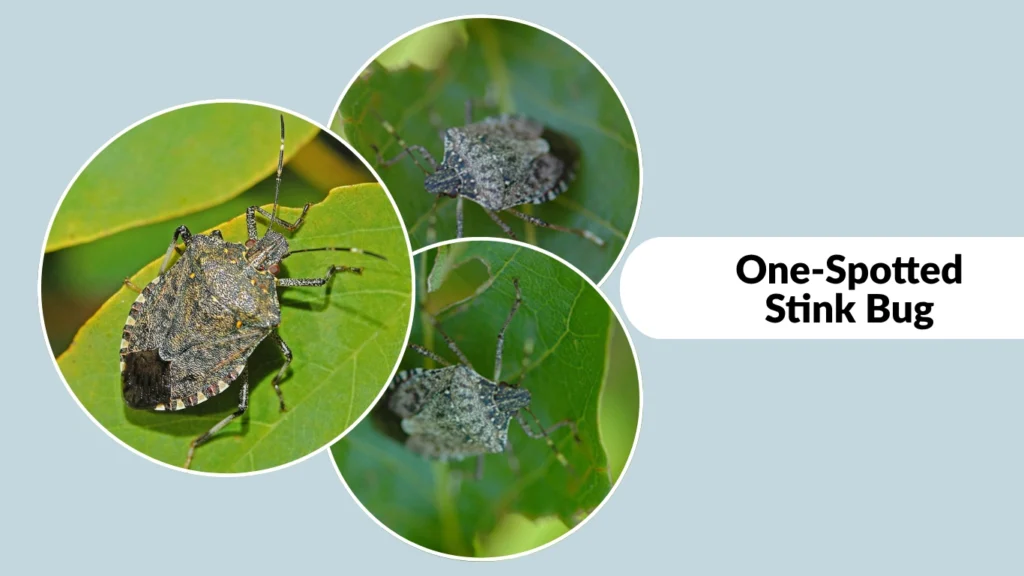
The One-Spotted Stink Bug is a medium-sized brown stink bug found throughout North America. It is named for the single dark spot located on each wing cover. Though not as notorious as some relatives, it can feed on various plants and occasionally causes minor crop damage.
Identification
- Color: Light to medium brown
- Size: Around 12–14 mm
- Shape: Broad shield shape
- Markings: A single dark round spot on each forewing
- Wings: Folded flat, partially exposing the abdomen sides
Habitat
Often found in fields, gardens, meadows, and along woodland edges. Prefers areas with dense vegetation and access to fruiting plants.
Behavior and Diet
Feeds on seeds, fruits, and plant stems using its piercing mouthparts. Common host plants include legumes, berries, and sunflowers.
Role in the Ecosystem
Acts as both a minor pest and part of the food web. It is prey for wasps, birds, and spiders, and helps naturally prune vegetation.
9. Rough Stink Bug (Brochymena quadripustulata)
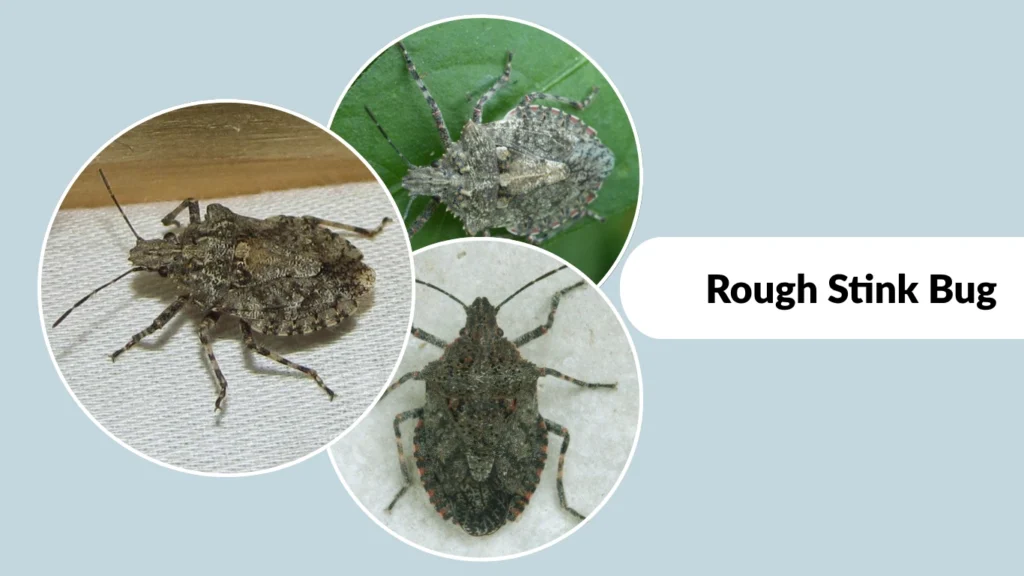
The Rough Stink Bug is a rugged-looking species often mistaken for bark due to its rough, camouflaged appearance. Unlike many crop-feeding stink bugs, it is more often found in wooded areas and is considered a predator of pest insects.
Identification
- Color: Grayish-brown with a rough, textured surface
- Size: Around 12–17 mm
- Shape: Flattened, shield-shaped with jagged edges
- Markings: Often four pale spots on the scutellum (hence “quadripustulata”)
- Wings: Rough texture blends with the body’s bark-like appearance
Habitat
Prefers woodlands, tree trunks, and bark crevices. Found across North America, especially in areas with mature trees.
Behavior and Diet
Feeds occasionally on plant sap but primarily preys on soft-bodied insects like caterpillars and beetle larvae. Not typically a garden or crop pest.
Role in the Ecosystem
Considered beneficial due to its predatory habits. Helps control insect populations and contributes to natural pest regulation in forested ecosystems.
10. Two-Spotted Stink Bug (Perillus bioculatus)
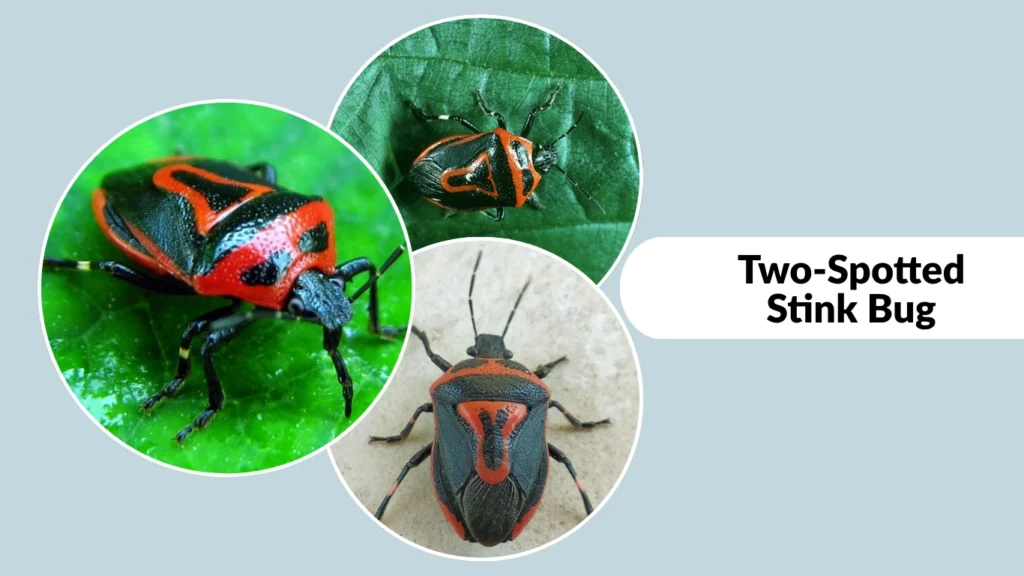
The Two-Spotted Stink Bug is a distinctive and beneficial species known for its predatory behavior. Unlike plant-feeding stink bugs, this one feeds primarily on insect pests such as caterpillars, especially the Colorado potato beetle larvae. It is commonly found in North American crop fields.
Identification
- Color: Black with red or orange markings
- Size: Around 8–12 mm
- Shape: Rounded shield shape
- Markings: Two prominent black spots on a red or orange background on the back
- Wings: Folded flat with vibrant color contrast visible
Habitat
Found in agricultural fields, gardens, and woodland edges across North America. Especially common in areas with potato or tomato crops.
Behavior and Diet
Predatory—feeds on soft-bodied insects such as beetle larvae, caterpillars, and sometimes aphids. It uses its rostrum to pierce and consume prey.
Role in the Ecosystem
Highly beneficial for pest control, particularly in vegetable crops. Often encouraged by organic farmers as a natural alternative to pesticides.
11. Anchor Stink Bug (Stiretrus anchorago)
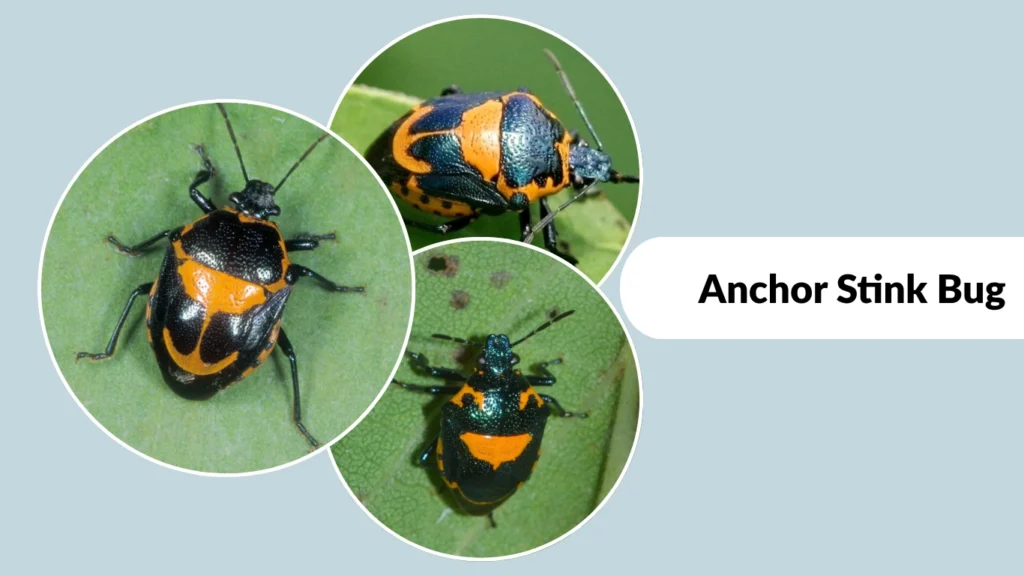
The Anchor Stink Bug is another predatory species, recognizable by its colorful body and the unique anchor-shaped marking on its back. Found throughout the Americas, it preys on many agricultural pests and is considered a helpful insect in gardens and fields.
Identification
- Color: Red, orange, or yellow with black markings
- Size: Around 10–13 mm
- Shape: Rounded shield with curved edges
- Markings: Distinctive black anchor or T-shaped mark on its back
- Wings: Usually blend into the bold body coloration
Habitat
Found in gardens, meadows, and farmlands throughout North, Central, and South America.
Behavior and Diet
Feeds on caterpillars, beetle larvae, and other soft-bodied insects. Uses its long, pointed mouthpart to inject enzymes and consume the liquefied insides of its prey.
Role in the Ecosystem
Beneficial predator that helps manage pest insect populations. Its vivid coloration may also act as a warning to predators about its scent glands.
12. Spined Soldier Bug (Podisus maculiventris)
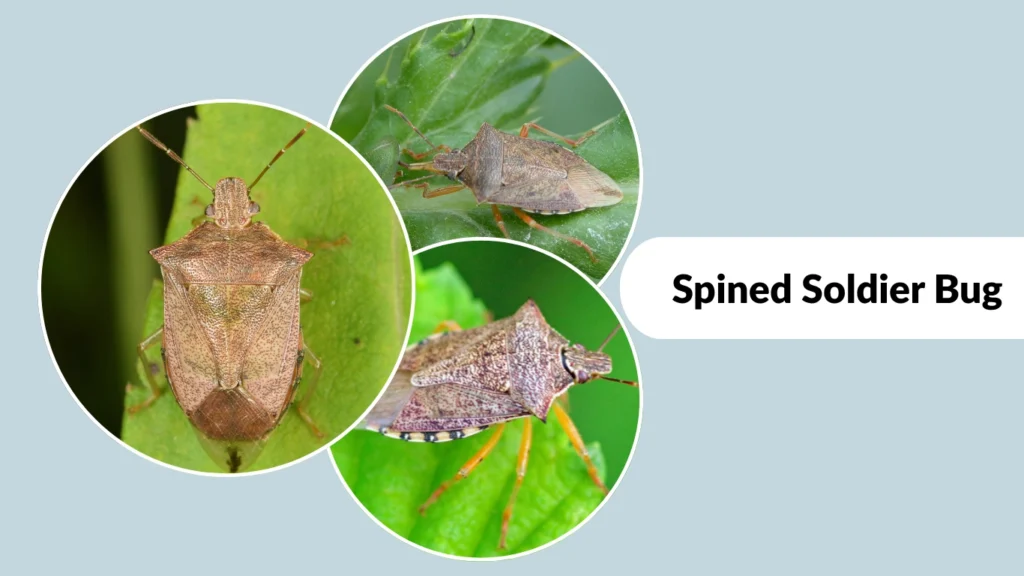
The Spined Soldier Bug is a well-known predatory stink bug commonly used in biological pest control. It gets its name from the prominent spiny projections on its shoulders. Native to North America, it’s a beneficial insect that preys on many destructive crop pests.
Identification
- Color: Brown to gray with pale spots
- Size: Around 8–13 mm
- Shape: Shield-shaped with sharp shoulder spines
- Markings: Dark spots on the underside and sometimes faint markings on the back
- Wings: Overlap slightly with visible veining
Habitat
Found in fields, orchards, forests, and gardens across North America. Prefers areas where soft-bodied insect prey are plentiful.
Behavior and Diet
Feeds on caterpillars, beetle larvae (like Colorado potato beetles), and other agricultural pests. Stabs prey with its rostrum and feeds on their fluids.
Role in the Ecosystem
A highly beneficial insect used in integrated pest management. Helps reduce the need for chemical pesticides in crop production.
13. Florida Predatory Stink Bug (Euthyrhynchus floridanus)
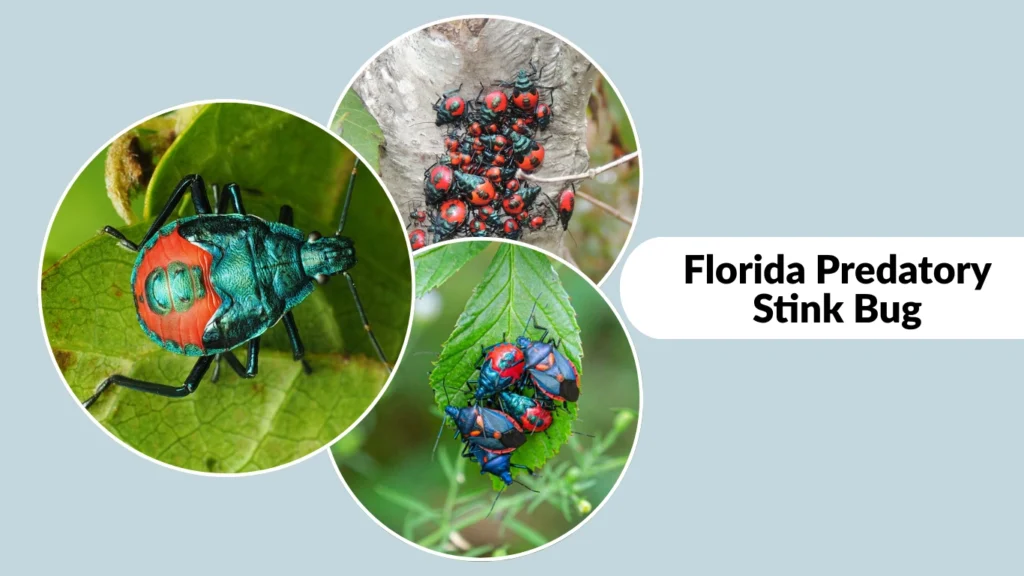
The Florida Predatory Stink Bug is a colorful and aggressive predator found mainly in the southeastern United States. Its glossy body and striking coloration distinguish it from other stink bugs, and it’s known for feeding on a wide range of garden pests.
Identification
- Color: Metallic blue-green with orange spots or stripes
- Size: About 10–15 mm
- Shape: Broad, slightly rounded shield shape
- Markings: Orange markings along the abdomen edge and on the pronotum
- Wings: Dark, shiny, and often blend with the body color
Habitat
Common in Florida and surrounding southern states. Found in gardens, citrus groves, woodlands, and vegetable fields.
Behavior and Diet
Feeds aggressively on caterpillars, beetle grubs, and other soft-bodied insects. Actively hunts and can be seen moving through vegetation during the day.
Role in the Ecosystem
Considered a beneficial predator that helps manage pest populations naturally. Its presence is welcomed in gardens and farms practicing sustainable agriculture.
14. Blue Shield Bug (Zicrona caerulea)

The Blue Shield Bug is a small, predatory species native to Europe and parts of Asia. It stands out for its deep, metallic blue or green coloration, making it one of the most visually striking stink bugs. Though small, it plays an important role in natural pest control.
Identification
- Color: Shiny metallic blue or green
- Size: Around 5–8 mm
- Shape: Compact, rounded shield
- Markings: Uniform in color with a smooth, glossy appearance
- Wings: Fit neatly over the back, same color as the body
Habitat
Found in meadows, gardens, forest edges, and fields. Prefers areas with abundant insect prey like leaf beetles and caterpillars.
Behavior and Diet
Feeds primarily on insect larvae, especially beetles. Active during warm months and often seen hunting along low vegetation.
Role in the Ecosystem
Acts as a natural biological control agent. Helps reduce pest insect populations in both wild and cultivated areas.
15. Edessa Stink Bug (Edessa meditabunda)
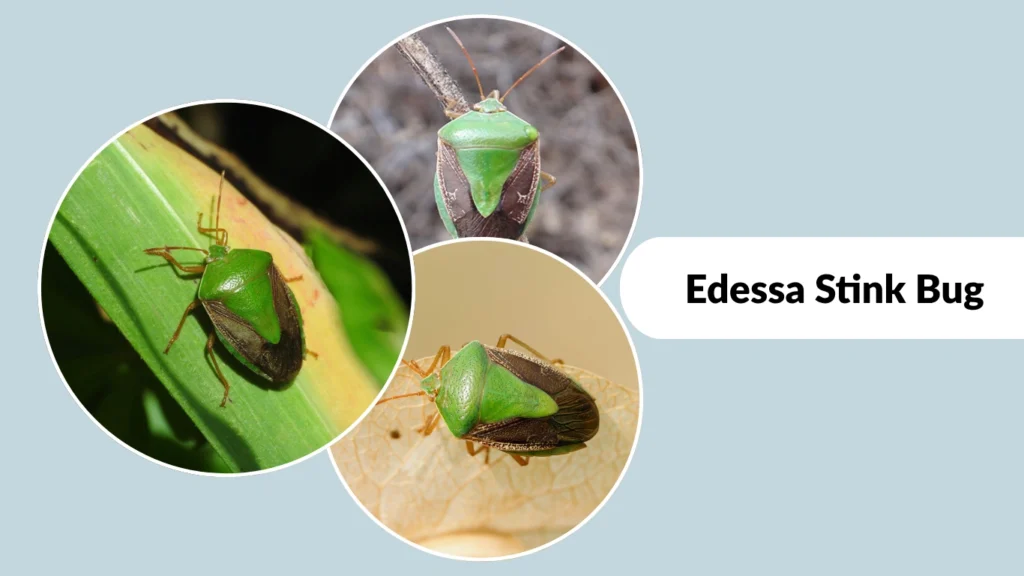
The Edessa Stink Bug is a widespread species in Central and South America, known for its flat body and unique coloration. It is a plant-feeding stink bug that sometimes becomes a pest in agricultural crops like soybean and cotton.
Identification
- Color: Brown or olive green with red, orange, or yellow edges
- Size: Around 12–15 mm
- Shape: Broad, flattened body with a slightly flared abdomen
- Markings: May have patterned margins or subtle central markings
- Wings: Lay flat with minor veining visible
Habitat
Common in tropical and subtropical areas, especially in soybean fields, cotton plantations, and forest borders.
Behavior and Diet
Feeds on sap from plant stems, pods, and fruits. Causes discoloration, deformities, and reduced yield in host plants.
Role in the Ecosystem
Considered a pest in agriculture but part of the natural food chain in wild environments. Often targeted by parasitoid wasps and predatory insects.
16. Bagrada Bug (Bagrada hilaris)

Although not a true stink bug taxonomically, the Bagrada Bug is often grouped with stink bugs due to its similar appearance, shield shape, and foul odor. Native to Africa and parts of Asia, it has become an invasive pest in the U.S., particularly in the Southwest, where it targets cole crops.
Identification
- Color: Black with striking white and orange markings
- Size: Around 5–7 mm
- Shape: Small, shield-like, compact body
- Markings: Bright orange and white spots or stripes on a dark background
- Wings: Small and blend into body coloration
Habitat
Common in arid and warm regions like Arizona and California. Found in gardens, agricultural fields, and urban landscapes.
Behavior and Diet
Feeds on mustard-family plants, especially cabbage, broccoli, kale, and cauliflower. Damages plants by piercing stems and leaves, leading to wilting and stunted growth.
Role in the Ecosystem
A major invasive pest with few natural predators in introduced regions. Management is difficult and often requires cultural controls and targeted treatment.
17. Black Stink Bug (Proxys punctulatus)

The Black Stink Bug is a sleek, dark-colored species native to North and Central America. It is both a plant feeder and occasionally a scavenger, giving it a mixed impact on agriculture depending on the environment and crop.
Identification
- Color: Glossy black or very dark brown
- Size: About 11–15 mm
- Shape: Smooth, rounded shield shape
- Markings: Sometimes has faint pale spots on the back or abdomen edge
- Wings: Folded flat, same dark color as the body
Habitat
Found in fields, gardens, forests, and meadows. Prefers weedy areas with broadleaf plants and crops.
Behavior and Diet
Feeds on seeds, fruits, and sometimes decaying organic matter. Known to target soybeans, corn, and legumes but not typically in high numbers.
Role in the Ecosystem
Can be a minor crop pest, but also contributes to decomposition and serves as prey for birds and predatory insects. Its mixed diet gives it a dual ecological role.
18. Field Stink Bug (Chlorochroa uhleri)

The Field Stink Bug is a large, green stink bug commonly found across the Great Plains and western regions of North America. It blends well into vegetation and is often seen on wildflowers, legumes, and crops. Though not highly destructive, it can damage seeds and pods in legume crops.
Identification
- Color: Bright green with pale margins
- Size: About 12–16 mm
- Shape: Rounded shield shape
- Markings: Pale or whitish lines along the edge of the pronotum and abdomen
- Wings: Light green, overlapping neatly on the back
Habitat
Found in fields, prairies, gardens, and roadsides. Prefers legume-rich areas like alfalfa, clover, and soybean fields.
Behavior and Diet
Feeds on seeds and pods of legumes and other herbaceous plants. Uses piercing mouthparts to suck plant juices, which can cause minor crop damage.
Role in the Ecosystem
Contributes to natural pruning of legumes and is part of the diet of spiders, birds, and assassin bugs. Population outbreaks are typically limited.
19. Green Shield Bug (Palomena prasina)
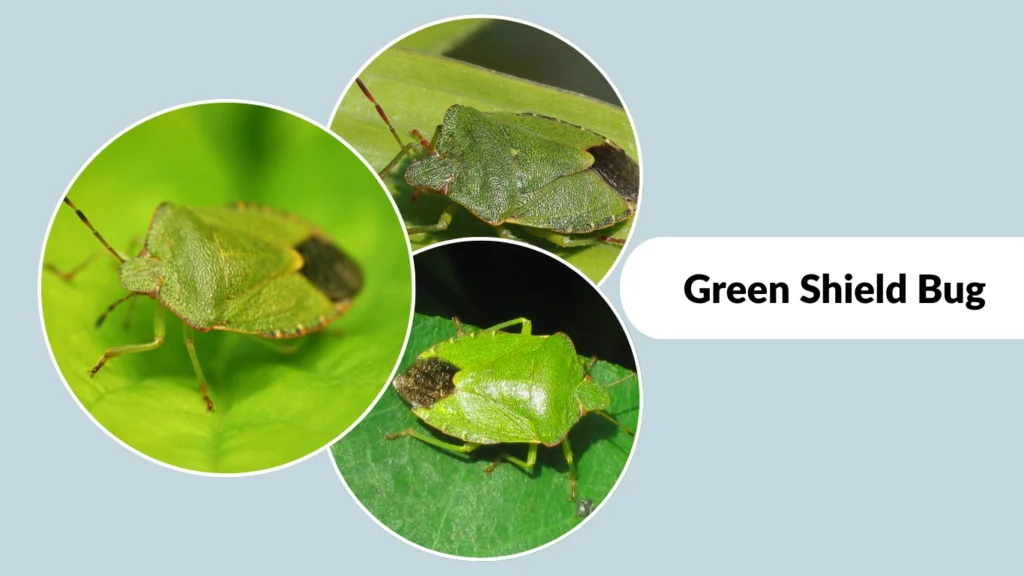
The Green Shield Bug is one of the most common stink bugs in Europe. It is often found in gardens, forests, and hedgerows, where it feeds on a variety of plants. Its bright green color and gentle nature make it easy to spot in summer months.
Identification
- Color: Bright green in summer; turns brownish-green in autumn
- Size: Around 12–15 mm
- Shape: Classic shield shape, smooth body edges
- Markings: Often has dark speckles or no distinct markings
- Wings: Lay flat, matching the body color
Habitat
Widespread across Europe in parks, gardens, forests, and farmland. Prefers shrubs, broadleaf plants, and fruit-bearing trees.
Behavior and Diet
Feeds on plant sap, especially from leaves and fruit. Often seen on raspberries, apples, and beans. In late summer, they may seek shelter indoors for overwintering.
Role in the Ecosystem
A minor garden pest, but generally harmless in small numbers. Plays a role in the food web as prey for birds, spiders, and parasitoids.
20. Banasa Stink Bug (Banasa dimidiata)
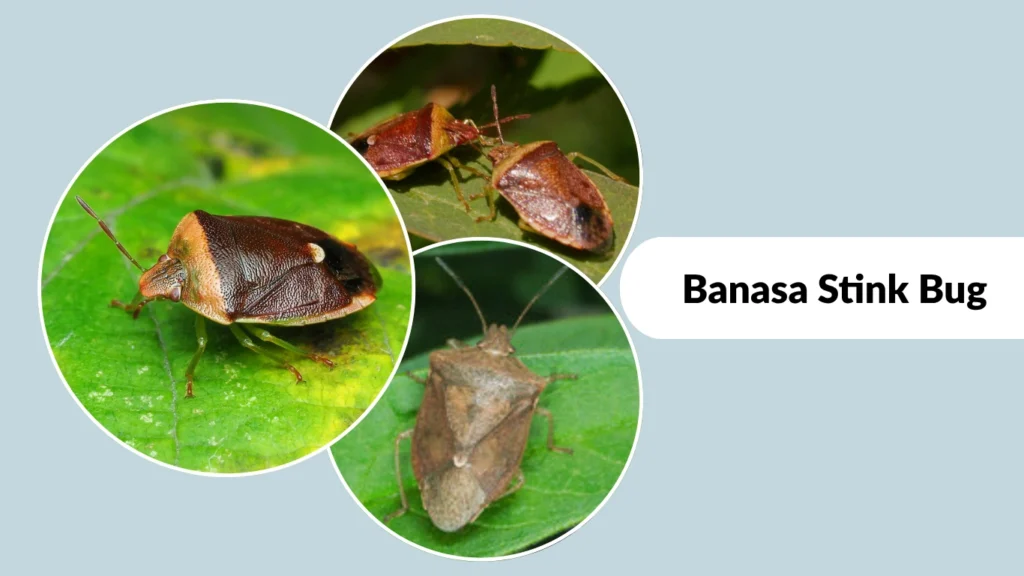
The Banasa Stink Bug is a small, often overlooked species native to North America. Its subtle coloring and small size help it blend into foliage. It is not typically considered a major pest and is most often found in wooded or shrubby areas.
Identification
- Color: Green with a reddish or pinkish margin along the pronotum
- Size: Around 8–10 mm
- Shape: Compact, rounded shield
- Markings: Two-toned body—green center with pink to red margins
- Wings: Neatly folded, with slight transparency at the tips
Habitat
Found in gardens, forests, and shrublands throughout the United States. Commonly seen on ornamental plants, shrubs, and wildflowers.
Behavior and Diet
Feeds on sap from a variety of herbaceous and woody plants. Rarely reaches high population levels, so damage is usually minimal or cosmetic.
Role in the Ecosystem
A low-impact species that contributes to biodiversity in plant-rich environments. Acts as a minor food source for insectivorous birds and predatory bugs.
21. Red-Bordered Stink Bug (Edessa rufomarginata)

The Red-Bordered Stink Bug is native to Central and South America and is known for its bold and beautiful coloration. It feeds on a variety of plants and can sometimes become a localized crop pest in tropical regions.
Identification
- Color: Dark brown to black with vivid red or orange border around the shield
- Size: Around 12–16 mm
- Shape: Broad, flat shield shape with flared edges
- Markings: Bright red or orange edge around the pronotum and abdomen
- Wings: Dark and often partially cover the colored border
Habitat
Found in tropical and subtropical forests, agricultural fields, and gardens throughout Central and South America.
Behavior and Diet
Feeds on plant juices from fruits, stems, and leaves. It may affect crops like beans, cassava, and tomatoes if populations become dense.
Role in the Ecosystem
Adds striking diversity to tropical stink bug populations and plays a dual role as both herbivore and prey. Its coloration may also serve as a warning to predators about its odor defenses.
22. Say’s Stink Bug (Chlorochroa sayi)

Say’s Stink Bug, named after the American entomologist Thomas Say, is a large, green stink bug native to North America. It’s known to feed on a wide variety of plants and can occasionally be an agricultural pest, especially in grain-producing regions.
Identification
- Color: Bright green with contrasting reddish or yellowish edges
- Size: Around 14–17 mm
- Shape: Broad and oval shield shape
- Markings: Colored margin (often orange or red) around the thorax and abdomen
- Wings: Blend well into the body; folded flat
Habitat
Common in gardens, grasslands, and crop fields across the United States, especially in the Midwest and southern plains.
Behavior and Diet
Feeds on legumes, grains, and fruits by piercing plant tissue and sucking sap. Known to damage soybeans, corn, and sunflowers during late summer.
Role in the Ecosystem
Considered a mild to moderate pest. However, it also supports predator species such as birds and parasitic wasps in agricultural ecosystems.
23. Kirkaldy’s Stink Bug (Euschistus ictericus)
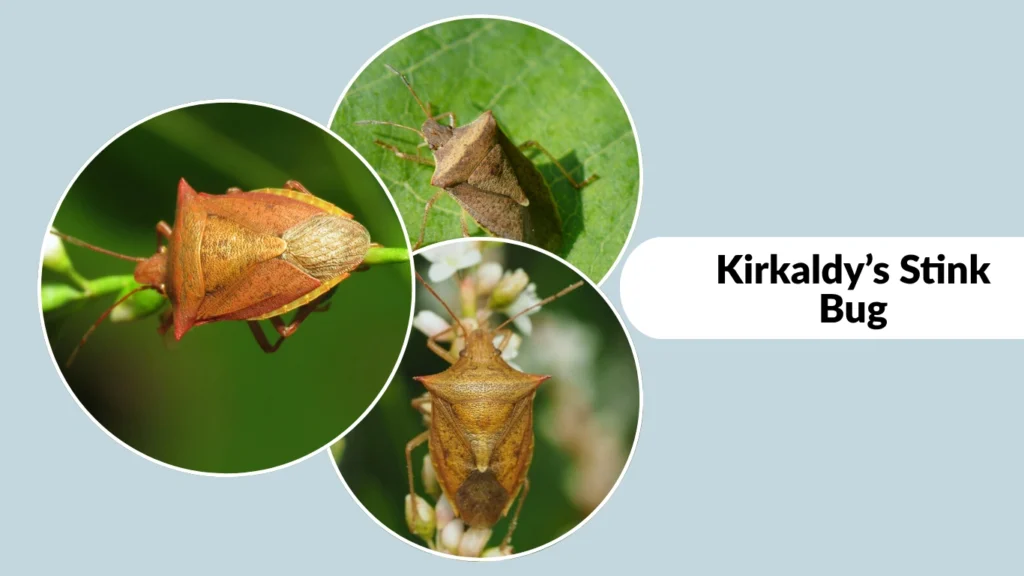
Kirkaldy’s Stink Bug is a lesser-known brown stink bug species found in North America. It resembles other Euschistus species and is most often found in woodland margins and crop fields. Though not widespread, it can become locally abundant.
Identification
- Color: Light brown to reddish-brown
- Size: Around 12–14 mm
- Shape: Broad shield with slightly rounded edges
- Markings: Faint spots on the pronotum and wing covers; pale legs
- Wings: Overlap at the rear, with visible venation
Habitat
Found in meadows, forest edges, and gardens in the eastern and central United States. Prefers wildflower areas and crops like clover and alfalfa.
Behavior and Diet
Feeds on a variety of herbaceous plants, seeds, and flower buds. Sometimes found in soybean and cotton fields.
Role in the Ecosystem
Acts as a minor herbivore but contributes to plant diversity control. Also preyed upon by predatory insects and small birds.
24. Conchuela Stink Bug (Chlorochroa ligata)
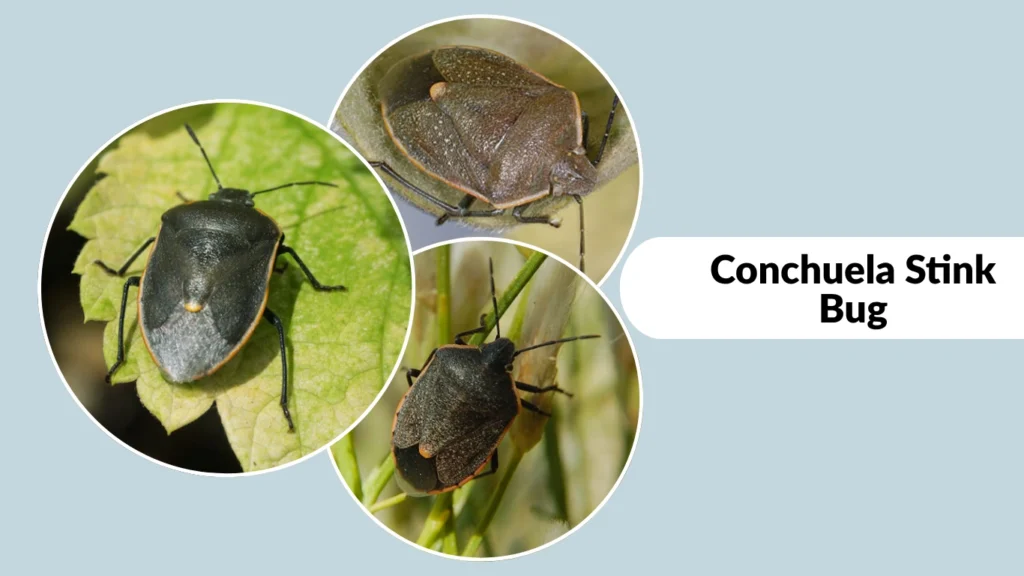
The Conchuela Stink Bug is a common agricultural pest found mainly in the southwestern United States and Mexico. It closely resembles Say’s stink bug but can be distinguished by its coloration. It often targets legumes and is frequently seen in cotton and sorghum fields.
Identification
- Color: Dark green or brownish-green with a red or orange margin
- Size: Around 12–15 mm
- Shape: Broad, flat, and shield-like
- Markings: Bright red or orange lines along the pronotum and abdomen edges
- Wings: Fold flat, blending with body color
Habitat
Common in arid and semi-arid regions, especially in Texas, Arizona, and northern Mexico. Found in farms, fields, and roadside vegetation.
Behavior and Diet
Feeds on cotton, sorghum, alfalfa, and legumes by piercing pods and stems. Its feeding can cause pod deformation and yield loss.
Role in the Ecosystem
A significant pest in certain crop systems but also a host for natural predators like assassin bugs and parasitic wasps.
25. Brown Stink Bug (Euschistus servus)

The Brown Stink Bug is a widespread North American species found in both agricultural and natural settings. It’s one of the more common brown stink bugs and is known for feeding on a wide variety of crops, making it a concern for farmers.
Identification
- Color: Uniform light to medium brown
- Size: 12–17 mm
- Shape: Classic shield shape with slightly pointed “shoulders”
- Markings: Minimal markings; sometimes dark patches on wings or body edges
- Wings: Folded flat with faint venation visible
Habitat
Found in crop fields, orchards, gardens, and grasslands throughout the U.S. and southern Canada.
Behavior and Diet
Feeds on corn, soybeans, tomatoes, peaches, and more. Uses its piercing-sucking mouthparts to extract sap from stems, leaves, and fruit.
Role in the Ecosystem
A common pest in agriculture but serves as a host for beneficial parasitoids. Plays a role in nutrient cycling by aiding plant turnover in natural habitats.
