

Bumblebees in the genus Bombus are some of the most important pollinators in the world, contributing to both wild ecosystems and agriculture. With over 250 species globally, their diversity in size, coloration, and behavior is remarkable. In this guide, we explore 17 notable Bombus species, detailing their identification features, habitat preferences, behaviors, and diets to help you recognize and appreciate these vital insects.
1. Bombus terrestris – Buff-tailed Bumblebee

The buff-tailed bumblebee (Bombus terrestris) is one of the most widespread and recognizable bumblebee species in Europe. Known for its strong pollination abilities, it is also widely used in commercial greenhouse farming. These bees are active from early spring to late autumn, making them vital for crop and wildflower pollination.
Identification
- Large, robust body with black and yellow bands
- Buff-colored “tail” (rear segment) rather than pure white
- Queens are noticeably larger than workers and males
- Dense, fuzzy hair covering the body
Habitat & Distribution
Buff-tailed bumblebees are found across Europe, parts of northern Africa, and western Asia, and have been introduced to New Zealand and Tasmania. They adapt to diverse habitats, including gardens, meadows, agricultural lands, and urban green spaces, often nesting underground in abandoned rodent burrows.
Behavior & Ecology
This species forms annual colonies led by a single queen, with worker numbers peaking in mid-summer. They are resilient foragers, active even in cooler and overcast conditions, which gives them a longer working season. Their pollination activity supports both wild ecosystems and agricultural productivity.
Diet
Buff-tailed bumblebees feed primarily on nectar for energy and gather pollen to feed their larvae. They forage from a wide range of plants, including clovers, lavender, sunflowers, beans, and fruit blossoms, showing a strong preference for flowers with abundant nectar reserves.
2. Bombus impatiens – Common Eastern Bumblebee
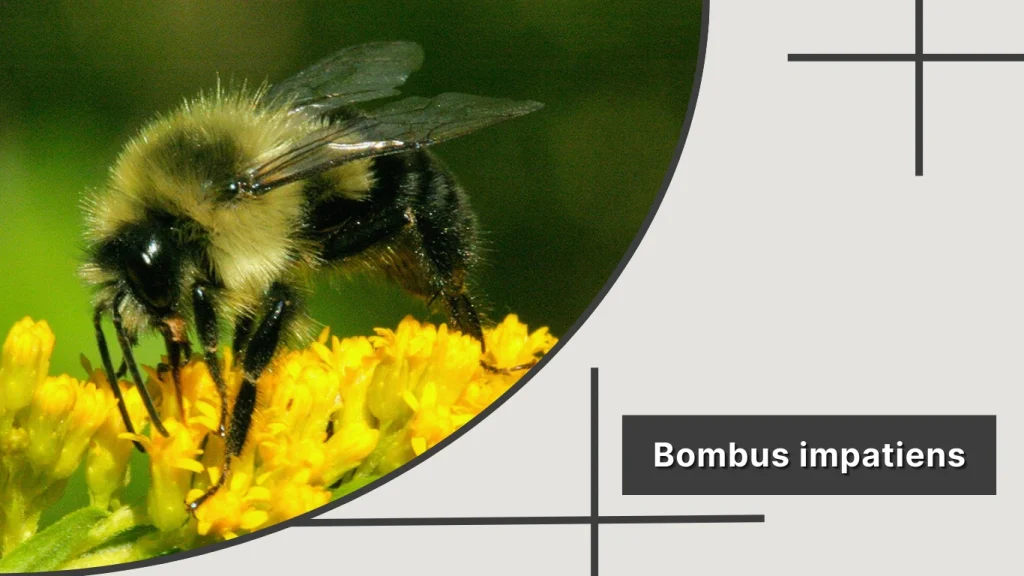
The common eastern bumblebee (Bombus impatiens) is one of the most abundant pollinators in eastern North America. Known for its adaptability and extended foraging season, it plays a crucial role in both agricultural and wild plant pollination.
Identification
- Medium-sized bumblebee with black head and thorax
- Bright yellow band on the thorax behind the head
- Abdomen mostly black with a single yellow band at the front
- Dense, velvety hair covering the body
Habitat & Distribution
This species is native to eastern North America, ranging from southern Canada to Florida and the Midwest. It thrives in gardens, farmlands, woodlands, and urban parks, and often nests underground in abandoned rodent burrows or in shaded grassy areas.
Behavior & Ecology
Colonies typically last from spring to early autumn, with a single queen and hundreds of workers at peak size. They are efficient pollinators for crops such as tomatoes, peppers, and berries, and remain active in various weather conditions, making them valuable for both farmers and ecosystems.
Diet
They feed on nectar for energy and collect pollen to nourish larvae. Preferred plants include goldenrod, clover, sunflower, blueberry, and a wide range of wildflowers, showing flexibility in food choice depending on availability.
3. Bombus lapidarius – Red-tailed Bumblebee
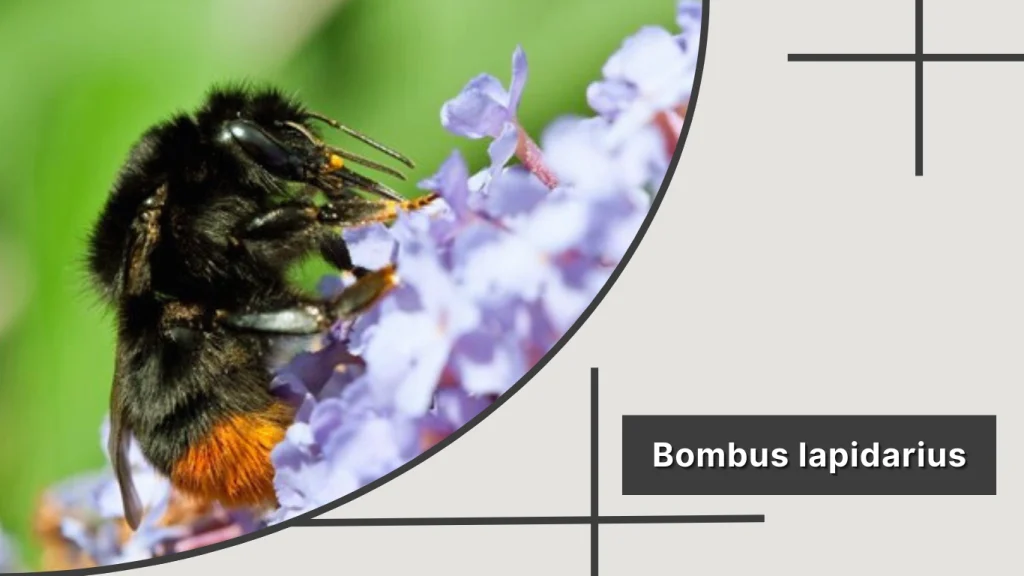
The red-tailed bumblebee (Bombus lapidarius) is easily recognized by its striking coloration and is a common species across much of Europe. It is a highly effective pollinator, especially in gardens and wildflower-rich areas.
Identification
- Large bumblebee with entirely black body except for a bright red tail
- Queens and workers share similar patterns, though queens are larger
- Males have yellow facial markings and longer antennae
- Short, even hair giving a sleek appearance
Habitat & Distribution
Native to Europe and parts of Asia, this species thrives in gardens, grasslands, heathlands, and coastal areas. They often nest underground in abandoned burrows but can also choose tussocky grass or compost heaps for shelter.
Behavior & Ecology
Red-tailed bumblebees form annual colonies, with peak worker numbers in midsummer. They are generalist foragers, visiting a broad range of flowers, and can forage over long distances, ensuring effective cross-pollination between plants in different habitats.
Diet
Their diet includes nectar from thistles, clovers, lavender, and fruit blossoms, while pollen from legumes and other protein-rich plants is collected to feed their young. They are particularly drawn to deep-tubed flowers suited to their long tongues.
4. Bombus hortorum – Garden Bumblebee
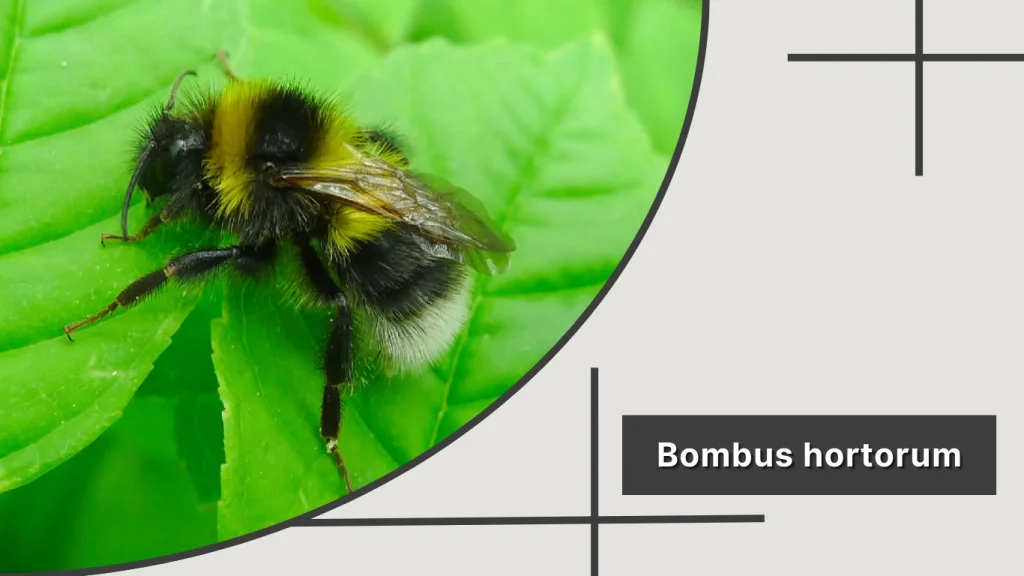
The garden bumblebee (Bombus hortorum) is known for its long tongue, which allows it to feed from deep-tubed flowers that many other bees cannot access. It is a familiar sight in gardens, parks, and countryside areas during the warmer months.
Identification
- Slender body with three yellow bands: one on the thorax, two on the abdomen
- Long face and extended tongue for deep flowers
- Tail is white and contrasts with the yellow and black bands
- Dense, silky hair covering the body
Habitat & Distribution
Found widely across Europe and parts of Asia, the garden bumblebee thrives in gardens, meadows, hedgerows, and urban parks. They prefer areas with a high diversity of flowering plants, often nesting above ground in dense vegetation or abandoned bird nests.
Behavior & Ecology
Colonies are typically smaller than other Bombus species, but they are important pollinators for both wild and cultivated plants. Their long tongues make them specialists for plants like foxgloves and honeysuckles. They are also active over an extended season, from spring to late autumn.
Diet
They feed on nectar from deep flowers such as foxglove, honeysuckle, vetch, and clover, while gathering pollen from legumes and other nutrient-rich plants for their larvae.
5. Bombus pascuorum – Common Carder Bee
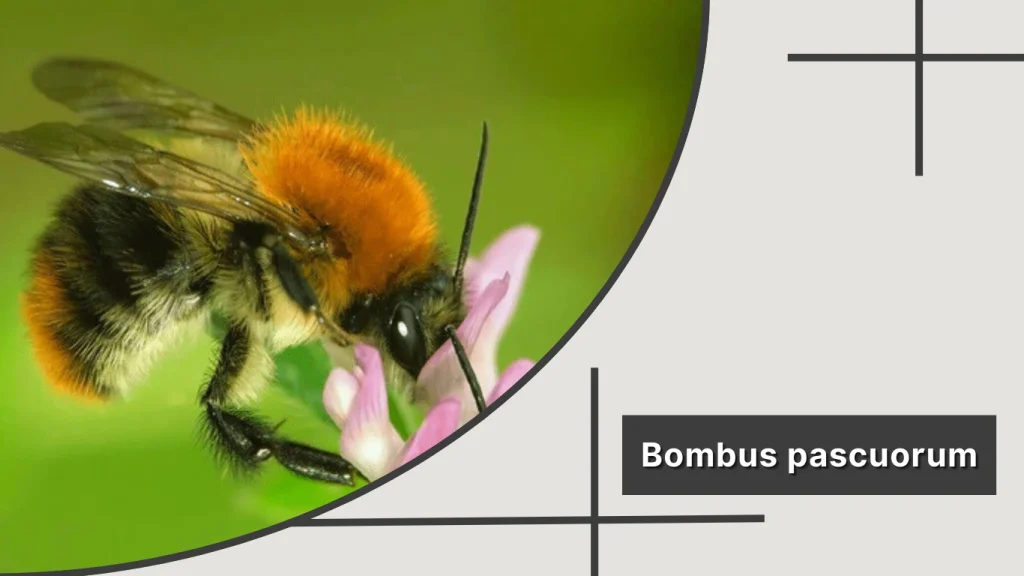
The common carder bee (Bombus pascuorum) is one of the most widespread bumblebees in Europe, easily recognized by its warm brown or ginger coloring. It is a long-season pollinator, often active well into autumn.
Identification
- Medium-sized bumblebee with overall ginger or brown hair
- Lacks the distinct black-and-yellow banding of many other species
- Tail is usually the same color as the body or slightly darker
- Hair appears soft and shaggy
Habitat & Distribution
This species is common across Europe, parts of Asia, and has also been found in some North African regions. It thrives in meadows, gardens, road verges, and other flower-rich areas, nesting above ground in grass tussocks or abandoned bird nests.
Behavior & Ecology
Colonies are smaller compared to some other bumblebees, often with fewer than 150 workers. They are gentle in nature and rarely sting. Their long foraging season and adaptability to various flower types make them a crucial pollinator for many plants.
Diet
They forage on a variety of flowers, favoring clovers, vetches, lavender, and borage. Pollen is collected mainly from legumes, which provide the necessary protein for developing larvae.
6. Bombus lucorum – White-tailed Bumblebee
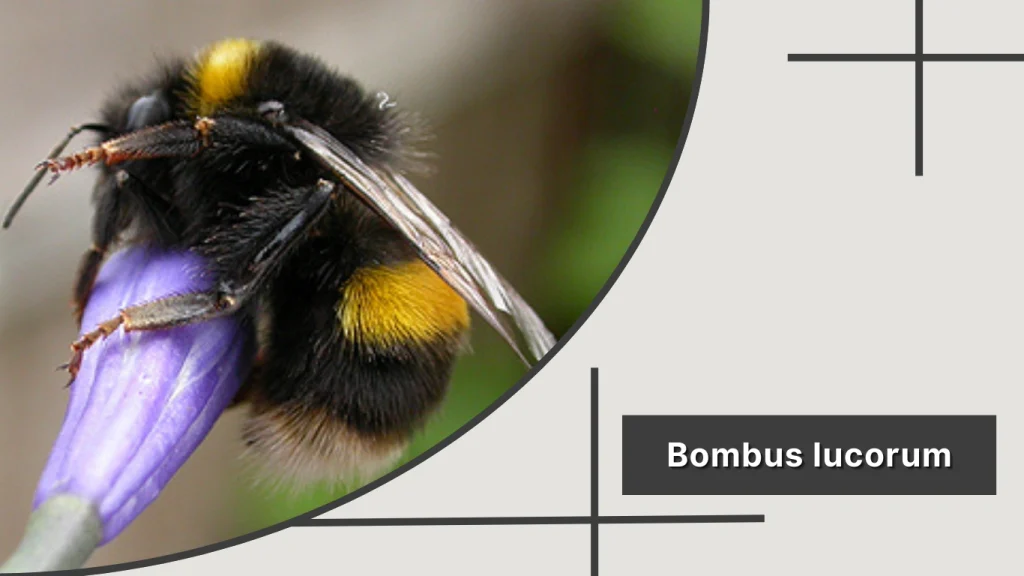
The white-tailed bumblebee (Bombus lucorum) is a widespread and abundant species in Europe, easily confused with several close relatives in the Bombus lucorum complex. Its bold coloration and adaptability make it a familiar garden visitor.
Identification
- Black body with two bright yellow bands: one on the thorax, one on the abdomen
- Distinct white tail at the rear
- Queens are large and robust, while males have longer antennae and lighter yellow markings
- Short, dense hair giving a smooth look
Habitat & Distribution
Native to Europe and parts of northern Asia, this species thrives in gardens, grasslands, woodlands, and farmland edges. It adapts well to urban environments and nests underground in abandoned small mammal burrows or tussocky grass.
Behavior & Ecology
Colonies form in spring and peak in midsummer, with hundreds of workers foraging daily. The species is an important pollinator for crops and wildflowers, active even in cooler temperatures. It often coexists with similar-looking species, making identification challenging.
Diet
Feeds on nectar from clover, thistles, dandelions, and fruit blossoms. Pollen is collected from a wide range of plants, especially legumes, for feeding larvae.
7. Bombus pratorum – Early Bumblebee
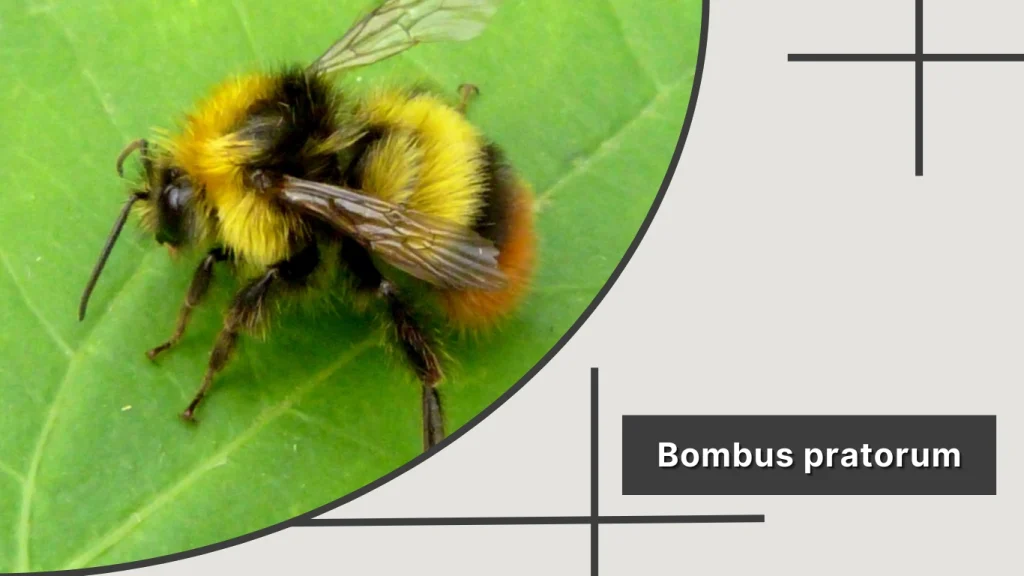
The early bumblebee (Bombus pratorum) is among the first bumblebee species to emerge each spring. Its early activity makes it crucial for pollinating early-blooming plants before other pollinators appear.
Identification
- Small to medium size with black body and yellow bands on thorax and abdomen
- Distinctive orange-red tail that may fade with age
- Males often have more extensive yellow on the thorax and face
- Hair is fine and moderately dense
Habitat & Distribution
Found widely across Europe and parts of Asia, the early bumblebee inhabits gardens, meadows, woodland edges, and hedgerows. Nests are usually built above ground in grass tussocks, bird boxes, or compost heaps.
Behavior & Ecology
Colonies are relatively small and short-lived, often completing their life cycle by midsummer. Their early emergence allows them to exploit spring flowers, and they are capable of pollinating plants in cooler weather conditions.
Diet
They feed on nectar from willow, blackthorn, raspberry, and early-flowering herbs. Pollen is collected from legumes and other protein-rich flowers to nourish developing larvae.
8. Bombus hypnorum – Tree Bumblebee
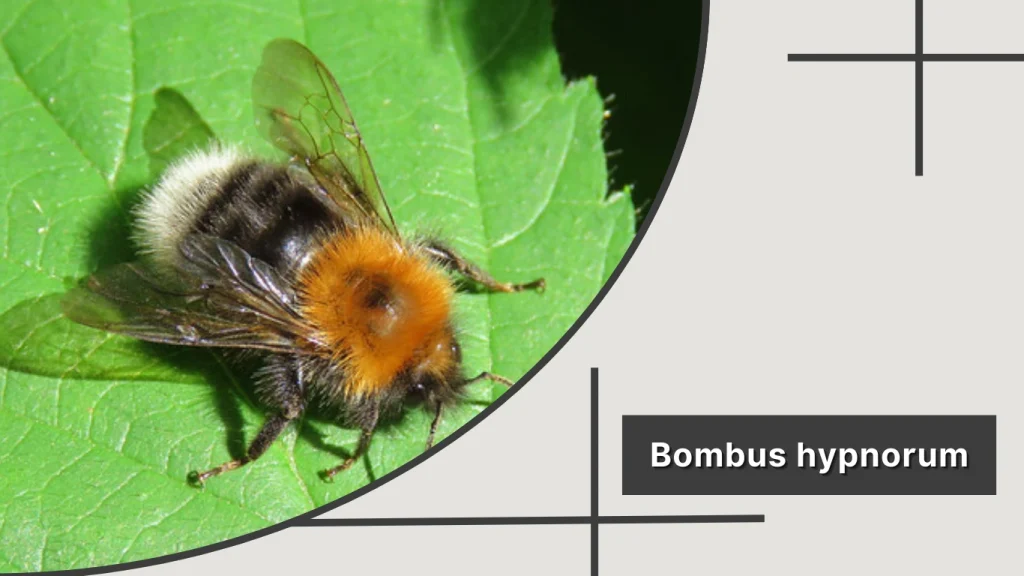
The tree bumblebee (Bombus hypnorum) is a relatively new arrival in some parts of Europe, having expanded its range rapidly in recent decades. It is distinctive for its color pattern and preference for nesting above ground.
Identification
- Chestnut-brown thorax
- Black abdomen
- White tail
- Medium-sized with short, dense hair
Habitat & Distribution
Originally native to parts of Europe and Asia, the tree bumblebee has expanded into the UK and other regions over the past few decades. It prefers gardens, parks, woodland edges, and urban areas, nesting in bird boxes, roof spaces, and hollow trees.
Behavior & Ecology
Colonies are often found in elevated nesting sites, sometimes in close proximity to humans. They are highly adaptable and can establish colonies in artificial structures. Activity begins in early spring and continues into late summer, with workers foraging for a variety of flowers.
Diet
Feeds on nectar from fruit blossoms, willow, bramble, and various ornamental plants. Pollen sources include dandelion, clover, and wild herbs.
9. Bombus muscorum – Moss Carder Bee
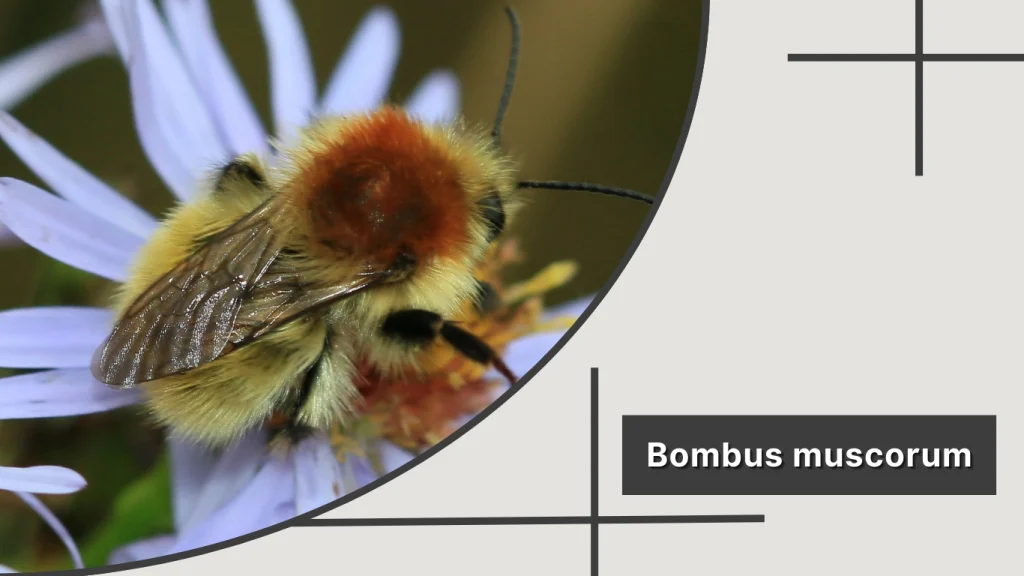
The moss carder bee (Bombus muscorum) is a ginger-colored species that often constructs its nests from moss and grass, giving it its name. It is a gentle bee, rarely aggressive, and is important in pollinating wildflowers.
Identification
- Uniform ginger or tawny coloring over the entire body
- Lacks distinct black-and-yellow banding
- Long-haired and soft in appearance
- Queens, workers, and males look similar in coloration
Habitat & Distribution
Found across much of Europe, especially in flower-rich grasslands, coastal dunes, and meadows. It prefers undisturbed areas and nests above ground, often in mossy tussocks or grassy clumps, sometimes under hedges.
Behavior & Ecology
Colonies are generally small, often with fewer than 100 workers. They are long-tongued bees, favoring tubular flowers. Active from late spring through autumn, they contribute significantly to the pollination of wild and cultivated plants.
Diet
Feeds mainly on nectar from clover, vetches, knapweed, and lavender. Pollen is gathered from legumes and other protein-rich flowers to feed the brood.
10. Bombus ruderatus – Large Garden Bumblebee
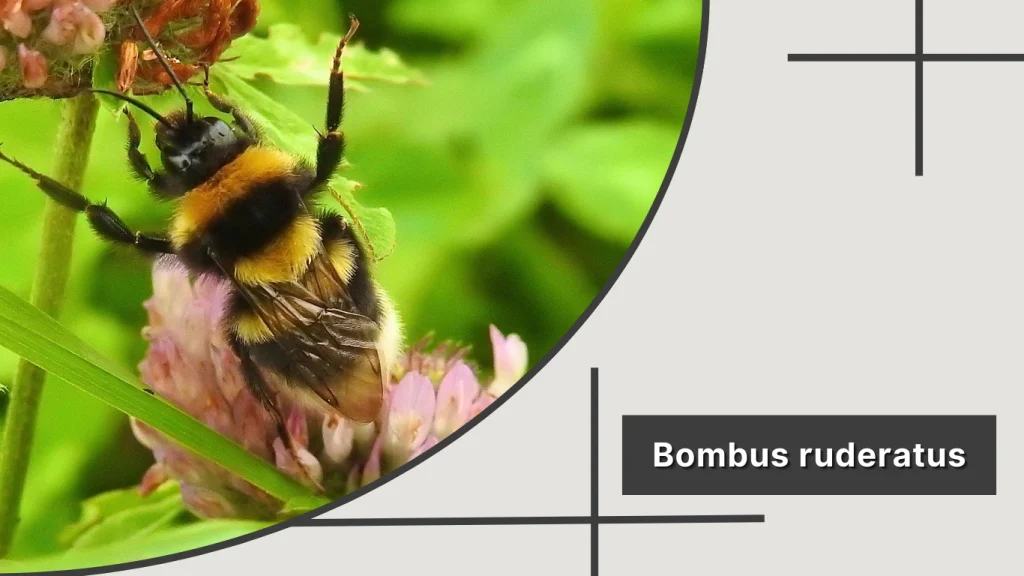
The large garden bumblebee (Bombus ruderatus) is one of the longest-tongued bumblebees, enabling it to access nectar from deep flowers that many other species cannot reach. It is closely related to Bombus hortorum but is generally larger.
Identification
- Slender body with three yellow bands: one on the thorax, two on the abdomen
- Long face and very long tongue
- White tail contrasting with yellow and black bands
- Queens are noticeably larger than workers and males
Habitat & Distribution
Native to Europe but also introduced to New Zealand and parts of South America. It inhabits meadows, gardens, hedgerows, and farmland with abundant flowering plants. Nests are usually built above ground in dense vegetation or abandoned bird nests.
Behavior & Ecology
Colonies are relatively small but highly specialized for deep flowers like foxglove and clover. They are long-season foragers, active from spring through late autumn. Their long tongues make them important for plants requiring specialized pollination.
Diet
Feeds on nectar from deep-tubed flowers such as foxglove, clover, vetch, and honeysuckle. Collects pollen mainly from legumes for brood nourishment.
11. Bombus distinguendus – Great Yellow Bumblebee
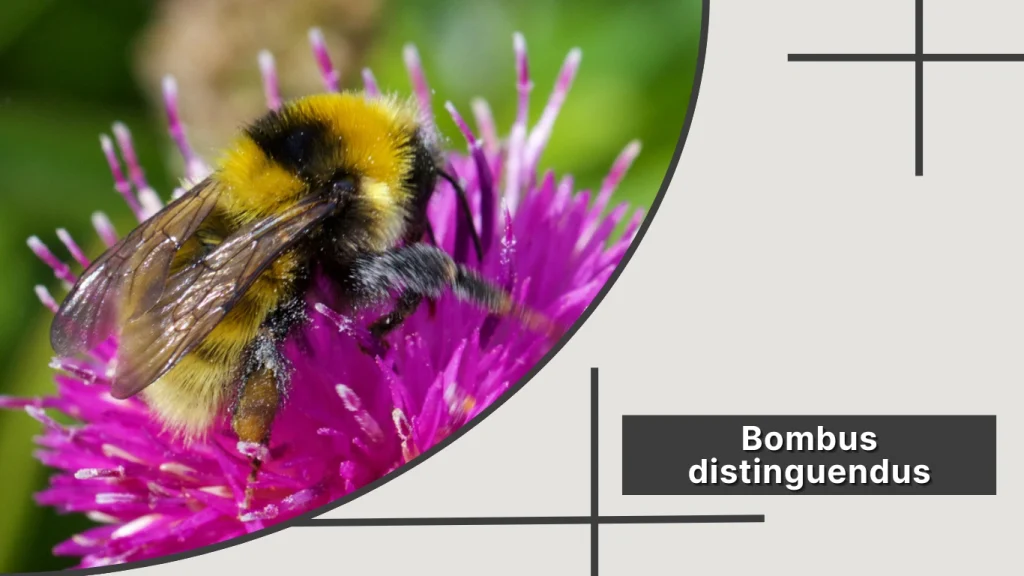
The great yellow bumblebee (Bombus distinguendus) is a rare and declining species in many parts of its range, known for its striking yellow coloring and association with flower-rich grasslands.
Identification
- Large, robust bee with pale lemon-yellow hair covering most of the body
- Single black band between the wings on the thorax
- Tail matches the yellow body color
- Hair is dense and long
Habitat & Distribution
Historically widespread across Europe, but now mainly found in the northern and western UK, Ireland, and parts of northern Europe. Prefers coastal machair grasslands, meadows, and other areas rich in wildflowers. Nests are often above ground in thick vegetation.
Behavior & Ecology
Colonies are small, often fewer than 100 workers, and rely on habitats with a continuous supply of flowers throughout the summer. They are sensitive to habitat loss and agricultural intensification, making them a conservation priority in some regions.
Diet
Feeds on nectar from red clover, vetches, knapweed, and thistles. Pollen is gathered mainly from legumes and protein-rich flowers to feed larvae.
12. Bombus polaris – Arctic Bumblebee

The Arctic bumblebee (Bombus polaris) is specially adapted to survive and thrive in extremely cold environments. It plays a crucial role in the short but intense Arctic flowering season, pollinating plants under challenging conditions.
Identification
- Medium-sized with dense black hair and yellow bands on the thorax and abdomen
- Robust body adapted for heat retention
- Short wings relative to body size to reduce heat loss
- Queens are larger and more robust than workers
Habitat & Distribution
Found in Arctic and subarctic regions of North America, Europe, and Asia. Prefers tundra habitats, alpine meadows, and coastal areas where flowering plants bloom during the brief summer. Nests are typically underground, often in abandoned rodent burrows.
Behavior & Ecology
Highly cold-tolerant, capable of foraging in temperatures near freezing. Colonies are small and must complete their life cycle quickly during the short summer. Their long daily activity window allows them to take advantage of extended daylight hours.
Diet
Feeds on nectar from Arctic willows, saxifrages, and lupines. Pollen is collected from hardy, cold-adapted plants to raise larvae.
13. Bombus jonellus – Heath Bumblebee
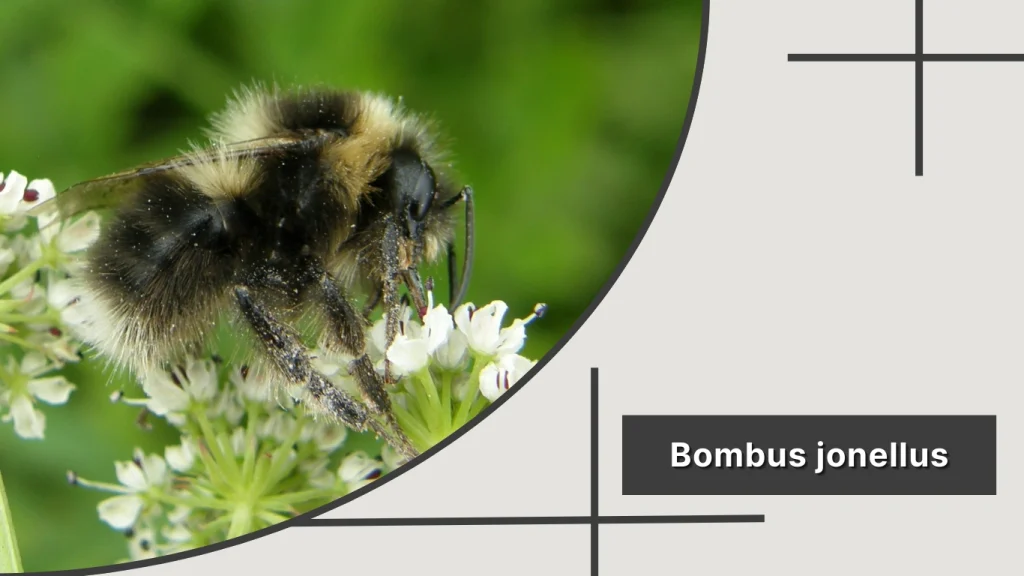
The heath bumblebee (Bombus jonellus) is a small, fast-flying species commonly found in open, flower-rich habitats, especially heathlands and moorlands. Its quick, darting flight makes it a distinctive sight among wildflowers.
Identification
- Small and compact body with yellow bands on thorax and abdomen
- White tail, sometimes tinged with buff
- Males often have more extensive yellow on the thorax and face
- Short, even hair
Habitat & Distribution
Widespread in northern and western Europe, including the UK, and found in coastal areas, moorlands, heathlands, and meadows. Nests are usually above ground in grass tussocks or under low vegetation.
Behavior & Ecology
Colonies are relatively small and active from late spring to early autumn. They are adaptable foragers, often seen visiting a wide range of flowers, and are particularly important pollinators in heathland ecosystems.
Diet
Feeds on nectar from clovers, bird’s-foot trefoil, thistles, and heathers. Collects pollen mainly from legumes and wildflowers suited to their short tongues.
14. Bombus vestalis – Vestal Cuckoo Bumblebee
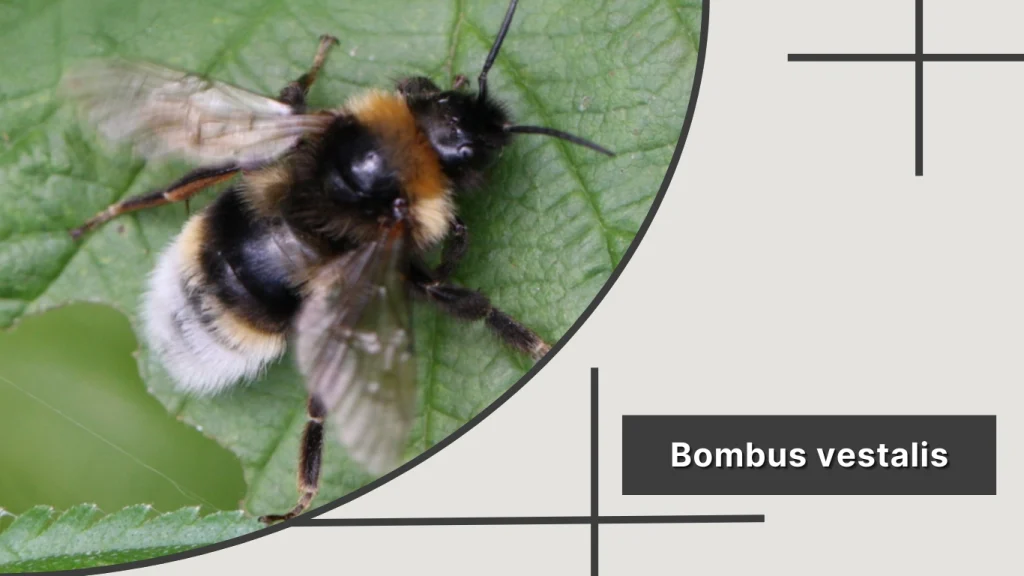
The vestal cuckoo bumblebee (Bombus vestalis) is a social parasite that does not build its own nest but instead invades and takes over the nests of other bumblebee species, particularly Bombus terrestris.
Identification
- Large body with black base color and two yellow bands: one on the thorax, one on the abdomen
- White tail with a yellow fringe at the front
- Queens are large and robust, while males have longer antennae
- Sparse hair compared to many other bumblebees
Habitat & Distribution
Found throughout much of Europe, from lowland farmland to urban gardens and meadows. Prefers areas where host species, especially buff-tailed bumblebees, are abundant.
Behavior & Ecology
Queens emerge later than host species queens, timing their invasion when the host colony already has workers. They kill or subdue the host queen and use the existing workers to raise their own offspring. They do not collect pollen for larvae, as their hosts do this work.
Diet
Feeds on nectar from the same flowers as its hosts, including clovers, thistles, and lavender.
15. Bombus bohemicus – Gypsy Cuckoo Bumblebee
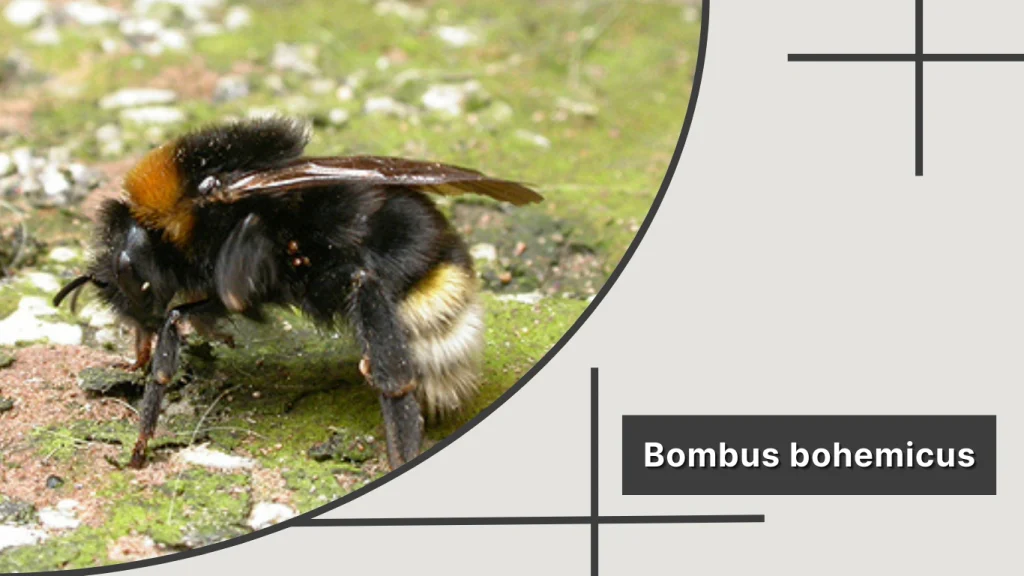
The gypsy cuckoo bumblebee (Bombus bohemicus) is another parasitic species, primarily targeting white-tailed bumblebees (Bombus lucorum) and related species.
Identification
- Black body with two yellow bands: one behind the head and one near the front of the abdomen
- White tail without the yellow fringe seen in B. vestalis
- Queens are large and somewhat less hairy than worker bumblebees
- Males have longer antennae and slightly lighter yellow markings
Habitat & Distribution
Native to Europe, Asia, and parts of North America. Found in grasslands, meadows, gardens, and woodland edges where host species are present.
Behavior & Ecology
Queens infiltrate host nests in late spring or early summer, overpowering or killing the host queen. The host workers then rear the parasitic queen’s offspring. Like other cuckoo bumblebees, they produce only queens and males—no worker caste.
Diet
Relies entirely on nectar for energy, often visiting clovers, knapweed, and thistles. Does not gather pollen for brood rearing, as hosts provide food for their larvae.
16. Bombus flavifrons – Yellow-fronted Bumblebee
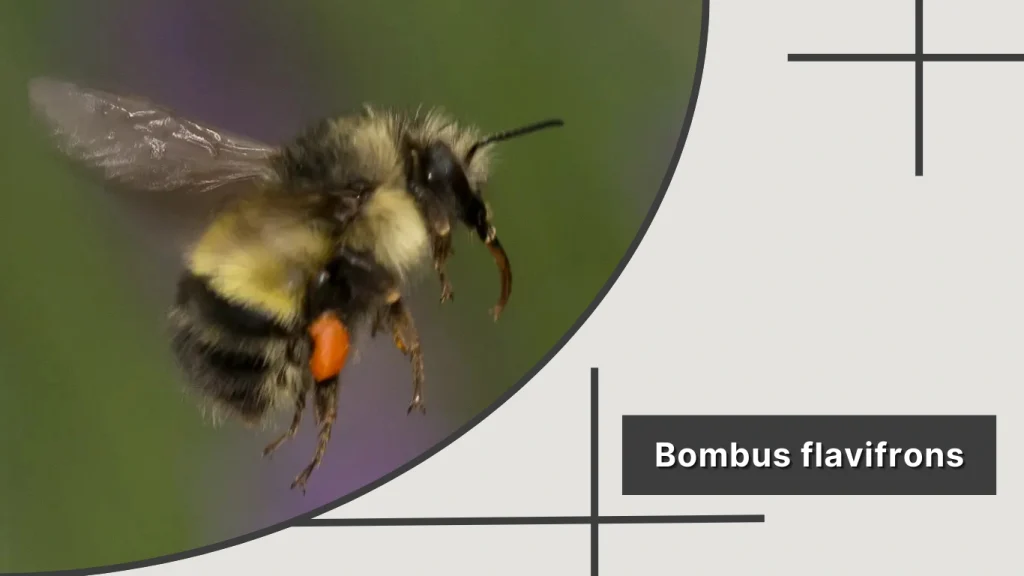
The yellow-fronted bumblebee (Bombus flavifrons) is a hardy species found in cooler climates, particularly in mountainous and northern regions. It is known for its distinctive yellow face and adaptability to various habitats.
Identification
- Medium-sized with black body and bright yellow bands
- Yellow hair on the face, giving its common name
- White or pale tail, sometimes with buff shading
- Dense, fine hair suited for cooler temperatures
Habitat & Distribution
Native to North America, especially in Alaska, Canada, and the northern United States, as well as some higher-altitude regions further south. Found in meadows, tundra, forest edges, and alpine zones. Nests are usually built underground or in sheltered cavities.
Behavior & Ecology
Colonies are moderate in size and active from late spring through summer. Adapted to cooler weather, they forage during cloudy or chilly days when other bees may be inactive. They are valuable pollinators of wildflowers and some crops.
Diet
Feeds on nectar from fireweed, clover, lupine, and willow. Pollen is collected from legumes, composites, and other protein-rich plants for developing larvae.
17. Bombus huntii – Hunt’s Bumblebee
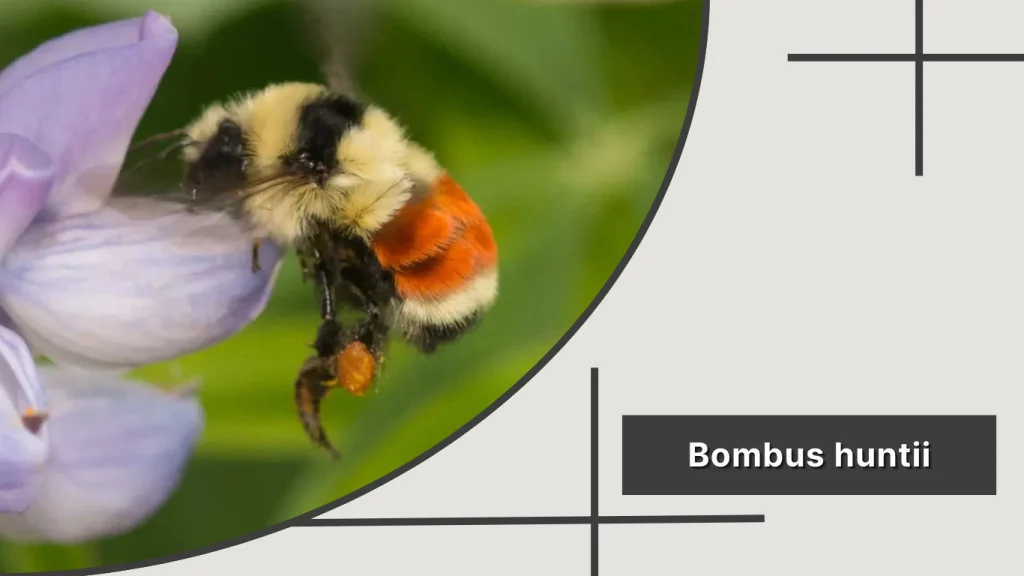
Hunt’s bumblebee (Bombus huntii) is a colorful and highly adaptable species, easily recognized by its orange and yellow banding. It is a key pollinator in both agricultural and wild ecosystems in western North America.
Identification
- Black body with alternating yellow and orange-red bands
- White tip at the end of the abdomen
- Medium to large in size with dense hair
- Males often have more yellow on the thorax and face
Habitat & Distribution
Native to western North America, ranging from Canada to northern Mexico. Occupies diverse habitats, including meadows, deserts, gardens, and agricultural fields. Nests are usually underground but can also be found in abandoned rodent burrows or under plant debris.
Behavior & Ecology
Colonies are active from spring through late summer, with peak worker numbers in midsummer. They are generalist foragers, visiting a wide range of plants, and are particularly important for pollinating alfalfa and clover in agricultural systems.
Diet
Feeds on nectar from sunflowers, clover, milkweed, and asters. Pollen sources include legumes, composites, and various wildflowers.
