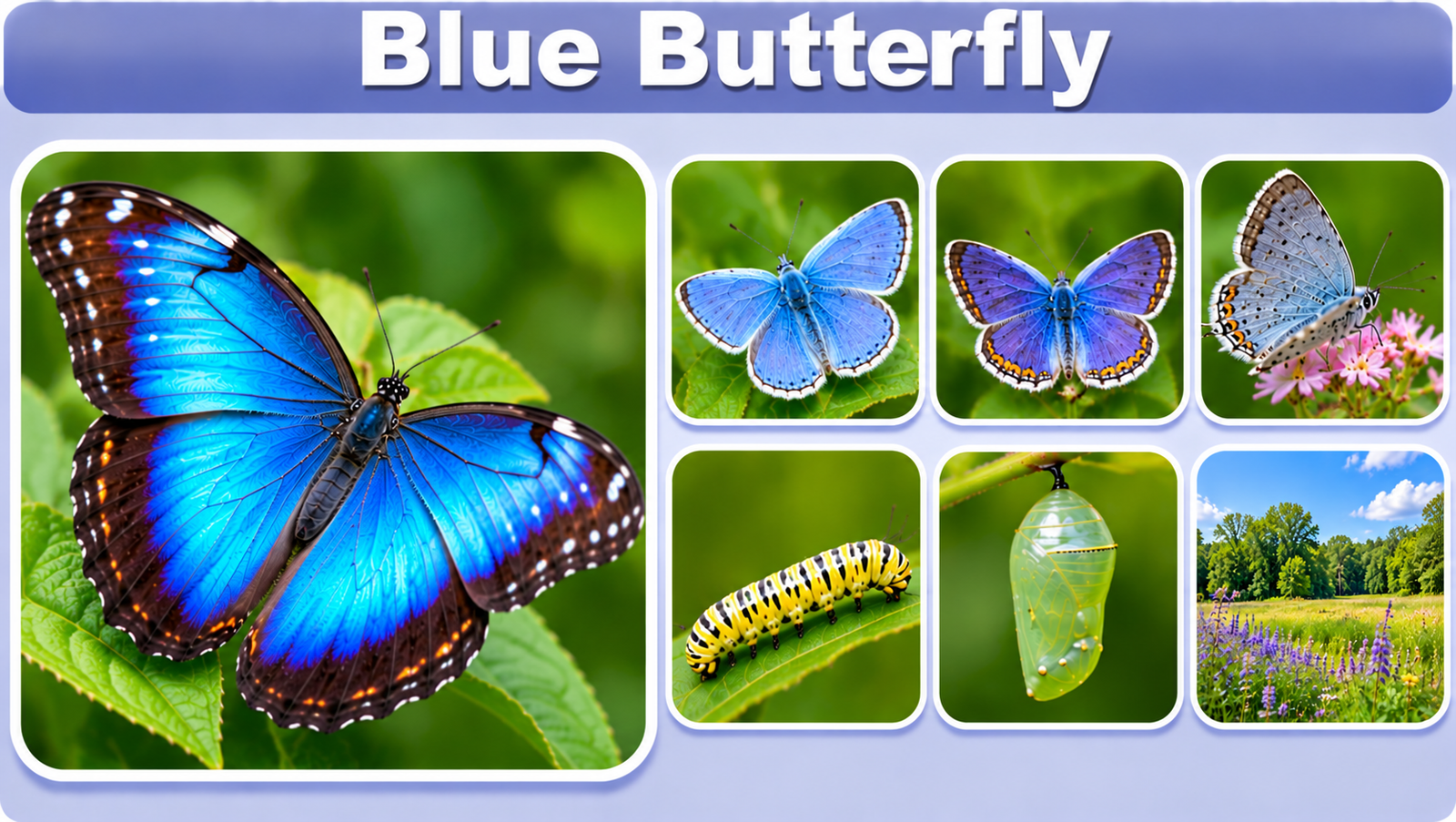
A blue butterfly is one of nature’s most beautiful insects, recognized for its brilliant blue wings, delicate appearance, and graceful flight. Blue butterflies occur in different sizes, from tiny grassland species to large tropical morphos. Popular examples include the Common Blue, Karner Blue, Eastern Tailed-Blue, and Blue Morpho. These butterflies inhabit forests, gardens, meadows, and coastal environments worldwide. Their remarkable wing colors, interesting life cycles, and symbolic meanings make them fascinating subjects for butterfly enthusiasts and nature lovers.
What Is a Blue Butterfly?
Blue butterflies are a diverse group of butterflies recognized by blue coloration on their wings. Many belong to the Lycaenidae family, which contains numerous small blue butterflies, while others belong to different families. Their beautiful colors range from pale sky-blue to deep violet and metallic turquoise. Interestingly, the blue appearance of many species comes from microscopic wing structures rather than blue pigments.
Are Blue Butterflies a Single Species?
No. The term “blue butterfly” describes numerous species rather than one particular butterfly.
Many small blue butterflies belong to the subfamily Polyommatinae within the Lycaenidae family. However, larger butterflies, including Blue Morphos, belong to the Nymphalidae family.
Their sizes, habitats, and feeding habits vary considerably between species.
Why Are Blue Butterfly Wings Blue?
Many blue butterflies display structural coloration, an optical effect created by microscopic structures on their wing scales.
These structures interact with incoming light, reflecting particular wavelengths that produce brilliant blue appearances.
The Blue Morpho is a famous example. Its shimmering wings can appear to change color depending on the viewing angle.
7 Beautiful Types of Blue Butterflies
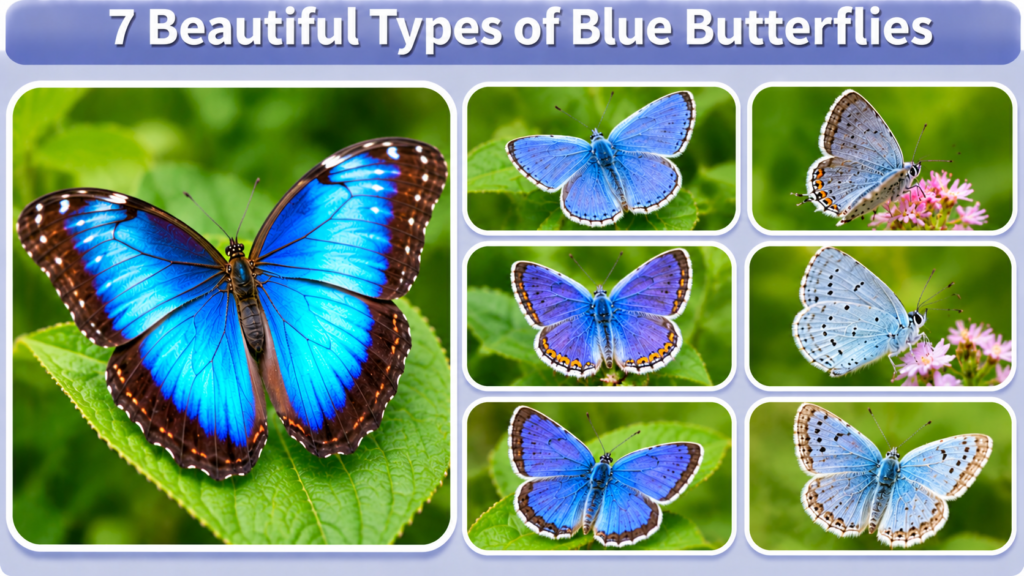
There are numerous blue butterfly species worldwide, ranging from common garden visitors to endangered insects found in restricted habitats. Some have bright metallic wings, while others display subtle blue markings mixed with black, gray, or brown. The following seven species are particularly interesting because of their distinctive appearances, geographic distributions, and ecological importance.
1. Blue Morpho Butterfly (Morpho Species)
lue Morpho butterflies are among the world’s most recognizable blue butterflies. They inhabit tropical forests in Central and South America.
Their large wings display brilliant iridescent blue upper surfaces with darker borders. When resting, their brown undersides and eyespots can help conceal them from predators.
Species such as Morpho menelaus are especially famous for their striking blue coloration.
2. Common Blue Butterfly (Polyommatus icarus)
The Common Blue is a small butterfly widely distributed across Europe and parts of Asia.
Male Common Blues usually possess bright blue upper wings with narrow dark margins. Females are often brown with orange markings, although some display extensive blue coloration.
These butterflies commonly inhabit grasslands, meadows, and other open areas containing suitable larval host plants.
3. Eastern Tailed-Blue Butterfly (Cupido comyntas)
The Eastern Tailed-Blue is a small North American butterfly recognized by its delicate hindwing tails.
Males usually have iridescent blue upper wings, while females are predominantly brown.
The underside features dark spots and small orange markings near the hindwing tails. These butterflies frequently visit low-growing flowers in sunny habitats.
4. Karner Blue Butterfly (Lycaeides melissa samuelis)
The Karner Blue is an endangered butterfly found in limited areas of the northern United States.
Males possess violet-blue wings, while females display brownish wings with orange markings.
Its caterpillars depend on wild blue lupine (Lupinus perennis) as their food plant.
Habitat loss and fragmentation have contributed significantly to population declines.
5. Holly Blue Butterfly (Celastrina argiolus)
The Holly Blue is a small butterfly commonly observed in gardens, woodland edges, and parks across parts of Europe.
Its upper wings are pale blue, while the undersides appear silvery with small black spots.
In Britain, its caterpillars frequently feed on the flower buds of holly and ivy.
Unlike many grassland blues, adults often fly relatively high around shrubs and trees.
6. Miami Blue Butterfly (Cyclargus thomasi bethunebakeri)
The Miami Blue is a rare, endangered butterfly native to southern Florida.
Its small wings display attractive blue upper surfaces, with noticeable differences between males and females.
This species inhabits coastal environments and depends on particular host plants, including balloonvine and gray nickerbean.
Conservation programs focus on protecting its remaining populations.
7. Xerces Blue Butterfly (Glaucopsyche xerces)
The Xerces Blue was a beautiful butterfly once found in the coastal sand dunes of San Francisco, California.
Its upper wings displayed blue coloration, while the undersides had distinctive pale markings.
Unfortunately, this species became extinct during the twentieth century, largely because of habitat destruction associated with urban development.
It remains an important symbol of butterfly conservation.
How to Identify a Blue Butterfly
Identifying a blue butterfly requires examining more than wing color. Different species can share similar shades of blue, making accurate identification challenging. Wing size, markings, shape, geographic location, and flight behavior all provide useful clues. Understanding these characteristics can help distinguish common blue butterflies from rare species and similarly colored insects.
Blue Butterfly Identification Features
Important characteristics include:
- Wing color: Sky-blue, metallic blue, violet-blue, or turquoise.
- Dark borders: Black or brown margins around the wings.
- Wing underside: Gray, brown, or pale surfaces with spots.
- Size: Small grassland butterflies or large tropical species.
- Hindwing tails: Tiny extensions present in certain species.
- Flight behavior: Low grassland flight or higher movement around vegetation.
Females of some species appear brown rather than blue, making identification more difficult.
Black and Blue Butterfly Identification
A black and blue butterfly may belong to several different species.
Blue Morphos often have dark wing borders surrounding brilliant blue surfaces. Some swallowtails, including the Pipevine Swallowtail, display dark wings with iridescent blue areas.
Small blue butterflies may also appear black and blue when their dark margins contrast with bright upper wings.
Geographic location and wing markings are essential for identifying the exact species.
Blue Butterfly Habitat, Food, and Life Cycle
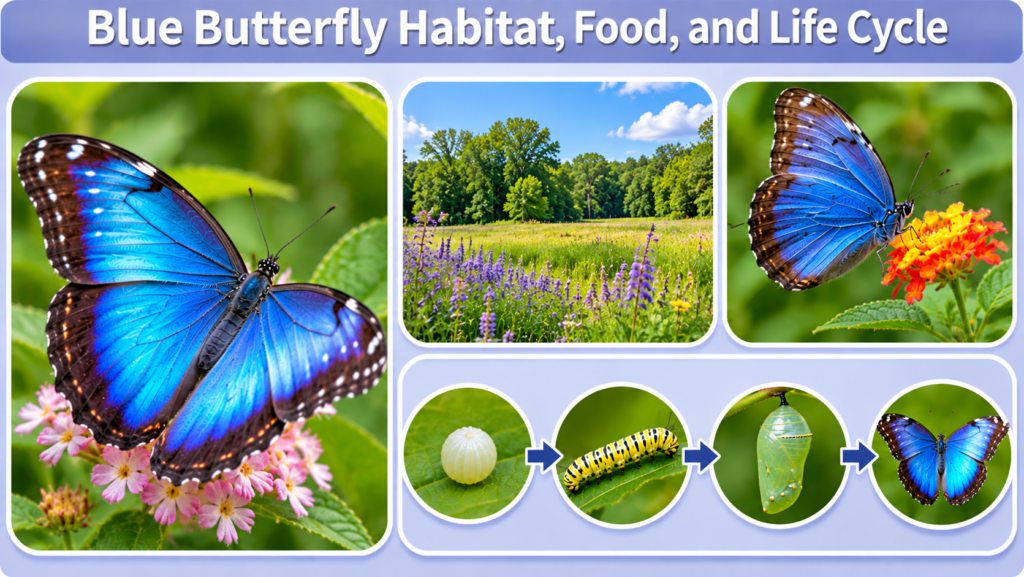
Blue butterflies occupy diverse ecosystems, including tropical rainforests, temperate grasslands, coastal dunes, gardens, and open woodlands. Their habitat requirements vary depending on the species and availability of suitable host plants. Although adult butterflies often visit flowers for nectar, caterpillars may depend on specific plants or develop specialized relationships with other insects.
Where Do Blue Butterflies Live?
Common habitats include:
- Tropical forests: Home to Blue Morpho butterflies.
- Grasslands: Suitable for Common Blues and many related species.
- Woodland edges: Provide shelter and feeding areas.
- Coastal habitats: Support certain rare blue butterfly populations.
- Gardens and parks: Offer nectar flowers and host plants.
Some species occupy wide geographic ranges, while others survive only in small, isolated locations.
What Do Blue Butterflies Eat?
Adult blue butterflies consume various liquid foods, depending on their species. Many drink flower nectar, while some tropical species also feed on juices from overripe fruit.
Caterpillars typically consume particular host plants.
For example, Karner Blue caterpillars feed exclusively on wild blue lupine, while Eastern Tailed-Blue caterpillars feed on flowers, buds, and seeds of several legumes.
Blue Butterfly Life Cycle
Blue butterflies undergo complete metamorphosis through four developmental stages.
The cycle begins when females lay eggs on or near suitable host plants. Caterpillars hatch and consume plant material while growing through successive molts.
After reaching maturity, they form pupae, where their bodies transform into adults.
The emerging butterflies expand their wings before beginning their adult lives.
Blue Butterfly Meaning and Symbolism
Beyond their biological importance, blue butterflies hold symbolic meanings in different cultures and personal traditions. Their delicate appearance and remarkable transformation have inspired associations with hope, renewal, peace, and spiritual change. The color blue also contributes to interpretations involving calmness, trust, and emotional balance. These meanings are cultural beliefs rather than scientifically established properties of butterflies.
What Does a Blue Butterfly Symbolize?
Common symbolic interpretations include:
- Transformation: Personal growth and positive change.
- Hope: Optimism during difficult circumstances.
- Peace: Calmness and emotional balance.
- Freedom: Independence and new opportunities.
- Renewal: Fresh beginnings and life transitions.
Individual interpretations vary depending on personal experience and cultural traditions.
Black and Blue Butterfly Spiritual Meaning
Black and blue butterflies are sometimes interpreted as symbols of transformation, resilience, and inner strength.
The darker coloration may represent mystery or uncertainty, while blue is often associated with peace and hope.
However, there is no universal spiritual interpretation, and these symbolic associations should not be confused with biological facts.
How to Attract and Protect Blue Butterflies
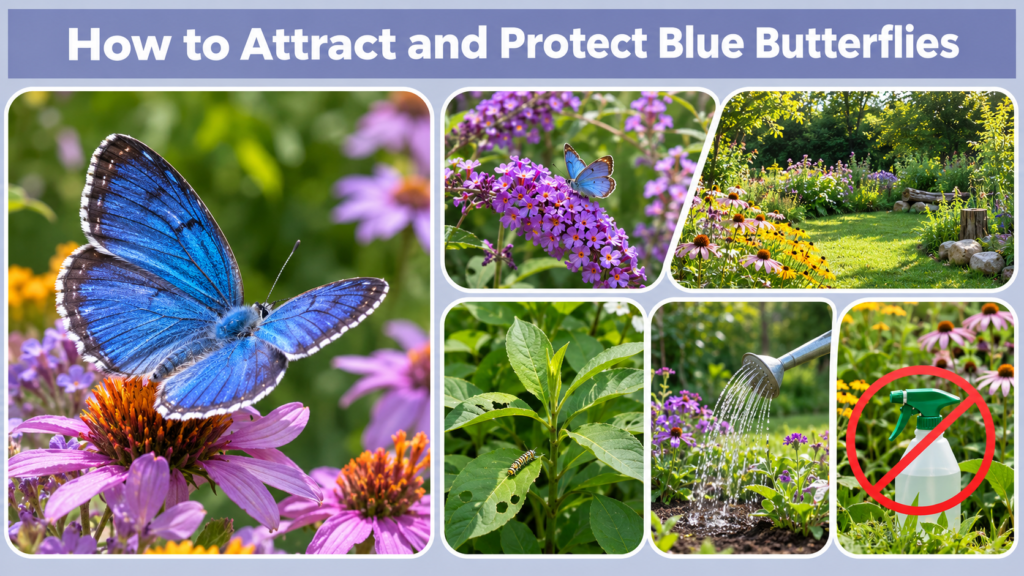
Supporting blue butterflies begins with protecting the habitats and plants they require. Many species depend on particular host plants during their caterpillar stage, making habitat quality essential for successful reproduction. Providing nectar sources, reducing pesticide exposure, and conserving native vegetation can benefit butterflies and other pollinating insects throughout their life cycles.
Creating a Blue Butterfly-Friendly Garden
Several practices can help:
- Grow native flowering plants that provide nectar.
- Include appropriate caterpillar host plants.
- Avoid unnecessary insecticide applications.
- Maintain sunny areas with some sheltered vegetation.
- Preserve natural patches of grass and native plants.
- Avoid disturbing eggs, caterpillars, and pupae.
The best plant choices depend on which blue butterfly species naturally occur in your region.
Why Are Some Blue Butterflies Endangered?
Habitat destruction is a major threat to several blue butterfly species.
Urban development, changes in land management, pesticide exposure, and loss of specialized host plants can reduce butterfly populations.
The extinction of the Xerces Blue demonstrates the potential consequences of losing suitable habitat.
Protecting native ecosystems is essential for maintaining healthy butterfly populations.
FAQs
1. Are blue butterflies rare?
Some blue butterflies are common, while others are extremely rare or endangered. The Common Blue is widespread in parts of Europe, whereas the Karner Blue and Miami Blue have limited populations. Rarity depends on species, location, and habitat conditions.
2. What is the most beautiful blue butterfly?
The Blue Morpho is often considered one of the most beautiful blue butterflies because of its large, shimmering metallic-blue wings. However, smaller species such as the Adonis Blue and Common Blue also display striking colors and patterns.
3. What does seeing a blue butterfly mean?
Seeing a blue butterfly is sometimes interpreted symbolically as a sign of hope, peace, transformation, or positive change. These interpretations depend on personal beliefs and cultural traditions. Scientifically, encountering one simply indicates that a butterfly is present in the environment.
4. Are blue butterflies poisonous?
Blue coloration alone does not indicate whether a butterfly is poisonous. Some butterfly species possess chemical defenses obtained from their food plants, while many blue butterflies are harmless to predators and humans. Defensive properties vary by species.
5. What is the difference between a blue butterfly and a Blue Morpho?
Blue butterfly is a general description covering many differently related species with blue-colored wings. Blue Morphos belong to the genus Morpho and are generally large tropical butterflies known for their brilliant structural coloration. Not every blue butterfly is a Blue Morpho.