
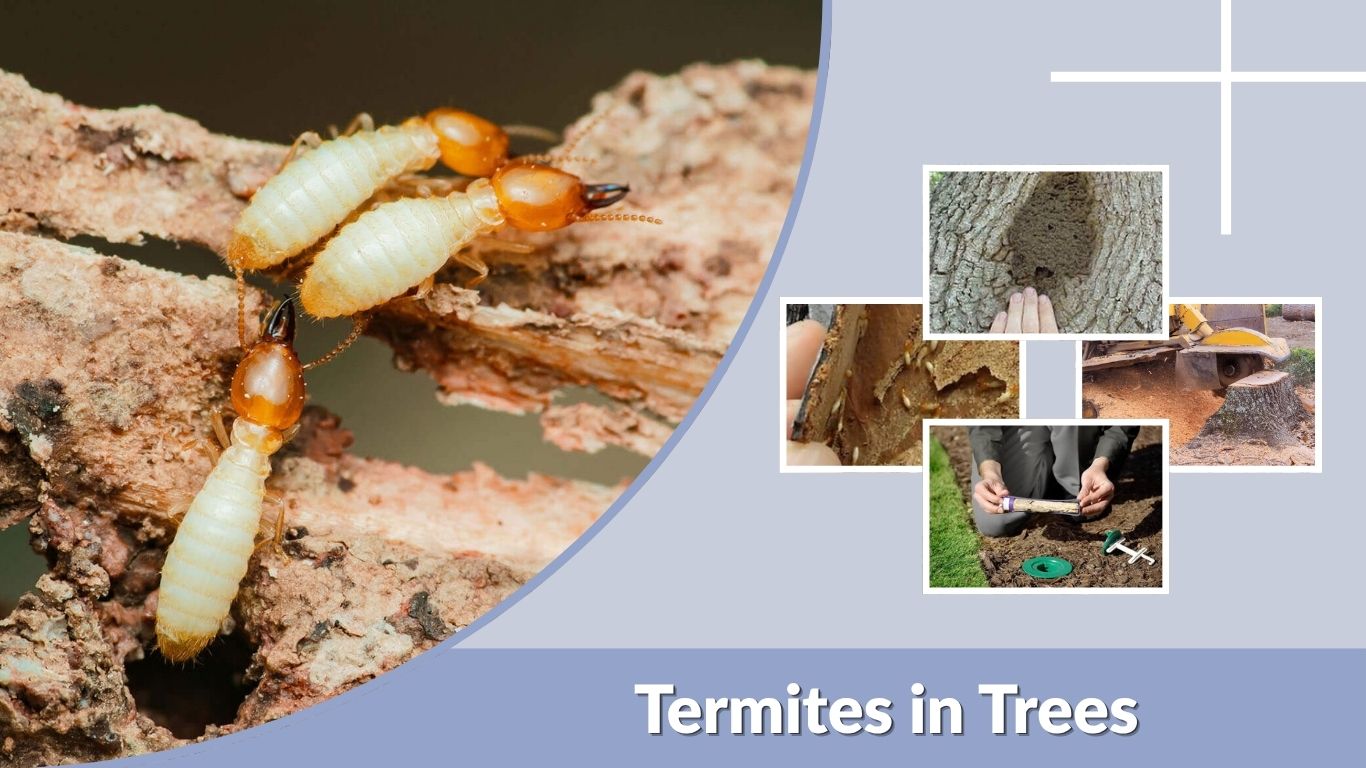
Termites in trees can be easy to overlook until the damage becomes serious. These wood-destroying insects often feed on dead, decaying, or moisture-damaged wood, but they may also infest living trees that are already stressed or weakened. If you notice termite holes, mud tubes, hollow wood, or termites near a tree stump, quick action can help protect your trees and nearby structures.
Do Termites Eat Trees?
Termites eat cellulose, a natural material found in wood, bark, roots, leaves, and plant debris. Because trees contain cellulose, they can become a food source for termites under the right conditions. However, termites are usually more attracted to dead, moist, or rotting wood than healthy living tissue.
Do Termites Eat Live Trees?
Yes, termites can eat live trees, but they usually do not attack strong, healthy trees first. Most termite activity in living trees begins where there is decay, injury, moisture damage, or hollow wood. A tree with broken bark, pruning wounds, disease, or internal rot is more vulnerable because termites can access soft, weakened areas more easily.
In many cases, termites in a live tree are a sign that the tree already has an underlying health problem. The termites may not be the original cause of decline, but they can make the damage worse over time.
Do Termites Live in Trees?
Termites can live in trees, especially inside hollow trunks, decaying roots, old cavities, and damaged sections near the base. Subterranean termites may travel from the soil into the tree through mud tubes, while some termite species may build nests inside tree cavities.
A tree can have termites inside even if the outside still looks normal. That is why tapping the trunk, checking the base, and looking for mud tubes or soft wood are important steps during inspection.
Can Termites Kill a Tree?
Termites can contribute to tree death if they damage the roots, trunk, or internal structure badly enough. A tree with severe termite damage may become hollow, unstable, or unable to move water and nutrients properly. However, termites often attack trees that are already weakened by disease, drought, injury, or decay.
The bigger concern is safety. A termite-damaged tree may drop limbs, split, or fall during storms, especially if the trunk or root system has been hollowed out.
Signs of Termites in Trees
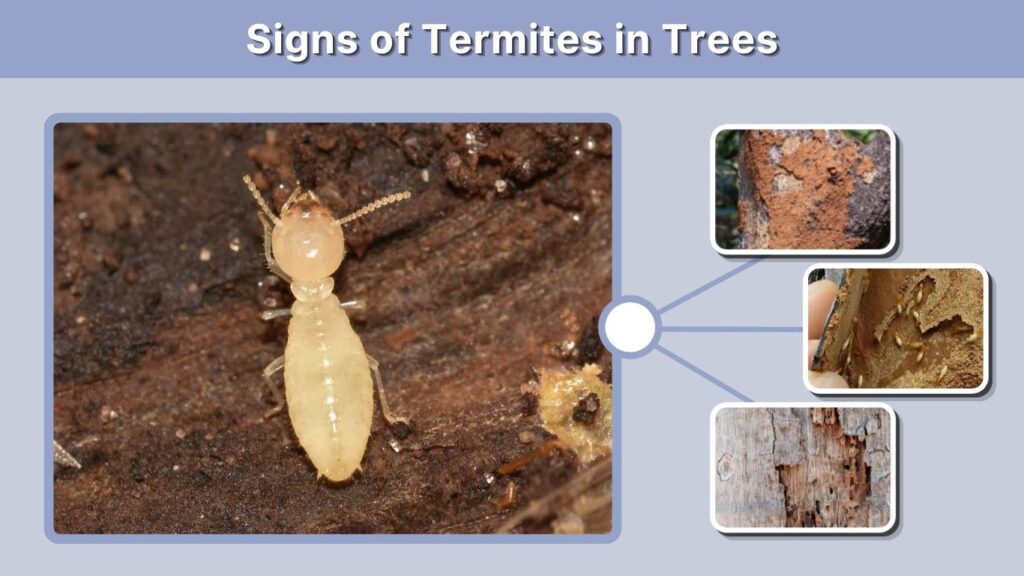
Signs of termites in trees can be subtle at first. Since termites often feed inside the wood, visible damage may not appear until the infestation is advanced. Checking the tree base, trunk, bark, and nearby soil can help you spot problems early.
Common Signs to Look For
- Mud tubes running up the trunk, roots, or bark
- Small holes, cracks, or openings in the tree
- Hollow sound when tapping the trunk
- Soft, crumbling, or papery wood
- Termites at the base of the tree
- Damaged bark near the soil line
- Discarded wings from termite swarmers
- Dead branches or thinning canopy
- Tree cavities with dark, moist, damaged wood
Mud Tubes on the Tree
Mud tubes are one of the most common signs of subterranean termites. These pencil-sized tunnels are made of soil, saliva, and termite waste. Termites use them to stay moist while moving between the ground and their food source.
You may find mud tubes near the root flare, along the bark, or inside cracks at the base of the tree. If you break open a fresh mud tube and see small pale insects moving inside, termites may be active.
Termite Holes in Trees
Termite holes in a tree may appear as small openings, cracks, or damaged spots in the bark. However, not every hole is caused by termites. Beetles, borers, carpenter ants, birds, and woodpeckers can also create holes in trees.
Termite damage is often more hidden than other pest damage. Instead of neat round holes, you may find soft galleries, hollow areas, mud-packed cracks, or damaged wood beneath loose bark.
Hollow or Weak Wood
A tree with termite damage may sound hollow when tapped. This happens because termites eat the inner wood while leaving some outer layers behind. If large sections of the trunk are hollow, the tree may be structurally unsafe.
Soft, spongy, or crumbling wood is another warning sign. If bark falls away easily or the wood underneath breaks apart, termites or decay organisms may be active.
What Does Termite Damage Look Like on a Tree?
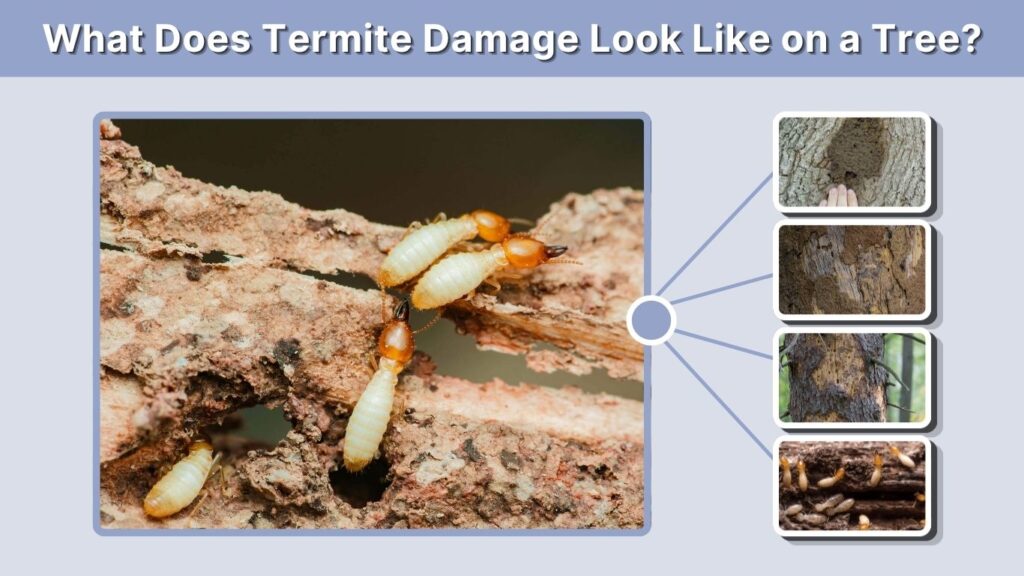
Termite damage on trees can look different depending on the termite species, the health of the tree, and how long the infestation has been present. In general, termite tree damage is most common near the base, roots, hollow sections, or old wounds.
| Sign of Damage | What It May Mean |
| Mud tubes on bark | Subterranean termites are traveling from soil to wood |
| Hollow trunk | Internal wood may be eaten or decayed |
| Soft wood near base | Moisture damage, rot, or termite feeding may be present |
| Small holes or cracks | Possible termite entry points or other insect activity |
| Damaged roots | Tree stability may be reduced |
| Termites in stump | Dead wood is feeding an active colony |
| Falling limbs | Internal decay or structural weakness may be advanced |
Termite Holes vs. Woodpecker Holes
Woodpecker holes are usually larger, more visible, and more patterned than termite damage. Woodpeckers may drill into trees to reach insects inside, so their presence can also suggest a pest problem.
Termite damage is usually less obvious from the outside. You may see mud tubes, damaged bark, or soft wood rather than clear rows of holes. If both woodpecker activity and hollow wood are present, the tree should be inspected carefully.
Termite Nest in a Tree
A termite nest in a tree may be hidden inside a cavity, hollow trunk, or damaged root area. Some nests may contain soil-like material, mud, carton-like structures, or live termites. If a nest is inside a tree near your house, it should be taken seriously because the colony may also forage toward nearby wooden structures.
Why Termites Infest Trees
Termites are attracted to trees when conditions make the wood easier to access and digest. Healthy trees have natural defenses, but stressed or damaged trees are more likely to become infested.
Common Causes of Tree Termite Problems
- Dead or decaying wood inside the tree
- Old pruning wounds or storm damage
- Moist soil around the base
- Mulch piled against the trunk
- Tree cavities or hollow sections
- Fungal decay or disease
- Dead roots or nearby stumps
- Wood piles, boards, or debris near the tree
Moisture Around the Tree
Moisture is one of the biggest termite attractants. Overwatering, poor drainage, compacted soil, or thick mulch can keep the base of a tree damp. Subterranean termites need moisture to survive, so wet soil and decaying wood create ideal conditions.
Keep mulch several inches away from the trunk and avoid burying the root flare. A tree that stays wet around the base is more likely to develop rot, which can invite termites.
Tree Injuries and Decay
Cracks, wounds, broken branches, and damaged bark can give termites easy access to inner wood. Once decay begins, termites may move in and expand the damage. Proper pruning, disease management, and tree care can reduce the risk.
Termites in Tree Stumps
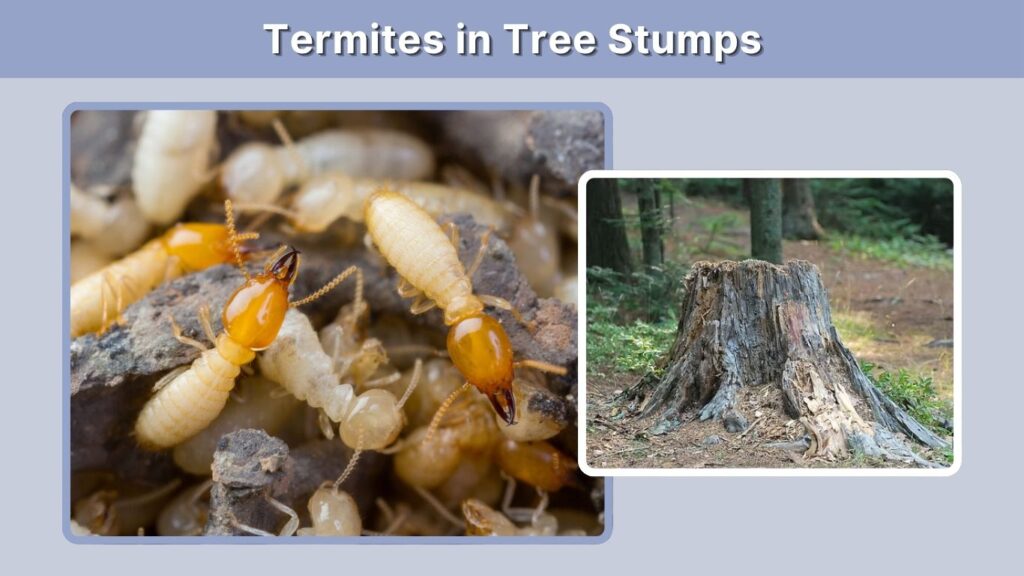
Termites in tree stumps are very common because stumps are dead wood. Once a tree is cut down, the remaining stump and roots begin to decay. This makes them attractive to termites looking for a soft, moist food source.
Are Termites in a Tree Stump Dangerous?
Termites in a stump are not always an immediate emergency, but they can become a problem if the stump is close to your house, deck, fence, shed, or crawl space. A stump can provide food for a termite colony and keep activity close to your home.
If the stump is far from structures, the risk may be lower. Still, it is usually best to remove or grind old stumps to reduce termite food sources on your property.
Termites in a Tree Stump Near House
A stump near the house deserves quick attention. Termites can move through soil and search for other wood sources nearby. If there is wood-to-soil contact around your foundation, porch, deck posts, or siding, the risk increases.
How to Remove Tree Stump Termites
- Grind or remove the stump completely
- Remove as many dead roots as possible
- Clear wood chips and buried wood debris
- Avoid piling mulch against the foundation
- Inspect nearby fences, decks, and siding
- Consider a professional termite inspection
Termites in Trees Near the House
Termites in trees near the house may indicate active termite pressure around your property. The tree itself may not be the only issue. Termites could also be moving through the soil, feeding on buried roots, old wood, mulch, or structural lumber.
When Tree Termites Become a Home Risk
The risk is higher when the infested tree is close to the foundation, especially if it is within a few feet of the home. Subterranean termites can travel underground and may enter through cracks, expansion joints, crawl spaces, or areas where wood touches soil.
You should also be cautious if you see swarmers, mud tubes, or termites in multiple areas of the yard. That may suggest a larger colony.
Areas to Check Around Your Home
- Foundation edges
- Crawl spaces
- Basement framing
- Deck posts
- Wooden steps
- Fence lines
- Firewood piles
- Mulch beds
- Wooden landscape borders
- Siding near soil level
Should You Treat the Tree or the Soil?
The answer depends on the termite species, tree condition, and distance from the house. In many cases, treating only the visible tree damage is not enough. Subterranean termite colonies often live in the soil, so treatment may need to target the colony and the surrounding area.
A pest control professional may recommend bait stations, soil treatment, or targeted treatment near the tree. If the tree is structurally weak, an arborist should also inspect it.
How to Get Rid of Termites in a Tree
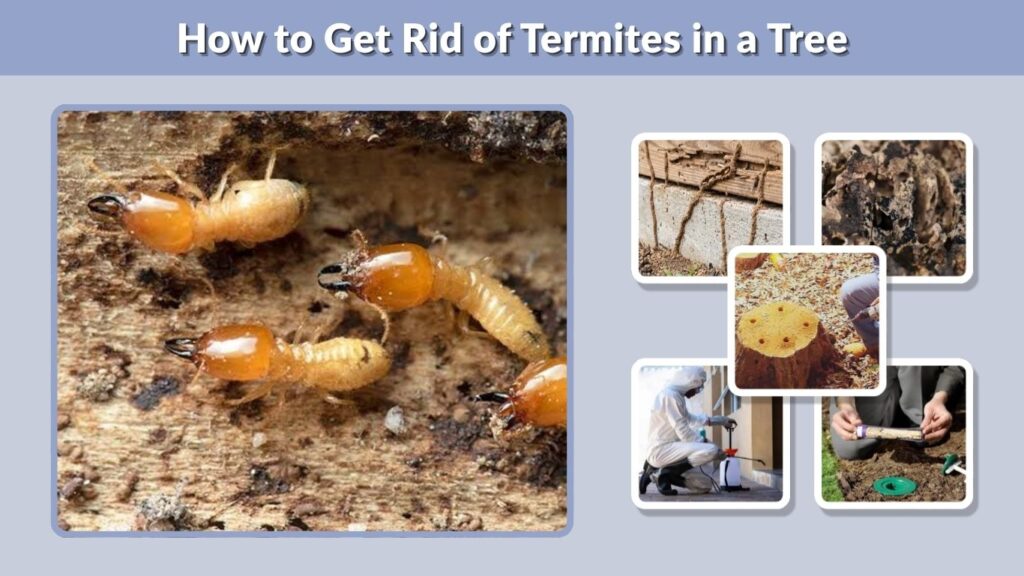
Getting rid of termites in a tree starts with proper identification. Ants, beetles, borers, and carpenter ants can sometimes be mistaken for termites. The wrong treatment may waste time and fail to solve the problem.
Step 1: Confirm the Pest
Look for termite mud tubes, pale soft-bodied workers, swarmers, discarded wings, and damaged wood galleries. If you are unsure, collect a sample or take clear photos and contact a pest control expert.
Step 2: Check the Tree’s Health
A termite-infested tree may have other issues, such as rot, fungal decay, root damage, or disease. Look for dead limbs, leaning, cracks, hollow areas, and canopy thinning. If the tree is large or close to a building, do not ignore structural warning signs.
Step 3: Remove Dead Wood and Debris
Dead branches, fallen limbs, old boards, firewood, and stumps can all attract termites. Removing these food sources can reduce termite activity and make treatment more effective.
Step 4: Use Professional Termite Treatment
For active infestations, professional treatment is often the safest and most reliable option. Termite control for trees may involve bait stations, soil treatments, or targeted applications around affected areas. Products must be used carefully around living trees to avoid harming roots, soil health, or nearby plants.
Step 5: Call an Arborist for Safety
If the trunk is hollow, the tree is leaning, or large limbs are dying, call a certified arborist. Termite damage can weaken a tree from the inside, making it dangerous even if the outside still looks stable.
Termite Treatment for Trees
Tree treatment for termites should focus on three goals: controlling active termites, protecting the health of the tree, and reducing the risk to nearby structures.
Soil Treatment Around the Tree
Soil treatment may be used when subterranean termites are active around the base or root zone. This type of treatment targets termites traveling through the soil. However, it should be handled carefully, especially around valuable trees and landscape plants.
Termite Bait Stations
Bait stations are often used to control termite colonies over time. They are placed in the soil where termites are likely to forage. Once termites feed on the bait, they can carry it back to the colony. This option may be useful when termites are found in trees, stumps, or soil near a home.
Direct Tree Treatment
In some cases, targeted treatment may be applied to cavities, galleries, or damaged sections of the tree. This should be done only after confirming the tree is safe and worth saving. Severe damage may require removal instead of treatment.
Best Termite Killer for Trees
The best termite killer for trees depends on the termite species, tree condition, location, and risk to nearby buildings. A product that works in soil may not be suitable for direct use on living tree tissue. For this reason, it is better to get a professional recommendation before applying chemicals to a live tree.
How to Get Rid of Termites in Trees Naturally
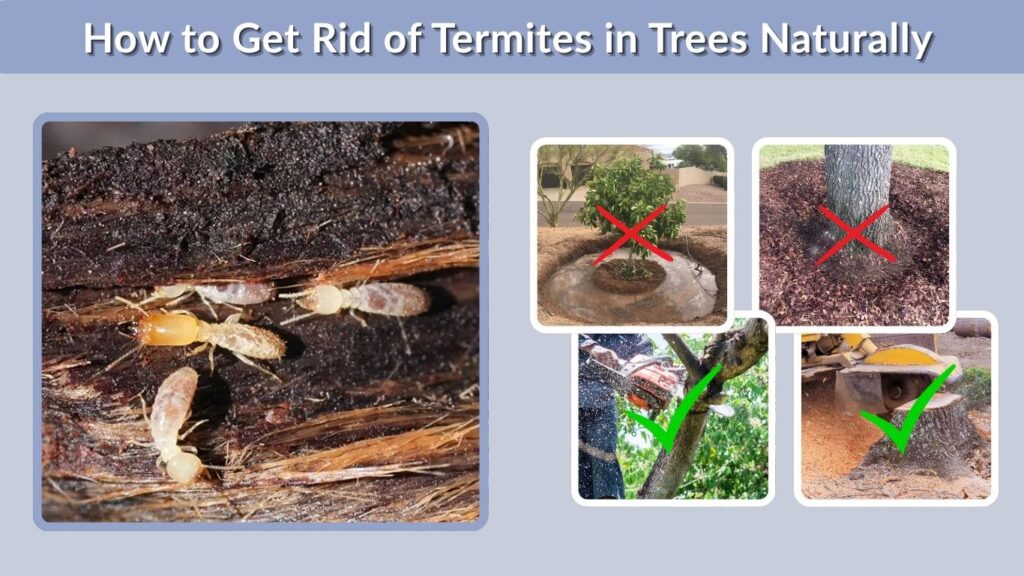
Natural methods may help reduce termite-friendly conditions, but they usually will not eliminate a large colony by themselves. They are best used for prevention or as part of a larger control plan.
Natural Prevention Methods
- Improve drainage around the tree
- Avoid overwatering
- Keep mulch away from the trunk
- Remove dead limbs and fallen branches
- Grind or remove old stumps
- Keep firewood away from trees and the house
- Maintain healthy soil and proper tree care
Tea Tree Oil for Termites
Tea tree oil is sometimes mentioned as a natural termite repellent, but it is not a dependable solution for termites inside a tree or stump. Essential oils may affect some insects on contact, but they do not usually reach the full colony. For serious infestations, professional treatment is more reliable.
Termites in Oak, Maple, Pine, and Palm Trees
Different trees can experience termite problems, especially when they are weakened, damaged, or decaying. The tree species matters less than the condition of the wood.
Termites in Oak Trees
Oak trees can live for many years, but older oaks may develop cavities, dead limbs, or internal decay. Termites may infest hollow sections or damaged areas near the base. Because large oaks can be dangerous if weakened, professional inspection is important.
Termites in Maple Trees
Maple trees with wounds, cracks, or internal rot may attract termites. If the tree has soft wood, hollow areas, or dying branches, both termite activity and tree health should be evaluated.
Termites in Pine Trees
Pine stumps, dead pine roots, and fallen pine logs are attractive to termites. Living pine trees may be less likely to be attacked unless they are damaged, diseased, or moisture-stressed.
Termites in Palm Trees
Palm trees can show pest or decay problems through soft trunk tissue, holes, frass-like material, or weakness near the base. Termites may be involved, but other pests can cause similar symptoms. Accurate identification is important before treatment.
Should You Cut Down a Tree with Termite Damage?
Not every tree with termites needs to be removed. If the damage is limited and the tree is structurally stable, treatment and good tree care may help. However, safety should always come first.
When the Tree May Be Saved
A tree may be worth saving if the termite activity is minor, the trunk is not hollow, the roots are stable, and the canopy is still healthy. In this case, pest treatment and arborist care may help preserve the tree.
When Removal May Be Necessary
- The trunk is mostly hollow
- The tree is leaning
- Major roots are damaged
- Large limbs are dying
- The tree is close to a house
- The tree may fall during storms
- The infestation is severe
- The tree has advanced decay
How to Prevent Termites After Cutting Down a Tree
After removing a tree, do not leave the stump and roots to decay near your home. Grind the stump, remove wood debris, and avoid burying wood chips close to the foundation. If termites were active, schedule a termite inspection to make sure they have not moved toward the house.
How to Prevent Termites in Trees
Preventing termites in trees is mostly about reducing moisture, dead wood, and easy access to decaying material. Healthy trees are less attractive to termites than stressed or rotting ones.
Keep Trees Healthy
Water properly, prune damaged limbs, avoid injuring bark, and treat tree diseases early. Healthy trees are better able to resist pests and decay.
Remove Stumps and Dead Wood
Old stumps, fallen branches, dead roots, and firewood piles can feed termite colonies. Removing these materials lowers the chance of termites becoming established near your home.
Manage Mulch Carefully
Mulch can help trees, but too much mulch against the trunk creates moisture problems. Keep mulch a few inches away from the tree trunk and avoid thick piles near the foundation.
Inspect Trees Regularly
Check trees near your house for mud tubes, hollow sounds, soft bark, termites at the base, and damaged roots. Early detection makes treatment easier and can reduce the risk of structural damage.
When to Call a Professional
Call a pest control expert if you see live termites, mud tubes, swarmers, or termites in a tree stump near your home. A professional can identify the termite species and recommend the right treatment.
Call an arborist if the tree sounds hollow, leans, has large dead limbs, or shows signs of structural weakness. Pest control can address termites, but an arborist can determine whether the tree is safe.
FAQs
Do termites eat trees?
Yes, termites eat trees because wood contains cellulose, their main food source. They usually prefer dead, decaying, or moisture-damaged wood, but they may also infest living trees that are already injured, hollow, diseased, or weakened by environmental stress.
Can termites kill a tree?
Termites can help kill a tree if they severely damage the trunk, roots, or internal structure. However, termites often infest trees that already have decay or health problems. Their feeding can make the tree weaker and increase the risk of falling limbs or tree failure.
How can you tell if a tree has termites?
Signs of termites in a tree include mud tubes, hollow-sounding wood, termites at the base, soft or crumbling bark, small holes, damaged roots, and discarded wings. Since other pests can cause similar damage, a professional inspection is the best way to confirm termites.
How do you get rid of termites in a tree?
First, confirm that the insects are termites. Then remove dead wood, reduce moisture, and inspect the tree’s health. Active infestations may require professional termite treatment, such as bait stations, soil treatment, or targeted applications around the affected tree.
Are termites in a tree stump near the house dangerous?
Termites in a tree stump near the house can increase the risk of termites moving toward your foundation, deck, fence, or crawl space. It is usually best to remove or grind the stump, clear wood debris, and have the area inspected for termite activity.
