

Botfly larvae are among the most disturbing parasites in the insect world. Known for burrowing beneath the skin of mammals—including humans—these wriggling creatures live under the surface for weeks before emerging as adult flies. While not typically life-threatening, botfly larval infections can be painful, shocking, and prone to secondary infection if untreated. This article explains what botfly larvae are, how they enter the skin, their life cycle, symptoms, removal methods, and how to prevent an infestation.
What Are Botfly Larvae?
Botfly larvae are the immature, developing stage of the botfly (family Oestridae). After hatching from eggs, these maggot-like larvae burrow into the skin of a warm-blooded host and remain there for several weeks. During this time, they feed on tissue fluids and grow significantly in size before exiting the body and dropping to the soil to pupate.
Description and Biological Role
Larvae are white to yellowish in color and have a cylindrical body covered with tiny spines, which help them stay anchored inside the host’s skin. They also have a breathing tube near the surface of the skin to access air while submerged.
Appearance and Size
Botfly larvae start at just a few millimeters long and can grow up to 1 inch (2.5 cm) during their development. Infected individuals often feel movement under the skin as the larva matures.
How Do Botfly Larvae Enter the Skin?
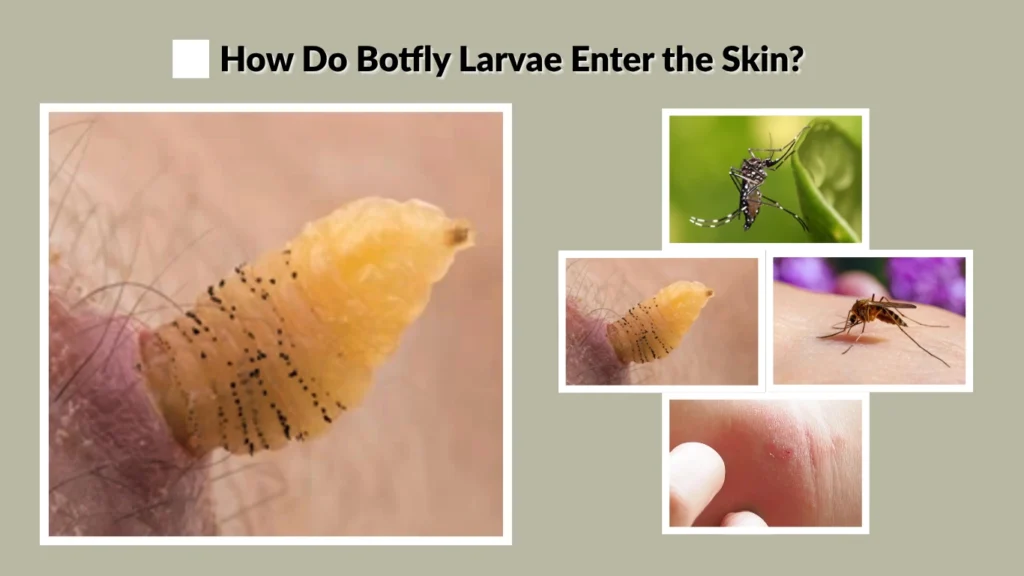
The most unsettling part of the botfly’s strategy is its method of entering the host.
Use of Mosquitoes or Ticks as Carriers
Female botflies rarely lay their eggs directly on the host. Instead, they attach the eggs to mosquitoes, ticks, or other blood-sucking insects. When the carrier insect lands on a mammal, the warmth of the host triggers the botfly egg to hatch.
Egg Hatching Triggered by Body Heat
As the mosquito feeds, the hatched larva drops onto the skin and quickly burrows in through hair follicles, open wounds, or thin skin. The host often doesn’t feel anything at this stage, making the infestation easy to miss at first.
Life Cycle of Botfly Larvae
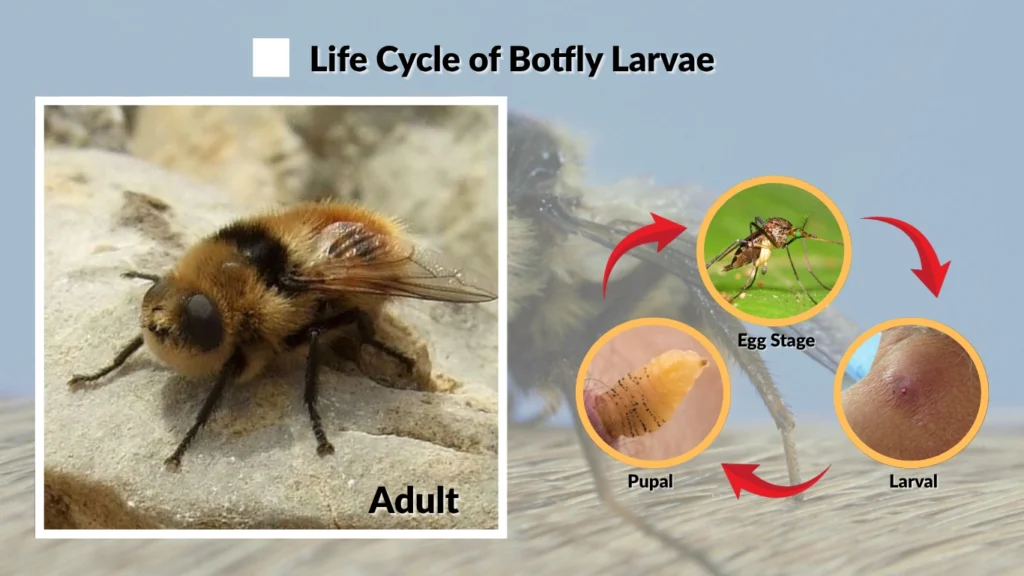
The life cycle of a botfly includes several distinct stages:
Egg Stage
The female botfly lays eggs on a carrier insect. These eggs can remain dormant until they sense body heat and moisture from a suitable host.
Larval Development Under Skin
Once inside the skin, the larva begins to feed and grow. It forms a small, raised bump on the surface, often mistaken for a boil or insect bite. The larva breathes through a small hole in the skin and may occasionally move, causing sharp pain.
The larval stage typically lasts 3 to 8 weeks.
Pupal and Adult Transformation
After maturing, the larva exits the skin, usually through the breathing hole, and falls to the ground. It then pupates in the soil and transforms into an adult botfly over several weeks. Adults do not feed and live only long enough to reproduce.
Symptoms of Botfly Larvae in Humans
Human botfly infestations are most common in Central and South America. Travelers returning from these areas may notice symptoms days or weeks after exposure.
Red Bumps That Look Like Boils
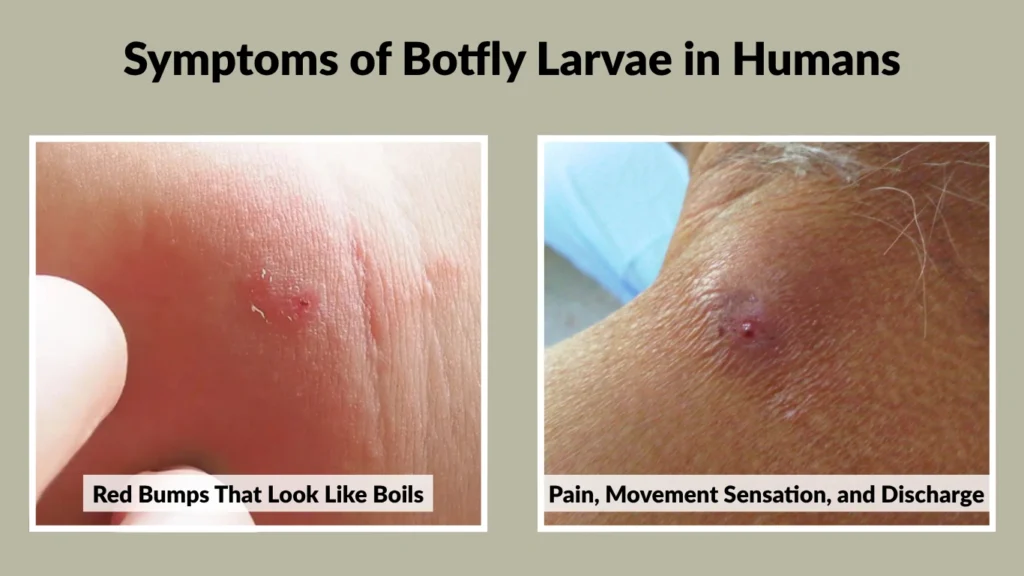
Infected individuals typically notice a painful, inflamed bump that grows slowly. It may resemble a pimple or cyst but often feels firmer.
Pain, Movement Sensation, and Discharge
People often describe a strange sensation of movement beneath the skin. In some cases, the bump may drain clear or yellowish fluid. The breathing hole may be visible at the center.
Symptoms in Animals (Pets and Wildlife)

Botfly larvae are more common in wild animals and outdoor pets than in people.
Swelling or Wounds in Cats, Dogs, or Rabbits
Common signs include swollen areas that ooze fluid or have a visible hole. Animals may lick, scratch, or bite the area persistently.
Behavioral Signs Like Scratching or Lethargy
Pets infected with botfly larvae may appear distressed, lose appetite, or show signs of fatigue due to discomfort and pain.
How to Identify a Botfly Larva Infection
Early detection is crucial to prevent further tissue damage.
Visible Breathing Hole on the Skin
A central hole in the swelling is usually a giveaway. It may appear dark or crusted and is often accompanied by discharge.
Larva Movement Felt or Seen Under Skin
In some cases, the movement of the larva can be felt as a twitch or even seen as the skin pulsates.
Methods to Remove Botfly Larvae
Removing botfly larvae must be done carefully to avoid rupturing the larva, which can lead to infection.
Medical Removal by a Professional
The safest method is to consult a healthcare provider. They may use surgical tools to extract the larva through the breathing hole or make a small incision. Antibiotics may be prescribed if an infection is present.
Home Remedies (With Caution)
In remote areas, people sometimes use petroleum jelly, bacon strips, or duct tape to suffocate the larva and force it to come out. While sometimes effective, this method carries risks such as infection or incomplete removal.
Note: Home removal is not recommended unless professional care is unavailable.
What Happens If a Botfly Larva Is Not Removed?
While the larva will eventually leave the body on its own, failure to remove it early can result in complications.
Possible Infection or Tissue Damage
The open wound created by the breathing hole allows bacteria to enter, increasing the risk of secondary infections. Prolonged infestation can also damage tissue and nerves.
Natural Exit and Scarring
If left alone, the larva will exit the skin once mature. This can leave behind a scar or pitted mark and, in some cases, lingering discomfort.
Prevention Tips
Avoiding botfly infestations involves reducing contact with carrier insects and staying alert while in endemic areas.
Protective Clothing and Mosquito Repellent
Wear long-sleeved clothing and insect repellent with DEET when in forests or tropical regions. Avoid mosquito-prone areas at dusk and dawn.
Avoiding Known Endemic Areas
If possible, avoid deep jungles in Central and South America unless you’re adequately protected. Sleeping in screened areas or using mosquito nets can also help.
FAQs
Can botfly larvae kill you?
No, botfly larvae do not typically kill their host. However, they can cause severe pain, infection, and psychological distress if untreated.
How long do they stay under the skin?
Larvae usually remain for 3 to 8 weeks before emerging. The exact timing depends on the species and environmental conditions.
Is the removal painful?
Yes, removal can be painful, especially if the larva resists. Local anesthesia is often used during medical extraction to reduce discomfort.
Are botfly larvae contagious?
No, they are not spread from person to person. You must be bitten by an insect carrying botfly eggs to become infected.
Can I remove it myself at home?
It’s possible, but not advised. Improper removal may rupture the larva, increasing the risk of infection. Seek medical attention if possible.
