
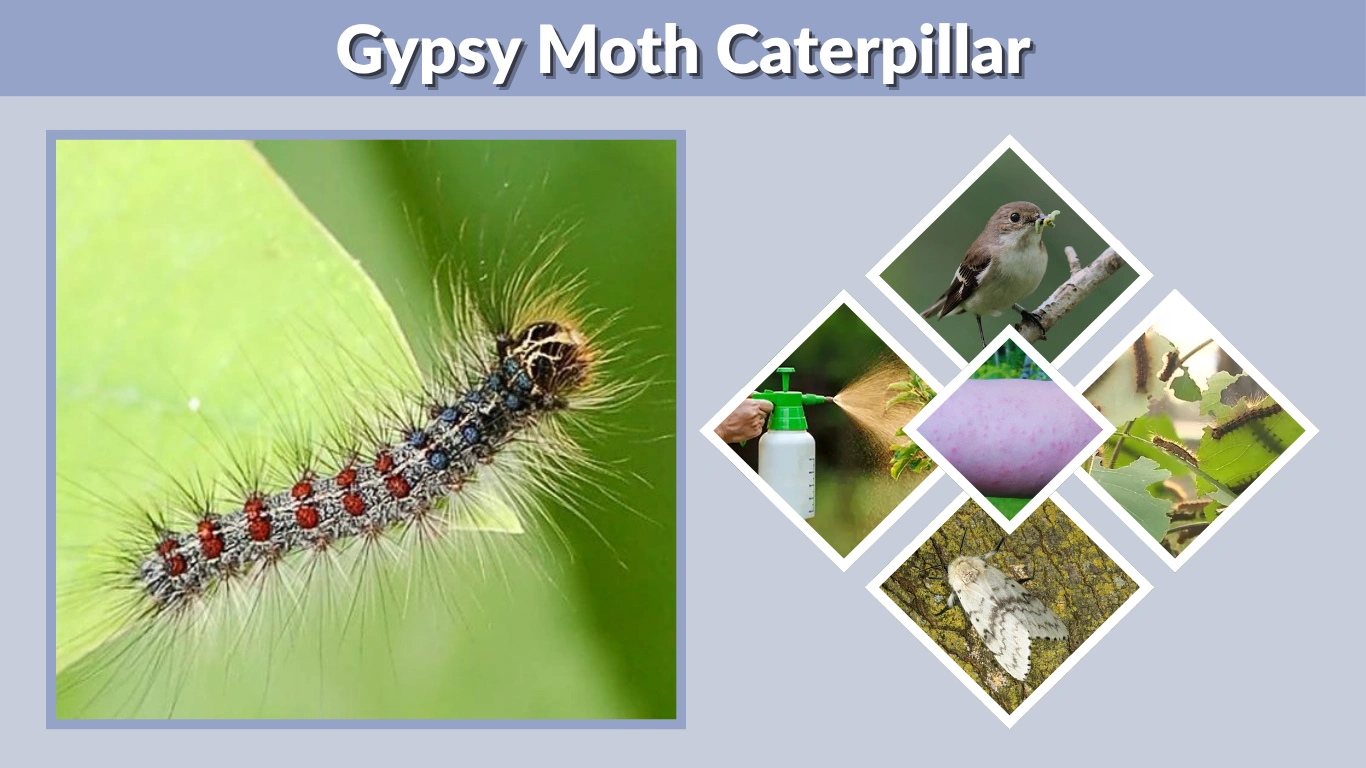
The gypsy moth caterpillar is one of the most destructive forest pests, known for its heavy feeding and ability to damage large areas of trees. This invasive species spreads quickly and can be found in forests, parks, and residential areas. Its hairy body not only harms trees but can also cause skin irritation in humans. Understanding how to identify, manage, and prevent infestations is essential to protect landscapes and reduce health risks associated with this caterpillar.
What Is a Gypsy Moth Caterpillar?
The gypsy moth caterpillar is the larval stage of the moth species Lymantria dispar. It is widely recognized for its destructive feeding habits and rapid population growth. In recent years, it has also been called the spongy moth caterpillar due to its egg mass appearance.
Definition and Classification
The gypsy moth caterpillar belongs to the Erebidae family. It is considered an invasive species in many regions because it lacks natural predators, allowing it to multiply quickly and spread across forests and urban landscapes.
Why It Is Important
This caterpillar stage is responsible for most of the damage caused by the species. It feeds aggressively on tree leaves, weakening trees and making them more vulnerable to disease and environmental stress.
Gypsy Moth Caterpillar Identification

Identifying this caterpillar early is important for controlling infestations. Its unique physical features make it easier to distinguish from other similar species found on trees.
What Does a Gypsy Moth Caterpillar Look Like?
- Hairy body with long, fine bristles
- Distinct pairs of blue and red spots along the back
- Dark head and rough body texture
- Length ranges from tiny to about 5–7 cm when mature
- Color varies from dark gray to black
Key Identification Features
- Blue spots appear first, followed by red spots toward the rear
- Body becomes more noticeable as it grows
- Often found crawling on tree trunks and branches
Gypsy Moth Caterpillar Life Cycle

The life cycle of the gypsy moth caterpillar includes several stages, each contributing to its growth and spread. Understanding these stages helps in applying control methods at the right time.
Egg Stage
Egg masses are laid on trees, outdoor objects, and structures. These masses are sponge-like and contain hundreds of eggs, allowing rapid population increase.
Larva Stage
- Most destructive stage of development
- Feeds heavily on leaves, especially hardwood trees
- Active during spring and early summer
- Can move across surfaces in search of food
Pupa Stage
After feeding, the caterpillar forms a cocoon in a sheltered location. During this stage, it transforms into an adult moth.
Adult Stage
Adult moths emerge to reproduce and lay eggs. This stage ensures the continuation of the species and the spread of infestations.
Gypsy Moth Caterpillar vs Tent Caterpillar
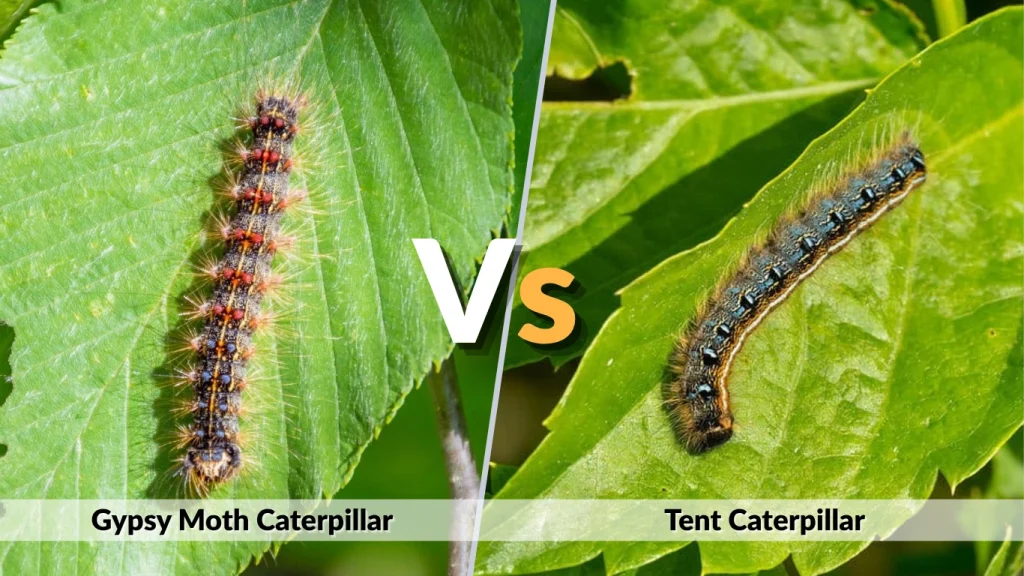
These two caterpillars are often confused, but they have clear differences in appearance and behavior. Knowing how to distinguish them helps in proper identification and management.
Key Differences
- Gypsy moth caterpillars have blue and red spots; tent caterpillars usually have stripes
- Tent caterpillars build silk tents, while gypsy moth caterpillars do not
- Gypsy moth caterpillars move individually, while tent caterpillars often stay in groups
Nest and Web Differences
Tent caterpillars create visible web-like nests in tree branches. In contrast, gypsy moth caterpillars do not form such structures, making them harder to detect early.
Gypsy Moth Caterpillar Habitat and Behavior
Gypsy moth caterpillars are commonly found in areas with abundant trees and vegetation. They thrive in forests, parks, and residential areas, especially where hardwood trees are present. Their activity is seasonal, with peak feeding occurring in spring and early summer. These caterpillars spend most of their time feeding on leaves and can travel short distances to find food. They are highly adaptable and can survive in different climates, contributing to their spread.
Feeding Habits
They prefer oak trees but also feed on maple, birch, and other hardwood species. During heavy infestations, they may consume nearly all available leaves in an area.
Movement and Spread
Caterpillars can crawl between trees or be carried by wind when young. This helps them spread quickly and establish new infestations in nearby locations.
Gypsy Moth Caterpillar Damage
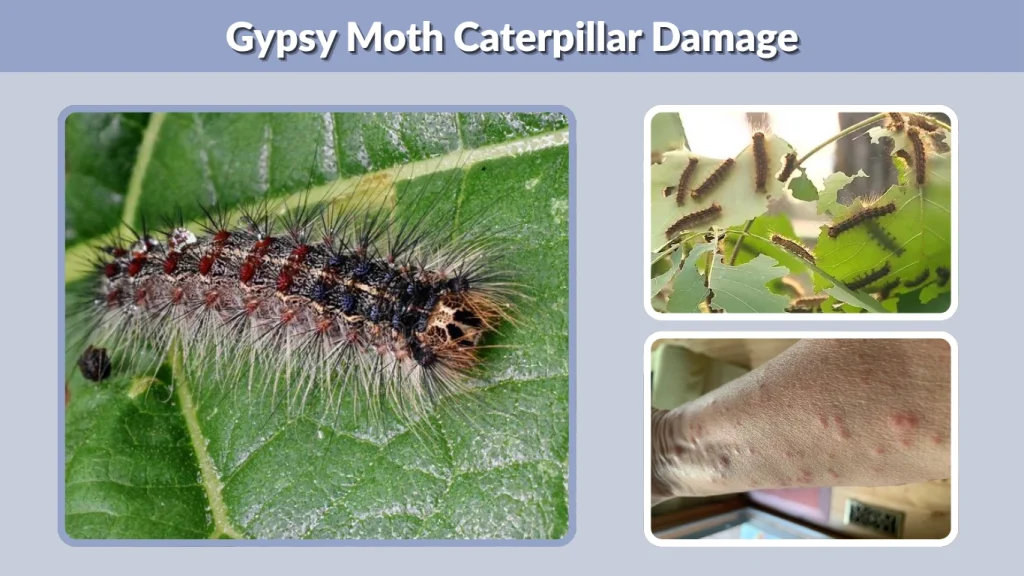
Gypsy moth caterpillars are known for causing serious damage to trees and ecosystems. Their feeding habits can strip trees of leaves quickly, weakening them over time. Repeated infestations can lead to long-term forest decline and increased vulnerability to disease and environmental stress.
Damage to Trees
- Heavy leaf loss (defoliation), especially in hardwood trees
- Reduced tree growth and overall health
- Increased risk of tree death after repeated attacks
Signs of Infestation
- Large numbers of caterpillars on trunks and branches
- Chewed or missing leaves
- Presence of droppings (frass) beneath trees
Gypsy Moth Caterpillar Rash and Health Effects

Contact with gypsy moth caterpillars can lead to skin irritation due to their tiny hair-like structures. These hairs can break off and embed into the skin, causing discomfort. While not usually dangerous, the reaction can be unpleasant and should be treated properly.
Is the Gypsy Moth Caterpillar Poisonous?
The caterpillar is not truly poisonous, but its hairs can trigger irritation or allergic reactions. The effect varies depending on individual sensitivity and level of exposure.
Symptoms of Skin Reaction
- Itching and redness
- Mild swelling or rash
- Burning or irritating sensation
Rash Treatment
- Wash the affected area with soap and water
- Apply a cold compress to reduce swelling
- Use anti-itch creams if needed
Gypsy Moth Caterpillar Infestation
Infestations occur when large populations of caterpillars spread across trees and surrounding areas. These outbreaks can grow quickly due to high reproduction rates and lack of natural control in some regions.
Causes of Infestation
Egg masses are easily spread through human activity. They attach to vehicles, firewood, and outdoor objects, allowing the species to move into new areas.
Signs of Heavy Infestation
- Large clusters of caterpillars covering trees
- Extensive leaf damage across multiple plants
- Increased droppings and visible egg masses
Affected Regions
Infestations are commonly reported in forested and suburban areas, particularly in regions with large populations of host trees.
How to Get Rid of Gypsy Moth Caterpillars

Managing gypsy moth caterpillars requires a combination of prevention and active control. Early detection is the most effective way to reduce damage and stop the spread.
Natural Control Methods
- Birds and small animals feeding on caterpillars
- Natural diseases that reduce populations
- Environmental conditions limiting growth
Chemical Control
- Use insecticides during early larval stages
- Apply biological treatments like BT spray
- Use horticultural oils to target eggs
Prevention Tips
- Remove egg masses from surfaces
- Avoid moving firewood from infested areas
- Monitor trees regularly for early signs
Gypsy Moth Caterpillar Control Tools
Effective control often involves using tools and methods designed to limit caterpillar movement and reproduction. These solutions can help reduce population levels and protect trees.
Traps and Barriers
Sticky bands placed around tree trunks can trap caterpillars and prevent them from climbing. Pheromone traps may also be used to monitor moth activity.
Sprays and Pesticides
Targeted sprays can reduce caterpillar populations when applied at the correct stage. Proper use is important to ensure effectiveness and minimize environmental impact.
Interesting Facts About Gypsy Moth Caterpillars
Gypsy moth caterpillars have several unique traits that make them both fascinating and problematic. Their behavior and adaptability contribute to their success as an invasive species.
Key Facts
- They can consume large amounts of leaves in a short time
- Young caterpillars can travel through the air using silk threads
- Populations often rise and fall in cycles
- They have adapted to survive in various climates
FAQs
What is a gypsy moth caterpillar?
A gypsy moth caterpillar is the larval stage of the moth Lymantria dispar. It is known for feeding on tree leaves and causing widespread defoliation in forests and residential areas.
Are gypsy moth caterpillars poisonous?
They are not poisonous, but their tiny hairs can cause skin irritation or allergic reactions. Contact may lead to itching, redness, or mild rash in some individuals.
How do you identify a gypsy moth caterpillar?
It can be identified by its hairy body and the distinct pattern of blue and red spots along its back. These features make it different from other caterpillars.
How do you get rid of gypsy moth caterpillars?
Control methods include removing egg masses, using biological sprays like BT, and applying insecticides early in the season. Prevention and monitoring are key.
What is the difference between gypsy moth and tent caterpillar?
Gypsy moth caterpillars have blue and red spots and do not build tents, while tent caterpillars create visible silk nests and usually have striped patterns instead of spots.
