
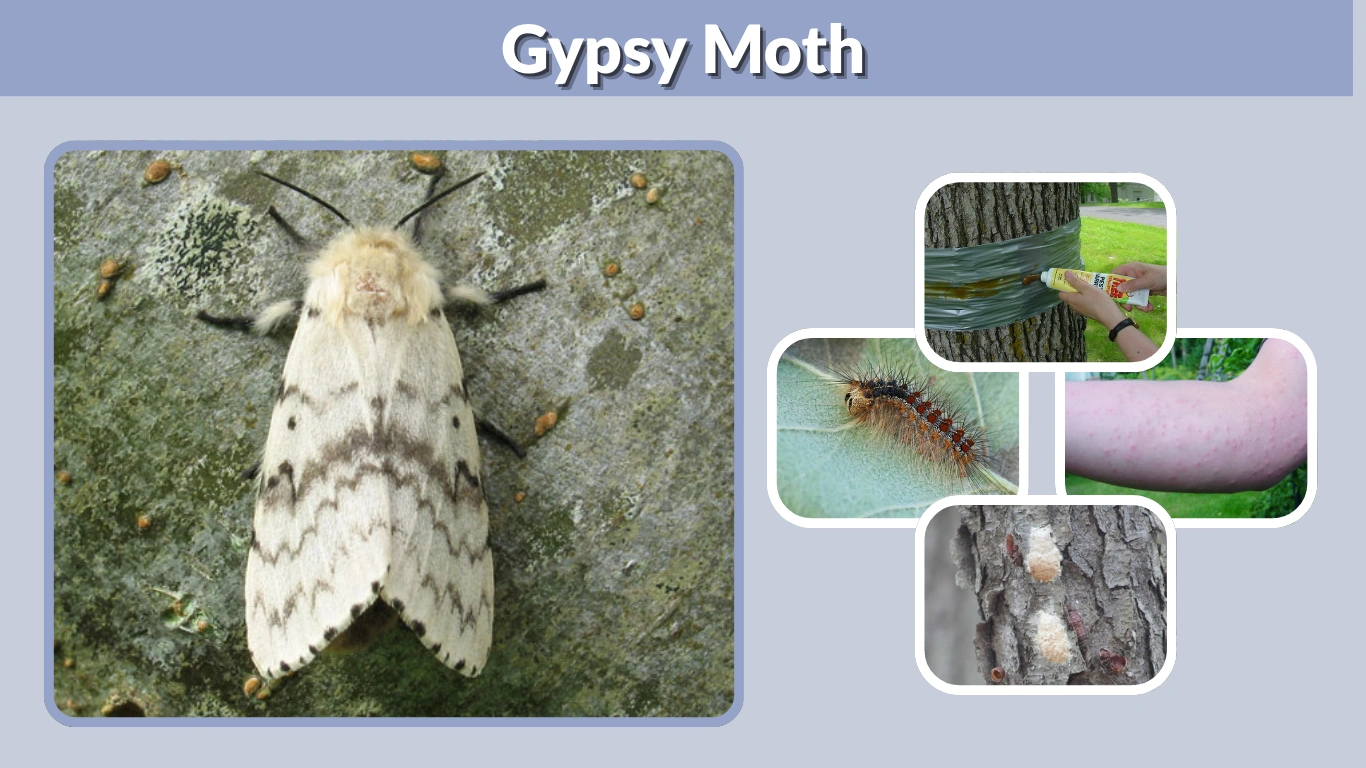
Gypsy moths are among the most destructive forest pests, known for their ability to defoliate large areas of trees in a short time. Originally introduced from Europe, this invasive insect has spread widely and continues to threaten ecosystems. The caterpillar stage is the most harmful, feeding aggressively on leaves and weakening trees. Understanding how to identify, manage, and prevent infestations is essential for protecting both natural environments and residential landscapes from long-term damage.
What Is a Gypsy Moth?
The gypsy moth, scientifically known as Lymantria dispar, is an invasive insect species that primarily affects trees. It is widely recognized for its destructive caterpillar stage. In recent years, it has also been referred to as the “spongy moth” due to its egg mass appearance.
Classification and Origin
The gypsy moth belongs to the family Erebidae and originated in Europe and parts of Asia. It was accidentally introduced into North America in the 19th century, where it spread rapidly due to a lack of natural predators.
European vs Asian Gypsy Moth
The European type is the most common and spreads slowly, while the Asian gypsy moth is more dangerous due to its ability to fly and spread quickly. This makes the Asian variant a greater threat to forests and agriculture.
Gypsy Moth Identification Guide
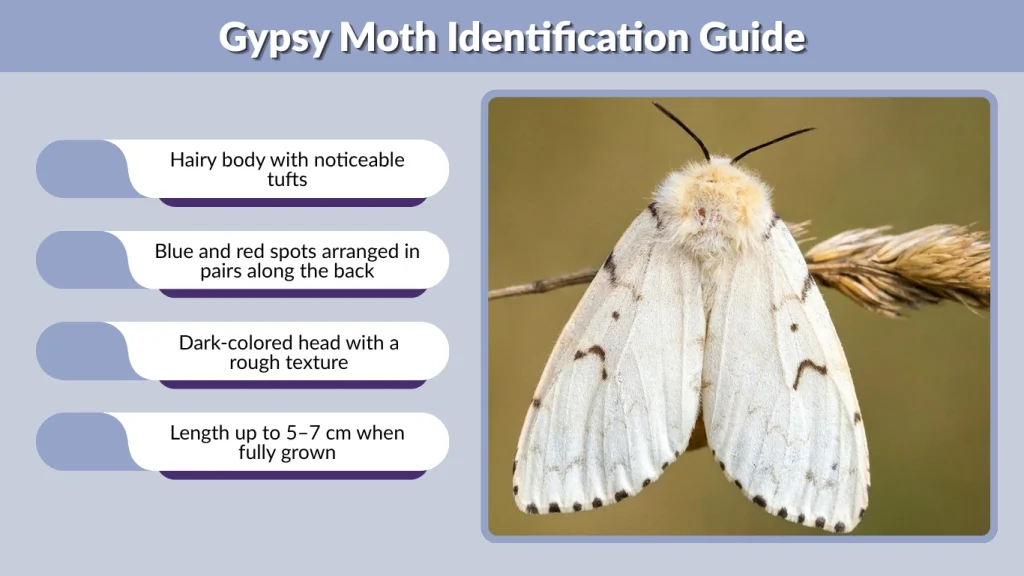
Proper identification is crucial to detect infestations early and prevent damage. Each life stage of the gypsy moth has distinct features that make it easier to recognize in natural settings.
What Does a Gypsy Moth Look Like?
Adult gypsy moths differ by gender. Males are smaller, brown, and capable of flight, while females are larger, white, and usually unable to fly. Both have distinctive wing patterns that help in identification.
Gypsy Moth Caterpillar Identification
- Hairy body with noticeable tufts
- Blue and red spots arranged in pairs along the back
- Dark-colored head with a rough texture
- Length up to 5–7 cm when fully grown
- Moves actively across tree trunks and leaves
3 Key Characteristics
- Highly destructive leaf-feeding behavior
- Distinct row of colored spots (blue then red)
- Ability to survive in various climates and habitats
Gypsy Moth Life Cycle

The gypsy moth undergoes a complete metamorphosis with four stages. Each stage plays a role in its survival and spread, making it important to understand for effective control.
Egg Stage
Egg masses are laid on tree bark, outdoor furniture, and even vehicles. They appear sponge-like and can contain hundreds of eggs, allowing rapid population growth.
Larva (Caterpillar Stage)
- Most destructive stage of the life cycle
- Feeds heavily on leaves, especially oak trees
- Active during spring and early summer
- Can travel long distances in search of food
Pupa Stage
After feeding, the caterpillar forms a pupa in a protected location. This stage is a transformation period where it develops into an adult moth.
Adult Stage
Adult moths emerge to reproduce. Males fly in search of females, while females remain stationary and lay eggs to begin the cycle again.
Gypsy Moth Damage
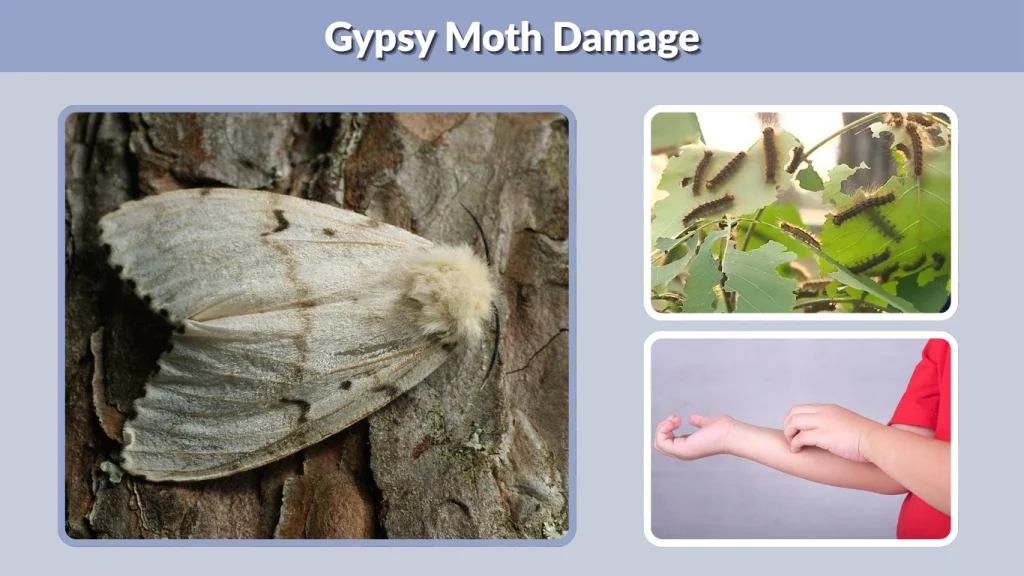
Gypsy moth infestations can severely impact both natural ecosystems and residential landscapes. The caterpillars consume large quantities of leaves, weakening trees and making them more vulnerable to disease.
Damage to Trees
- Defoliation of leaves, especially in hardwood trees
- Reduced tree growth and vitality
- Increased risk of tree death after repeated infestations
Damage to Humans
- Skin irritation from caterpillar hairs
- Itchy rashes after contact
- Mild allergic reactions in sensitive individuals
Signs of Infestation
- Egg masses on surfaces
- Large numbers of caterpillars on trees
- Chewed or missing leaves
Gypsy Moth as an Invasive Species
The gypsy moth is considered a major invasive species because it disrupts ecosystems and spreads rapidly. It lacks sufficient natural predators in introduced regions, allowing populations to grow uncontrollably. This leads to widespread defoliation, loss of biodiversity, and long-term ecological imbalance in forests and green areas.
Why It Spreads So Easily
The gypsy moth spreads through egg masses attached to objects like firewood, vehicles, and outdoor items. Human activity plays a major role in its expansion, making prevention and awareness essential for control efforts.
Gypsy Moth Rash and Health Effects
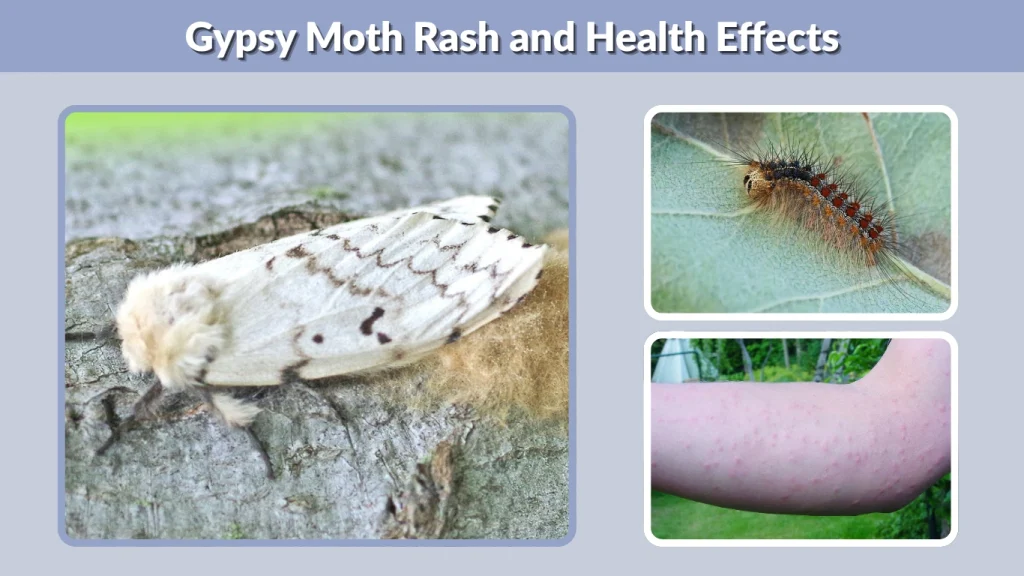
Contact with gypsy moth caterpillars can cause noticeable skin irritation due to tiny hair-like structures on their bodies. These hairs may contain toxins or trigger allergic reactions in some individuals. While not life-threatening in most cases, the discomfort can be significant and should be treated promptly.
What Causes the Rash
The rash is caused by direct contact with the caterpillar’s microscopic hairs. These hairs can break off and embed into the skin, leading to irritation and inflammation even without prolonged contact.
Symptoms
Common symptoms include itching, redness, swelling, and a burning sensation. In some cases, small bumps or hives may appear. Sensitive individuals may experience stronger reactions that last longer.
Treatment
Wash the affected area with soap and water immediately. Applying a cold compress can reduce swelling, while anti-itch creams may help relieve discomfort. Avoid scratching to prevent further irritation or infection.
Gypsy Moth Habitat and Behavior
Gypsy moths thrive in areas with abundant trees and vegetation. They are most active during warmer months and tend to concentrate in regions with suitable host trees. Their behavior is closely tied to feeding and reproduction cycles.
Common Habitats
They are commonly found in forests, parks, and residential areas with trees. Oak trees are a primary host, but they also feed on maple, birch, and other hardwood species.
Seasonal Activity
Caterpillars emerge in spring and feed through early summer. Adult moths appear later in the season to reproduce, completing their life cycle annually.
Nesting and Movement
Egg masses are laid in sheltered locations. Caterpillars may disperse by crawling or being carried by wind, allowing them to spread to nearby trees.
Gypsy Moth Control Methods
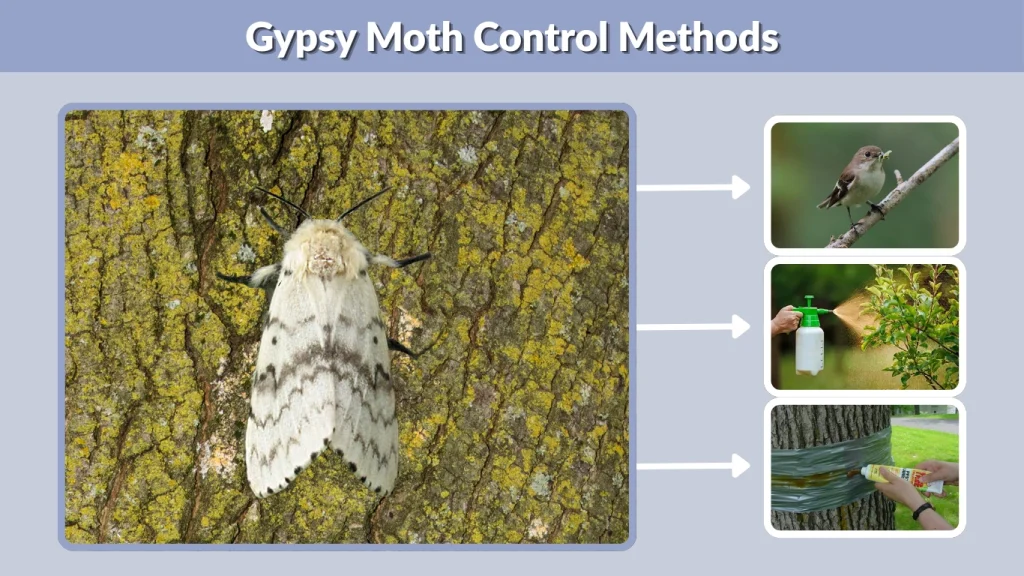
Controlling gypsy moth populations requires a combination of prevention, monitoring, and treatment. Early action is key to minimizing damage and stopping large infestations from developing.
Natural Control
- Birds and small mammals feed on caterpillars
- Fungal diseases can reduce populations
- Environmental conditions may limit outbreaks
Chemical Control
- Use of insecticides during early larval stages
- Bacillus thuringiensis (BT) as a biological option
- Horticultural oils to target eggs
Traps and Prevention
- Use pheromone traps to monitor populations
- Remove and destroy egg masses manually
- Avoid transporting firewood from infested areas
Gypsy Moth vs Tent Caterpillar
Gypsy moths are often confused with tent caterpillars, but they differ in behavior and appearance. Understanding these differences helps in proper identification and management of infestations.
Key Differences in Appearance
Gypsy moth caterpillars have blue and red spots along their backs, while tent caterpillars usually have a solid stripe or pattern without the same spot arrangement.
Behavioral Differences
Tent caterpillars build visible silk tents in tree branches, whereas gypsy moth caterpillars do not form such structures. Gypsy moths also tend to wander more while feeding.
European vs Asian Gypsy Moth
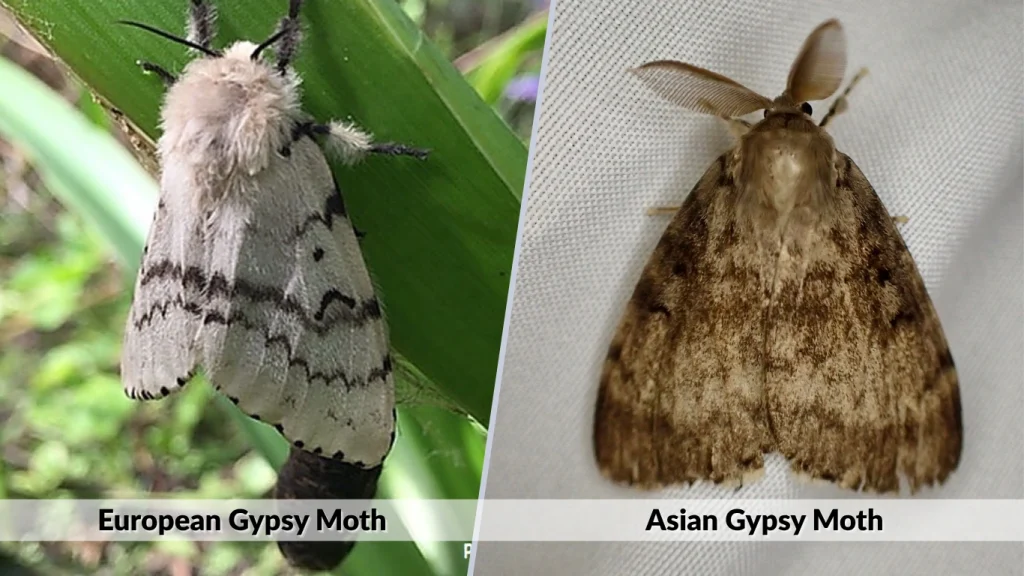
There are two main types of gypsy moths, and they differ in how they spread and impact ecosystems. Recognizing these differences is important for monitoring and control efforts.
European Gypsy Moth
This type is more common and spreads slowly. Female moths typically cannot fly, which limits the rate of expansion.
Asian Gypsy Moth
- Females are capable of flight
- Faster spread across regions
- Greater threat to forests and trade
Interesting Facts About Gypsy Moths
Gypsy moths have several unique traits that make them both fascinating and problematic. Their behavior, adaptability, and history contribute to their reputation as a major pest species.
Unique Facts
- Female moths release pheromones to attract males
- Caterpillars can consume large amounts of leaves daily
- The species has undergone a name change to “spongy moth”
- Outbreaks can occur in cycles every few years
FAQs
What is a gypsy moth?
A gypsy moth is an invasive insect species known for damaging trees during its caterpillar stage. It feeds on leaves and can cause widespread defoliation, weakening forests and landscapes over time.
Are gypsy moth caterpillars dangerous?
They are not highly dangerous but can cause skin irritation. Their tiny hairs may lead to itching, redness, or rashes when touched, especially in sensitive individuals.
How do you get rid of gypsy moths?
Control methods include removing egg masses, using biological treatments like BT, and applying insecticides during early stages. Preventing spread by avoiding movement of infested materials is also important.
What trees do gypsy moths attack?
They mainly target hardwood trees such as oak, maple, birch, and aspen. Oak trees are especially vulnerable and often suffer the most damage during infestations.
What is the new name for gypsy moth?
The gypsy moth is now commonly referred to as the “spongy moth.” This name comes from the sponge-like appearance of its egg masses and is used in scientific and public discussions.
