
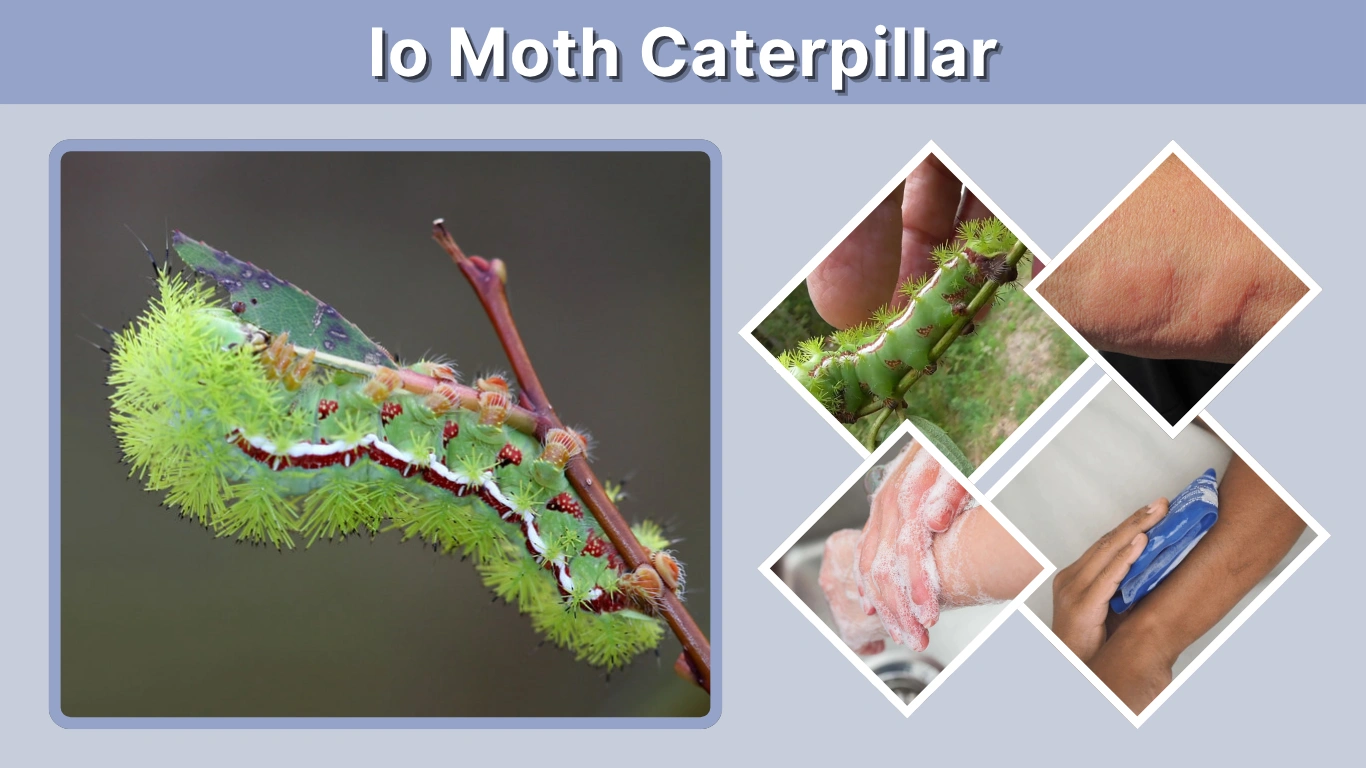
The Io moth caterpillar (Automeris io) is one of the most recognizable and caution-worthy insects in North America. Its bright green body and striking spines make it easy to identify, but also signal its defensive nature. Unlike many caterpillars, it can deliver a painful sting through venomous spines. Understanding its appearance, life cycle, feeding habits, and safety concerns helps people avoid unwanted contact while appreciating its role in nature.
What Is an Io Moth Caterpillar?
The Io moth caterpillar is the larval stage of the Io moth and is best known for its venomous spines and vivid green coloration. It plays a key role in the insect’s life cycle, focusing on feeding and growth before transforming into a moth.
Basic Characteristics
- Larval stage of Automeris io
- Bright green with rows of spines
- Known for defensive stinging ability
Why It Gets Attention
- Common in gardens and wooded areas
- Easily visible due to bright color
- Frequently encountered by humans
Io Moth Caterpillar Identification
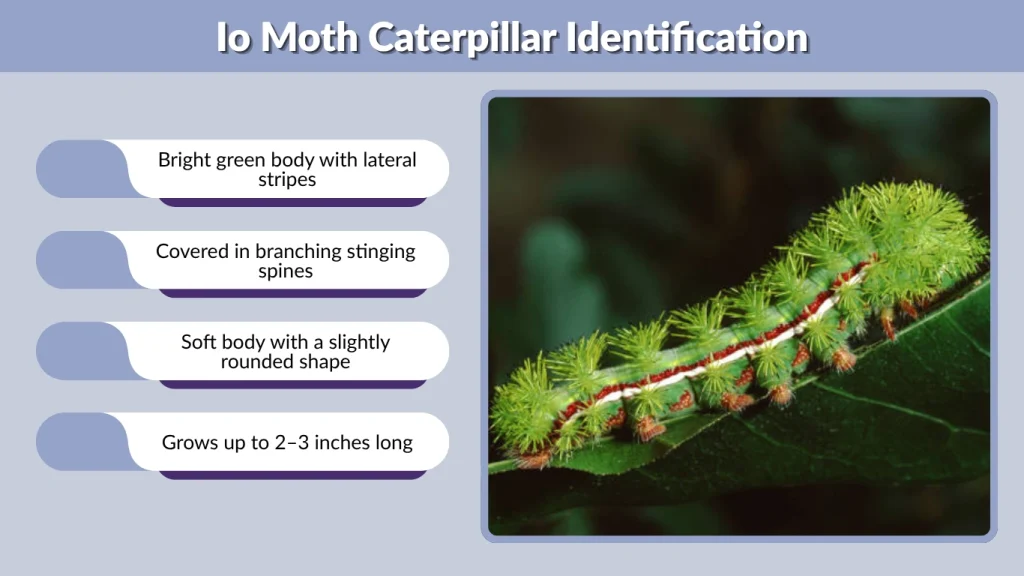
The Io moth caterpillar is easy to identify due to its bold coloration and unique defensive features. Its appearance changes slightly as it grows, but its spiny body remains a key characteristic throughout development.
Physical Appearance
- Bright green body with lateral stripes
- Covered in branching stinging spines
- Soft body with a slightly rounded shape
Size and Growth
- Grows up to 2–3 inches long
- Increases in size through molting stages
- Becomes thicker and more prominent over time
Spines and Defense
- Spines connected to venom glands
- Release toxin when touched
- Act as primary protection from predators
Io Moth Caterpillar Life Cycle
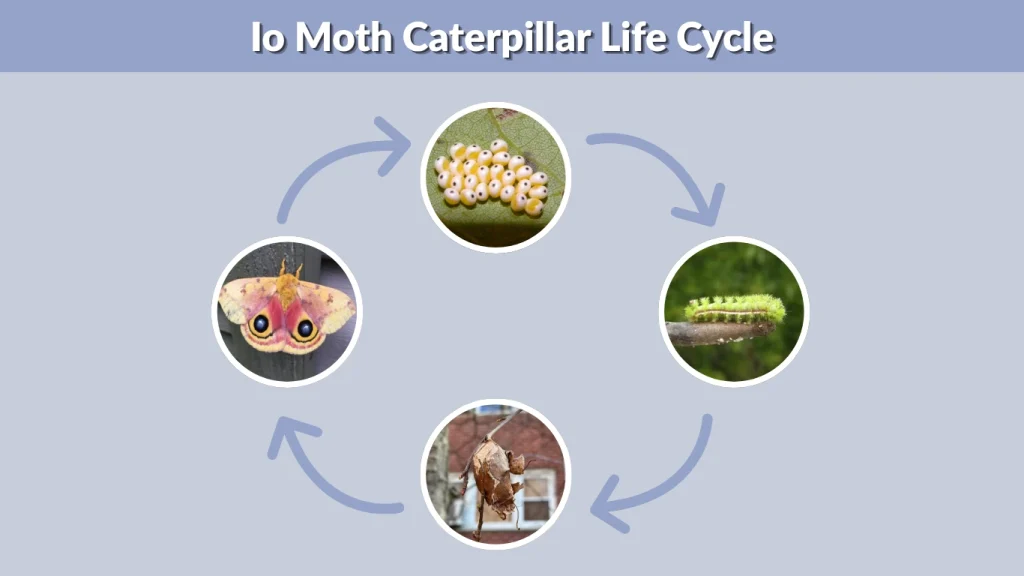
The Io moth caterpillar passes through several stages as part of complete metamorphosis. Each stage is important for growth and eventual transformation into an adult moth. This process allows it to adapt to seasonal changes and environmental conditions.
Egg Stage
- Eggs are laid in clusters on leaves
- Hatch within one to two weeks
- Young caterpillars remain grouped initially
Caterpillar Stages (Instars)
- Early instars live in groups
- Later stages become solitary
- Molts multiple times as it grows
Cocoon Formation
- Spins a thin silk cocoon in leaf litter
- Enters pupal stage for transformation
- Remains protected until emergence
Io Moth Caterpillar Diet
Feeding is the main activity during the caterpillar stage. It consumes large amounts of plant material to store energy needed for its transformation into an adult moth.
What Do Io Moth Caterpillars Eat?
- Oak leaves
- Elm leaves
- Willow leaves
- Hackberry plants
Feeding Behavior
- Eats continuously during growth
- Requires fresh leaves daily
- Prefers healthy, soft foliage
Io Moth Caterpillar Sting
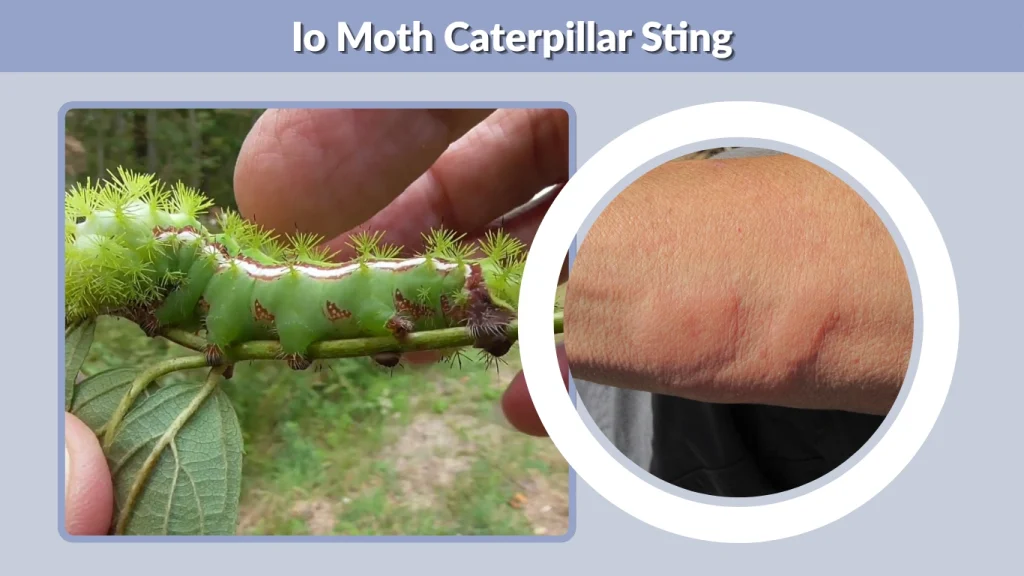
The sting of the Io moth caterpillar is one of its most notable features. It serves as a defense mechanism and can cause discomfort in humans who come into contact with its spines.
Can It Sting?
Yes, the caterpillar can sting through its venomous spines. Even light contact can trigger the release of toxins, causing an immediate reaction on the skin.
Sting Symptoms
- Sharp burning or stinging sensation
- Redness and swelling
- Itching or irritation
Sting Effects
- Pain may last from minutes to hours
- Localized skin reaction
- Rarely causes severe complications
Io Moth Caterpillar Sting Treatment
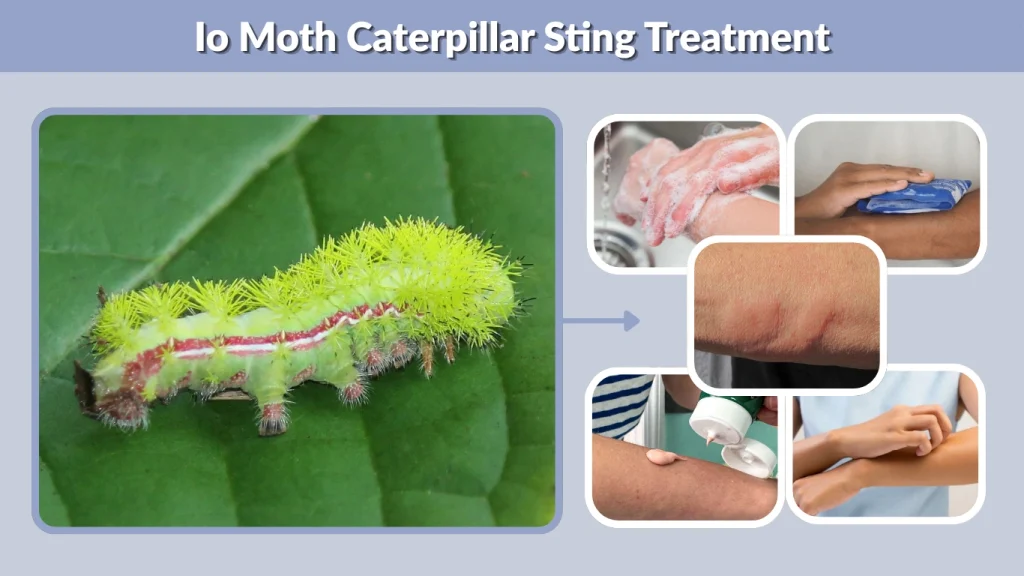
Proper treatment can reduce discomfort and prevent further irritation after a sting. Quick action helps minimize the effects and speeds up recovery.
First Aid Steps
- Use adhesive tape to remove spines
- Wash the area with soap and water
- Apply a cold compress
Additional Care
- Apply anti-itch or antihistamine cream
- Avoid scratching the affected area
- Seek medical help if symptoms worsen
Io Moth Caterpillar Habitat and Range
The Io moth caterpillar is commonly found in regions with abundant vegetation and suitable host plants. It thrives in environments where food sources are easily accessible, allowing it to grow quickly and safely.
Geographic Distribution
The Io moth caterpillar is widely distributed across North America, particularly in eastern and southern regions. It is commonly found in states such as Florida, Texas, and Louisiana, where warm climates support its development.
Preferred Habitat
It prefers forests, gardens, and shrub-filled areas where host plants are plentiful. These environments provide both food and shelter, making them ideal for survival during its vulnerable growth stages.
Io Moth Caterpillar Control

Managing Io moth caterpillars may be necessary when they appear in large numbers on plants. While they are part of the natural ecosystem, their presence can cause damage to leaves and pose a risk due to their stinging spines.
How to Get Rid of Io Moth Caterpillars
- Remove caterpillars manually using gloves
- Prune affected leaves or branches
- Dispose of them safely away from living areas
Control Methods
- Use insecticidal soap if infestation is high
- Encourage natural predators like birds
- Keep plants healthy to reduce attraction
Are Io Moth Caterpillars Dangerous?
The Io moth caterpillar is considered dangerous only because of its sting. It does not bite or attack, but contact with its spines can cause discomfort. Understanding this helps people avoid unnecessary fear while staying cautious.
Risk to Humans
The sting can cause pain, redness, and swelling. Most reactions are mild and temporary, though sensitive individuals may experience stronger irritation. Avoid direct contact to prevent stings.
Risk to Pets
Pets such as dogs may react if they touch or try to eat the caterpillar. The venom can irritate their mouth or skin, so it is best to keep animals away from affected areas.
Io Moth Caterpillar Care
Caring for Io moth caterpillars requires caution due to their venomous spines. Proper handling and feeding are essential for safe observation and development.
What to Feed Io Moth Caterpillars
- Fresh leaves from host plants like oak and elm
- Replace food daily to maintain freshness
- Avoid dried or damaged leaves
Rearing Tips
- Use a well-ventilated container
- Keep the environment clean
- Avoid direct handling whenever possible
Io Moth Caterpillar Behavior
The behavior of the Io moth caterpillar changes as it grows. Early stages are more social, while later stages become independent and focused on feeding and survival.
Group Behavior in Early Stages
Young caterpillars often stay in groups, feeding together and moving as a cluster. This behavior may provide protection against predators and improve feeding efficiency.
Solitary Behavior in Later Stages
As they grow, caterpillars spread out and live independently. This reduces competition for food and allows them to prepare for cocoon formation.
Io Moth Caterpillar vs Other Caterpillars
The Io moth caterpillar is often compared with other species due to its bright color and defensive features. These comparisons highlight its unique traits and help with identification.
Io Moth vs Luna Moth Caterpillar
The Io moth caterpillar has venomous spines, while the Luna moth caterpillar is smooth and harmless. This makes the Io caterpillar more defensive and risky to handle.
Io Moth vs Puss Caterpillar
The Io caterpillar causes a noticeable sting, but the puss caterpillar is known for more severe reactions. Both should be avoided, but the Io caterpillar is easier to identify due to its bright green color.
Interesting Facts About Io Moth Caterpillars
The Io moth caterpillar has several unique characteristics that make it stand out among insects and attract attention from researchers and nature enthusiasts.
- Its bright color acts as a warning to predators
- Spines deliver venom through contact
- Early stages live in groups before becoming solitary
FAQs
Are Io moth caterpillars poisonous?
Io moth caterpillars are venomous, meaning their spines can deliver a painful sting. While not deadly, the venom can cause irritation, redness, and swelling. Most reactions are mild, but sensitive individuals may experience stronger discomfort.
What happens if an Io moth caterpillar stings you?
A sting usually causes an immediate burning sensation followed by redness and swelling. The discomfort can last from a few minutes to several hours. In rare cases, more noticeable irritation may occur depending on skin sensitivity.
How do you treat an Io moth caterpillar sting?
First, remove any embedded spines using adhesive tape. Then wash the area with soap and water. Applying ice and an antihistamine cream can help reduce swelling and itching. Seek medical advice if symptoms worsen.
What do Io moth caterpillars eat?
Io moth caterpillars feed on leaves from various plants, including oak, elm, willow, and hackberry. They require fresh foliage daily to support their rapid growth and development before entering the cocoon stage.
