

The Polyphemus moth (Antheraea polyphemus) is one of the most recognizable giant silk moths in North America. Known for its large size and striking eye-like spots on its wings, this moth plays an important role in natural ecosystems. Despite its bold appearance, it is harmless to humans. Its short adult life, unique life cycle, and fascinating caterpillar stage make it a subject of interest for both beginners and insect enthusiasts.
What Is a Polyphemus Moth?
The Polyphemus moth belongs to the Saturniidae family, often called giant silk moths. These moths are known for their large wings, soft bodies, and short adult lifespan. Unlike many insects, adult Polyphemus moths do not feed at all and exist mainly to reproduce before completing their life cycle.
Polyphemus Moth Identification
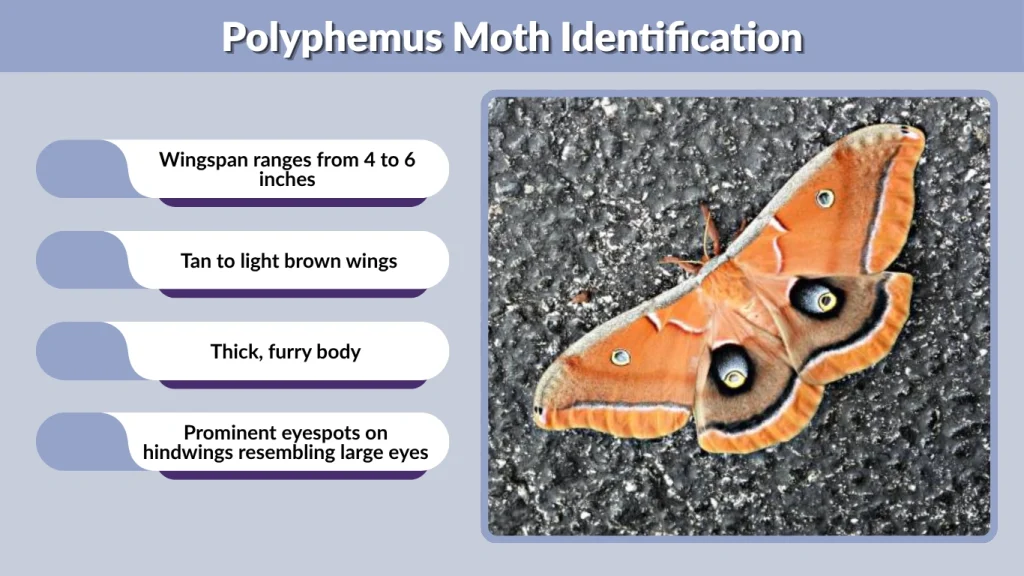
Identifying a Polyphemus moth is straightforward due to its size and distinctive markings. It stands out from other moth species because of its large eyespots and neutral brown coloring.
Size and Wingspan
- Wingspan ranges from 4 to 6 inches
- Large, heavy-bodied structure
- One of the biggest moths in North America
Wing Appearance
- Tan to light brown wings
- Prominent eyespots on hindwings resembling large eyes
- Wings appear plain when closed, hiding bright patterns
Body and Antennae
- Thick, furry body
- Males have large, feathery antennae
- Females have smaller, simpler antennae
Polyphemus Moth Life Cycle
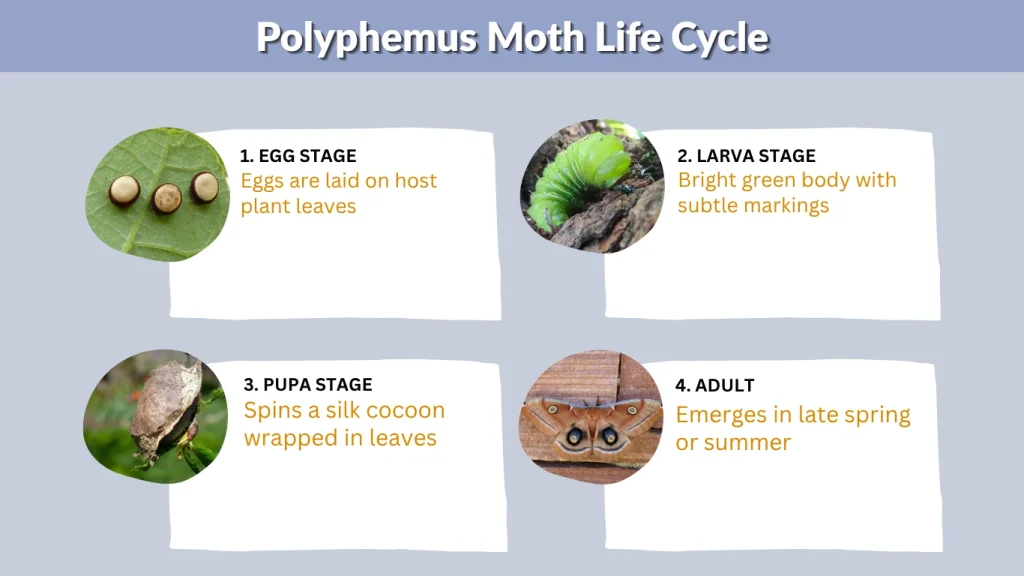
The Polyphemus moth undergoes complete metamorphosis, moving through four distinct stages. Each stage is essential for growth, survival, and reproduction, especially in adapting to seasonal changes.
Egg Stage
- Eggs are laid on host plant leaves
- Hatch within one to two weeks
- Small and slightly oval in shape
Caterpillar (Larval Stage)
- Bright green body with subtle markings
- Grows rapidly through multiple instars
- Consumes large amounts of leaves
Cocoon and Pupa Stage
- Spins a silk cocoon wrapped in leaves
- Often falls to the ground in autumn
- Remains inside during winter months
Adult Moth Stage
- Emerges in late spring or summer
- Lives for about one week
- Focuses only on reproduction
Polyphemus Moth Habitat and Range
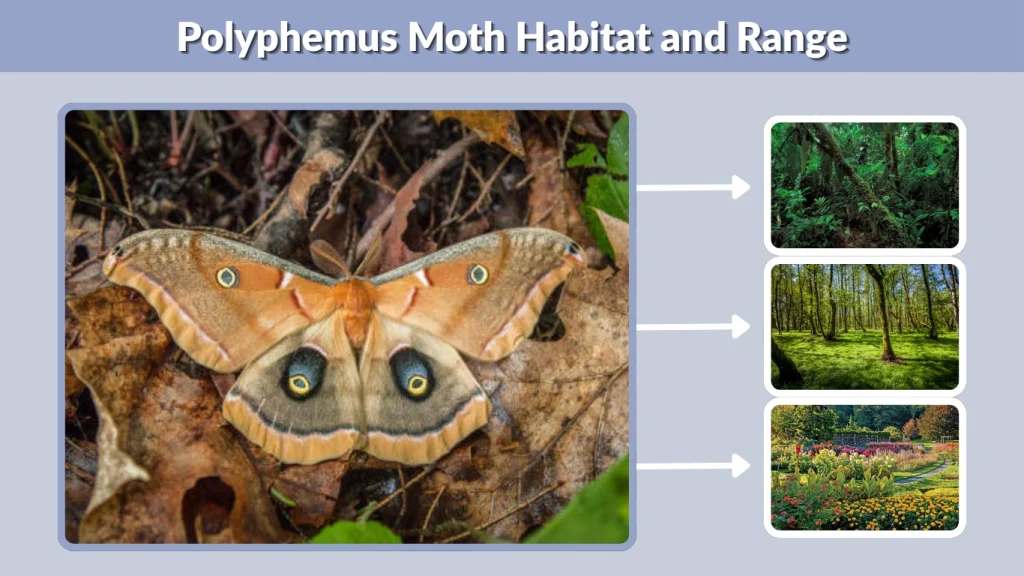
Polyphemus moths are widely distributed and adapt well to different environments. Their presence depends largely on the availability of suitable host plants, making them common in both natural forests and suburban landscapes.
Where Do Polyphemus Moths Live?
- Found across most of North America
- Common in woodlands and gardens
- Often seen near deciduous trees
Regional Distribution
- Frequently observed in states like Florida, Texas, Ohio, and Michigan
- Present in both eastern and western regions
- Population varies based on habitat conditions
Polyphemus Moth Diet
The diet of the Polyphemus moth changes completely between life stages. This shift is critical to its survival strategy and explains why the adult stage is so short-lived.
What Do Adult Polyphemus Moths Eat?
Adult Polyphemus moths do not eat at all. They lack functional mouthparts and survive on energy stored during their caterpillar stage. Their primary purpose is to mate and reproduce within a short time frame.
Caterpillar Diet
- Feeds on leaves of host plants
- Common food sources include oak, maple, and birch
- Requires fresh leaves daily for proper growth
Polyphemus Moth Caterpillar and Cocoon

The caterpillar and cocoon stages are critical for the development of the Polyphemus moth. During this time, the insect focuses on feeding, growth, and transformation. The caterpillar becomes large and strong, while the cocoon protects it through seasonal changes until it is ready to emerge as an adult.
Caterpillar Appearance and Growth
- Bright green body with smooth texture
- Can grow up to 3–4 inches long
- Passes through several instars as it develops
Cocoon and Pupa Stage
- Spins a silk cocoon often wrapped in leaves
- Cocoon may fall to the ground before winter
- Remains dormant until warmer seasons
Male vs Female Polyphemus Moth
Male and female Polyphemus moths look similar at first glance, but they have clear differences in structure and behavior. These differences are especially important during reproduction and help distinguish between the two.
Key Physical Differences
Males are generally smaller and have large, feathery antennae that allow them to detect pheromones from females. Females are larger with a heavier abdomen, which is used to carry and lay eggs. Their antennae are smaller and less complex.
Mating Behavior
Females release pheromones shortly after emerging. Males can detect these chemical signals from long distances and fly toward the female. After mating, the female lays eggs on host plants to begin the next generation.
Are Polyphemus Moths Dangerous?
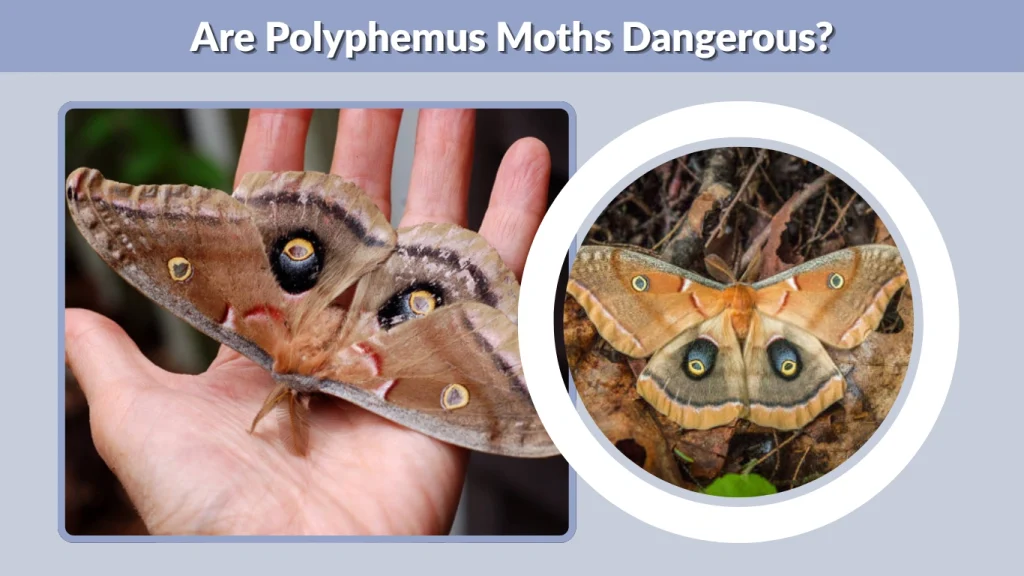
Despite their size and bold wing patterns, Polyphemus moths are completely harmless. They do not have stingers, venom, or biting mouthparts. Their large eyespots serve as a defense mechanism to scare predators rather than to attack.
Safety Around Humans
These moths are safe to observe closely. Even their caterpillars are not poisonous and do not pose a threat. However, handling should be minimal to avoid causing stress or damage to the insect.
Polyphemus Moth Behavior and Survival
Polyphemus moths are nocturnal insects with behaviors centered on survival and reproduction. Their short adult life means they must act quickly to find mates and continue their life cycle.
Flight and Activity
They are active mainly at night and are often attracted to artificial lights. Their flight is slow and heavy, making them easier to observe compared to smaller moth species.
Predators and Threats
Natural predators include birds, rodents, and parasitic insects. Environmental threats such as habitat loss and pesticide use can also impact their populations in certain areas.
Polyphemus Moth Symbolism and Meaning
The Polyphemus moth is often associated with awareness, protection, and transformation. Its large eyespots symbolize watchfulness and the ability to see beyond illusions. Like many moths, it also represents personal growth and change through its complete metamorphosis.
Polyphemus Moth Care and Rearing
Raising Polyphemus moths can be a rewarding experience for those interested in insects. Proper care during the caterpillar stage is essential to ensure healthy development into adulthood.
Basic Care Tips
- Provide fresh host plant leaves daily
- Keep the enclosure clean and well-ventilated
- Avoid frequent handling during growth stages
Interesting Facts About Polyphemus Moths
The Polyphemus moth has several unique features that make it stand out among other insects. These traits contribute to its survival and popularity among insect enthusiasts.
- Named after a one-eyed giant due to its wing eyespots
- Adults do not eat and live only briefly
- Eyespots help deter predators
FAQs
What do Polyphemus moths eat?
Adult Polyphemus moths do not eat because they lack functional mouthparts. They rely on stored energy from their caterpillar stage. The caterpillars feed on leaves such as oak, maple, and birch to support their rapid growth and development.
Are Polyphemus moths poisonous?
No, Polyphemus moths are not poisonous or dangerous. They cannot sting or bite, and they do not produce toxins. Their appearance may seem intimidating, but they are completely safe to observe.
How long do Polyphemus moths live?
Adult Polyphemus moths typically live for about one week. Their full life cycle, including egg, larva, and pupa stages, can last several months depending on environmental conditions and seasonal changes.
Where do Polyphemus moths live?
Polyphemus moths are found across North America in forests, suburban areas, and regions with abundant host plants. They are adaptable and can thrive in a variety of climates where suitable vegetation is available.
