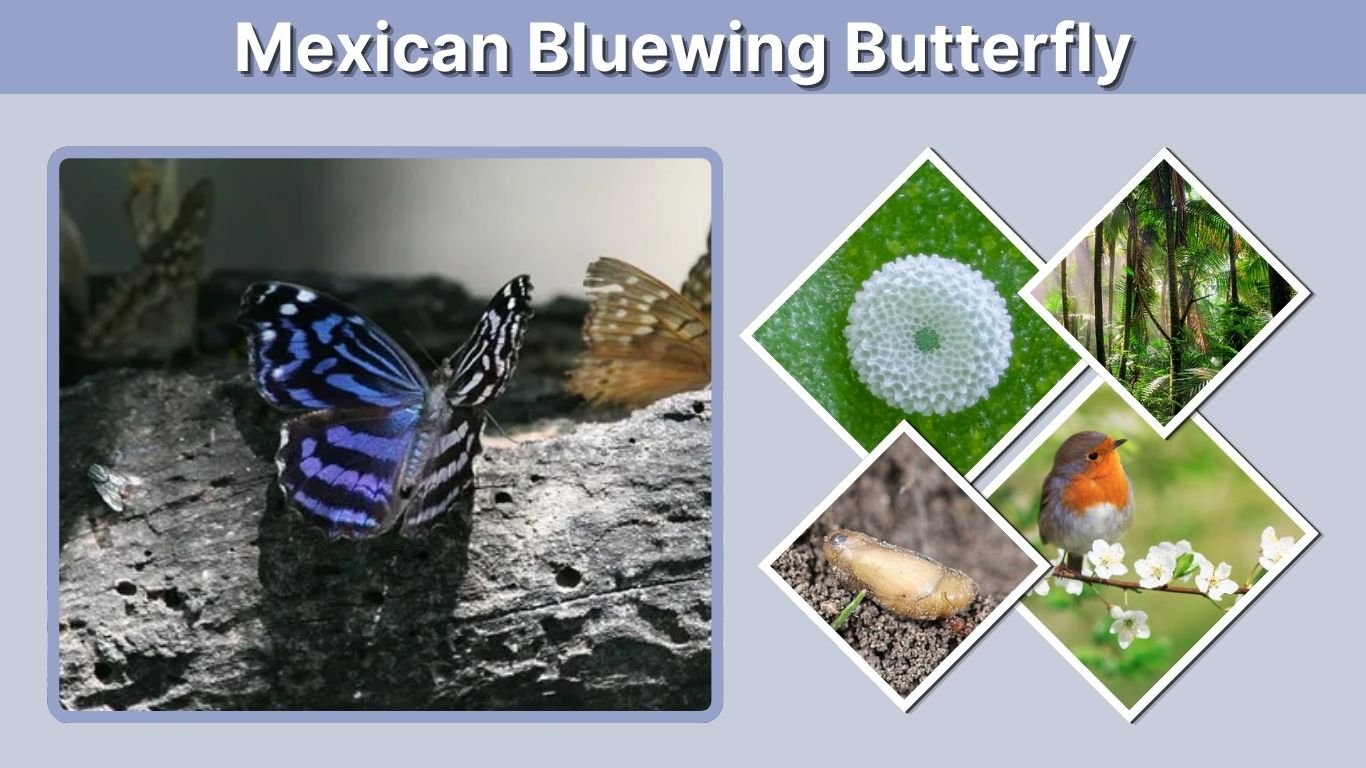
The Mexican Bluewing butterfly is a stunning tropical butterfly known for its brilliant blue, black, and white wing patterns. Scientifically called Myscelia ethusa, this butterfly inhabits forests, wooded stream valleys, and tropical scrublands across Mexico and Central America. Its vibrant upper wings contrast with its bark-like undersides, helping it remain hidden from predators. Unlike many butterflies that primarily drink flower nectar, Mexican Bluewings commonly feed on rotting fruit. Learning about their appearance, habitat, caterpillars, diet, and life cycle reveals the remarkable adaptations of this colorful species.
What Is a Mexican Bluewing Butterfly?
The Mexican Bluewing butterfly (Myscelia ethusa) belongs to the Nymphalidae family, commonly known as brush-footed butterflies. It is classified within the Biblidinae subfamily, which includes several colorful tropical butterfly species.
This butterfly is recognized for its dark upper wings decorated with iridescent blue bands and distinctive white spots.
Mexican Bluewings are primarily associated with tropical environments, although some individuals occasionally reach southern Texas.
Unlike many small blue butterflies, Mexican Bluewings are relatively large and have an unusual preference for rotting fruit rather than flower nectar.
Mexican Bluewing Butterfly Identification
Identifying a Mexican Bluewing butterfly is relatively easy when its wings are fully open. However, its appearance changes dramatically when the wings are closed, making careful observation important.
Mexican Bluewing Butterfly Color and Appearance
The Mexican Bluewing has dark black or brownish-black upper wings decorated with bright, iridescent blue bands.
Its forewings feature several distinctive white spots near the outer edges, creating a striking contrast against the darker background.
The outer wing margins are slightly irregular, while the forewing tips have a somewhat flattened appearance.
When the butterfly closes its wings, the undersides reveal brown, gray, and black patterns resembling tree bark or dried leaves.
This natural camouflage helps the butterfly blend into its surroundings while resting.
Mexican Bluewing Butterfly Size and Wingspan
Mexican Bluewings are medium-sized butterflies with relatively broad wings.
- Wingspan: Approximately 2.5–3 inches (6.4–7.6 cm).
- Upper wing color: Black with iridescent blue bands.
- Wing markings: Distinctive white spots near the forewing edges.
- Underside color: Mottled brown and gray.
- Scientific name: Myscelia ethusa.
- Family: Nymphalidae.
Their wings are considerably larger than those of many small blue butterfly species found in North America.
Mexican Bluewing Butterfly Habitat and Distribution
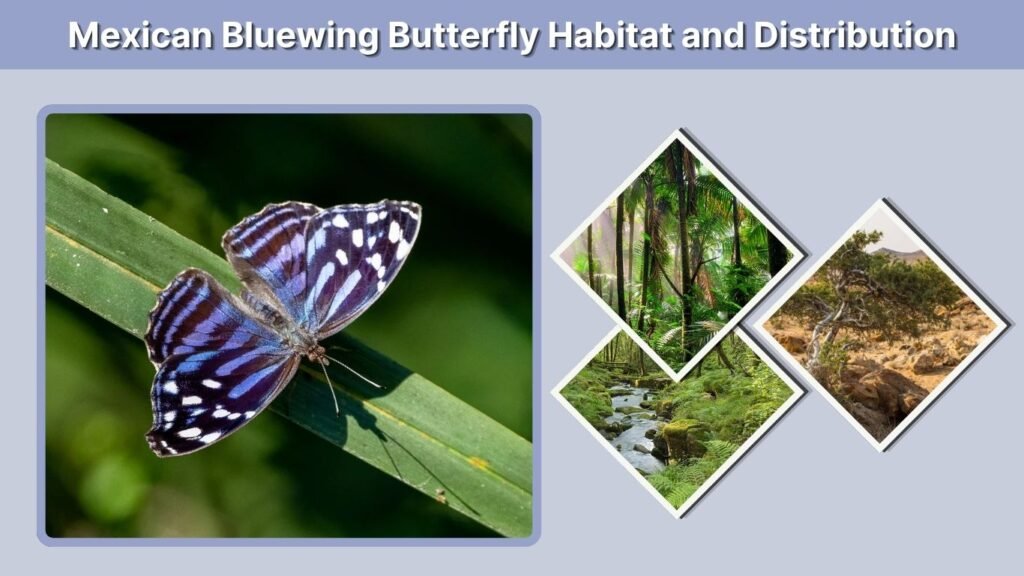
Mexican Bluewing butterflies inhabit warm tropical and subtropical regions where suitable vegetation and food sources are available. Their distribution is closely associated with forested environments and naturally sheltered areas.
Where Do Mexican Bluewing Butterflies Live?
Mexican Bluewings occur from Colombia northward through Central America into Mexico.
Their preferred habitats include:
- Tropical forests: Provide shaded resting places and suitable vegetation.
- Wooded stream valleys: Offer sheltered environments and favorable moisture conditions.
- Dry scrublands: Support butterflies where scattered trees and host plants remain.
- Forest edges: Provide access to sunlight, food sources, and protective vegetation.
The species occasionally appears in the Lower Rio Grande Valley of southern Texas, particularly in areas containing suitable woodland and brushland habitats.
When Are Mexican Bluewing Butterflies Active?
Mexican Bluewing butterflies can remain active throughout much of the year in warm tropical environments.
In southern Texas, several generations may occur annually when environmental conditions are favorable.
Adults are commonly observed resting on tree trunks, exploring wooded habitats, or visiting fallen fruit.
Their activity depends on local temperature, rainfall, seasonal vegetation, and food availability.
What Do Mexican Bluewing Butterflies Eat?
Mexican Bluewing butterflies have different dietary requirements during their adult and caterpillar stages. Their unusual feeding behavior distinguishes them from many other colorful butterfly species.
Adult Mexican Bluewing Butterfly Diet
Adult Mexican Bluewings primarily feed on rotting fruit rather than relying heavily on flower nectar.
As fruit decomposes, it releases sugary liquids and other dissolved nutrients that butterflies can absorb through their proboscises.
Fermenting and fallen fruits provide accessible food sources in their natural habitats.
This feeding preference helps explain why Mexican Bluewings may be observed near fallen fruit or decaying organic material in tropical forests.
Mexican Bluewing Butterfly Caterpillar Host Plants
Mexican Bluewing caterpillars primarily feed on plants from the spurge family, Euphorbiaceae.
Documented host plants include species belonging to the genus Dalechampia. Host records also include Adelia.
These plants provide foliage for developing caterpillars, allowing them to obtain the nutrients required for growth.
Female butterflies must locate appropriate host plants for egg-laying because young caterpillars cannot survive without suitable food.
Mexican Bluewing Butterfly Life Cycle
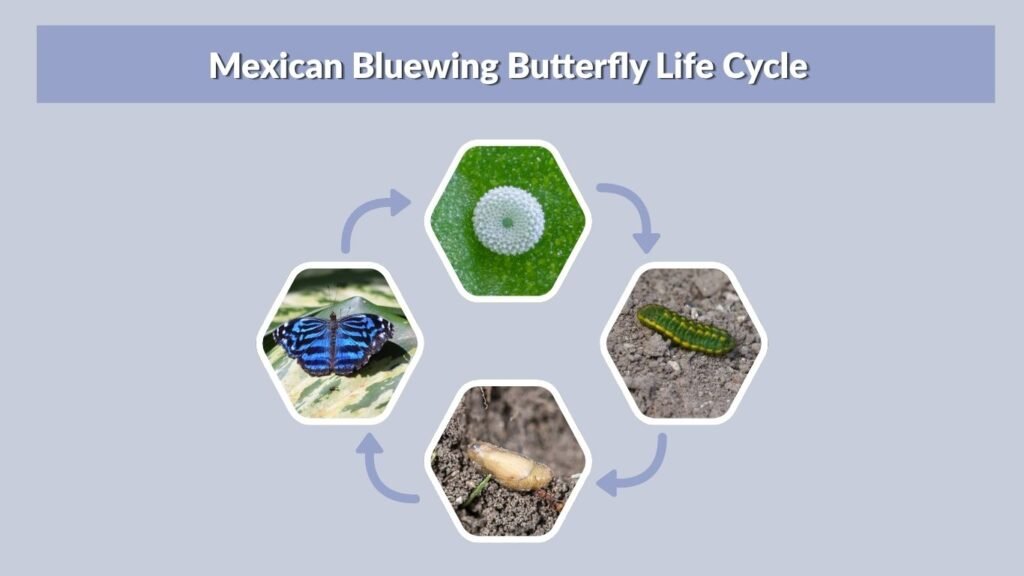
The Mexican Bluewing butterfly undergoes complete metamorphosis, passing through four developmental stages: egg, caterpillar, chrysalis, and adult butterfly.
Each stage has a different appearance and plays an essential role in the butterfly’s development.
1. Egg Stage
The life cycle begins when a female Mexican Bluewing lays eggs on suitable host plant vegetation.
The developing embryo remains protected inside the egg until it is ready to hatch.
Environmental conditions, particularly temperature and humidity, influence the rate of development.
After hatching, the young caterpillar begins feeding on its host plant.
2. Mexican Bluewing Caterpillar Stage
Mexican Bluewing caterpillars feed on suitable host plant leaves while growing through successive developmental stages.
One fascinating behavior involves constructing a small resting perch along a leaf vein.
Young caterpillars attach tiny fecal pellets and silk to the vein, creating a structure used for resting.
This unusual behavior is an important characteristic of the species’ early development.
As the caterpillars grow, they periodically shed their outer skin to accommodate their increasing body size.
3. Chrysalis Stage
After completing larval development, the Mexican Bluewing caterpillar enters the pupal stage.
During this stage, it transforms into a chrysalis, where significant internal changes take place.
Adult wings, legs, and other structures develop within the protective pupal covering.
The length of this stage depends on environmental conditions, including temperature.
4. Adult Butterfly Stage
The adult butterfly eventually emerges from its chrysalis and expands its wings before flying.
Once its wings have hardened, it begins searching for food and suitable mates.
Adult Mexican Bluewings spend much of their time moving through wooded habitats, feeding on decaying fruit, and resting on tree trunks.
Successful mating and egg-laying begin another generation.
Mexican Bluewing Butterfly Behavior and Adaptations
Mexican Bluewings exhibit several interesting behaviors that help them survive in tropical environments.
Their most distinctive adaptation is the dramatic difference between their upper and lower wing surfaces.
When their wings are open, brilliant blue bands become visible against the dark background.
However, when they close their wings while resting on tree trunks, their brown undersides resemble bark.
This camouflage can make them difficult for predators to detect.
Their ability to exploit rotting fruit also provides access to food sources different from those used by nectar-feeding butterflies.
Mexican Bluewing vs. Similar Blue Butterflies
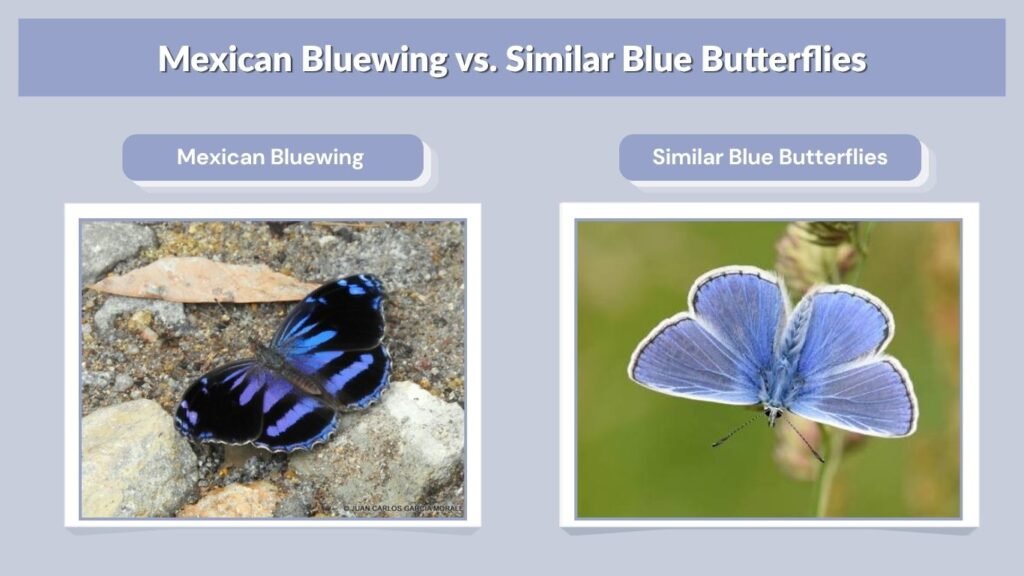
The Mexican Bluewing can resemble other tropical blue butterflies, particularly members of the genus Myscelia.
| Butterfly | Distinguishing characteristics |
| Mexican Bluewing | Black wings with vivid blue bands and white forewing spots |
| Blue Wave | Blue and pale bands with a different arrangement of wing markings |
| Blackened Bluewing | Generally darker forewing tips and broader blue hindwing bands |
| Blue Morpho | Broad areas of brilliant blue coloration and a different underside pattern |
Wing patterns, white spotting, size, and geographic location are useful characteristics for accurate identification.
Mexican Bluewing Butterfly Predators and Conservation
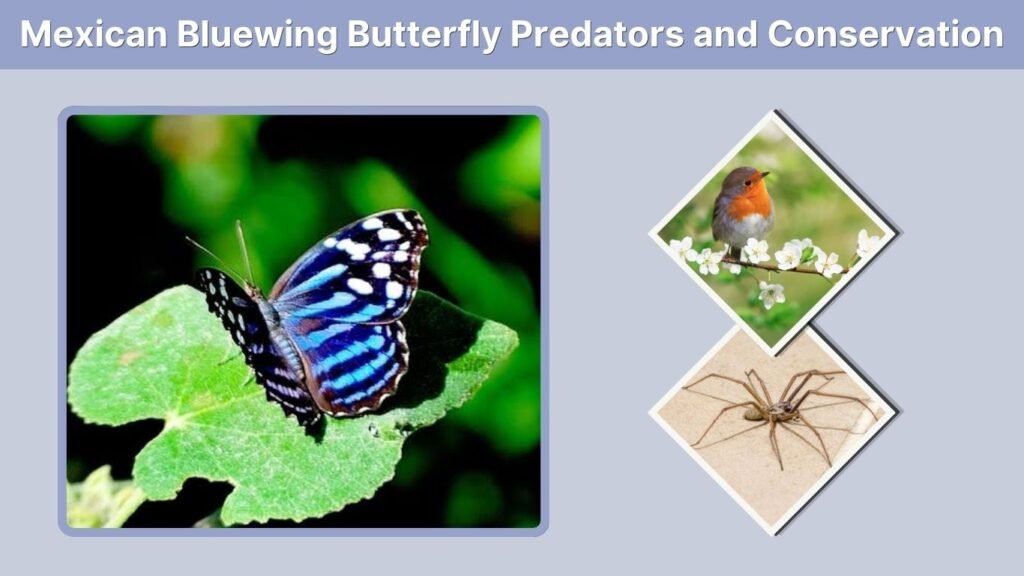
Mexican Bluewing butterflies may be hunted by insect-eating birds, spiders, and other natural predators.
Their bark-like wing undersides provide an important defensive adaptation while resting.
Although the species is considered apparently secure globally, populations near the northern edge of its range may be less common.
In southern Texas, habitat protection is particularly important.
Conserving Tamaulipan brushland, wooded stream corridors, and native host plants can support Mexican Bluewing populations and other tropical butterfly species.
FAQs
1. Are Mexican Bluewing Butterflies Rare?
Mexican Bluewings occur naturally across Mexico, Central America, and parts of northern South America. However, they are uncommon and localized in the United States, where they mainly appear in southern Texas.
2. What Does a Mexican Bluewing Caterpillar Eat?
Mexican Bluewing caterpillars feed on host plants in the Euphorbiaceae family, particularly Dalechampia species. Adelia is also recorded among their host plant genera.
3. How Big Is a Mexican Bluewing Butterfly?
Adult Mexican Bluewings typically have a wingspan of approximately 2.5–3 inches (6.4–7.6 cm), making them medium-sized butterflies.
4. Are Mexican Bluewing Butterflies Dangerous?
No. Mexican Bluewing butterflies are harmless to humans. They do not sting, and adults primarily obtain their food from rotting fruit.
5. What Makes the Mexican Bluewing Butterfly Unique?
The Mexican Bluewing is distinctive for its iridescent blue and black wings, white forewing markings, bark-like camouflage, unusual caterpillar resting structures, and preference for feeding on rotting fruit.