
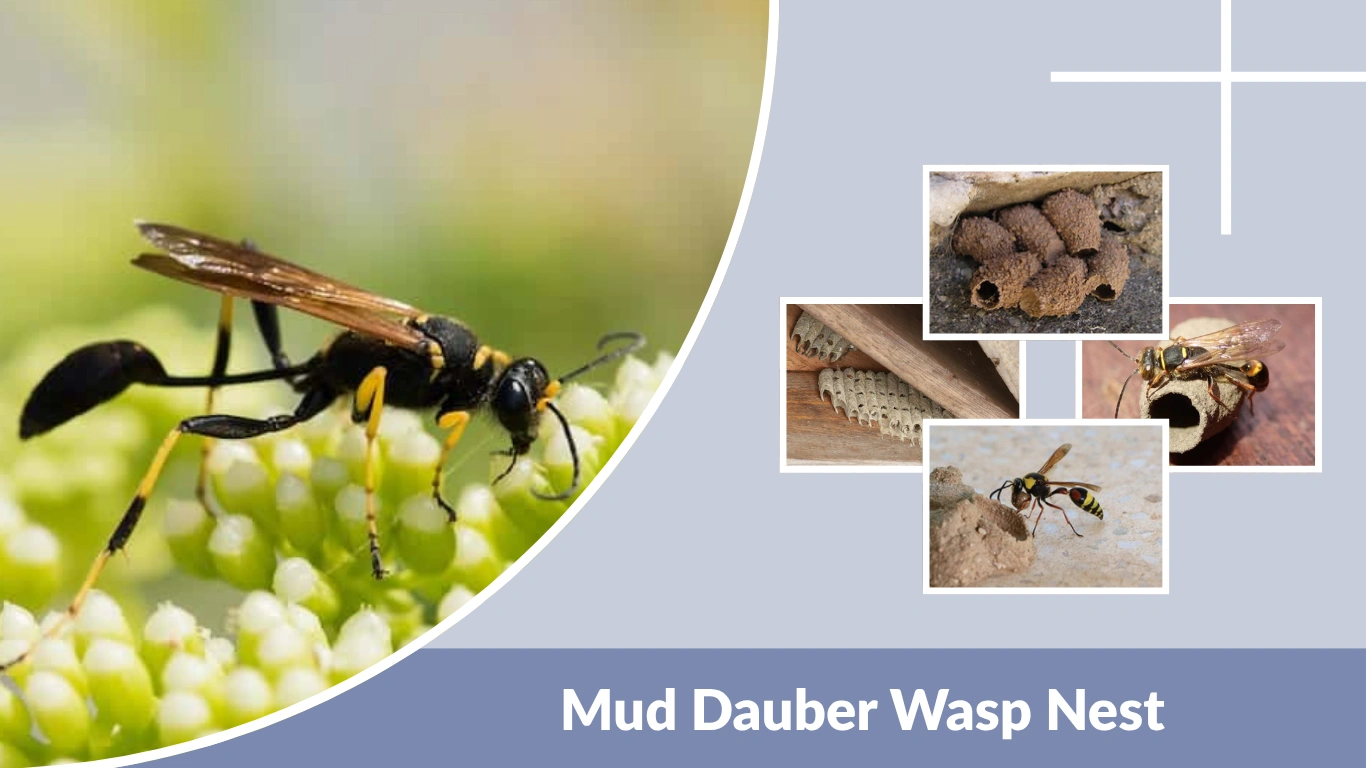
Mud dauber wasps are known for their unique craftsmanship — building intricate clay nests that serve as both nursery and protection for their young. Unlike aggressive social wasps, mud daubers are solitary, quiet, and beneficial to the environment. Understanding their nests helps identify them correctly, differentiate them from other wasps, and learn safe ways to manage or remove them when necessary.
Identification

What Is a Mud Dauber Wasp Nest?
A mud dauber nest is made from small pellets of mud or clay carefully molded by the female wasp. These nests typically appear as tubes, lumps, or clusters on walls, ceilings, or sheltered outdoor spaces. Each nest may contain several chambers, with each chamber serving as a nursery for a single egg.
Inside these chambers, the mother wasp places paralyzed spiders — food for the developing larvae. Once an egg is laid on the spider, she seals the cell with mud and begins the next one. Over time, the entire structure hardens into a durable shell that can last for months.
Common Locations
Mud dauber wasp nests are often found:
- Under eaves, porches, or barn ceilings
- Inside attics, garages, or tool sheds
- Around window frames or door corners
- On pipes, beams, or soffits
They prefer quiet, sheltered, and dry spots that offer safety from rain and wind — ideal environments for egg development.
Types of Mud Dauber Wasps and Their Nests
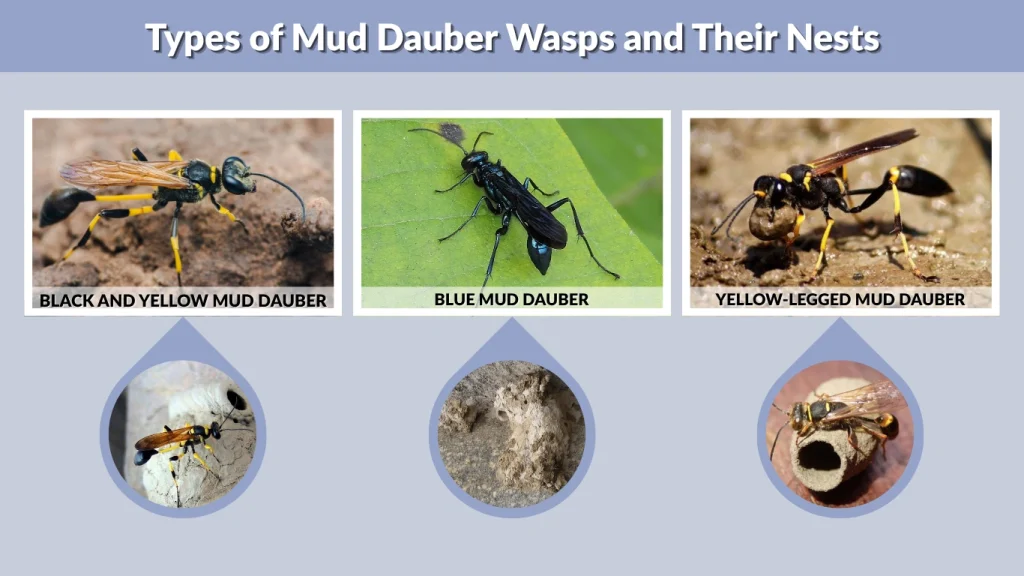
Black and Yellow Mud Dauber (Sceliphron caementarium)
This species creates long, smooth tubes of dried mud. Each tube holds several chambers lined neatly together. Their nests often resemble organ pipes or a stack of small cigars.
Blue Mud Dauber (Chalybion californicum)
Known for its metallic blue body, this wasp often reuses abandoned nests built by other species. It remodels existing cells and adds new ones, saving time and energy.
Yellow-Legged Mud Dauber
This species constructs rough, globular nests with irregular textures. They often build under decks or wooden beams, sometimes hidden within crevices.
Nest color varies depending on the soil used — from light brown to dark gray — making it an accurate reflection of the local environment.
Mud Dauber Nest vs Other Wasp Nests

It’s easy to confuse mud dauber nests with those of paper wasps or hornets, but several key differences make identification simple.
| Feature | Mud Dauber Nest | Paper Wasp Nest | Hornet Nest |
| Material | Mud or clay | Paper-like pulp | Paper pulp layers |
| Shape | Tubular or lumpy cells | Open combs | Enclosed, round ball |
| Colony Type | Solitary | Social colonies | Large colonies |
| Aggression | Non-aggressive | Defensive | Highly aggressive |
Mud daubers work alone, while paper wasps and hornets live in colonies. Because mud daubers are solitary, their nests are smaller, denser, and located in more secluded areas.
Life Cycle and Nest Building
Nest Construction
A female mud dauber begins her work by collecting wet mud from puddles or streams. She carries small pellets back to the nesting site and carefully molds them with her mandibles into small chambers. Each chamber takes several trips and hours to complete.
After building a chamber, she hunts for spiders — her larvae’s only food source. Using her sting, she paralyzes the spider but doesn’t kill it, keeping it fresh for her offspring. Inside the mud cell, she places several spiders, lays one egg, and seals the chamber.
Inside the Nest
Once the larvae hatch, they feed on the immobilized spiders until they grow large enough to pupate. The pupa remains sealed in the chamber, protected by layers of dried mud. After maturing, the adult wasp chews a small round hole in the nest to emerge. These holes are clear signs of a vacated nest.
Are Mud Dauber Wasps Dangerous?

Despite their intimidating size and name, mud daubers are non-aggressive and rarely sting. They do not defend their nests like hornets or yellowjackets. Their main focus is nest-building and hunting spiders, making them beneficial for natural pest control.
However, when numerous nests accumulate around homes or in attics, they can create unsightly dirt marks, attract other insects, or block vents. In such cases, careful removal or prevention is necessary.
Mud Dauber Nest Removal and Prevention

Safe Removal Steps
If mud daubers have built nests around your home, removal should be done carefully and calmly. While these wasps are not aggressive, sudden movements can provoke defensive behavior. The best approach is to remove nests at night or early morning when the wasps are least active.
Steps to remove a mud dauber nest:
- Wear protective clothing — long sleeves, gloves, and eyewear.
- Check for activity — ensure no adult wasps are entering or leaving the nest.
- Gently scrape the nest off using a putty knife or flat tool.
- Dispose of the nest in a sealed bag to prevent reuse by other insects.
- Clean the area with mild soap and warm water to remove scent residues.
- Inspect nearby areas — other nests may be hidden under eaves or beams.
For larger infestations or hard-to-reach nests (like in attics or vents), it’s best to call a licensed pest-control professional to ensure complete and safe removal.
Prevention Tips
Preventing mud daubers from building new nests involves reducing their access to building materials and nesting sites.
Practical prevention methods include:
- Seal small openings: Close cracks, vents, and soffits where wasps might enter.
- Eliminate standing water: Reduce sources of mud by keeping outdoor areas dry.
- Paint or seal rough surfaces: Smooth finishes make it harder for wasps to attach mud.
- Reduce insects and spiders: Since spiders attract mud daubers, control their populations near your home.
- Use natural deterrents: Peppermint oil or vinegar sprays can discourage nesting in vulnerable areas.
Regular maintenance and cleaning are the best defenses. Once the wasps find no suitable surfaces or mud nearby, they typically move on.
Ecological Importance
While some homeowners consider mud daubers pests, these wasps are actually beneficial insects. They help keep spider populations under control, including dangerous species like black widows. Each mud dauber nest can contain dozens of paralyzed spiders, meaning one female can significantly reduce pest numbers around a home or garden.
Mud daubers also play a role in the pollination process. Though they’re not as efficient as bees, they occasionally transfer pollen while hunting or drinking nectar from flowers. Their presence supports biodiversity and helps maintain ecological balance.
Destroying every nest isn’t always necessary; simply removing those built in inconvenient locations often suffices.
Mud Dauber Nest Facts
- Mud daubers do not live communally — each female works alone.
- Their nests are usually small (2–4 inches) and made up of several sealed chambers.
- The blue mud dauber often reuses old nests, saving time and effort.
- A single nest may hold 15–25 spiders as food for larvae.
- Old, vacated nests have tiny circular holes, evidence that adult wasps have already emerged.
These facts show how remarkably efficient these solitary insects are, performing architectural feats with nothing but mud and instinct.
FAQs
What does a mud dauber wasp nest look like?
It looks like a collection of hardened mud tubes or small lumps. Each tube contains one wasp egg and several paralyzed spiders. Nest color varies based on local soil — from light tan to dark gray.
How many wasps live in a mud dauber nest?
Usually just one female builds and maintains a nest. Each cell inside contains one developing wasp larva, so multiple adults may emerge later, but they don’t live together.
Do mud daubers reuse old nests?
Some species, especially blue mud daubers, reuse or repair old nests. Others abandon them once the young emerge, allowing new wasps or insects to occupy them.
How do I get rid of mud dauber wasp nests safely?
Remove nests at night when wasps are inactive. Scrape the nest gently, clean the area, and seal openings to prevent rebuilding. For large infestations, call pest control.
Are mud dauber wasps aggressive?
No. Mud daubers are solitary and non-aggressive. They rarely sting humans and prefer to avoid confrontation. In fact, they’re considered beneficial because they help control spider populations naturally.
