

Many people are shocked to hear that a wasp dies inside every fig — but the truth is more fascinating than frightening. The relationship between figs and wasps is one of the most remarkable examples of natural cooperation. This tiny insect and the sweet fruit have evolved together for millions of years, forming a cycle of life, death, and renewal that benefits both species.
Identification

Fig Fruit
A fig isn’t a typical fruit but an inverted flower cluster known as a syconium. Instead of having petals exposed to air, its flowers bloom internally. The outer skin protects hundreds of tiny blossoms that later develop into seeds. Unlike most plants, figs can’t rely on wind or bees for pollination — they depend entirely on wasps.
Fig Wasp
The fig wasp, from the Agaonidae family, is small — often no larger than a sesame seed. Each fig species typically has its own wasp species. Female wasps carry pollen from one fig to another, while males spend their entire lives inside the fruit, mating and digging tunnels for females before dying.
Why Do Wasps Enter Figs?
When a fig fruit matures, it releases a distinct fragrance that attracts its matching wasp species. The female wasp, carrying pollen from another fig, squeezes through a narrow passage at the top of the fig called the ostiole. During entry, she often loses her wings and antennae — a one-way trip.
Once inside, she lays her eggs in some flowers and spreads pollen to others. The fertilized flowers develop seeds, while those with eggs become nurseries for larvae. This process is the essence of mutualism — a partnership where both species benefit. The fig gets pollinated, and the wasp ensures her offspring have food and shelter.
Why Do Wasps Die Inside Figs?
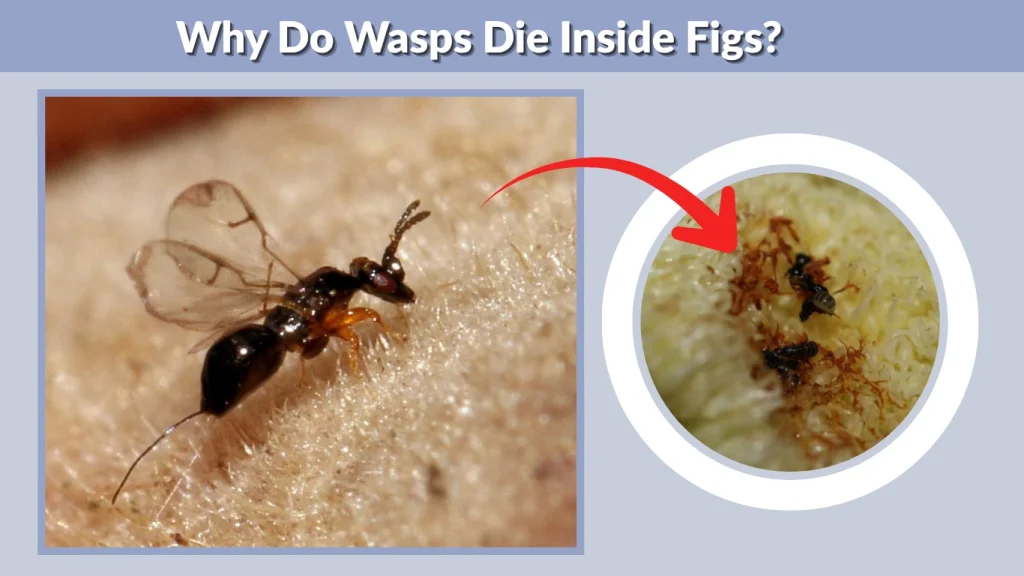
After laying her eggs and pollinating the flowers, the female wasp’s purpose is fulfilled. Wingless and trapped, she soon dies within the fig. Her death might seem tragic, but it’s a vital part of nature’s design. As the fig matures, it produces an enzyme called ficin, which gently breaks down her body, transforming it into nutrients that help the fruit ripen.
This natural process ensures no trace of the wasp remains — not her wings, body, or legs. What’s left behind is purely plant tissue, safe and entirely edible. It’s a perfect example of nature’s efficiency, where nothing is wasted.
Do Wasps Die in Every Fig?
Not all figs contain a wasp. In wild fig species, wasps are essential for pollination, and yes — the female dies inside after completing her role. But in cultivated figs, like the common Ficus carica sold in grocery stores, pollination isn’t necessary. These fruits develop through parthenocarpy, a process where the fig grows without fertilization or insect involvement.
As a result, the figs we eat today are completely wasp-free — no pollination, no insects, just naturally formed fruit.
The Fig–Wasp Relationship: Life, Death, and Renewal
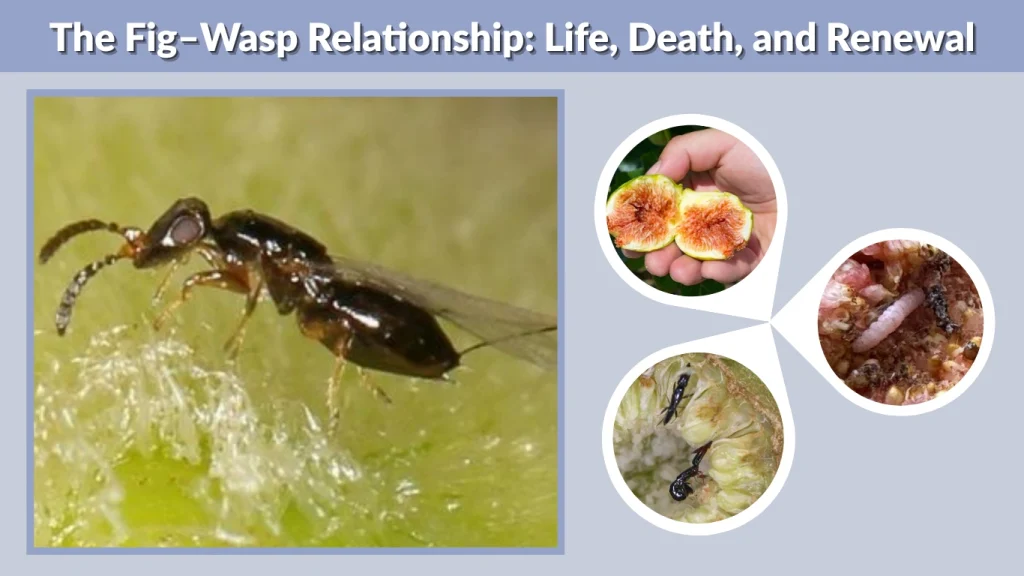
The death of the fig wasp is not an accident but a necessary step in a mutualistic partnership that ensures the continuation of both species. As the female wasp dies inside the fig, her offspring mature safely within the flower chambers. Male larvae emerge first, mate with females while still inside, and then dig exit tunnels. After this, they die within the same fig that gave them life.
The newly fertilized female wasps collect pollen from the fig’s internal flowers before flying off to find a new, receptive fig — continuing the life cycle. This repeating pattern of birth, death, and renewal demonstrates nature’s perfect balance between sacrifice and survival.
Ecological Importance
Figs are often called keystone species, meaning that countless animals depend on them for food. Because fig trees can produce fruit year-round, they sustain wildlife during seasons when other fruits are unavailable. Birds, bats, monkeys, and insects all rely on figs, indirectly depending on fig wasps as well.
Without wasps to pollinate wild figs, many fig species would vanish, and the ecosystem would lose a critical food source. Thus, the death of a tiny wasp supports not just the fig tree but entire tropical forests — a reminder that even small life forms play powerful ecological roles.
Do Wasps Die to Make Figs We Eat?

This question is common, and the answer depends on the type of fig. Commercial figs, like Kadota and Black Mission, do not require wasps. These varieties grow through parthenocarpy, a process where fruit forms naturally without pollination. The enzyme ficin still exists in these figs, but it’s used for ripening — not for digesting insects.
In contrast, wild figs depend entirely on wasps. Without them, no pollination would occur, and no fruit would form. So yes — in nature, wasps die in figs, but not in the ones we commonly eat.
Myths and Misconceptions
It’s easy to imagine figs filled with wasps, but this idea is misleading. The truth is:
- The wasp’s body dissolves completely through enzymatic breakdown.
- There’s no visible insect part inside ripe figs.
- The final fruit is 100% plant material, safe and natural.
What’s remarkable is not that a wasp dies, but that her death nourishes new life — a cycle that sustains ecosystems quietly and beautifully.
FAQs
Do wasps really die in figs?
Yes, in wild figs. The female wasp dies inside after pollination, but her body is broken down by enzymes, leaving no trace. In cultivated figs, no wasps are involved at all.
Does every fig have a dead wasp?
No. Only wild figs that require pollination contain wasps. Commercial figs like Kadota or Mission grow without any insect assistance.
Why do wasps die in figs?
The female loses her wings while entering the fig, trapping herself inside. After laying eggs and pollinating, she dies naturally — an essential step in the plant’s life cycle.
Do wasps have to die to make figs?
Only for wild figs. The wasp’s death is part of their mutual relationship. For cultivated figs, fruit develops without pollination, meaning no wasp needs to die.
Are there wasps in the figs we eat?
No. Store-bought figs are grown from self-pollinating varieties that never contain wasps. Even in wild figs, enzymes completely dissolve the insect, leaving the fruit pure and edible.
