

Sand flies may be tiny, but their bites on humans can leave behind intense itching, swelling, and even long-lasting sores. Unlike mosquitoes, sand flies are active mostly during the evening and night, making them a hidden threat for campers, beachgoers, and travelers. These bites can be especially troublesome in warm regions such as Florida, Mexico, and Punta Cana, where sand fly populations are high. Understanding what sand fly bites look like, how to treat them, and when they can be dangerous is crucial for protecting yourself.
What Are Sand Flies?

Overview of Sand Flies
Sand flies are small biting insects that belong to the Psychodidae family. They measure about 2–3 mm in size, making them almost invisible when they land on the skin. Despite their tiny size, their bites cause disproportionate irritation. While some people mistake them for gnats or midges, sand flies are unique in their hairy bodies, delicate wings, and nocturnal activity.
Sand Flies vs Sand Fleas
A common confusion is between sand flies and sand fleas. Many search for sand flies vs sand fleas bites because both cause itchy welts:
- Sand fly bites usually appear as small, red bumps that may blister or ulcerate.
- Sand flea bites often appear in clusters around the ankles or feet and sometimes burrow under the skin.
Knowing the difference is important, since sand fly bites can carry diseases, while sand fleas are more of a skin nuisance.
Sand Fly Bites on Humans – What Do They Look Like?

Sand fly bites can look similar to mosquito bites but are often more painful and last longer.
Early Symptoms
- A sharp, stinging pain during the bite.
- Small red bumps on exposed areas, especially ankles and legs (sand fly bites on feet are very common).
- Localized swelling within minutes of being bitten.
Delayed Reactions
Unlike mosquito bites that itch right away, sand fly bites often cause delayed reactions. Hours after the bite, swelling increases, itching intensifies, and the skin may become warm to the touch. In sensitive individuals, blisters or open sores may develop. This explains why many people search for sand fly bites delayed reaction.
Pictures for Identification
If you’ve wondered what do sand fly bites look like?, they usually appear as raised, red bumps or welts, sometimes with a blistered center. Many guides online share sand fly bites on humans pictures and sand flea bites pictures to help people distinguish between them. Unlike bed bug bites that occur in straight lines, sand fly bites are usually random and concentrated on uncovered skin.
Common Areas Where Sand Fly Bites Occur
Sand flies are found across the globe, but bites are especially common in coastal and tropical regions.
Sand Fly Bites in Florida
In Florida, sand flies—locally called “no-see-ums”—are a well-known nuisance. They thrive in marshes, mangroves, and coastal beaches. Residents often complain that bites appear after evening walks, with most cases affecting ankles, arms, and the back of the neck.
Sand Fly Bites in Mexico and Punta Cana
Tourists in Mexico and Punta Cana frequently experience sand fly bites while on vacation. Resorts near the beach are prime areas where sand flies bite at dusk. These bites can ruin beach trips, leading travelers to search for sand fly bites cure or sand fly bites how to treat during their stay.
Sand Fly Bites in Australia
Sand flies are also a year-round issue in Australia, particularly along the northern coasts. The hot, humid climate provides ideal breeding grounds. Locals report that sand fly bites on humans often become more severe with repeated exposure, as the body develops allergic reactions.
Do Sand Fly Bites Hurt or Itch?

Painful Symptoms
Unlike mosquitoes, sand flies use scissor-like mouthparts to cut the skin before feeding. This makes the initial bite painful, often described as a sharp prick or sting. Many people ask do sand fly bites hurt?—and the answer is yes, often more than mosquito bites.
Itching and Irritation
Hours after being bitten, the irritation intensifies. These sand bug bites may itch so severely that scratching is hard to resist. Unfortunately, scratching increases the chance of sand fly bites spreading into larger sores or leading to infections. This is why sand fly bites itch is one of the most searched terms by people suffering from them.
Health Risks and Diseases from Sand Fly Bites
Transmission of Leishmaniasis
The most serious risk from sand fly bites is Leishmaniasis, a parasitic disease transmitted in tropical and subtropical regions. Symptoms can range from skin ulcers to serious organ damage in advanced cases. Areas like Mexico, Central America, and parts of the Middle East have reported high numbers of Leishmaniasis cases.
Other Health Concerns
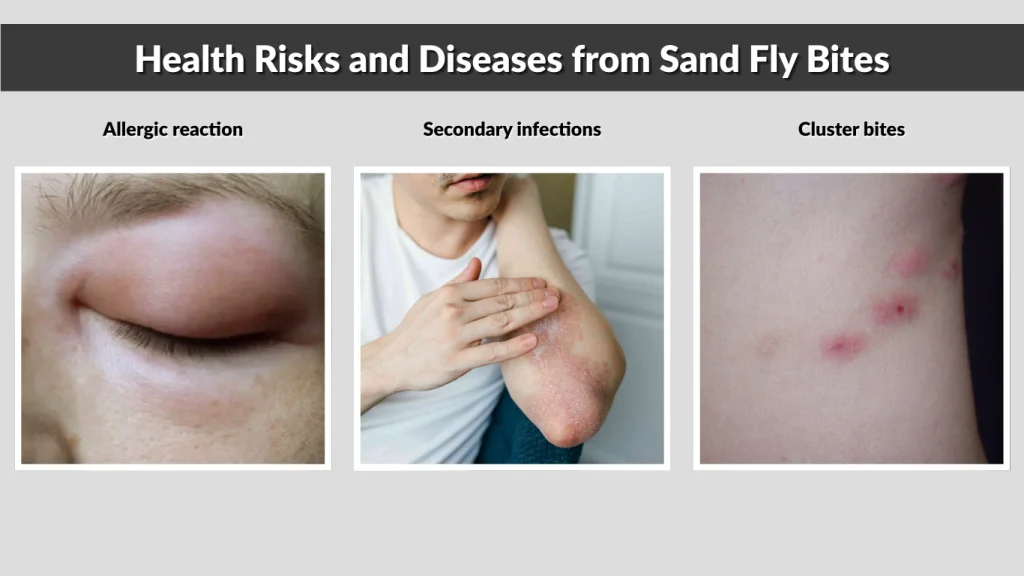
- Allergic reactions: swelling of the eyes, lips, or throat.
- Secondary infections: caused by scratching the bites excessively.
- Cluster bites: sometimes mistaken for bed bug sand fly bites because of their appearance.
Even in non-disease regions like Florida, the itching and irritation make sand fly bites a common medical complaint.
Sand Fly Bites Treatment and Cure

While sand fly bites are irritating, most heal on their own in about a week. Still, proper treatment can greatly reduce itching, swelling, and the risk of infection.
Immediate First Aid
If you’ve just been bitten by a sand fly, follow these steps:
- Wash the area with mild soap and cool water to remove saliva and bacteria.
- Apply an ice pack wrapped in cloth to reduce swelling and numb pain.
- Avoid scratching, since this can lead to sand fly bites spreading and worsening.
- If available, use antiseptic wipes to keep the bite clean.
Medical Treatment
For more serious cases of sand fly bites on humans treatment, over-the-counter and prescription options may help:
- Antihistamines (oral tablets) reduce itching and allergic reactions.
- Hydrocortisone cream eases redness and inflammation.
- Antibiotics may be prescribed if secondary infection occurs.
- Seek a doctor immediately if you experience fever, enlarged sores, or signs of Leishmaniasis.
Home Remedies (Sand Fly Bites Cure)
Many natural remedies provide relief without chemicals:
- Aloe vera gel: Cools the skin and reduces swelling.
- Honey: Has antibacterial properties to prevent infection.
- Apple cider vinegar: Neutralizes itching and disinfects skin.
- Tea tree or lavender oil: Natural antiseptics with anti-itch benefits.
These options are commonly searched as sand fly bites cure or how to treat sand fly bites at home.
How to Prevent Sand Fly Bites
Prevention is always easier than dealing with painful bites. Here’s how to protect yourself in high-risk areas:
Protective Clothing
- Wear long sleeves, pants, and socks, especially near beaches or marshes.
- Light-colored clothing helps reduce attraction.
- Use ankle bands or shoe coverings when walking near sand.
Insect Repellents
- DEET (20–30%): Proven to be effective.
- Picaridin: Safer alternative for sensitive skin.
- Natural oils: Citronella, eucalyptus, and neem oil provide short-term protection.
Avoid Peak Activity Times
- Sand flies are most active at dusk and dawn.
- Plan beach walks and outdoor activities during the day when bites are less likely.
These prevention tips are essential for travelers searching how to get rid of sand fly bites in Florida, Mexico, or Punta Cana.
Sand Fly Bites vs Other Insect Bites

Since sand fly bites resemble other insect bites, many people struggle with identification.
Sand Fly Bites vs Bed Bug Bites
- Sand fly bites: Randomly scattered, painful, often on ankles and legs.
- Bed bug bites: Usually in straight lines or clusters, appear overnight indoors.
This explains why searches like bed bug sand fly bites are so common.
Sand Fly Bites vs Mosquito Bites
- Mosquito bites: Itchy welts that usually heal quickly.
- Sand fly bites: Longer-lasting, often blistering or ulcerating.
Sand Fly Bites vs Sand Flea Bites
- Sand flies: Do not burrow under skin but cause surface welts and itching.
- Sand fleas: Sometimes embed under the skin (chigoe fleas) and cause clusters of bites.
This clarifies the sand flies vs sand fleas bites confusion.
FAQs
What do sand fly bites look like?
They appear as red, raised bumps that may blister or ulcerate. Sand fly bites on humans pictures often show clusters around ankles, legs, and arms.
Do sand fly bites itch or hurt more?
Both. The bite itself feels like a sharp sting (do sand fly bites hurt), followed by hours of intense itching (do sand fly bites itch).
How long do sand fly bites last?
Typically 3–7 days, but in sensitive people, bites may last up to 2 weeks. Delayed reactions can worsen symptoms.
Can sand fly bites spread diseases?
Yes. In tropical regions, sand flies transmit Leishmaniasis, a serious parasitic disease. In the U.S. and Europe, the risk is lower, but infections from scratching are common.
What is the best treatment for sand fly bites?
Immediate cleaning, applying cold compresses, and using anti-itch creams or antihistamines. For natural relief, aloe vera or honey works well.
