
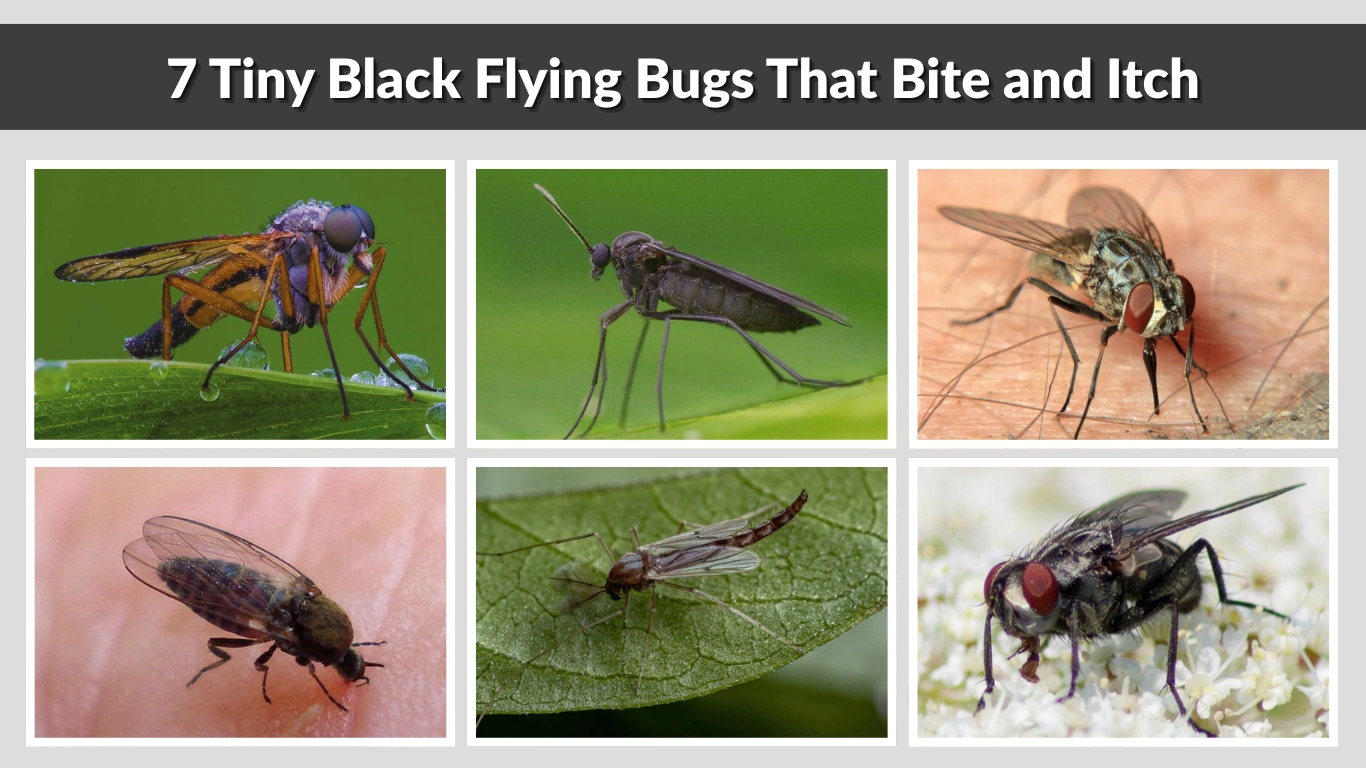
If you’ve ever been annoyed by tiny black flying bugs that bite and itch, you’re not alone. From black flies and deer flies to biting midges and sand flies, these pests can leave behind painful welts, redness, and swelling. Many people even wonder what are these tiny little black flying bugs that bite humans in the UK or outside near water? In this guide, we’ll explore 7 common biting black bugs, their habitats, behaviors, and the best treatment methods to relieve the irritation.
1. Black Fly (Buffalo Gnat)

Black flies are among the most common tiny black flying bugs that bite and itch, often mistaken for small gnats or midges. These insects are notorious for their painful bites and itchy welts, especially when they attack in swarms. Despite their small size—only about 1–5 mm long—they cause disproportionate discomfort to both humans and animals.
Identification
- Size: Very tiny, usually between 1–5 mm
- Color: Dark black or gray, with a humpbacked body shape
- Wings: Short and broad, held flat over the body when at rest
- Eyes: Large, shiny, and often iridescent under light
If you’re wondering what are these tiny black flying bugs that bite?—chances are, they’re black flies, especially if you notice the bites around your head, neck, and ears.
Habitat
Black flies thrive near fast-flowing rivers and streams, since their larvae cling to submerged vegetation. They are especially common in Michigan, Wisconsin, Ohio, Maine, and Canada, but also found in the UK, Ireland, and France. Sometimes, people even notice these tiny black flying bugs that bite in house, especially if they live close to wetlands or open their windows during peak season.
Behavior
Only female black flies bite. They use cutting mouthparts to slice the skin and lap up blood, which they need to lay eggs. Unlike mosquitoes, which leave small punctures, black flies create painful wounds that often bleed.
- Outdoor black fly activity: They are most aggressive in the morning and late afternoon, near rivers, lakes, and wooded areas.
- Indoor cases: Occasionally, black flies may wander indoors, leading people to search for solutions like tiny black flying bugs that bite in house treatment.
Risks to Humans
Black fly bites are not just itchy—they can cause significant swelling and irritation.
- Immediate effects: Sharp stinging pain, redness, and bleeding.
- Delayed reaction: Raised welts, severe itching, and sometimes headaches or fever.
- Severe cases: Allergic swelling of the eyes, lips, or face.
In rare situations, black flies can transmit parasites (such as Onchocerciasis in tropical regions), though in areas like the UK, Canada, and the U.S., they’re mainly a painful nuisance.
Treatment for Black Fly Bites
If you’re dealing with these tiny black flying bugs that bite and itch, immediate treatment is key:
- Wash the bite with soap and cold water to prevent infection.
- Apply a cold compress to reduce swelling.
- Use calamine lotion or hydrocortisone cream for itching.
- Take an antihistamine if the reaction is severe.
Some people also look up tiny black flying bugs that bite and itch pictures online to confirm whether the culprit is a black fly. If your bite looks like a small red dot with surrounding swelling, it’s likely from this insect.
2. Biting Midge (No-see-um)

Biting midges, often called no-see-ums, are infamous for being almost invisible yet delivering painful, itchy bites. Many people describe them as tiny little black flying bugs that bite humans because of their nearly microscopic size. Despite being only 1–3 mm long, they can cause serious irritation when they attack in swarms.
Identification
- Size: 1–3 mm, often hard to see with the naked eye
- Color: Dark gray to black
- Wings: Short, patterned wings covered with fine hairs
- Body: Compact, giving them a stubby appearance
If you’ve ever searched for tiny black flying bugs that bite and itch pictures, midges are often among the top culprits.
Habitat
Biting midges thrive in wet, marshy environments, especially around beaches, estuaries, and damp soil. They are common outdoors in the UK and coastal U.S. states, and people also report outdoor tiny black flying bugs that bite when camping or fishing near wetlands.
Behavior
- Blood feeding: Only females bite, needing blood to lay eggs.
- Activity time: They are most active at dawn and dusk.
- Indoors: While primarily outdoor pests, midges may enter homes, leading to complaints of tiny black flying bugs that bite in house.
- Swarming: Midges rarely bite alone—they attack in large numbers, making their presence especially irritating.
Risks to Humans
Midge bites cause intense itching, swelling, and sometimes blister-like reactions. Unlike mosquito bites, their welts can last longer. In some regions, midges also transmit animal diseases, but in humans, they are mainly a source of pain and discomfort.
Treatment for Midge Bites
If you’re wondering how to get rid of tiny black flying bugs that bite and itch, the first step is managing the bite:
- Clean the skin with soap and water.
- Apply a cold compress for swelling.
- Use anti-itch creams such as calamine or hydrocortisone.
- Take an antihistamine if the itching is severe.
3. Sand Fly

Sand flies are another type of tiny black flying bugs that bite you and cause long-lasting irritation. Although slightly larger than biting midges, they are still very small—around 2–3 mm—and often go unnoticed until after the bite.
Identification
- Size: 2–3 mm
- Color: Light brown to black, often hairy
- Wings: Held in a “V” shape at rest
- Key trait: Delicate, moth-like appearance
When people ask what are the tiny black flying bugs that bite and itch UK or abroad?, sand flies are often part of the answer in warmer regions.
Habitat
Sand flies thrive in warm, humid climates, especially in tropical and subtropical areas. They hide during the day in cracks, animal burrows, or under vegetation, emerging at night. Although rare indoors, some travelers report these tiny black flying bugs that bite in house in rural regions where infestations are heavy.
Behavior
- Biting: Females feed on blood, leaving painful welts.
- Timing: They are nocturnal, attacking mostly at night.
- Attraction: Drawn to body heat and carbon dioxide.
- Transmission: Known vectors of Leishmaniasis in certain regions.
Risks to Humans
Sand fly bites are extremely itchy and may develop into open sores if scratched. In regions where they carry parasites, these tiny black bugs that bite and itch pose a serious health risk. In non-disease areas, they remain a painful nuisance.
Treatment for Sand Fly Bites
To manage these bites effectively:
- Wash the area with cool water.
- Apply aloe vera gel or witch hazel to calm irritation.
- Use medicated anti-itch creams.
- Avoid scratching to prevent infection.
4. Stable Fly

Stable flies are sometimes mistaken for house flies, but unlike their harmless cousins, these are tiny black flying bugs that bite humans and animals. They use sharp, needle-like mouthparts to pierce the skin, causing painful bites that can itch for days.
Identification
- Size: 6–8 mm, similar to a house fly
- Color: Gray-black body with four dark stripes on the thorax
- Mouthparts: Prominent forward-pointing proboscis (used for biting)
- Key Feature: Unlike house flies, they bite and cause pain
When people search for tiny black flying bugs that bite and itch pictures, stable flies often come up because of their close resemblance to common house flies.
Habitat
Stable flies breed in decaying vegetation mixed with manure, hay, or seaweed. They are found in farms, stables, and coastal areas, but also near suburban homes. People often complain about tiny black flying bugs that bite in house when stable flies enter through open doors or windows.
Behavior
- Both males and females bite, unlike many other fly species.
- They usually target ankles, legs, or exposed lower body parts.
- They are most active during warm, sunny weather.
- Their persistence makes them difficult to swat away.
Risks to Humans
Stable fly bites are sharp and painful, often leaving raised welts. While they don’t usually spread diseases to humans, they cause extreme irritation. For livestock, however, they can lead to stress, weight loss, and reduced productivity.
Treatment for Stable Fly Bites
If you’re dealing with these tiny black bugs that bite and itch, here’s what to do:
- Wash the area with soap and cold water.
- Apply an ice pack to reduce pain.
- Use anti-itch creams like hydrocortisone.
- Take an antihistamine if swelling is severe.
5. Fungus Gnat (Biting Species)

Most fungus gnats are harmless plant pests, but some species are considered very tiny black flying bugs that bite humans indoors. They are commonly mistaken for fruit flies, but unlike fruit flies, these pests can bite and cause irritation.
Identification
- Size: 2–4 mm, much smaller than house flies
- Color: Black or dark brown slender body
- Wings: Transparent and delicate
- Key Feature: Often seen flying around potted plants and damp soil
Homeowners often confuse them with gnats or midges, leading to searches like small black flying bugs in house not fruit flies.
Habitat
Fungus gnats thrive in moist soil, especially in overwatered houseplants. While most species feed only on fungi and roots, biting species occasionally feed on humans, making them one of the tiny black flying bugs that bite in house.
Behavior
- Attracted to indoor lights, windows, and moisture.
- Active year-round indoors, especially in homes with many plants.
- Biting species target humans when other food sources are scarce.
- They are weak fliers, often hovering near plants or faces.
Risks to Humans
While not as aggressive as black flies or stable flies, fungus gnat bites can still cause itchy red spots. For sensitive individuals, the bites may lead to swelling or rash. Their indoor presence makes them especially annoying compared to outdoor-only species.
Treatment for Fungus Gnat Bites
To reduce itching and irritation:
- Wash with mild soap and cool water.
- Apply aloe vera or tea tree oil to calm skin.
- Use an anti-itch cream for relief.
- Reduce indoor breeding by drying out plant soil and using sticky traps.
6. Snipe Fly
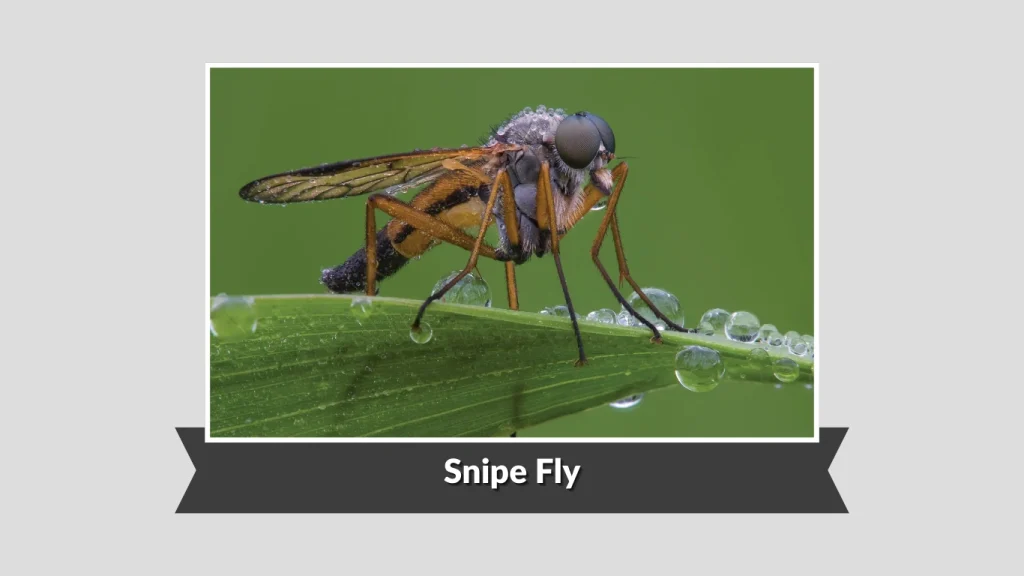
Snipe flies are less commonly discussed than mosquitoes or black flies, but they are another example of tiny black flying bugs that bite humans. While some species are larger, several small black species deliver sharp, painful bites that cause irritation.
Identification
- Size: 6–10 mm, though some small black species are tinier
- Color: Dark brown or black slender body
- Wings: Often patterned or smoky in appearance
- Eyes: Large, brightly colored and iridescent
When people search for tiny black flying bugs that bite and itch pictures, snipe fly bites often appear as small, red, swollen spots with a sharp pain on impact.
Habitat
Snipe flies live near wetlands, rivers, and damp woodlands. They are common in rural areas of North America and Europe, including parts of the UK and Ireland. Unlike fungus gnats, they rarely appear indoors, but they can cause trouble for people spending time outdoors near water.
Behavior
- Females feed on blood, while males consume nectar.
- They attack silently, often landing before you notice.
- They don’t chase as aggressively as deer flies or horse flies.
- They usually bite exposed arms and legs of humans.
Risks to Humans
Snipe fly bites are painful, often compared to a sharp sting. They cause redness, swelling, and itching that can last several days. Though not known for spreading diseases, they are included among tiny black bugs that bite and itch humans due to the irritation they cause.
Treatment for Snipe Fly Bites
If bitten by a snipe fly:
- Clean the bite area with cool water and soap.
- Apply an ice pack to reduce swelling.
- Use calamine lotion or aloe vera to ease itching.
- Take an oral antihistamine if you have a stronger reaction.
7. Deer Fly

Deer flies are small relatives of horse flies and are well known for their aggressive biting behavior. They are frequently described as tiny black flying bugs that bite outside, especially in wooded and marshy regions.
Identification
- Size: 5–12 mm (smaller than horse flies)
- Color: Often black or dark brown with yellow markings
- Eyes: Bright green or gold with horizontal stripes
- Wings: Clear or patterned with dark bands
When people ask what are these tiny little black flying bugs that bite humans? deer flies are often among the top answers, especially during the summer months.
Habitat
Deer flies thrive in wetlands, forests, and grassy fields. They are very common in the U.S., Canada, and parts of Europe, including the UK. They are outdoor pests and not typically found indoors, though people may mistake other gnats for tiny black flying bugs that bite in house.
Behavior
- Only females bite, requiring blood for egg production.
- They often attack in swarms, making them especially troublesome.
- They are daytime feeders, most active in hot, humid weather.
- Deer flies are persistent and can chase humans over long distances.
Risks to Humans
Deer fly bites are extremely painful and may cause swelling, itching, and even allergic reactions. In rare cases, they can spread diseases such as tularemia or parasitic infections. For most people, however, the biggest problem is the pain and irritation.
Treatment for Deer Fly Bites
To manage bites from these tiny black bugs that bite and itch:
- Wash with soap and cold water immediately.
- Apply a cold compress to ease pain.
- Use hydrocortisone cream or calamine lotion.
- Avoid scratching to prevent infection.
