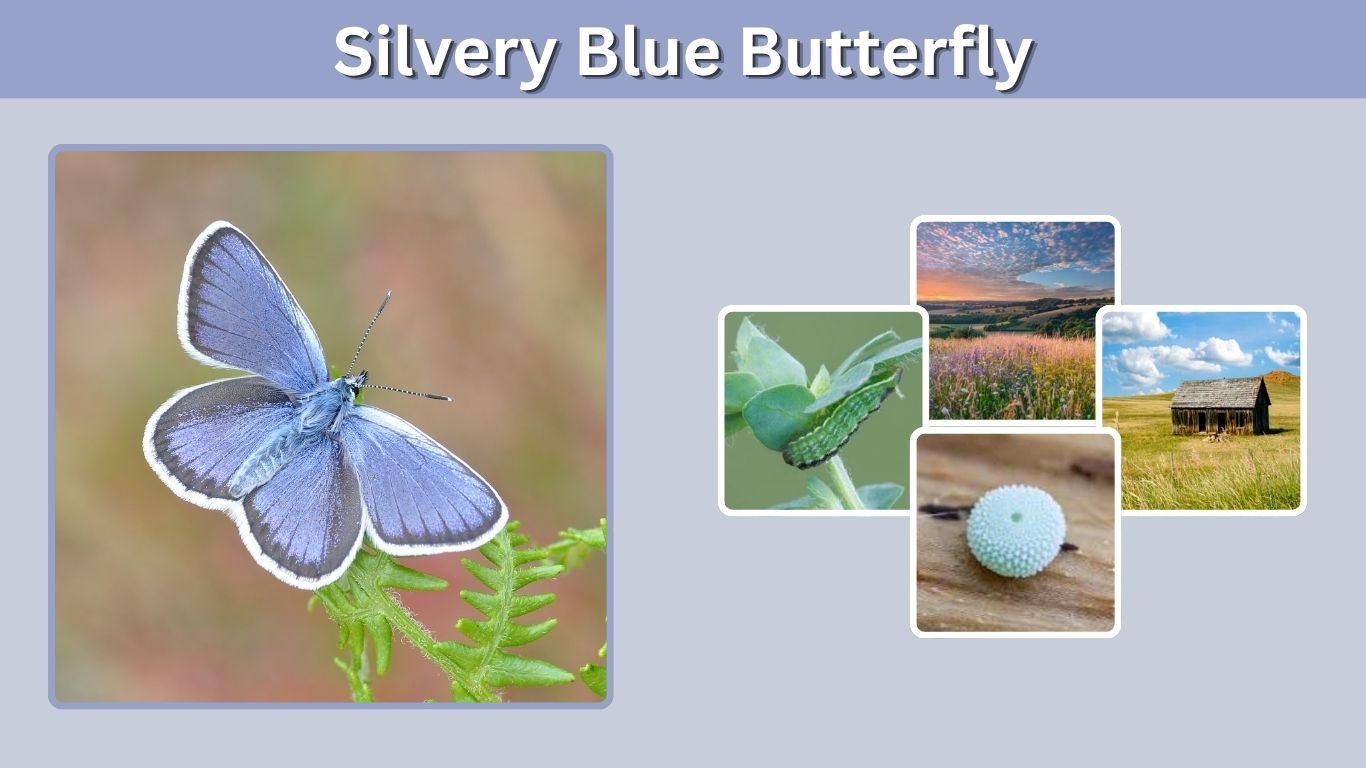
The Silvery Blue butterfly is a small, beautiful butterfly recognized for its shimmering blue wings and delicate appearance. Found across many parts of North America, this butterfly commonly inhabits meadows, grasslands, open woodlands, and coastal areas. Its distinctive silvery coloration and black-spotted wing undersides make it fascinating to observe in nature. Although relatively small, it plays an important ecological role by visiting flowers and supporting local food webs. Understanding the Silvery Blue butterfly’s identification, size, habitat, diet, caterpillar, and life cycle reveals what makes this species unique.
What Is a Silvery Blue Butterfly?
The Silvery Blue butterfly (Glaucopsyche lygdamus) belongs to the Lycaenidae family, commonly called the gossamer-winged butterflies. It is a North American species distinguished by its beautiful blue coloration and delicate wings.
The butterfly belongs to the subfamily Polyommatinae, which includes numerous small blue butterflies. Males generally display brighter silvery-blue wings, while females have darker blue coloration with wider borders.
Unlike many butterflies that produce several generations annually, Silvery Blues typically complete only one generation each year. Their emergence generally corresponds with the flowering periods of their caterpillar host plants.
Silvery Blue Butterfly Identification
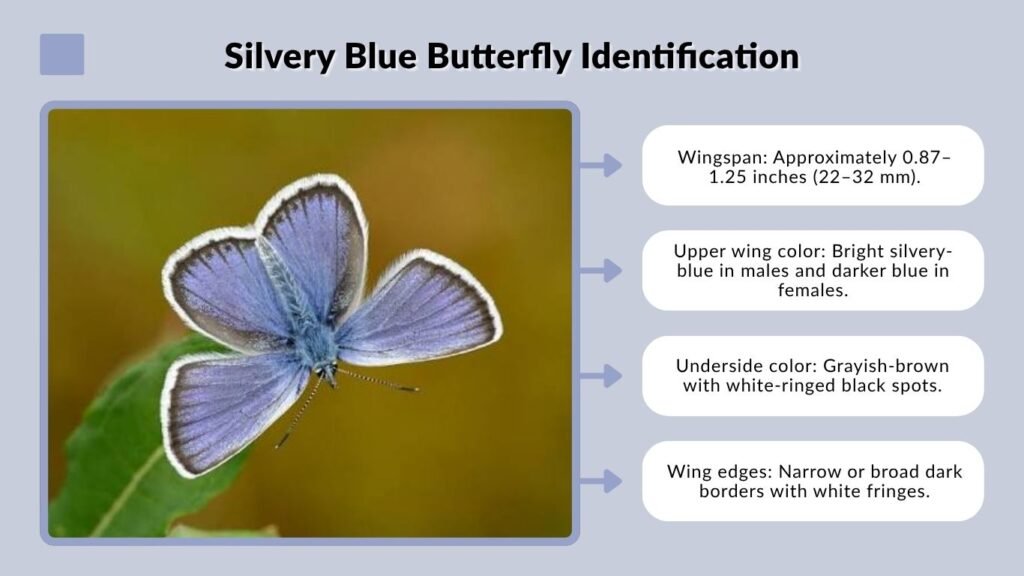
Identifying a Silvery Blue butterfly involves observing its wing colors, markings, body structure, and overall size. Although it resembles several other blue butterfly species, particular characteristics make identification easier.
Male and Female Appearance
Male Silvery Blue butterflies have brilliant, iridescent blue upper wings with narrow dark borders. Their wings often appear particularly bright in direct sunlight.
Females generally have duller blue upper wings with noticeably broader dark margins. Both sexes possess delicate white fringes along the wing edges.
The undersides of their wings are grayish-brown and feature a distinctive row of round black spots surrounded by white rings.
These markings are especially useful for distinguishing Silvery Blues from other small blue butterflies.
Silvery Blue Butterfly Size and Wingspan
The Silvery Blue is a relatively small butterfly, although its exact dimensions vary among individuals and populations.
- Wingspan: Approximately 0.87–1.25 inches (22–32 mm).
- Upper wing color: Bright silvery-blue in males and darker blue in females.
- Underside color: Grayish-brown with white-ringed black spots.
- Wing edges: Narrow or broad dark borders with white fringes.
- Hindwing tails: Absent.
Its small size allows it to move easily among grasses, wildflowers, and low-growing vegetation.
Silvery Blue Butterfly Habitat and Range
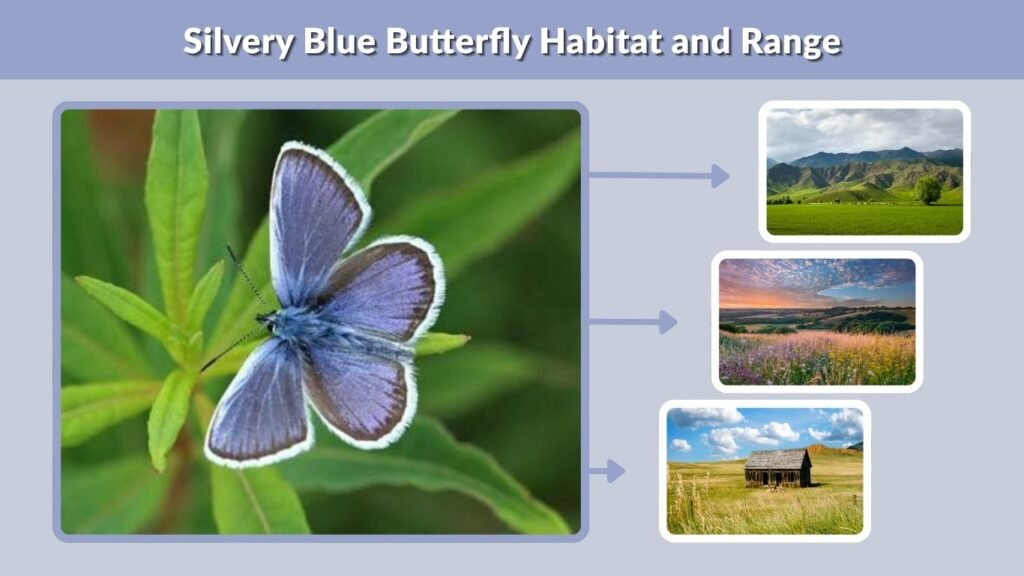
Silvery Blue butterflies occupy a wide variety of natural environments throughout North America. Their distribution depends largely on suitable climates and the presence of caterpillar host plants.
Where Do Silvery Blue Butterflies Live?
Silvery Blues inhabit open grasslands, meadows, coastal dunes, prairies, woodland clearings, and brushy fields.
They also occur along roadsides and in rocky, moist woodland environments where suitable vegetation grows.
Their range extends from Alaska across much of Canada and into numerous regions of the United States. Populations occur throughout much of western North America, with additional populations in northern and parts of eastern states.
Different geographical populations may prefer particular habitats depending on local vegetation and environmental conditions.
When Are Silvery Blue Butterflies Active?
Silvery Blue butterflies generally become active during spring and summer.
At lower elevations, adults commonly fly between March and June. In mountainous regions and higher elevations, their flight season often extends from June through August.
Most populations produce a single generation annually. Consequently, adults may only be noticeable for a relatively brief period each year.
Silvery Blue Butterfly Host Plants and Diet
Silvery Blue butterflies depend heavily on flowering plants throughout their development. Adult butterflies obtain energy from nectar, while caterpillars consume selected plant tissues.
Silvery Blue Butterfly Caterpillar Host Plants
Female Silvery Blue butterflies lay their eggs on plants belonging primarily to the pea family, Fabaceae.
Important host plants include:
- Lupines (Lupinus): Important hosts for many populations.
- Milkvetches (Astragalus): Support developing caterpillars in numerous habitats.
- Vetches (Vicia): Provide suitable flowers and developing seeds.
- Wild peas (Lathyrus): Serve as caterpillar food sources.
- Locoweeds (Oxytropis): Used by certain populations.
- Sweet clovers (Melilotus): Additional host plants in some regions.
Caterpillars consume flower buds, blossoms, seedpods, and young leaves. The specific host plants used vary with geographical location.
What Do Adult Silvery Blue Butterflies Eat?
Adult Silvery Blue butterflies primarily consume nectar from flowering plants.
They visit different wildflowers, including asters and other members of the Asteraceae family. These flowers provide carbohydrates needed for flight and reproduction.
Adults may also visit other locally available nectar-producing flowers.
Access to suitable nectar sources is especially important during their relatively short adult flight season.
Silvery Blue Butterfly Life Cycle
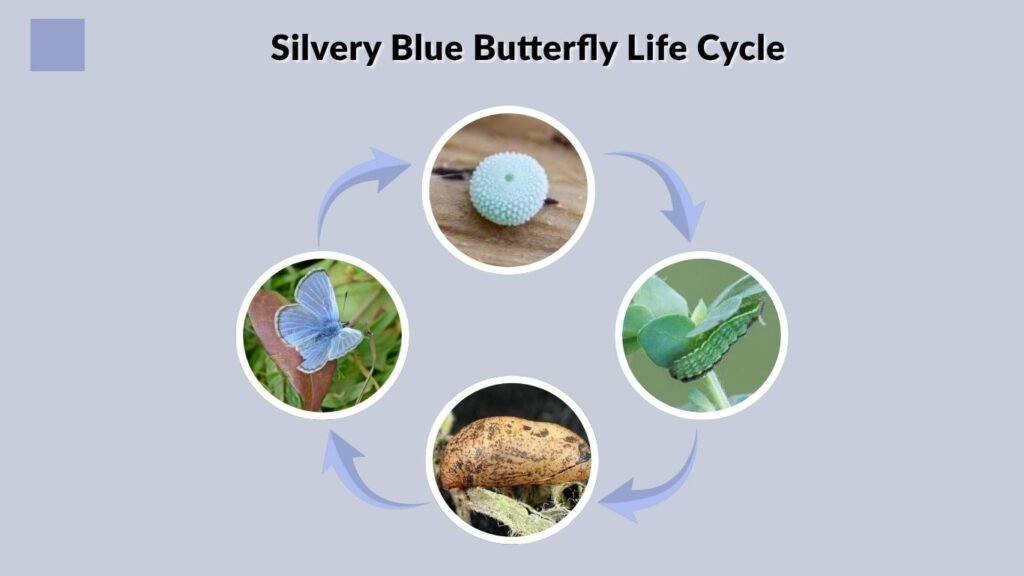
The Silvery Blue butterfly undergoes complete metamorphosis, developing through four stages: egg, caterpillar, chrysalis, and adult.
Its life cycle is closely connected to seasonal changes and the flowering periods of suitable host plants.
1. Egg Stage
Female Silvery Blue butterflies usually deposit individual eggs on flower buds or young leaves of their host plants.
The eggs are very small and positioned where newly hatched caterpillars can find suitable food.
After embryonic development, the eggs hatch into tiny larvae that begin feeding on nearby plant tissues.
2. Silvery Blue Caterpillar Stage
Silvery Blue caterpillars have short, flattened bodies typical of many butterflies in the Lycaenidae family.
Their coloration helps them blend into the flowers and foliage on which they feed.
Caterpillars consume tender plant tissues, including developing flowers, young leaves, and seedpods.
An interesting characteristic is their relationship with ants. Some ants tend the caterpillars, collecting sugary secretions and sometimes helping protect them from predators.
3. Chrysalis Stage
After completing their larval development, caterpillars transform into chrysalises.
During this stage, their bodies undergo major developmental changes as adult structures form.
Silvery Blue butterflies generally overwinter as chrysalises. This allows them to survive colder months and emerge when seasonal conditions become favorable.
4. Adult Butterfly Stage
Adult Silvery Blue butterflies emerge from their chrysalises during the appropriate flight season.
After expanding and drying their wings, they begin flying, feeding, and searching for mates.
Males frequently patrol areas containing host plants to locate females.
Following mating, females lay eggs on suitable vegetation, beginning the next generation.
Silvery Blue Butterfly Behavior and Predators
Silvery Blue butterflies are generally active in sunny conditions, frequently flying around low-growing vegetation and flowers.
They may rest on plant stems or spread their wings while basking in sunlight.
Like other small butterflies, Silvery Blues face threats from spiders, predatory insects, and insect-eating birds.
Their rapid movements and relatively inconspicuous wing undersides can help reduce detection by predators.
The butterfly’s dependence on suitable host plants also makes local populations vulnerable to changes in vegetation and habitat quality.
Silvery Blue vs. Similar Blue Butterflies
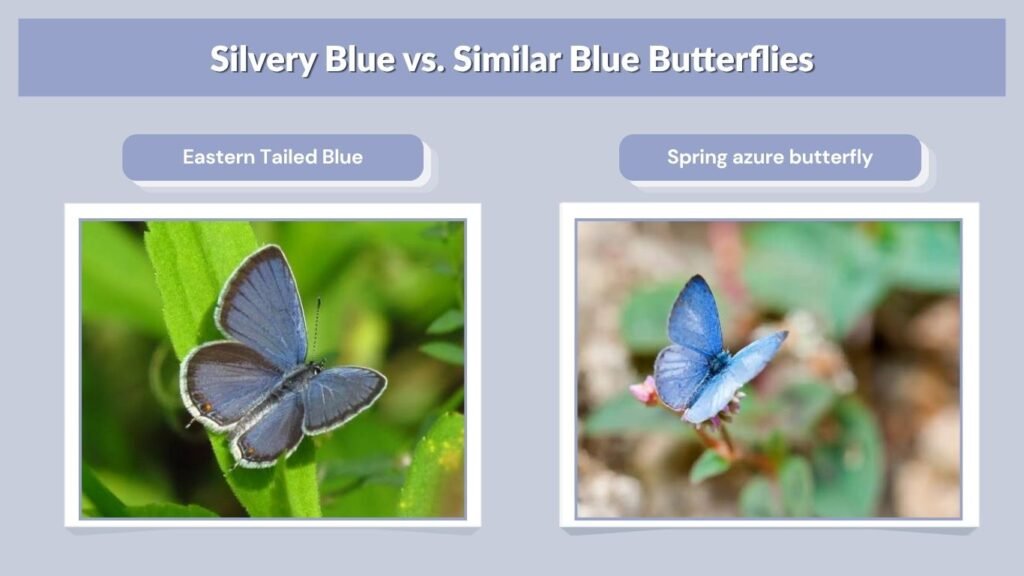
Several North American butterflies resemble the Silvery Blue. Examining wing markings and the presence or absence of hindwing tails can help distinguish these species.
| Butterfly | Distinguishing characteristics |
| Silvery Blue | Silvery-blue upper wings and white-ringed black spots underneath |
| Eastern Tailed Blue | Small hindwing tails and orange markings |
| Spring Azure | Pale blue wings with smaller, more scattered underside markings |
| Karner Blue | Orange markings on the female’s hindwing upperside and underside patterns different from the Silvery Blue |
The Silvery Blue’s neat row of white-ringed black spots on the wing undersides is one of its most reliable identification features.
How to Attract and Protect Silvery Blue Butterflies
Creating suitable habitat can encourage Silvery Blue butterflies in areas where they naturally occur.
Plant locally native host plants such as appropriate lupines, milkvetches, and wild peas. Include nectar-producing wildflowers that bloom during the local adult flight season.
Preserve sunny meadow patches and avoid unnecessary pesticide applications around flowering plants.
Protecting native grasslands, coastal dunes, and open woodland habitats also supports populations.
While Silvery Blue butterflies are widespread, certain localized subspecies have experienced serious declines due to habitat loss.
FAQs
1. Are Silvery Blue Butterflies Rare?
The Silvery Blue butterfly is widespread across North America, but local abundance varies. Certain subspecies, including the Palos Verdes Blue, are extremely rare and require conservation protection.
2. What Does a Silvery Blue Caterpillar Look Like?
Silvery Blue caterpillars have compact, flattened bodies and colors that help them blend into plant tissues. They usually feed on flowers, young leaves, and developing seedpods.
3. How Long Do Silvery Blue Butterflies Live?
Adult Silvery Blues generally live for a relatively short period, typically days to weeks. However, the complete life cycle extends across seasons because they usually overwinter as chrysalises.
4. Are Silvery Blue Butterflies Dangerous?
No. Silvery Blue butterflies are harmless to humans. They do not sting, and adults feed primarily on flower nectar.
5. What Makes the Silvery Blue Butterfly Unique?
Its shimmering silvery-blue wings, distinctive white-ringed black spots, association with pea-family host plants, and relationships between caterpillars and ants make it an interesting North American butterfly.