
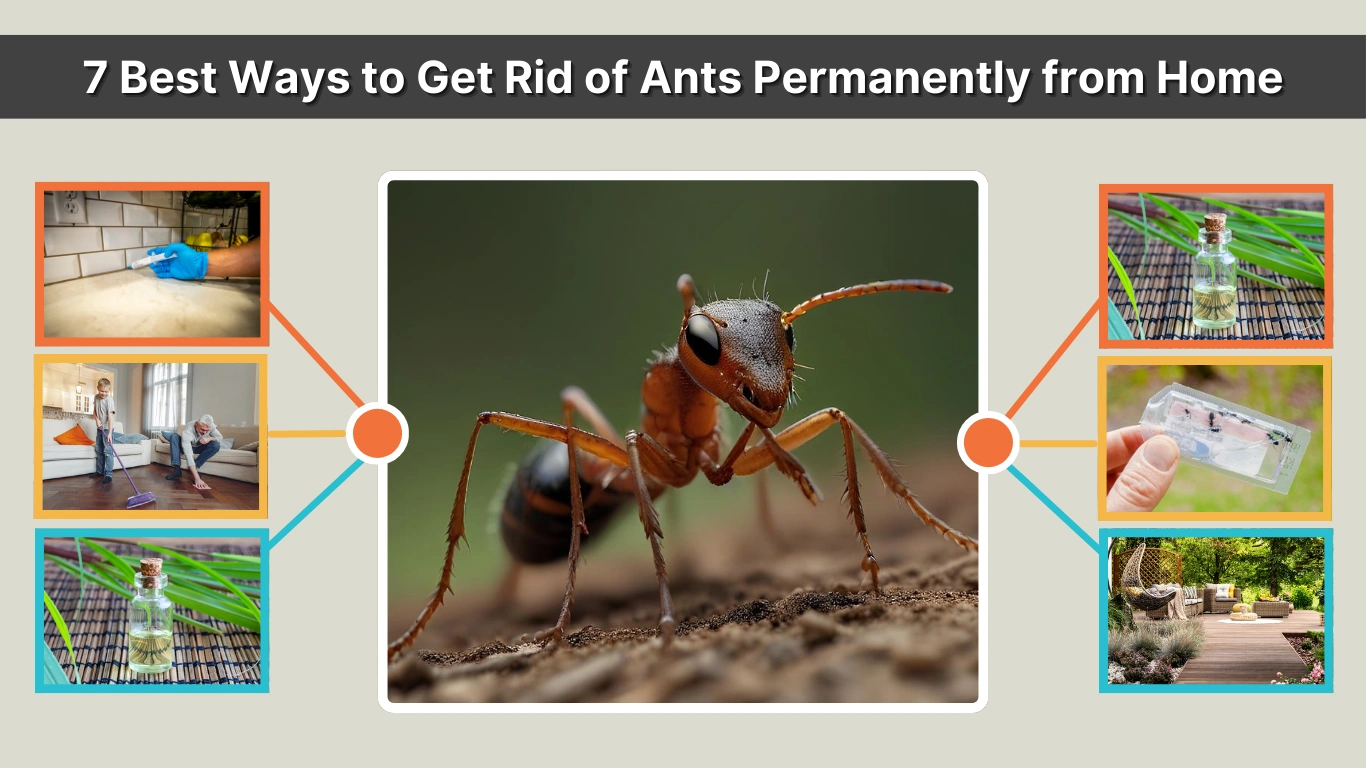
Ants are one of the most common household pests, and once they find a food source indoors, they can quickly turn into a persistent infestation. While killing a few visible ants may provide temporary relief, the key to eliminating them permanently lies in addressing their entry points, nests, and food supply. In this guide, you’ll discover seven proven methods—ranging from natural remedies to professional treatments—that will help you get rid of ants for good and keep your home pest-free.
1. Seal All Entry Points

Ant infestations often begin with tiny cracks or gaps that go unnoticed. Even the smallest opening is enough for ants to find their way indoors. Sealing these access points is one of the most effective methods to stop ants permanently because it not only keeps them out but also reduces the chances of re-infestation.
Identify Ant Trails and Gaps
Ants leave behind scent trails that lead other colony members to food. By observing these trails, you can track where they enter your home. Common entry points include:
- Cracks in walls and floors
- Gaps around windows and door frames
- Spaces near pipes, vents, and wiring
- Foundation openings and baseboard gaps
Seal with Proper Materials
Once you’ve identified the problem areas, use durable sealing methods to block them:
- Caulk or silicone for small cracks and window gaps
- Weatherstripping for doors and windows that don’t close tightly
- Mesh screens for vents, chimneys, and larger openings
- Foam sealant for utility lines and pipe gaps
Maintain and Inspect Regularly
Ants are resourceful, and new gaps can form over time. Inspect your home’s structure every few months, especially after seasonal changes, and reseal where necessary. This ongoing maintenance ensures ants never regain access.
2. Keep Your Home Clean

Ants are primarily drawn indoors in search of food and water. A clean home disrupts their food supply and makes it difficult for colonies to thrive. Consistently maintaining hygiene is a key step to keeping ants away permanently.
Eliminate Food Sources
Ants are highly attracted to sugary items, crumbs, and greasy residues. Wipe down kitchen counters, sweep floors daily, and store food in airtight containers. Even pet food left out can attract ants, so make sure to clean bowls after feeding.
Manage Waste Properly
Garbage bins are one of the biggest ant attractants. Always keep trash sealed with tight lids, take it out regularly, and clean bins weekly with disinfectant to remove odors. Compost bins should also be kept outside and away from entry points.
Control Moisture and Spills
Standing water and sticky spills are perfect ant magnets. Immediately clean up drink spills, dry sinks after use, and repair any leaking faucets or pipes. A dry and tidy home environment leaves ants with nothing to forage.
3. Use Natural Repellents

Natural repellents are a safe and eco-friendly way to deter ants without harsh chemicals. These remedies disrupt their scent trails and create an environment that ants avoid, making them effective for long-term prevention.
Vinegar and Water Spray
A simple 50/50 mixture of white vinegar and water works wonders. Spray it directly along ant trails, doorways, and windowsills. Vinegar erases their pheromone trails, which prevents other ants from following the same path.
Essential Oils
Certain oils such as peppermint, tea tree, eucalyptus, and citrus are natural ant deterrents. Mix 10–15 drops with water in a spray bottle and apply around baseboards, cracks, and entry points. Refresh the spray every few days for lasting results.
Other Household Remedies
Cinnamon powder, coffee grounds, and lemon juice are also effective deterrents. Sprinkling or applying them near entry areas creates a natural barrier that ants dislike crossing.
4. Apply Ant Baits

While repellents can drive ants away temporarily, baits are one of the most effective ways to eliminate entire colonies. Ant baits work by attracting worker ants with a food-based poison that they carry back to the nest, eventually wiping out the source.
Why Ant Baits Work
Unlike sprays that only kill visible ants, baits target the whole colony. The workers share the poisoned food with other ants, including the queen, ensuring the infestation ends at its root.
Best Placement for Baits
Position baits directly along ant trails, near entry points, under sinks, and along baseboards. Avoid cleaning the area with strong-smelling repellents beforehand, as this may prevent ants from approaching the bait.
Choosing the Right Type
Ant baits come in gels, stations, and granules. Gel baits are ideal indoors, while granules work better for outdoor nests. Select based on the type of ants in your home for maximum effectiveness.
5. Destroy Ant Nests

Even if you eliminate visible ants, the infestation will continue unless the nest itself is destroyed. Targeting the colony directly ensures you stop the breeding cycle and remove the source of the problem.
Locating the Nest
Follow ant trails closely, especially in the early morning or evening when they are most active. Common nesting spots include wall voids, under floorboards, garden soil, and beneath paving stones.
Natural Nest Treatments
Pouring boiling water into outdoor nests can kill large numbers of ants instantly. Sprinkling diatomaceous earth around the nest is another safe, non-toxic method that dehydrates and eliminates ants.
Chemical Nest Solutions
For stubborn colonies, use commercial ant-killer granules or liquid insecticides designed for direct nest application. These penetrate deeper into the colony, reaching the queen and ensuring complete eradication.
6. Maintain Yard and Outdoor Areas

A neglected yard can become a breeding ground for ants, giving them easy access to your home. By keeping the outdoor environment tidy and less inviting, you significantly reduce the chances of an infestation indoors.
Trim Vegetation and Branches
Ants often use tree branches, shrubs, or climbing plants as natural bridges to enter through windows and roofs. Regularly trim vegetation that touches or leans against your house to cut off these pathways.
Remove Standing Water
Moisture is a strong attractant for ants. Eliminate standing water from birdbaths, buckets, or plant saucers. Fix outdoor leaks, ensure gutters drain properly, and keep your yard well-ventilated to prevent damp spots.
Manage Outdoor Debris
Stacks of firewood, leaf piles, and clutter provide shelter for ant colonies. Store firewood away from your home, dispose of yard waste promptly, and keep the area around your foundation clear.
7. Seek Professional Pest Control

Sometimes, ant infestations become too severe or persistent to handle with DIY methods. In such cases, professional pest control services offer the most reliable and long-lasting solution.
When to Call Experts
If you notice recurring infestations, large colonies, or aggressive species like carpenter or fire ants, it’s best to involve professionals. They have the expertise and equipment to identify the specific ant species and tailor treatments accordingly.
Advanced Treatment Methods
Pest control specialists use powerful, targeted solutions such as non-repellent insecticides, colony-specific baits, and barrier treatments that aren’t available for household use. These methods ensure the entire colony, including the queen, is eliminated.
Long-Term Prevention Plans
Many pest control companies also offer ongoing maintenance plans. These include routine inspections, preventive treatments, and sealing advice to make sure ants do not return in the future.
FAQs
1. What is the fastest way to kill ants in the house?
The fastest method is using ant sprays or boiling water for visible ants and nests. However, for permanent results, ant baits are more effective because they target the entire colony, including the queen.
2. Do natural remedies really work for ant control?
Yes, natural remedies like vinegar, essential oils, and diatomaceous earth can repel or kill ants. While they may not eliminate large colonies, they are excellent for prevention and small infestations.
3. How do I stop ants from coming back after cleaning?
To prevent ants from returning, seal entry points, store food in airtight containers, clean up crumbs and spills promptly, and maintain dry, clutter-free surroundings both indoors and outdoors.
4. Are professional pest control services worth it for ants?
Yes, professionals are worth it if you face recurring infestations or dangerous species like carpenter ants. They use advanced treatments and provide long-term prevention plans that DIY methods can’t match.
5. Can ants cause damage to my home?
Yes, certain species like carpenter ants can cause structural damage by tunneling through wood. Others may contaminate food or spread bacteria. Quick action is important to avoid these risks.
