
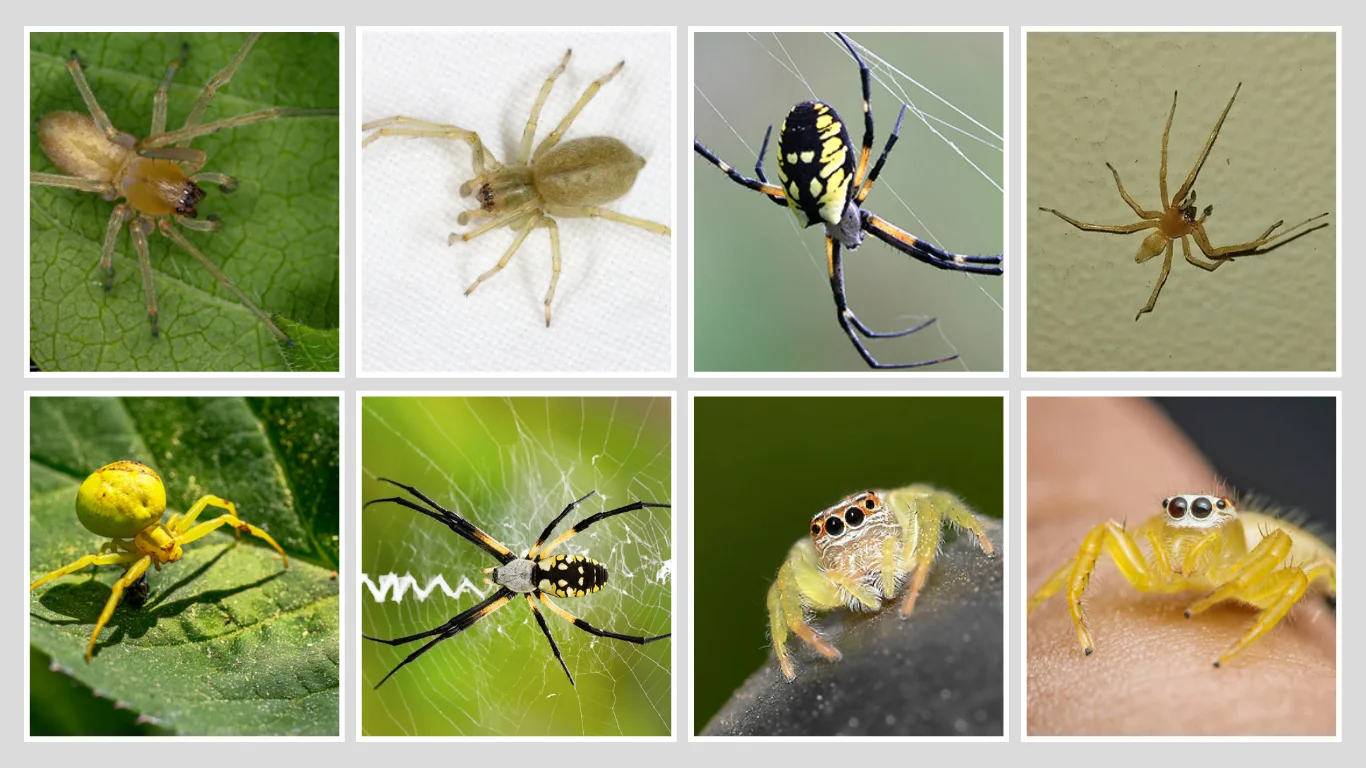
Yellow spiders are some of the most eye-catching arachnids found in gardens, homes, and natural landscapes. Their vibrant colors range from soft pale yellow to bold black-and-yellow patterns. In this guide, you’ll explore 12 yellow spider species, including how to identify them, where they live, what they look like, and how big they grow—perfect for curious homeowners, gardeners, or nature lovers looking to learn more.
1. Yellow Sac Spider

The Yellow Sac Spider is a pale yellow to yellowish-green spider commonly found both indoors and outdoors. Its smooth, soft body and almost translucent appearance make it easy to overlook, especially against light-colored walls or foliage. This spider is nocturnal and hides in small silk sacs during the day.
Identification Features
- Long, slender front legs
- Oval-shaped, smooth abdomen
- No distinctive patterns on the body
- Darker fang area (chelicerae)
- Small size with quick movement
Natural Habitat
Yellow Sac Spiders are widespread in North America, especially in the United States. They live:
- Indoors—behind pictures, under furniture, or along ceilings
- Outdoors—in rolled leaves, under stones, or garden mulch
- In man-made structures like sheds and garages
Body Color
This spider is generally pale yellow, sometimes with a greenish tint. Its legs are often semi-translucent and may darken slightly toward the tips. The mouthparts are usually darker than the rest of the body.
Typical Size Range
Females grow up to 10 mm in body length, while males are slightly smaller. With legs extended, the spider can span up to 25 mm, giving it a delicate but noticeable presence when spotted.
Let me know when to continue with the second spider.
2. Northern Yellow Sac Spider

The Northern Yellow Sac Spider is closely related to the Yellow Sac Spider and looks very similar. It is also pale yellow or beige in color and is often found indoors. This species is known for its fast movement and ability to bite when threatened.
Identification Features
- Pale yellow or light beige body
- Long, thin legs with darker tips
- Oval-shaped, soft abdomen
- Dark mouthparts
- No distinct markings or patterns
Natural Habitat
This spider is commonly found throughout North America and parts of Europe. It prefers:
- Indoor areas like walls, ceilings, and window corners
- Garden beds, leaf piles, and under rocks outdoors
- Storage rooms, basements, and attics
Body Color
Its color can range from pale yellow to almost ivory, depending on lighting and age. The cephalothorax and legs may appear slightly darker than the abdomen.
Typical Size Range
- Adult females: 6–10 mm in body length
- Males: slightly smaller
- With legs extended, it can measure up to 20–25 mm
3. Yellow Garden Spider

The Yellow Garden Spider is one of the most striking yellow spiders. It has a bold black and yellow patterned abdomen and is known for spinning large, round webs with a distinctive zigzag pattern (stabilimentum). This spider is harmless to humans and beneficial in gardens.
Identification Features
- Bright yellow and black abdomen
- Large, round body
- Long black legs with orange or yellow bands
- Web includes a vertical zigzag line
- Female much larger than male
Natural Habitat
This spider prefers sunny, open areas and is commonly found in:
- Gardens and flower beds
- Shrubs and tall grass
- Along fences, walls, and outdoor structures
Body Color
Its body is vivid yellow with black symmetrical markings. The legs are mostly black, with some yellow or orange coloring at the joints. Males are duller in color and much smaller.
Typical Size Range
- Females: 19–28 mm in body length
- Males: 5–9 mm
- Leg span can reach up to 75 mm in adult females
4. Black-Footed Yellow Sac Spider
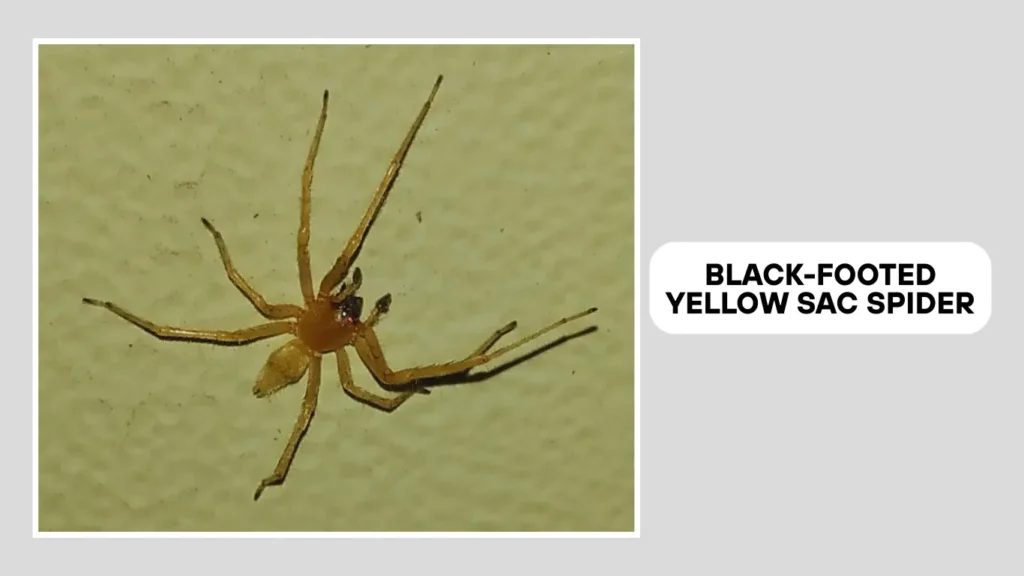
The Black-Footed Yellow Sac Spider is another species within the Cheiracanthium genus, known for its pale yellow body and dark-colored leg tips, which give it its name. It’s a common house spider that may bite when accidentally trapped against the skin.
Identification Features
- Light yellow to pale green body
- Oval abdomen with no markings
- Long front legs
- Distinct dark tips on the feet
- Small, quick-moving spider
Natural Habitat
This spider is commonly found in human environments, especially during colder months. It lives in hidden places such as behind picture frames, inside closets, under baseboards, and within folded fabrics or storage boxes. Outdoors, it may hide in rolled leaves, bark, or under stones.
Body Color
Its overall color is soft yellow to yellow-green, with the key distinguishing feature being the dark “feet” (ends of the legs). The mouthparts are also typically darker than the rest of the body.
Typical Size Range
Adult females measure between 5 to 10 mm in body length, with a total leg span reaching around 25 mm. Males are slightly smaller but similar in appearance.
5. Goldenrod Crab Spider

The Goldenrod Crab Spider is well-known for its ability to change color between white and yellow to match the flower it’s hiding on, usually goldenrod or daisies. It’s a sit-and-wait predator that ambushes prey rather than spinning webs.
Identification Features
- Crab-like stance and body shape
- Broad, flat body
- Two front legs longer than the others
- Smooth, glossy abdomen
- No web structure
Natural Habitat
This spider is found on flowering plants in fields, gardens, and meadows. It stays on top of flower petals, especially goldenrods, sunflowers, and daisies, where it waits for insects to land. Its natural camouflage helps it remain hidden from both prey and predators.
Body Color
Females can appear bright yellow when sitting on yellow flowers, but they may also turn white or pale green. The ability to shift between white and yellow tones makes them well-camouflaged. Males are smaller and typically darker, with reddish markings.
Typical Size Range
Females can grow up to 10 mm in body length, while males are much smaller, usually around 3 to 4 mm. The front legs are often longer than the body, giving them a wider overall span.
6. Yellow Orb-Weaver Spider

The Yellow Orb-Weaver Spider is a member of the Araneidae family, known for building classic round webs in gardens and forests. These spiders vary in appearance, but many have yellow coloration on their abdomens, often mixed with white, orange, or brown patterns.
Identification Features
- Round or oval-shaped abdomen
- Yellow coloration, sometimes with stripes or spots
- Short, sturdy legs with bands or markings
- Large, symmetrical web structure
- Typically hangs head-down in center of web
Natural Habitat
These spiders are often found in gardens, wooded areas, parks, and meadows. They prefer quiet spots where their large webs won’t be disturbed. The web is usually built between plants, branches, or even man-made structures like fences.
Body Color
The abdomen may be bright yellow with brown or black patterns, depending on species. Some orb-weavers appear almost golden in the sunlight. Their coloration helps them blend in with flowers or foliage, or to act as a lure for flying insects.
Typical Size Range
Females can reach up to 20 mm in body length, while males are significantly smaller, often around 5–8 mm. The overall leg span can exceed 40 mm in large individuals.
7. Neon Yellow Jumping Spider

The Neon Yellow Jumping Spider is a visually striking species that belongs to the Salticidae family. It’s rare and not widely documented, but certain jumping spiders exhibit vivid yellow or greenish-yellow coloring, especially in tropical and subtropical regions.
Identification Features
- Compact body shape
- Short, strong legs with hairy surfaces
- Large front eyes for excellent vision
- Bright yellow or neon green body
- Quick, jerky movements
Natural Habitat
Jumping spiders can be found in a variety of habitats—on tree bark, garden plants, walls, and even indoors. The neon yellow variety typically prefers sunny, plant-rich environments like flower beds, bushes, or tropical gardens.
Body Color
This spider’s bright neon yellow body is often paired with darker eyes and leg tips. The bold color serves as a visual warning to predators or camouflage among brightly colored flowers.
Typical Size Range
These spiders are small, with adults ranging from 4 to 8 mm in body length. Despite their size, their movements and colors make them very noticeable when seen up close.
8. Little Yellow Spider

The term “Little Yellow Spider” is commonly used to describe juvenile yellow sac spiders or other small yellow-colored spiders seen in gardens and homes. These spiders are often mistaken for harmless bugs due to their tiny size and soft coloring.
Identification Features
- Very small body size
- Pale yellow or creamy body
- Oval-shaped abdomen
- Thin legs relative to body size
- Quick and shy behavior
Natural Habitat
These small yellow spiders are frequently found in gardens, grassy areas, and inside homes—especially near windowsills, baseboards, or ceiling corners. Outdoors, they can be found hiding in curled leaves, flower heads, or small crevices in tree bark.
Body Color
They usually have a soft, pale yellow color that may appear slightly green or beige depending on the light. As juveniles, their coloration is often lighter and becomes more defined as they mature.
Typical Size Range
Most are under 5 mm in body length. Their small size makes them easy to miss unless they’re moving or caught in light.
9. Yellow Zipper Spider (Argiope aurantia)

The Yellow Zipper Spider is another common name for the Yellow Garden Spider, referring specifically to the zigzag “zipper” pattern in the center of its web. It’s known for its bold black-and-yellow coloring and impressive web-building skills.
Identification Features
- Striking black and yellow patterned abdomen
- Long black legs with orange or yellow bands
- Builds large, circular webs with a zigzag line
- Females much larger than males
- Usually stays centered in web
Natural Habitat
These spiders thrive in sunny gardens, meadows, and alongside homes or barns. They favor open spaces where their large webs can stretch between plants, shrubs, or man-made structures like fences and posts.
Body Color
The body is a vivid yellow with symmetrical black markings on the abdomen. The legs are long and dark, often with orange or yellow accents near the joints. The characteristic zigzag pattern in the web adds to its recognition.
Typical Size Range
Females range from 19 to 28 mm in body length, while males are only 5 to 9 mm. Including legs, a mature female can span up to 75 mm.
10. Yellow Crab Spider
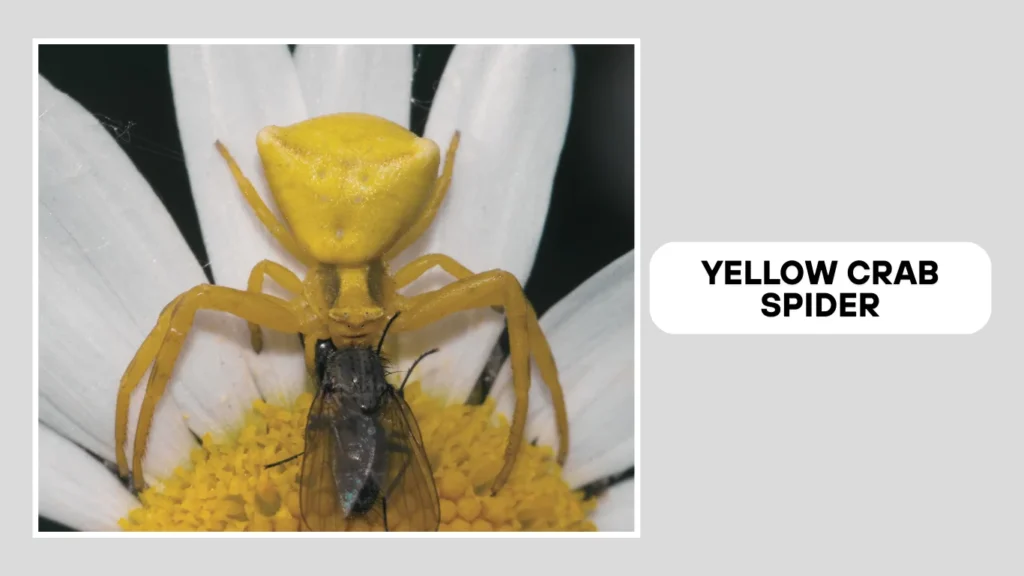
The Yellow Crab Spider belongs to the Thomisidae family and is named for its crab-like appearance and sideways movement. It doesn’t build webs to catch prey—instead, it waits motionless on flowers to ambush visiting insects. Its yellow color helps it blend perfectly with petals.
Identification Features
- Flat, wide body resembling a crab
- Two front legs longer and thicker than others
- Can walk sideways or backward
- Smooth, round abdomen
- No web-building behavior
Natural Habitat
Yellow Crab Spiders are typically found on flowers, especially yellow or white blooms like daisies, black-eyed Susans, and goldenrods. They prefer open meadows, gardens, and edges of wooded areas where pollinators are active.
Body Color
These spiders are bright yellow and can sometimes shift slightly in color to match their surroundings. Their coloration acts as both camouflage and a hunting advantage. Males may have darker patterns, while females are solid yellow or yellow-white.
Typical Size Range
Females grow up to 10 mm in body length, with their front legs extending their overall span. Males are much smaller, often measuring 3 to 5 mm.
Summary:
From the tiny Yellow Sac Spider to the bold Yellow Garden Spider, these yellow spiders display a wide range of sizes, markings, and behaviors. Some species hunt actively, while others rely on webs or camouflage. Found across various habitats, they play an essential role in insect control. Recognizing their unique features can help you identify them safely and appreciate their role in nature without unnecessary fear.