

The Carolina wolf spider (Hogna carolinensis) is one of the most impressive and recognizable spider species in North America. Known for its large size, agile hunting behavior, and distinctive appearance, this spider is often misunderstood. Despite its intimidating look, the Carolina wolf spider plays an important ecological role as a natural pest controller. It is the largest wolf spider species in the United States and serves as the official state spider of South Carolina—an interesting honor that highlights its cultural and biological importance.
Scientific Classification and Naming
Taxonomy Overview
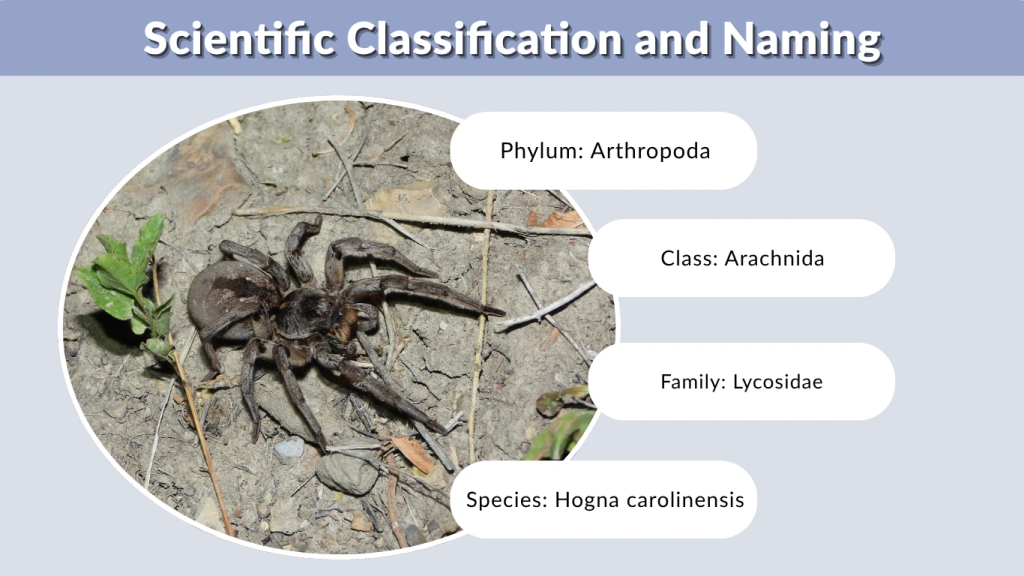
The Carolina wolf spider belongs to the family Lycosidae, commonly known as wolf spiders. Members of this family are known for their strong eyesight, fast hunting capabilities, and maternal care. The full scientific classification of Hogna carolinensis is:
- Kingdom: Animalia
- Phylum: Arthropoda
- Class: Arachnida
- Order: Araneae
- Family: Lycosidae
- Genus: Hogna
- Species: Hogna carolinensis
This species is part of the broader group of wolf spiders that are found worldwide, but it stands out due to its size and distinctive traits.
Common Names and Variants
The species is most commonly known as the Carolina wolf spider. Other versions of its name you might encounter include:
- Hogna carolinensis wolf spider
- Carolina wolf spider (Hogna carolinensis)
Regardless of the variation, all terms refer to the same species. The scientific name helps distinguish it from other wolf spiders, particularly because many species in the Hogna genus share similar traits.
Relationship to Other Wolf Spiders
Wolf spiders are a diverse group, and while many people confuse them with tarantulas or fishing spiders, H. carolinensis has its own distinct characteristics. It is often regarded as the largest wolf spider species in North America, making it more noticeable than others. Its behavior, appearance, and burrowing habits also make it unique within the Lycosidae family.
Physical Description and Identification
Size and Appearance
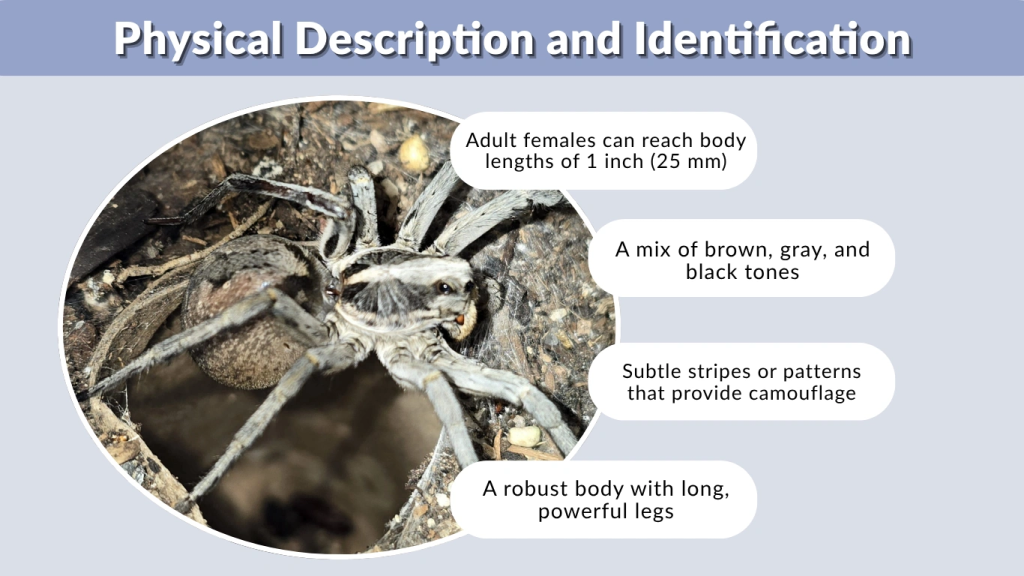
The Carolina wolf spider is notably large for a non-tarantula species. Adult females can reach body lengths of 1 inch (25 mm) or more, and with legs extended, they can appear even bigger. Males are smaller, usually about half the size of females, but still impressive compared to many other spiders.
Their coloration typically includes:
- A mix of brown, gray, and black tones
- Subtle stripes or patterns that provide camouflage
- A robust body with long, powerful legs
Because of their size and earthy colors, they blend well into their natural environment, making them excellent ambush predators.
Key Features That Distinguish H. carolinensis
Wolf spiders have a unique eye arrangement that makes them easy to identify. The Carolina wolf spider has:
- Eight eyes in three rows
- Two large, forward-facing eyes that provide strong night vision
- Excellent motion detection abilities
Their hairy bodies and legs give them a rugged appearance, but these features help them sense predators, vibrations, and environmental changes.
Sexual Dimorphism
Males and females differ noticeably in size and appearance:
- Females: Larger, heavier, often darker with thicker bodies
- Males: Slimmer, longer legs, lighter coloration
Males may appear more delicate and are more active during mating seasons, while females spend more time defending their burrows or caring for egg sacs.
Habitat and Distribution
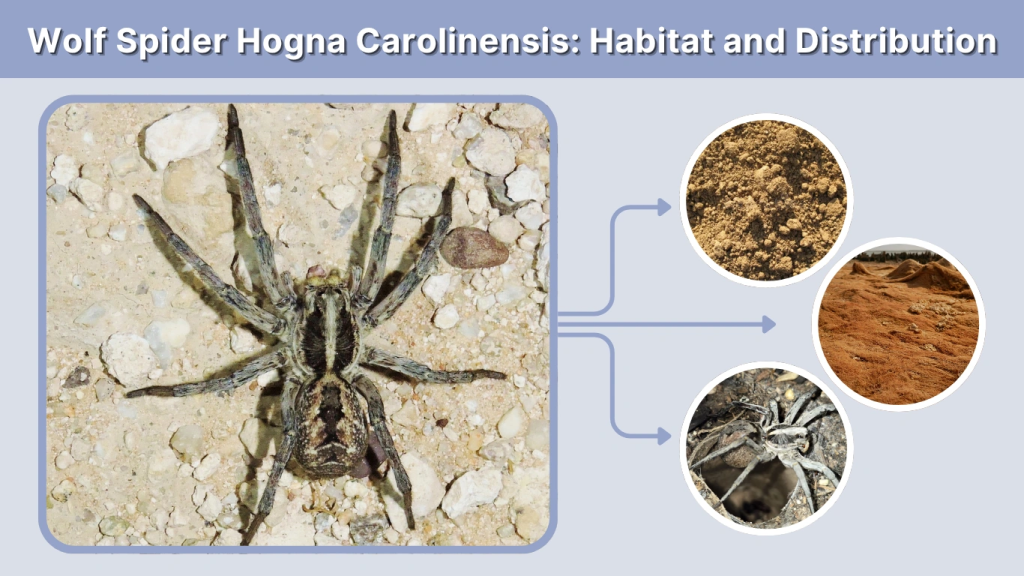
The Carolina wolf spider is native to North America and is most commonly found throughout the southeastern and central United States, with strong populations in both North and South Carolina. It thrives in a wide range of environments, including forests, grasslands, sandy areas, and semi-arid regions. Instead of building webs, this species creates burrows in the ground, choosing loose or soft soil that allows it to dig deeply for shelter and protection. Although it prefers natural habitats, the Carolina wolf spider may occasionally be seen near human structures, especially around foundations, sheds, and basements, where conditions resemble its natural underground retreats.
Preferred Habitats
Unlike many spiders that spin webs, wolf spiders are ground-dwelling hunters. Hogna carolinensis prefers:
- Loose soil
- Sandy areas
- Forest floors
- Grasslands
- Desert edges
They dig deep burrows, which they use for shelter, feeding, reproduction, and protection from weather changes. These burrows may be lined with silk to prevent collapsing.
Interaction With Human Spaces
Although they prefer natural environments, Carolina wolf spiders sometimes venture near or inside homes, especially:
- Under porches
- In basements
- Around foundations
- In garages or sheds
They don’t seek human contact, but artificial structures often provide shelter similar to natural burrows.
Behavior and Lifestyle
Nocturnal Hunting
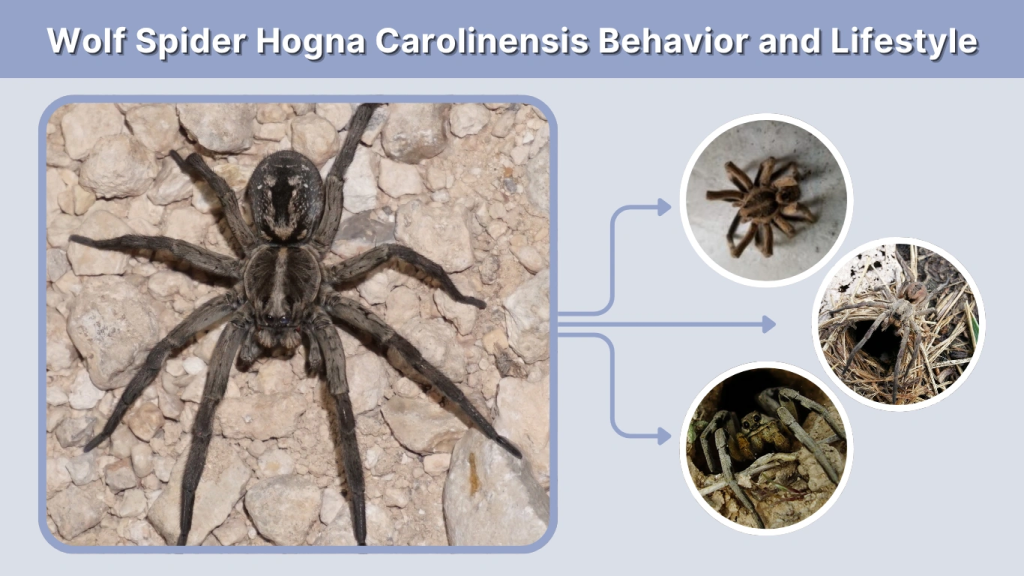
Carolina wolf spiders do not build webs to catch prey. Instead, they rely on speed, agility, and keen eyesight to chase down insects and small creatures at night. Their hunting style resembles that of wolves—hence their name.
Burrow Construction
Their burrows can be several inches deep and may have:
- Silk-reinforced walls
- A single entrance
- A sheltering lid or leaves placed by the spider
Females often stay near the burrow entrance at night, ready to ambush prey or defend eggs.
Defensive Behavior
Although their size may seem intimidating, the Carolina wolf spider is surprisingly shy. When threatened, it prefers to:
- Retreat into its burrow
- Run to cover
- Freeze and rely on camouflage
Biting is a last resort, used only when the spider feels cornered or physically handled. Because of their timid nature, bites are uncommon and usually occur only when a person accidentally traps the spider against their skin.
Diet and Hunting Techniques
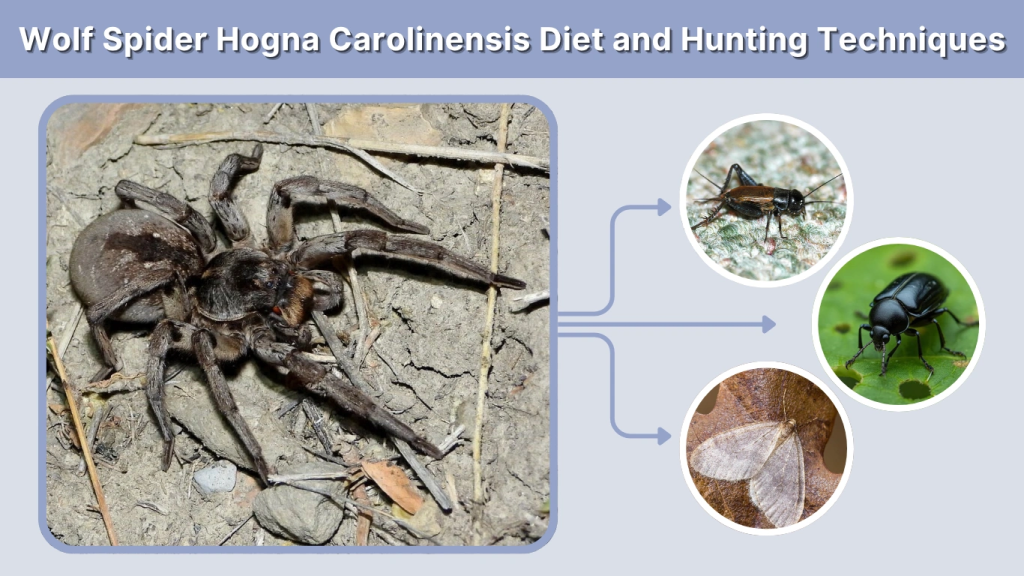
The Carolina wolf spider is an active predator that relies on speed, agility, and sharp vision to capture its prey. Rather than spinning webs, it hunts on the ground, stalking insects such as crickets, beetles, moths, and other small arthropods. Using its keen ability to sense vibration and movement, it ambushes or chases down prey with remarkable accuracy. Once caught, the spider subdues its victim with a quick bite of venom, which is strong enough to immobilize small animals but generally harmless to humans. This efficient hunting style makes the Carolina wolf spider an important natural controller of insect populations in its environment.
Venom, Bite, and Safety
Venom Strength
Like all wolf spiders, Hogna carolinensis uses venom to immobilize its prey. The venom is effective on insects and small animals but is not considered medically significant to humans. Its venom is far weaker than that of widow spiders or recluse spiders.
Are They Dangerous to Humans?
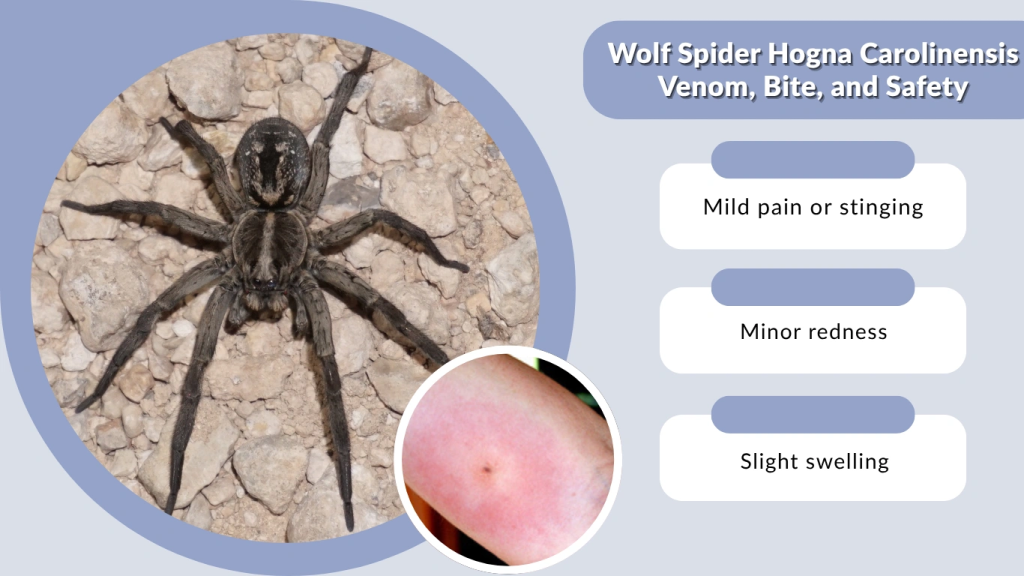
For most people, a Carolina wolf spider bite causes:
- Mild pain or stinging
- Minor redness
- Slight swelling
- Temporary itchiness
Symptoms usually fade within a few hours. Severe reactions are extremely rare, and when they do occur, they are usually allergic responses rather than venom effects.
Carolina wolf spiders are not aggressive, and they do not seek out humans. Most bites occur due to:
- Accidentally stepping on the spider
- Putting on clothing or shoes where the spider was hiding
- Reaching into dark areas without gloves
First Aid for a Wolf Spider Bite
If a bite does occur, basic first aid is usually all that’s required:
- Clean the bite gently with soap and water.
- Apply a cold compress to reduce swelling.
- Use antihistamines if itchiness develops.
- Take a mild pain reliever if needed.
Seek medical attention only if:
- The person has a known insect/spider allergy
- Symptoms worsen instead of improving
- There is difficulty breathing (rare but serious)
Overall, wolf spider bites are far less dangerous than many people believe.
Reproduction and Life Cycle
Mating Behavior
Mating is one of the few times male and female Carolina wolf spiders interact closely. Males approach cautiously, performing subtle leg and body movements to signal peaceful intent. This is important because females are larger and can be aggressive.
If the female accepts the male’s advance, mating occurs near the burrow. The male often dies naturally within weeks after mating, as his life cycle is shorter than the female’s.
Egg Sacs and Maternal Care
One of the most remarkable traits of wolf spiders is their maternal behavior.
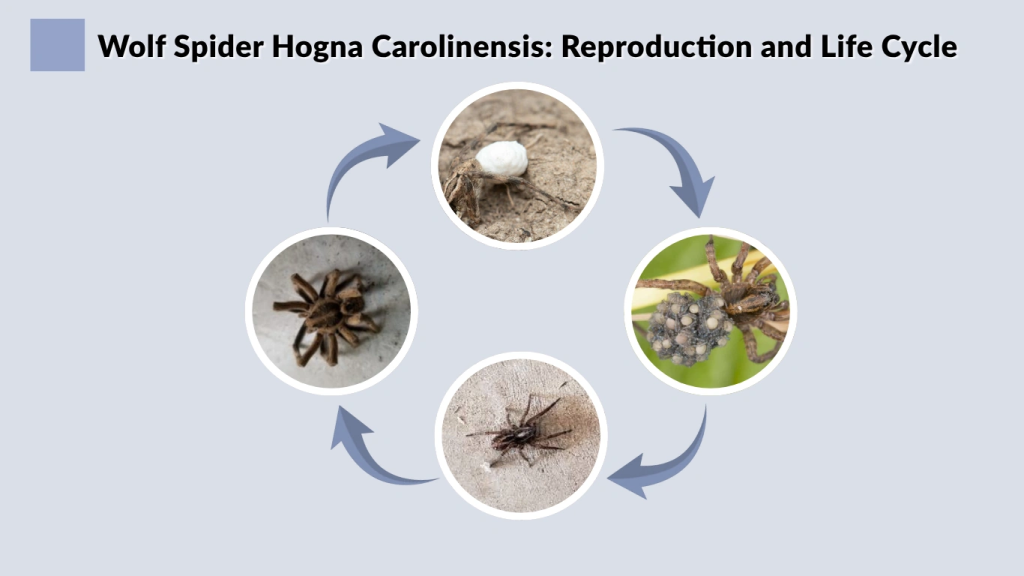
- Females create a silk egg sac and carry it attached to their spinnerets.
- They guard it constantly, even repositioning it for warmth or moisture control.
- When the eggs hatch, dozens of tiny spiderlings climb onto her back.
The female carries them for several days or weeks, protecting them until they are strong enough to survive alone. This behavior is rare among spiders and makes wolf spiders one of the most attentive spider parents.
Growth and Development
Wolf spiders go through several developmental stages:
- Egg
- Spiderling (carried on mother’s back)
- Juvenile (independent, small hunter)
- Adult (full size after molting)
Females usually live 2–3 years, while males live only 1 year or less.
Ecological Importance
Role in Ecosystems
Carolina wolf spiders play a vital role by:
- Controlling insect populations
- Reducing agricultural pests
- Keeping ecosystems balanced
They are both predators and prey, making them essential components of food chains.
Predators and Threats
Natural predators include:
- Birds
- Lizards
- Frogs
- Small mammals
- Parasitic wasps
Human activities also impact their habitat, including pesticide use, construction, and general habitat loss.
Interaction With Humans
Benefits to Homeowners
Because they prey on insects like roaches, crickets, and silverfish, Carolina wolf spiders can be beneficial around homes. Many gardeners deliberately avoid harming them because they help reduce insect pests.
Should You Remove or Relocate Them?
If a Carolina wolf spider is found indoors, relocation is usually the best option:
- Trap the spider in a container
- Slide a piece of paper underneath
- Release it outside away from the house
Killing wolf spiders is unnecessary and deprives the environment of a beneficial predator.
Preventing Indoor Encounters
To minimize visits from wolf spiders:
- Seal cracks in foundations
- Reduce clutter in basements and garages
- Keep outdoor lights dim (they attract insects, which attract spiders)
- Shake out shoes, clothing, and bedding stored on the floor
Conservation and Status
Current Population Health
The Carolina wolf spider is not endangered. Its populations are stable, and it adapts well to different environments.
Human Effects on Habitat
While not threatened, local populations may be affected by:
- Excessive pesticide use
- Habitat destruction
- Decline of prey species
Maintaining natural habitats helps support healthy populations.
FAQ
Are Carolina wolf spiders dangerous to humans?
Carolina wolf spiders are not considered dangerous to humans. Their venom is mild, and bites usually cause minor symptoms such as redness, swelling, or mild pain. Serious reactions are rare and typically related to allergies rather than venom strength.
How big can a Carolina wolf spider get?
Adult female Carolina wolf spiders can reach about 1 inch (25 mm) in body length, making them the largest wolf spider species in the United States. With legs extended, they can appear much larger. Males are smaller and thinner.
Do Carolina wolf spiders live in houses?
Yes, they sometimes enter homes—especially basements, garages, and areas near ground level. They are not trying to interact with humans; they are simply searching for food or shelter. They are shy, and indoor sightings usually happen when they wander by accident.
What do Carolina wolf spiders eat?
They eat a variety of insects, including crickets, cockroaches, beetles, moths, and other spiders. Their hunting ability helps control pest populations, making them beneficial to have around outdoor areas and gardens.
How do Carolina wolf spiders reproduce?
Females lay eggs in a silk egg sac and carry it attached to their body. After hatching, the spiderlings climb onto the mother’s back and remain there for several days or weeks until they are strong enough to survive independently. This level of maternal care is unique among spiders.