Lycosidae, commonly known as wolf spiders, are fast-moving ground hunters found across much of the world. Unlike many other spiders, they do not spin webs to trap prey. Instead, they actively chase and ambush insects, much like wolves hunting in the wild—hence their name. With excellent eyesight, strong legs, and impressive speed, wolf spiders are skilled predators. This article explores their size, physical features, habitat, diet, nesting behavior, and other fascinating characteristics.
What Is Lycosidae?
Lycosidae is a large family within the order Araneae. These spiders belong to:
- Kingdom: Animalia
- Phylum: Arthropoda
- Class: Arachnida
- Order: Araneae
- Family: Lycosidae
There are more than 2,400 known species of wolf spiders worldwide. They are found on every continent except Antarctica, making them one of the most widespread spider families. Their adaptability allows them to survive in deserts, forests, grasslands, and even urban areas.
Wolf spiders are best known for their hunting abilities and distinctive eye arrangement. Unlike web-building spiders, they rely on speed, camouflage, and vision to capture prey.
Physical Appearance and Size
Body Structure
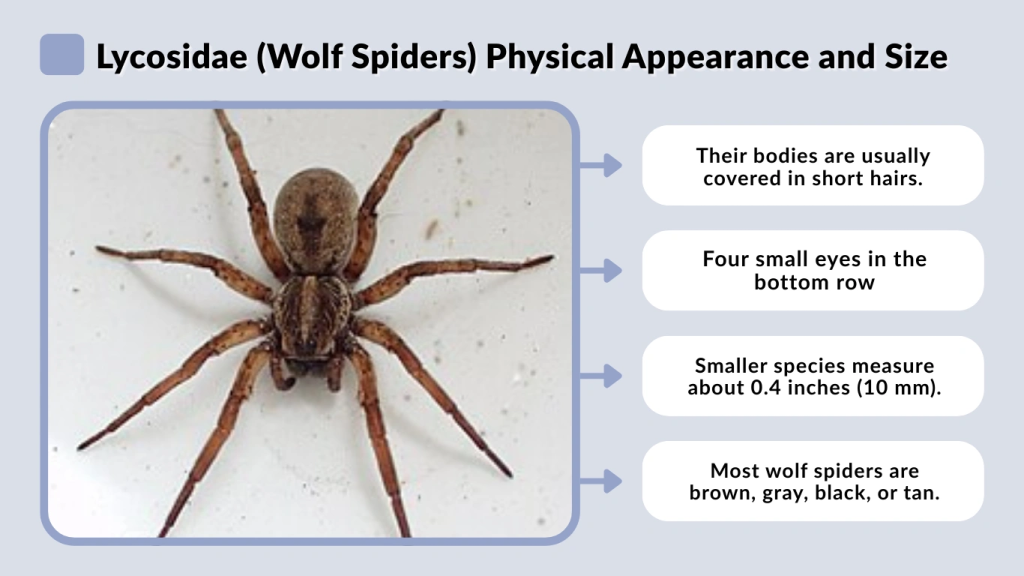
Wolf spiders have the typical spider body structure with two main parts: the cephalothorax (front section) and the abdomen (rear section). Their bodies are usually covered in short hairs, giving them a slightly fuzzy appearance. They also have long, strong legs that allow them to run quickly across the ground.
Eye Arrangement
One of the most distinctive features of Lycosidae is their eye pattern. They have eight eyes arranged in three rows:
- Four small eyes in the bottom row
- Two large forward-facing eyes in the middle
- Two medium-sized eyes on the top
The two large middle eyes provide excellent vision, especially at night. When light shines on them in the dark, their eyes often reflect brightly, making them easier to spot.
Size Range
Wolf spiders vary in size depending on the species.
- Smaller species measure about 0.4 inches (10 mm) in body length.
- Larger species can grow up to 1.5 inches (35 mm) long.
Including their legs, they may appear even larger. Females are typically bigger than males.
Color and Camouflage
Most wolf spiders are brown, gray, black, or tan. Many have striped or mottled patterns that help them blend into their surroundings. This camouflage allows them to hide in soil, leaf litter, or grass while waiting for prey.
Habitat and Distribution
Global Distribution
Wolf spiders are found across North America, Europe, Asia, Africa, Australia, and South America. Their wide distribution is due to their ability to adapt to various climates and environments.
Preferred Habitats
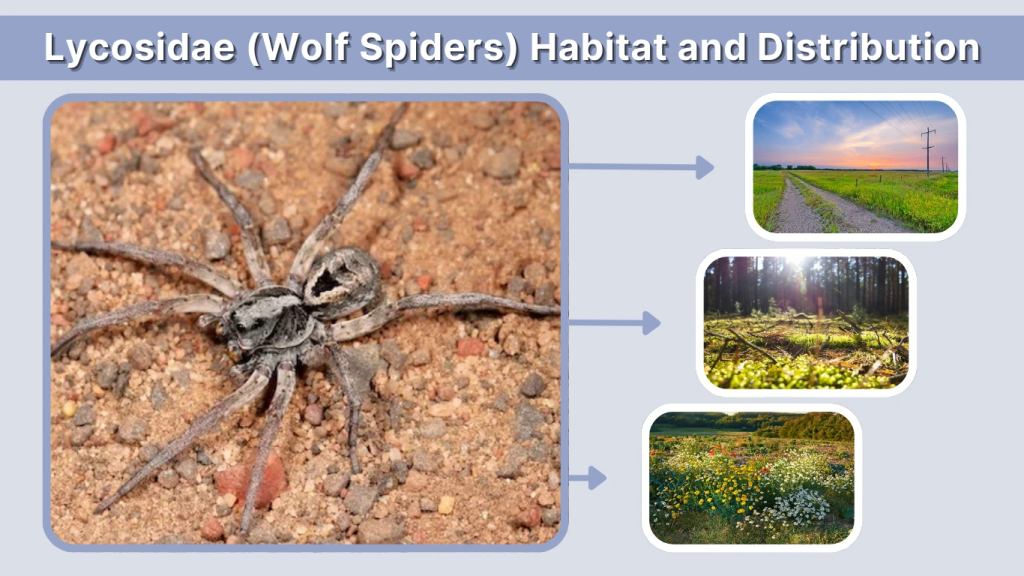
Lycosidae are primarily ground-dwelling spiders. They prefer habitats such as:
- Grasslands
- Forest floors
- Meadows
- Deserts
- Wetlands
- Agricultural fields
They are commonly found under rocks, logs, leaf litter, and garden debris. Some species even dig burrows in the soil.
Urban Environments
Wolf spiders often live near humans. They can be found in gardens, lawns, garages, sheds, and sometimes inside homes. When they enter houses, it is usually by accident while searching for food or shelter.
Despite their intimidating appearance, they are not aggressive and usually try to escape when disturbed.
Diet and Hunting Behavior

Carnivorous Diet
Wolf spiders are strict carnivores. Their diet mainly consists of:
- Ants
- Beetles
- Grasshoppers
- Crickets
- Other small spiders
- Various insects and arthropods
Because they eat many pest insects, they play an important role in controlling insect populations.
Hunting Strategy
Unlike web-building spiders, wolf spiders are active hunters. They do not rely on sticky webs to trap prey. Instead, they patrol the ground and use their sharp eyesight to locate movement.
Once they spot prey, they either:
- Stalk it slowly before attacking, or
- Chase it down quickly and pounce
Their strong legs allow them to sprint short distances with impressive speed. After capturing prey, they inject venom to immobilize it before feeding.
Night Hunting
Many wolf spider species are nocturnal, meaning they are most active at night. Their large middle eyes are especially useful in low light. This nighttime activity reduces competition and helps them avoid predators.
Venom and Humans
Wolf spiders use venom primarily to subdue prey. Their venom is not considered dangerous to humans. If bitten, a person may experience mild pain, redness, or swelling similar to a bee sting. Serious reactions are rare.
Nest and Burrowing Behavior
Do Wolf Spiders Build Webs?
Wolf spiders do not build webs to catch prey like orb-weavers or cobweb spiders. However, they still produce silk. They use silk for making egg sacs, lining burrows, and creating temporary shelters. Silk plays an important role in their survival, even though it is not used for trapping insects.
Burrow Construction
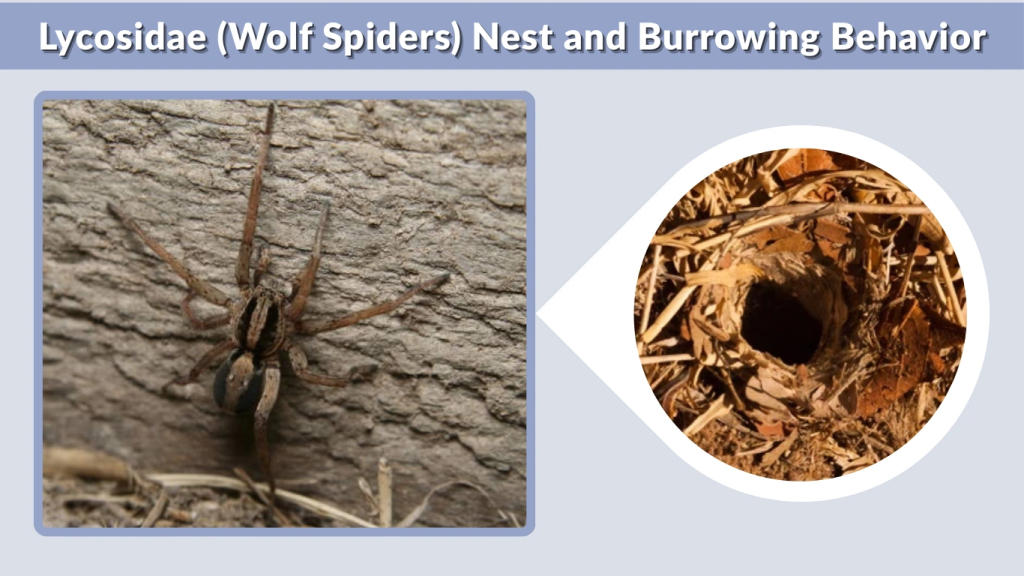
Some species of Lycosidae are skilled burrowers. They dig vertical tunnels in the soil using their strong legs and mouthparts. These burrows may be several inches deep and serve as protection from predators and extreme weather.
Many burrows are lined with silk, which strengthens the walls and prevents collapse. Certain species even build small turret-like structures made of soil, leaves, or tiny sticks around the entrance. These turrets help camouflage the opening and may act as a vibration sensor for detecting prey.
Shelter Habits
Not all wolf spiders dig burrows. Many species simply hide in natural shelters such as:
- Under rocks
- Beneath logs
- Inside leaf litter
- In thick grass
These hiding spots provide safety during the day, especially for nocturnal species.
Seasonal Behavior
Wolf spiders are more active during warmer months. In colder climates, they may overwinter in burrows or protected locations. Some species survive winter as juveniles and mature the following spring.
Reproduction and Life Cycle

Mating Behavior
Male wolf spiders perform courtship displays to attract females. These displays often include leg waving, body vibrations, and specific movement patterns. The vibrations are sometimes transmitted through the ground or nearby surfaces.
Courtship is important because females may attack and eat males if they mistake them for prey. Successful mating depends on clear communication and timing.
Egg Sac
After mating, the female produces an egg sac made of silk. One of the most unique traits of Lycosidae is how the female carries this egg sac. She attaches it to her spinnerets at the end of her abdomen and carries it wherever she goes.
If the egg sac becomes detached, the female will actively search for it and reattach it. This strong maternal instinct increases the survival rate of her offspring.
Spiderlings
When the eggs hatch, the spiderlings climb onto their mother’s back. This behavior is rare among spiders and is a defining characteristic of wolf spiders. Dozens of tiny spiderlings may ride on her abdomen for several days or even weeks.
During this time, the mother continues hunting while carrying her young. Eventually, the spiderlings disperse to live independently.
Growth and Lifespan
Wolf spiders grow through molting. They shed their exoskeleton multiple times before reaching adulthood. Most species live about one to two years, although lifespan can vary depending on environmental conditions.
Behavior and Temperament
Speed and Agility
Wolf spiders are known for their speed. They are fast runners and rely on quick reflexes to catch prey and escape predators. Their athletic build makes them efficient ground hunters.
Defensive Behavior
Despite their large size and somewhat intimidating appearance, wolf spiders are generally shy. When threatened, they prefer to run away rather than confront a potential danger.
Bites are rare and usually occur only if the spider is trapped or handled roughly. Their venom is mild and not considered medically significant to humans.
Solitary Lifestyle
Wolf spiders are solitary creatures. They do not live in colonies or cooperate with others of their kind. Each spider hunts and survives on its own, except during mating season.
Ecological Importance
Natural Pest Control
Wolf spiders play a crucial role in controlling insect populations. By feeding on beetles, grasshoppers, ants, and other insects, they help maintain ecological balance. In agricultural areas, they are especially beneficial because they reduce crop-damaging pests naturally.
Role in the Food Chain
While they are effective predators, wolf spiders are also prey for larger animals. Birds, reptiles, amphibians, and small mammals often feed on them. This makes them an important link in the food chain.
Environmental Indicators
Because they are sensitive to habitat changes, wolf spider populations can indicate environmental health. A decline in their numbers may signal ecological imbalance or pollution.
Wolf Spiders and Humans
Are They Dangerous?
Wolf spiders are not dangerous to humans. Although they can bite if provoked, their venom is not life-threatening. Most bites cause only mild irritation.
Common Misidentifications
Wolf spiders are sometimes mistaken for more dangerous species like the brown recluse. However, their eye arrangement and body markings clearly distinguish them from harmful spiders.
Preventing Indoor Entry
To reduce the chances of wolf spiders entering homes:
- Seal cracks and gaps around doors and windows
- Reduce clutter in basements and garages
- Keep outdoor lights away from entryways to avoid attracting insects
Since wolf spiders follow their prey, fewer insects near the home means fewer spiders.
Interesting Facts About Lycosidae
- Their eyes glow when illuminated at night.
- Females are highly protective mothers.
- Some species can briefly run across water surfaces.
- They are among the most widespread spider families in the world.
Conclusion
Lycosidae, or wolf spiders, are fascinating ground-dwelling hunters known for their speed, sharp eyesight, and unique maternal care. Found across diverse habitats worldwide, they play an essential role in controlling insect populations and maintaining ecological balance. Although their appearance may seem intimidating, they are generally harmless and prefer to avoid human contact. Understanding wolf spiders helps reduce fear and highlights their importance in nature.