
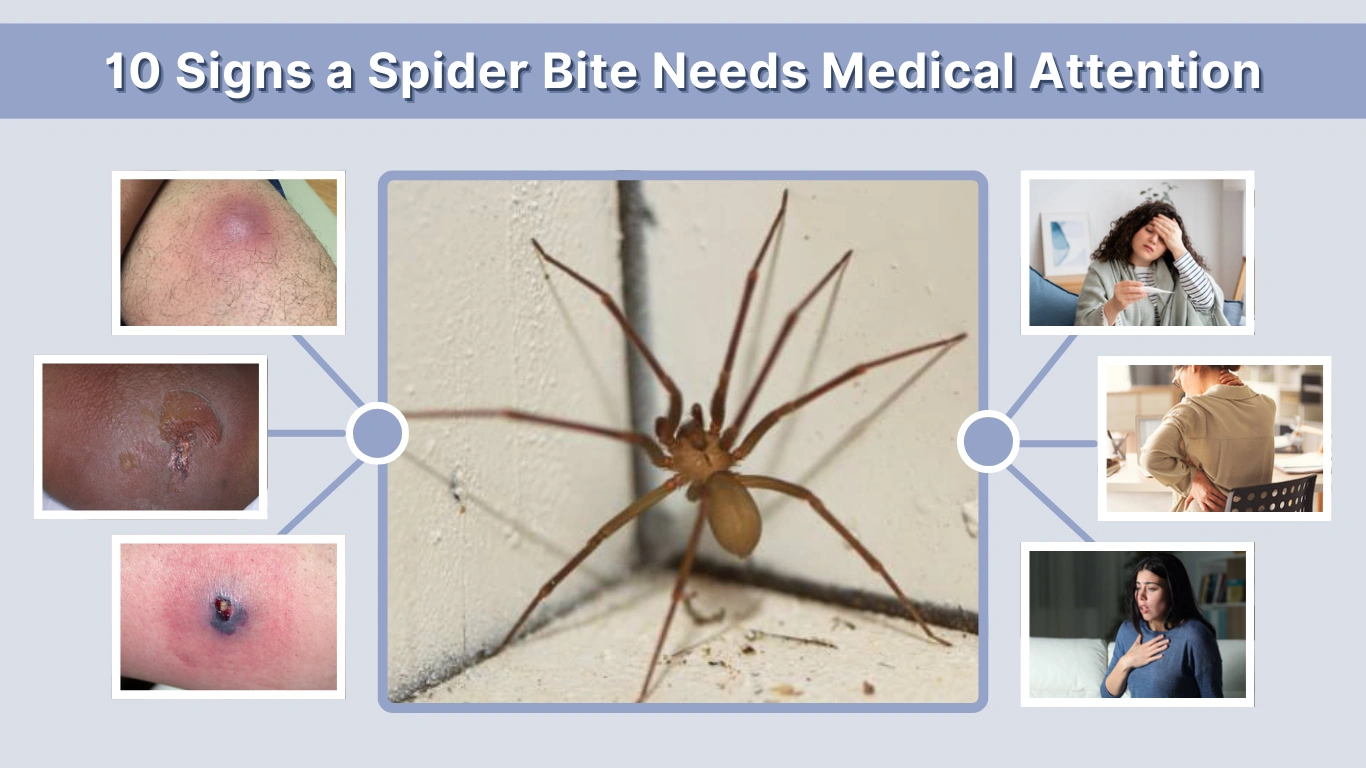
Most spider bites are harmless and heal on their own within a few days. In fact, many skin bumps people assume are spider bites turn out to be other insect bites or minor skin infections. However, certain spider bites can cause serious reactions, infections, or tissue damage. Knowing the warning signs can help you decide when home care is enough and when medical attention is necessary. Below are 10 important signs that a spider bite may require professional treatment.
Understanding Spider Bites
True spider bites are relatively uncommon. When they do occur, they often cause mild redness, slight swelling, itching, or minor discomfort. These symptoms typically improve within a day or two.
However, some spiders—such as the black widow and brown recluse—can inject venom that leads to more severe symptoms. Reactions vary depending on the type of spider, the amount of venom injected, and the person’s overall health. Recognizing abnormal or worsening symptoms early can prevent complications.
1. Severe or Worsening Pain

Mild discomfort is common with most bites. But if the pain becomes intense or continues to worsen several hours after the bite, it may signal a more serious reaction.
For example, black widow bites are known for causing significant pain that can spread beyond the bite area. The pain may feel sharp, cramping, or throbbing. If over-the-counter pain relievers don’t help or the pain feels disproportionate to the size of the bite, medical evaluation is recommended.
2. Rapidly Expanding Redness or Swelling
Some redness and swelling are normal. However, if the redness spreads quickly or the swelling becomes extensive, this could indicate infection or a strong inflammatory response.
Pay attention if:
- The red area keeps enlarging
- The skin feels tight or unusually warm
- Swelling spreads to nearby joints or body parts
Rapid changes over several hours should not be ignored.
3. Blistering or Skin Breakdown
Blisters at the bite site can signal a more serious venom reaction. In some cases—particularly with brown recluse bites—the skin may begin to break down.
You may notice:
- A fluid-filled blister
- An open sore forming
- Skin turning blue, purple, or dark in the center
These changes suggest tissue damage and require medical attention to prevent worsening injury.
4. Signs of Necrosis (Dead Tissue)
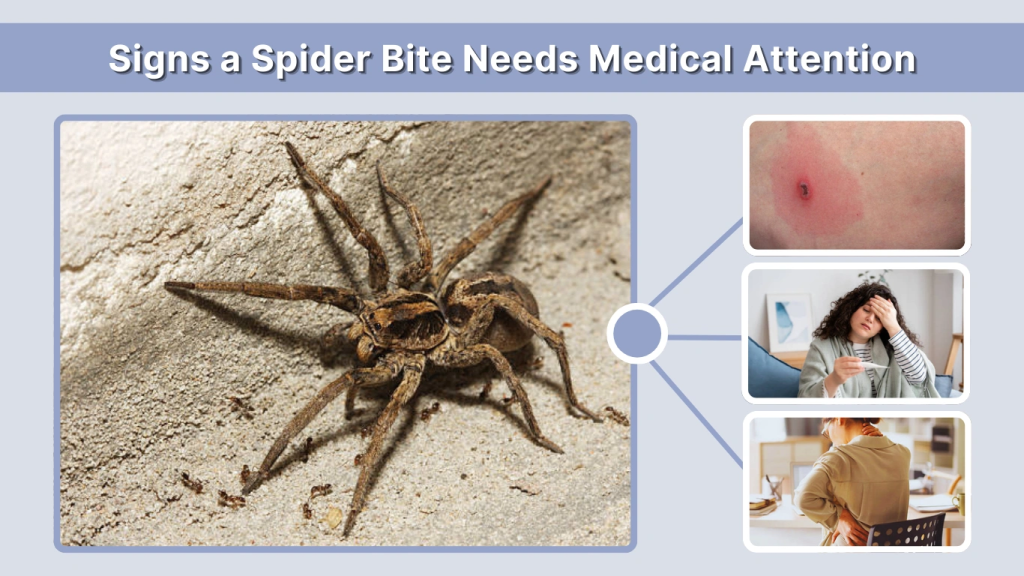
Necrosis occurs when venom damages skin and underlying tissue. The bite may start as a small red area but gradually develop a dark, sunken center.
Warning signs include:
- A black or crusted center
- An enlarging ulcer
- Surrounding redness and inflammation
Tissue damage can worsen over days, so early treatment is important to limit complications and scarring.
5. Fever or Chills
A spider bite should not cause full-body illness. If you develop a fever, chills, or general body aches, this may indicate infection or a systemic reaction to venom.
Other concerning symptoms include:
- Fatigue
- Sweating
- Swollen lymph nodes
These symptoms mean your body is reacting beyond the local bite area and should be evaluated by a healthcare professional.
6. Muscle Cramps or Severe Body Pain
Muscle cramping is a classic symptom of black widow bites. The venom affects the nervous system, leading to painful muscle contractions.
You may experience:
- Abdominal cramping
- Back pain
- Muscle rigidity
- Chest tightness
These symptoms can begin within hours of the bite and may become severe. Immediate medical care is strongly recommended if muscle pain spreads or intensifies.
7. Nausea, Vomiting, or Headache
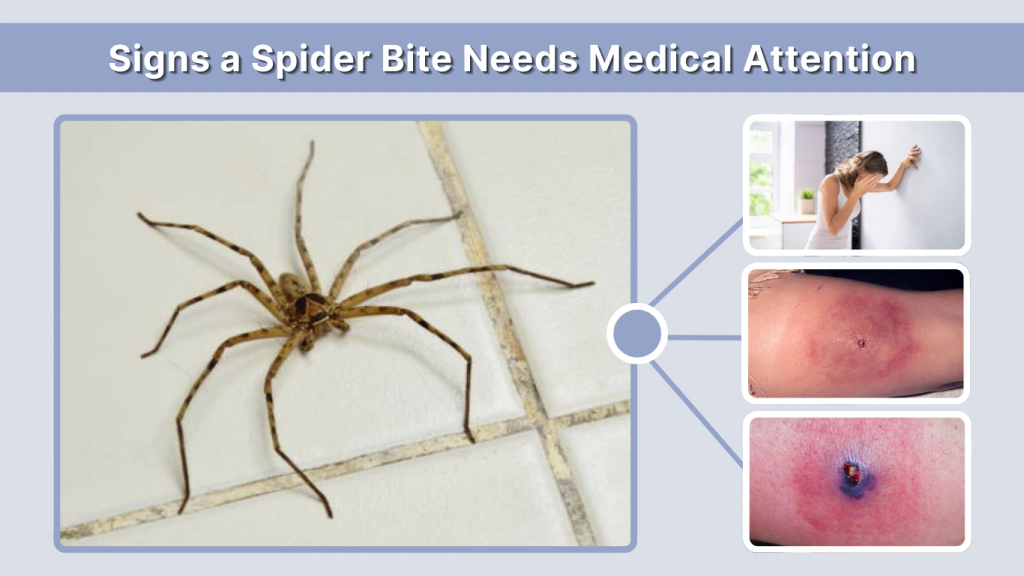
Digestive symptoms are not typical for simple insect bites. If you develop nausea, vomiting, dizziness, or a severe headache after a suspected spider bite, it could signal venom affecting your system.
These symptoms may be accompanied by:
- Sweating
- Weakness
- Elevated blood pressure
Systemic symptoms like these should always be assessed by a medical provider.
8. Signs of an Allergic Reaction
Some people may have an allergic reaction to spider venom. Mild allergic reactions can include itching or hives around the bite.
Severe reactions require emergency care. Watch for:
- Swelling of the face, lips, or throat
- Difficulty breathing
- Rapid heartbeat
- Feeling faint
These signs may indicate anaphylaxis, a life-threatening condition that requires immediate emergency treatment.
9. Signs of Infection
Even if the spider itself is not dangerous, bacteria can enter the skin through the bite wound. An infected spider bite can become painful and may worsen quickly without treatment.
Common signs of infection include:
- Pus or cloudy drainage
- Increasing warmth around the bite
- Red streaks spreading from the area
- Swollen lymph nodes
- Worsening tenderness
The skin may also become hard or develop a thick crust. If left untreated, infections can spread deeper into the tissue or bloodstream. Antibiotics may be necessary, so it’s important to see a healthcare provider if infection is suspected.
10. Symptoms That Don’t Improve After 48 Hours
Most minor spider bites begin to improve within one to two days. Redness and swelling should gradually decrease, and discomfort should ease.
If you notice that:
- Pain continues or intensifies
- The wound looks worse instead of better
- Swelling remains significant
- New symptoms appear
—it’s time to seek medical advice. A bite that fails to improve may not be a spider bite at all. Some skin infections, including those caused by antibiotic-resistant bacteria, are often mistaken for spider bites and require proper diagnosis and treatment.
When to Seek Emergency Care
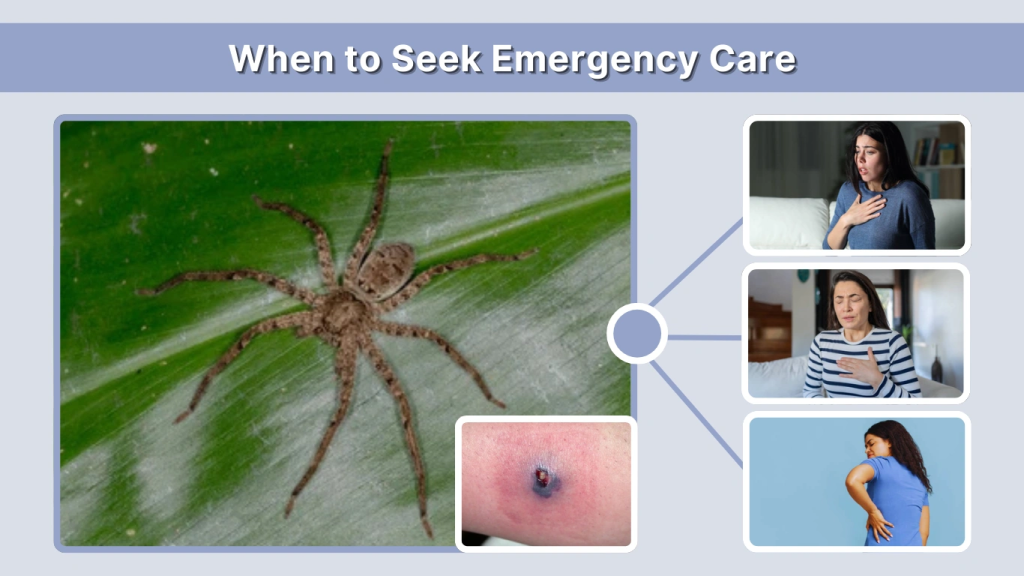
While many spider bites can be managed at home, certain symptoms require immediate emergency attention.
Call emergency services right away if you experience:
- Difficulty breathing
- Swelling of the tongue or throat
- Severe chest pain
- Intense muscle spasms
- Confusion or fainting
Children, older adults, pregnant individuals, and people with weakened immune systems are at higher risk for complications. For these groups, even moderate symptoms should be evaluated promptly.
What to Do If You Suspect a Dangerous Spider Bite
If you believe you’ve been bitten by a spider and symptoms are concerning, start with basic first aid:
1. Clean the area. Wash the bite gently with soap and water to reduce infection risk.
2. Apply a cold compress. Use a clean cloth wrapped around ice for 10–15 minutes at a time to reduce swelling and pain.
3. Elevate the area. If the bite is on an arm or leg, keep it raised to minimize swelling.
4. Monitor symptoms. Track changes in pain, redness, and overall health.
Avoid squeezing the bite, cutting into it, or applying heat. Heat may increase venom spread in certain cases. Home remedies that irritate the skin can worsen tissue damage.
If possible, safely capturing the spider (without risking another bite) may help with identification, but this is not necessary for treatment.
How Doctors Treat Serious Spider Bites
Treatment depends on the severity of symptoms and the type of spider involved.
Medical care may include:
- Prescription pain relievers
- Muscle relaxants for cramping
- Antibiotics if infection develops
- Tetanus booster if needed
- Wound care for ulcers or necrosis
In rare but severe cases involving black widow bites, antivenom may be administered. Hospital observation may be necessary if symptoms are intense or widespread.
Prevention Tips
While spider bites can’t always be prevented, simple precautions reduce your risk:
- Wear gloves when handling firewood, storage boxes, or debris
- Shake out shoes and clothing before wearing them
- Keep beds slightly away from walls
- Seal cracks around windows and doors
- Reduce clutter in basements, garages, and sheds
Taking these steps can limit contact with spiders in and around your home.
Conclusion
Most spider bites are minor and heal without medical treatment. However, certain warning signs—such as worsening pain, spreading redness, fever, muscle cramps, or allergic reactions—should never be ignored. Recognizing these symptoms early can prevent serious complications and speed recovery. When in doubt, it’s always safer to seek medical advice rather than wait for symptoms to worsen.
FAQs
How long does a spider bite take to heal?
Most mild spider bites heal within 3 to 7 days. Redness and swelling usually peak within 48 hours and then improve. More serious bites, especially those involving tissue damage, can take several weeks to heal and may require medical treatment.
Can a spider bite cause flu-like symptoms?
Yes, certain spider bites—particularly from venomous species—can cause fever, chills, body aches, nausea, and fatigue. These systemic symptoms suggest a stronger reaction and should be evaluated by a healthcare provider.
What does a dangerous spider bite look like?
A dangerous spider bite may develop severe pain, blistering, skin discoloration, or a dark center that worsens over time. Spreading redness, swelling, or signs of infection are also concerning and may require medical care.
Should I squeeze a spider bite?
No, squeezing a spider bite can damage tissue and increase the risk of infection. It’s best to gently clean the area, apply a cold compress, and monitor symptoms rather than attempting to drain or irritate the wound.
Are spider bites contagious?
Spider bites themselves are not contagious. However, if the wound becomes infected with bacteria, the infection could potentially spread through contact with drainage. Proper hygiene and wound care help prevent this.