
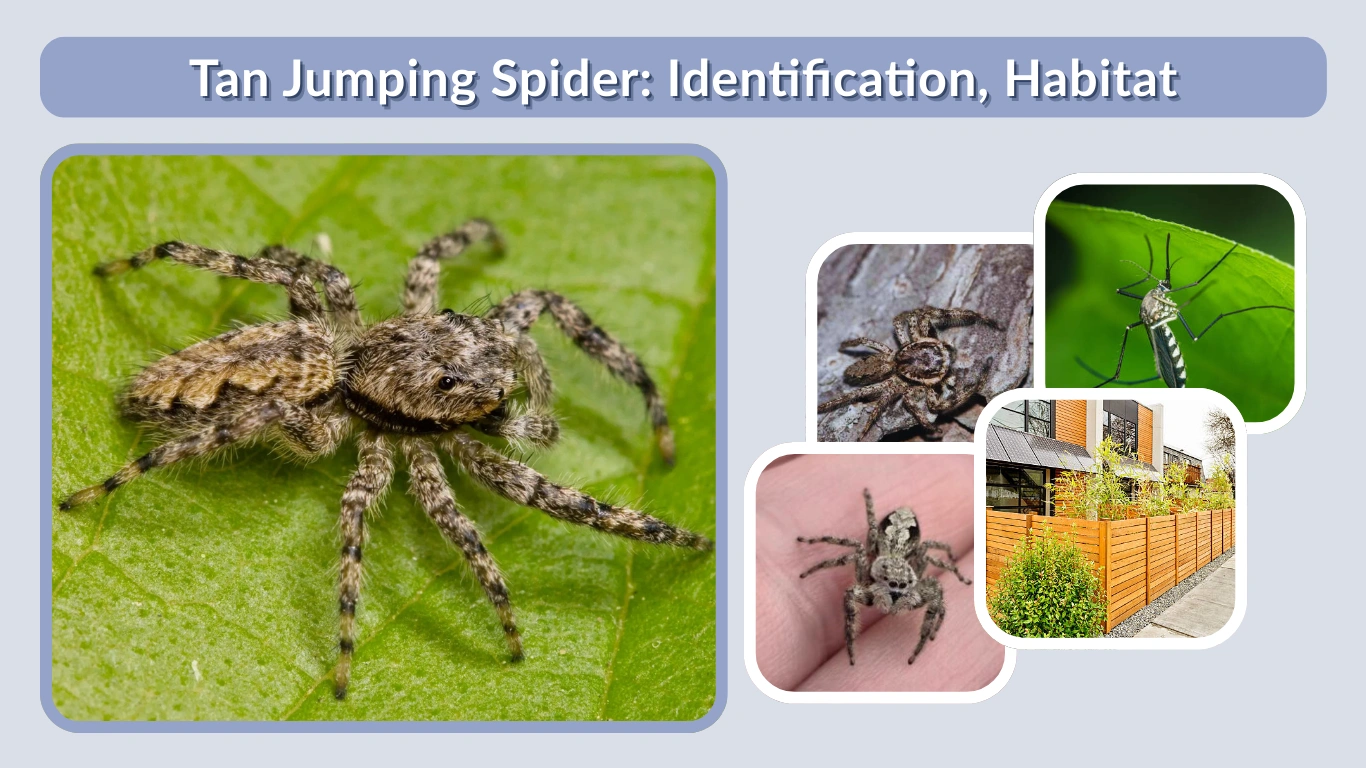
The tan jumping spider is a fascinating and harmless spider commonly found across North America. Known for its excellent eyesight and impressive jumping ability, this small predator belongs to the jumping spider family (Salticidae). Unlike many spiders that rely on webs, tan jumping spiders actively hunt their prey using speed and precision. They are often seen on tree bark, wooden fences, or house walls. Despite their intimidating appearance to some people, these spiders are beneficial because they help control insect populations.
What Is a Tan Jumping Spider?
The tan jumping spider is a species of jumping spider recognized for its flat body, bark-like coloration, and remarkable agility. These spiders are skilled hunters that rely on vision and quick movements rather than webs to capture prey.
Scientific Name and Classification
The scientific name of the tan jumping spider is Platycryptus undatus. It belongs to the family Salticidae, which is the largest family of spiders and includes more than 6,000 species worldwide. Jumping spiders are known for their intelligence, strong vision, and unique hunting style.
Within this family, the tan jumping spider stands out because of its flattened body shape and camouflage patterns that allow it to blend easily with tree bark and wooden surfaces.
Why It Is Called a Tan Jumping Spider
The common name “tan jumping spider” comes from its light brown or tan-colored body. This color helps the spider remain hidden in natural environments such as tree trunks and wooden structures.
Like all jumping spiders, this species does not rely on a web to catch prey. Instead, it stalks insects and leaps toward them using its powerful legs. This jumping behavior is what gives the entire family its name.
How to Identify a Tan Jumping Spider

Recognizing a tan jumping spider can be easier if you know its key physical features. These spiders have distinctive characteristics that separate them from many other spider species.
Size and Body Shape
Tan jumping spiders are relatively small. Adult spiders typically measure around 10 to 13 millimeters in body length, though females are usually slightly larger than males.
One of their most noticeable traits is their flat body shape. This flattened body allows them to hide in narrow spaces such as cracks in tree bark or between wooden boards.
Their legs are sturdy and adapted for jumping, giving them the ability to launch themselves several times their own body length when hunting or escaping predators.
Color and Patterns
The coloration of the tan jumping spider varies slightly, but it generally includes shades of tan, gray, or light brown. These colors often blend with darker markings or wavy patterns across the abdomen.
These markings resemble the texture of tree bark, which helps the spider camouflage itself effectively in its natural environment. This natural disguise protects the spider from predators and helps it approach prey without being noticed.
Eyes and Vision
Like other jumping spiders, the tan jumping spider has a unique eye arrangement. It has eight eyes, with the two large front-facing eyes being the most noticeable.
These large eyes give the spider exceptional vision. In fact, jumping spiders have some of the best eyesight among all spiders. They can detect movement, judge distances, and track prey accurately before making a jump.
This strong vision plays an essential role in their hunting strategy.
Habitat and Distribution

Tan jumping spiders are widely distributed and adaptable. They can live in both natural environments and areas close to human homes.
Geographic Range
This species is primarily found in North America. It is common throughout much of the United States and parts of southern Canada. Because they adapt well to different environments, they can live in forests, parks, and suburban neighborhoods.
Their ability to thrive in both wild and urban areas makes them one of the more frequently seen jumping spider species.
Common Places They Live
Tan jumping spiders prefer surfaces where they can easily blend in and observe potential prey. Some of the most common places where they are found include:
- Tree trunks and bark
- Wooden fences and decks
- House siding or walls
- Wooden posts and outdoor structures
Their flat bodies allow them to stay close to these surfaces, making them difficult to spot unless they move.
When They Are Most Active
These spiders are most active during the warmer months of the year, especially in spring and summer. Unlike many other spiders that are nocturnal, tan jumping spiders are active during the daytime.
Their excellent vision works best in daylight, which is why they hunt and explore during sunny conditions.
Behavior and Hunting Style
One of the most interesting features of the tan jumping spider is its unique hunting behavior. Unlike web-building spiders that wait for prey to get trapped, these spiders actively search for food. Their strong legs, sharp vision, and quick reflexes make them highly effective hunters.
Jumping Ability
Tan jumping spiders are known for their remarkable jumping skills. They can leap several times their body length in a single jump. This ability helps them catch prey quickly and also escape potential predators.
Before jumping, the spider often attaches a thin strand of silk to the surface beneath it. This silk acts as a safety line in case the jump fails, allowing the spider to climb back up and try again.
Their powerful back legs provide the force needed to launch them accurately toward their target.
How They Hunt Prey
Unlike many spiders that depend on webs to trap insects, tan jumping spiders rely on their vision and stealth. They slowly stalk their prey, carefully approaching without being noticed.
Once the spider is close enough, it leaps forward and grabs the insect with its front legs. After capturing the prey, it uses venom to immobilize it before feeding.
This hunting technique is very efficient and allows the spider to catch fast-moving insects.
Curious and Intelligent Behavior
Jumping spiders are often described as curious because they frequently turn and observe movement around them. Tan jumping spiders may appear to watch humans or track moving objects.
Researchers believe their advanced vision contributes to this behavior. Their ability to process visual information helps them make quick decisions when hunting or exploring their surroundings.
Diet and Role in the Ecosystem
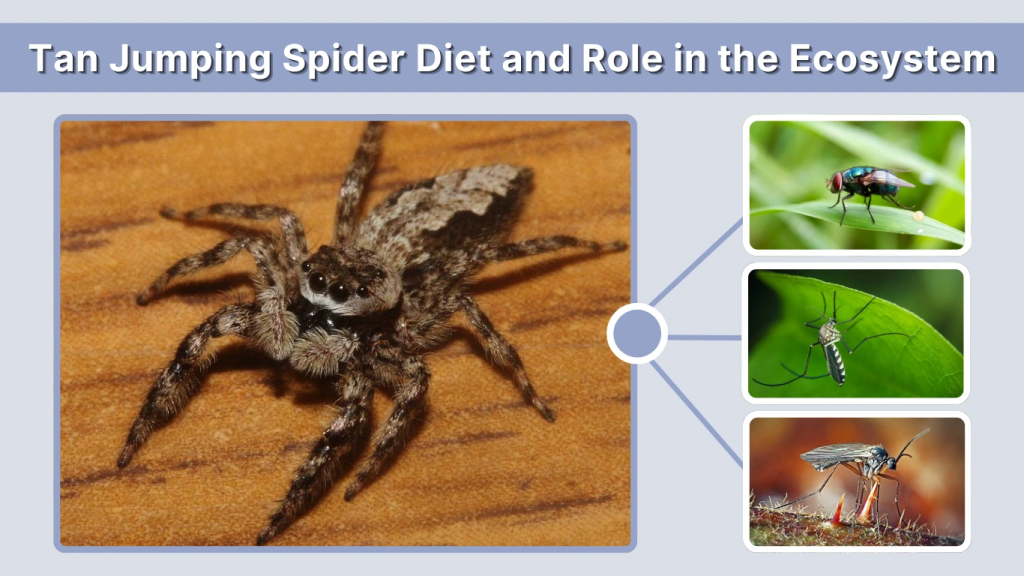
Tan jumping spiders play an important role in maintaining balance in the ecosystem. As active hunters, they help control populations of small insects that might otherwise become pests.
Common Prey
These spiders mainly feed on small insects that they can easily capture. Some of their most common prey include:
- Flies
- Mosquitoes
- Gnats
- Small beetles
- Occasionally other spiders
Their ability to catch flying or fast-moving insects makes them especially useful in reducing pest populations.
Natural Pest Control
Because tan jumping spiders eat many insects that are considered pests, they are actually beneficial to humans. In gardens, they help reduce the number of insects that can damage plants.
Around homes, they may catch flies or mosquitoes that gather near walls or outdoor lights. For this reason, many people choose to leave them alone when they appear near their homes.
Life Cycle of the Tan Jumping Spider
Like other spiders, the tan jumping spider goes through several stages of development during its life cycle. From mating to adulthood, each stage plays an important role in the survival of the species.
Mating Behavior
Male jumping spiders often perform special courtship displays to attract females. These displays may involve waving their legs, moving their bodies in patterns, or approaching carefully.
The purpose of these movements is to signal that the male is a potential mate rather than prey. If the female accepts the display, mating takes place.
Egg Sacs and Spiderlings
After mating, the female produces a silk egg sac in a sheltered location. This sac protects the eggs from predators and environmental conditions.
Once the eggs hatch, tiny spiderlings emerge. These young spiders initially stay near the egg sac before eventually dispersing to find their own territory.
Growth Stages
As the spiderlings grow, they molt several times. Molting is the process of shedding their outer shell so they can grow larger.
With each molt, the spiders develop more defined colors and body structures until they eventually reach adulthood.
Are Tan Jumping Spiders Dangerous?

Many people worry about spiders in their homes, but tan jumping spiders are generally harmless to humans.
Venom and Bites
Like most spiders, tan jumping spiders do have venom, but it is used mainly to subdue their prey. Their venom is not dangerous to humans.
Bites are extremely rare because these spiders prefer to avoid contact with people. If a bite does occur, it is usually mild and may cause slight redness or irritation similar to a small insect bite.
Interaction with Humans
Tan jumping spiders are not aggressive. When they encounter humans, they usually try to escape rather than attack.
In many cases, they simply move away or jump to another surface to avoid disturbance.
Interesting Facts About Tan Jumping Spiders
There are several fascinating facts about this small but impressive spider species:
- They have some of the best eyesight among all spiders.
- They can jump many times their own body length.
- They attach a silk safety line before jumping.
- They rely more on vision than webs to hunt prey.
- They are among the most curious spider species.
These unique traits make them one of the most interesting spiders found in North America.
How to Deal with Tan Jumping Spiders Around Your Home
If you notice a tan jumping spider near your home, there is usually no reason to worry. These spiders are helpful predators and rarely cause problems.
Why You Might Want to Keep Them
Tan jumping spiders eat insects that can be annoying or harmful. By hunting flies and mosquitoes, they help keep pest populations under control.
Because they are harmless and beneficial, many people prefer to leave them undisturbed.
Safe Removal Methods
If you would rather not have a spider inside your home, it can be safely removed without harming it.
A simple method is to place a glass or container over the spider and gently slide a piece of paper underneath. You can then carry the spider outside and release it in a garden or near a tree.
Conclusion
The tan jumping spider is a remarkable and beneficial species known for its excellent eyesight, impressive jumping ability, and active hunting style. Commonly found on tree bark, fences, and house walls, these spiders are harmless to humans and play an important role in controlling insect populations. By understanding their behavior and benefits, people can learn to appreciate these small but fascinating predators that help maintain balance in the natural environment.