

The marbled cellar spider is a long-legged house and outdoor-structure spider often seen hanging in messy webs under eaves, porches, garages, basements, and walls. Its scientific name is Holocnemus pluchei, and it belongs to the cellar spider family, Pholcidae. Although its thin legs and patterned body can look alarming, it is usually considered a nuisance spider rather than a dangerous one.
What Is a Marbled Cellar Spider?
The marbled cellar spider, also searched as marble cellar spider, is a species of cellar spider known for its long legs and mottled abdomen. It is non-native in parts of North America and is now common around homes in the southwestern United States.
| Feature | Marbled Cellar Spider |
| Scientific name | Holocnemus pluchei |
| Family | Pholcidae |
| Common name | Marbled cellar spider |
| Body shape | Small, narrow, elongated body |
| Legs | Very long, thin, often banded |
| Web type | Loose, messy, irregular web |
| Common areas | Eaves, garages, basements, porches, walls |
| Risk level | Low; mostly a nuisance spider |
How to Identify a Marbled Cellar Spider
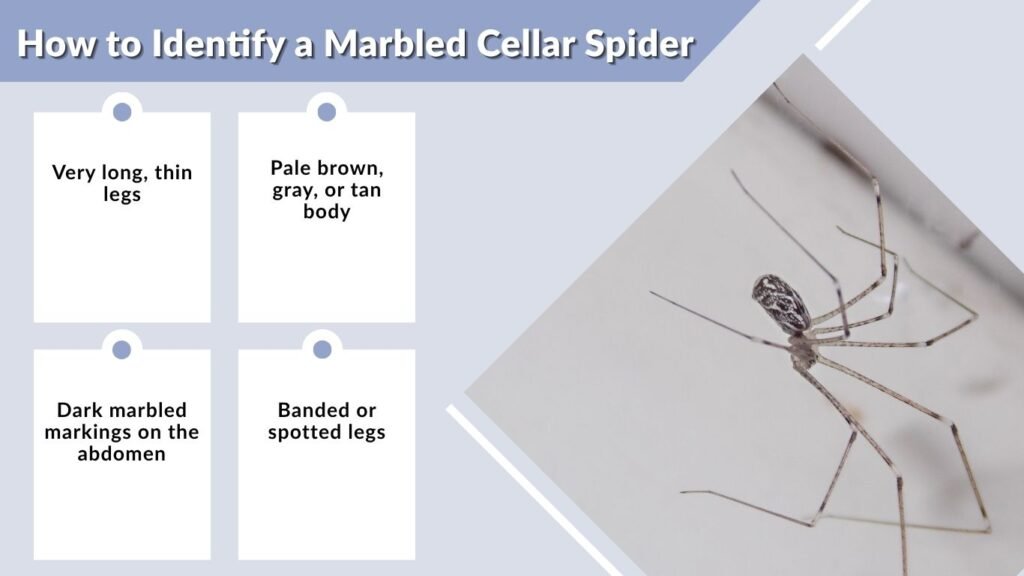
This spider is easier to identify when you look at the full body pattern, not just the long legs. BugGuide notes that the species has a distinctive abdomen pattern and a wide dark stripe on the underside.
Look for these signs:
- Very long, thin legs
- Pale brown, gray, or tan body
- Dark marbled markings on the abdomen
- Banded or spotted legs
- Loose, messy web in corners or under eaves
- Habit of hanging upside down in the web
- Small body compared with the length of the legs
Marbled Cellar Spider Photo Clues
In photos, the marbled cellar spider usually shows a narrow oval abdomen with pale and dark marbling. The legs are much longer than the body and may show dark rings or bands. This is one reason people confuse it with other long-legged house spiders.
Where Do Marbled Cellar Spiders Live?
Marbled cellar spiders are often reported around buildings, especially in warm, dry regions. They are found in abundance in the southwestern United States and can be common on walls and under eaves of homes.
Marbled Cellar Spider in Arizona
The keyword marbled cellar spider Arizona suggests many people in Arizona see these spiders around homes, patios, garages, and exterior walls. In warm regions, they may build webs outdoors under covered areas where insects are attracted to lights.
Marbled Cellar Spider in California
California is one of the best-known U.S. areas for this species. UC IPM shows adult marbled cellar spiders from Riverside, California, and BugGuide records also discuss its spread through California and the southwestern United States.
Is the Marbled Cellar Spider Poisonous or Venomous?
The better word is venomous, not poisonous. Poisonous means harmful when eaten or touched, while venomous means it injects venom. Like many spiders, cellar spiders use venom to subdue small prey, but cellar spiders are not considered medically important to people.
So, is the marbled cellar spider poisonous? No, it is not considered poisonous to humans. Is the marbled cellar spider venomous? Technically, it may use venom on prey, but it is not known as a dangerous spider for people.
Marbled Cellar Spider Bite: Should You Worry?
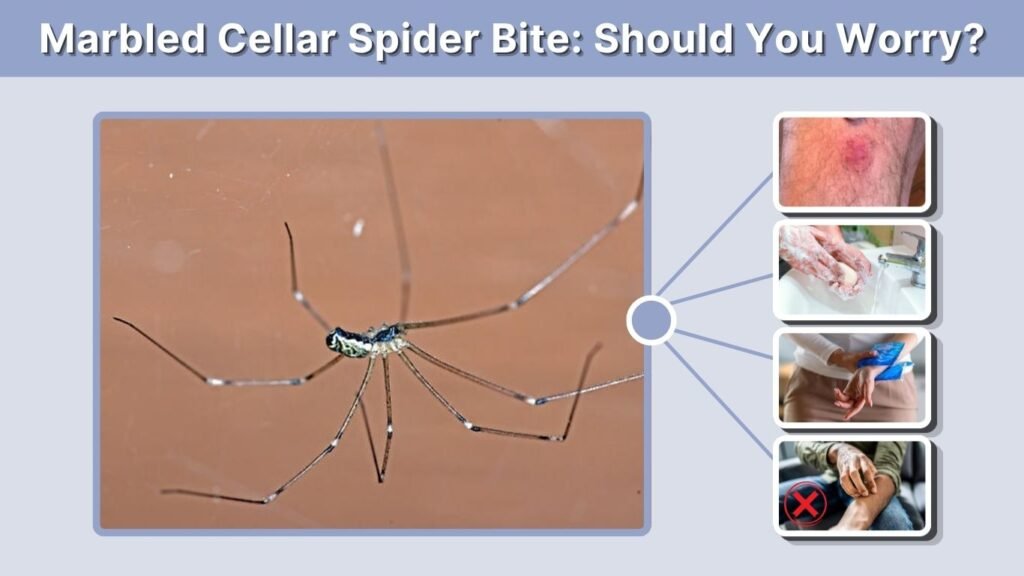
A marbled cellar spider bite is not a common concern. Cellar spiders are generally described as harmless and not medically important. They are more likely to run, hide, or vibrate in their web than bite a person.
Use basic first aid if you think any spider has bitten you:
- Wash the area with soap and water
- Apply a cold compress
- Avoid scratching
- Watch for swelling, spreading redness, or infection
- Seek medical help if symptoms become severe
Marbled Cellar Spider vs Brown Recluse
The keyword marbled cellar spider vs brown recluse is important because both can be brownish, indoor-associated spiders. However, they look and behave very differently. Brown recluse spiders are identified by features such as six eyes arranged in pairs, a violin-shaped mark, plain legs without bands, and a uniformly colored abdomen.
| Feature | Marbled Cellar Spider | Brown Recluse |
| Legs | Extremely long and thin, often banded | Long but not as threadlike; usually plain |
| Abdomen | Marbled or mottled pattern | Uniform color, not patterned |
| Web | Messy web in visible corners/eaves | More hidden, reclusive areas |
| Eyes | Cellar spider type, not recluse pattern | Six eyes in three pairs |
| Main marking | Marbled abdomen, dark underside stripe | Violin mark on cephalothorax |
| Risk | Low nuisance spider | Medically important spider |
Quick Difference
A spider with very long banded legs, a marbled abdomen, and a messy exposed web is much more likely to be a cellar spider than a brown recluse. A brown recluse usually has plain legs, a plain abdomen, and six eyes in paired groups.
What Do Marbled Cellar Spiders Eat?
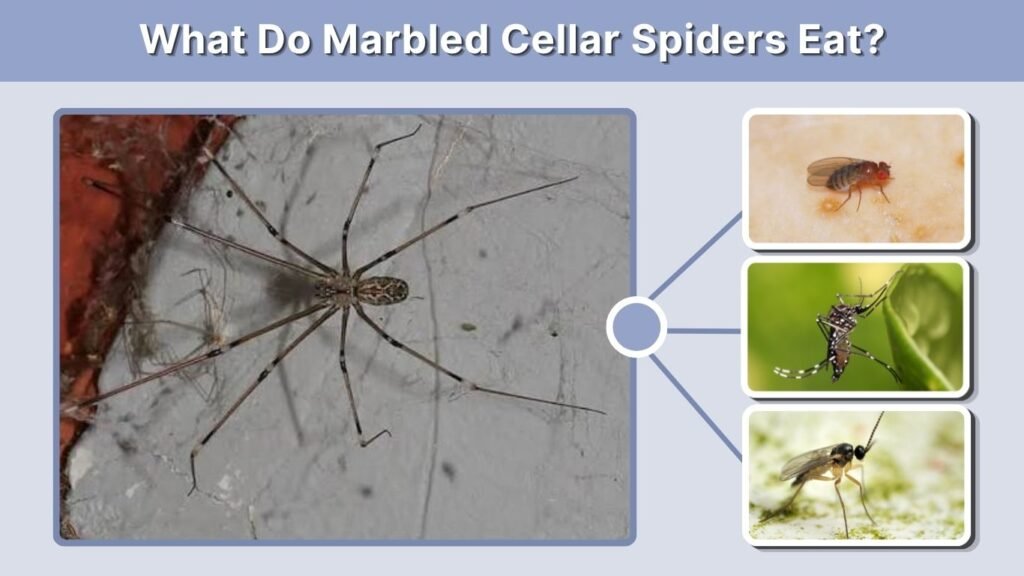
Marbled cellar spiders feed on small insects and other tiny arthropods that get trapped in their webs. Cellar spiders commonly wait upside down in loose webs and may shake or vibrate when disturbed.
Their prey may include:
- Small flies
- Mosquitoes
- Gnats
- Small moths
- Ants
- Other small spiders
- Tiny crawling insects
This makes them somewhat useful around homes, although their web buildup can become annoying.
How to Get Rid of Marbled Cellar Spiders
Marbled cellar spiders are usually controlled by reducing webs, insects, and shelter areas. Pest management research on this species has looked at cobweb removal and low-risk control methods because it can become abundant on homes in the Southwest.
Try these steps:
- Vacuum or sweep webs from corners, eaves, and garages
- Remove egg sacs when cleaning webs
- Seal cracks around doors, windows, and wall gaps
- Reduce outdoor lighting that attracts insects
- Clear clutter in garages and storage areas
- Fix moisture problems in basements or crawlspaces
- Use sticky traps for monitoring, not as the only control method
FAQs
Are marbled cellar spiders dangerous?
Marbled cellar spiders are not considered dangerous to humans. They are mostly nuisance spiders because they make messy webs around homes, garages, eaves, and basements. They may look creepy because of their long legs, but they are not treated as medically important spiders.
Is a marbled cellar spider bite serious?
A marbled cellar spider bite is unlikely to be serious. Cellar spiders are generally harmless and are not known for biting people. If you suspect a bite, clean the area, use a cold compress, and seek medical advice if symptoms worsen.
Are marbled cellar spiders found in Arizona?
Yes, marbled cellar spiders can be found in the southwestern United States, and Arizona provides suitable warm building environments. People often notice them under eaves, around patios, in garages, and near outdoor lights where small insects gather.
Are marbled cellar spiders found in California?
Yes, marbled cellar spiders are established in California. UC IPM has documented adult Holocnemus pluchei in Riverside, California, and BugGuide notes its spread through California and the southwestern United States.
Is a marbled cellar spider a brown recluse?
No, a marbled cellar spider is not a brown recluse. Marbled cellar spiders have very long legs, patterned bodies, and messy webs. Brown recluses have six eyes in pairs, plain legs, a plain abdomen, and a violin-shaped marking on the cephalothorax.