
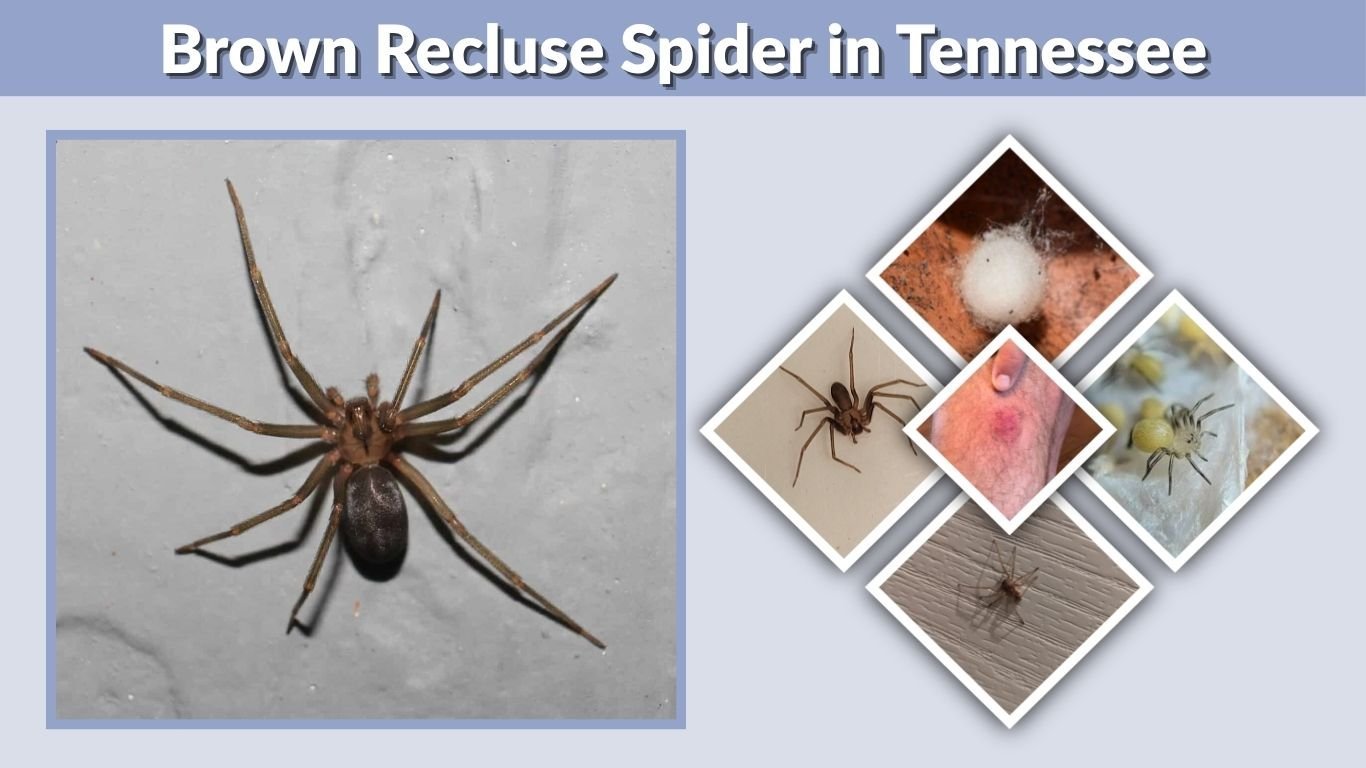
The brown recluse spider is one of the most searched spiders in Tennessee because it is medically important and often found around homes. It is a shy, hidden spider, not an aggressive attacker, but bites can happen when it is trapped against skin in clothing, bedding, shoes, or stored items. In Tennessee, correct identification matters because many harmless brown spiders are mistaken for brown recluses.
Are Brown Recluse Spiders in Tennessee?
Brown recluse spiders do live in Tennessee. The University of Tennessee Extension says the brown recluse is one of the feared poisonous spiders occurring in Tennessee, but it is shy, retiring, and usually bites only when injured or pressed against skin.
According to UT Extension, the brown recluse is found in every county in Tennessee, with the possible exception of a few extreme eastern counties. It is far more common in the western half of the state.
| Tennessee Area | Brown Recluse Risk |
| West Tennessee | Common and well established |
| Middle Tennessee | Common, including Nashville-area homes |
| East Tennessee | Present in many areas, but less common in extreme eastern counties |
| Rural homes | Possible in barns, sheds, woodpiles, storage rooms |
| Urban homes | Possible in closets, boxes, attics, basements, garages |
Brown Recluse Spider Identification in Tennessee
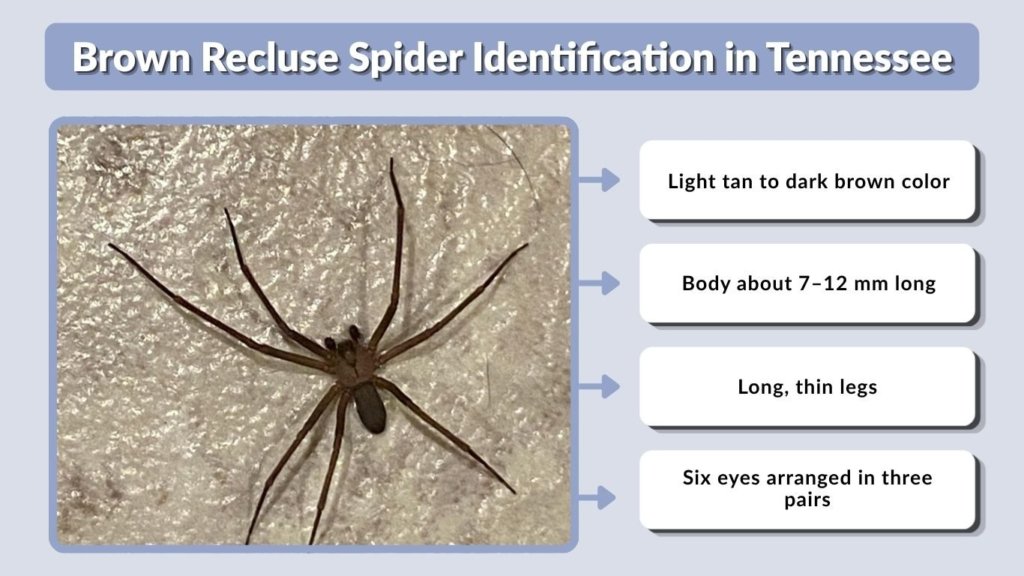
Many Tennessee homeowners see a small brown spider and assume it is a brown recluse. That can lead to unnecessary fear because many spiders are brown. Correct identification depends on several features, especially the eye pattern.
Key ID Features
A true brown recluse spider usually has:
- Light tan to dark brown color
- Body about 7–12 mm long
- Long, thin legs
- Plain abdomen without bold patterns
- Fine short hairs, not thick spines
- Dark violin-shaped marking on the front body section
- Six eyes arranged in three pairs
UT Extension says the adult body ranges from 7 mm to 12 mm long, with legs spanning roughly the size of a quarter to a half-dollar. It also notes that the best identification feature is the semicircular arrangement of three pairs of eyes, because most other spiders have eight eyes.
Brown Recluse Spider in Nashville and Middle Tennessee
Searches for “brown recluse spider Nashville Tennessee” and “brown recluse spider sightings Middle Tennessee” are common because Middle Tennessee sits within the spider’s known range. Homes, apartments, garages, sheds, and storage buildings can all provide suitable shelter.
Brown recluses prefer dry, quiet, low-disturbance areas. They are not usually seen walking in the open during the day. If you see several suspected brown recluses in a Nashville-area home, use sticky traps and professional identification before assuming an infestation.
Common Middle Tennessee Hiding Places
Check carefully in:
- Closets
- Basements
- Attics
- Garages
- Storage boxes
- Old clothing
- Shoes and boots
- Under furniture
- Behind picture frames
- Kitchen cabinets
- Crawl spaces
- Firewood stacks
UT Extension lists many Tennessee hiding places, including closets, garages, basements, attics, cupboards, utility boxes, under furniture, behind picture frames, in boxes, among papers, in clothing, under boards, in firewood stacks, and other sheltered places.
Brown Recluse Spider in East Tennessee
Brown recluse spiders can occur in East Tennessee, but they are generally less common in the far eastern part of the state than in western and middle areas. UT Extension states that the species is found in every Tennessee county with the possible exception of a few extreme eastern counties.
This means a brown spider in East Tennessee should be identified carefully. It may be a brown recluse, but it may also be a wolf spider, house spider, nursery web spider, or another harmless lookalike.
Brown Recluse Spider Bites in Tennessee
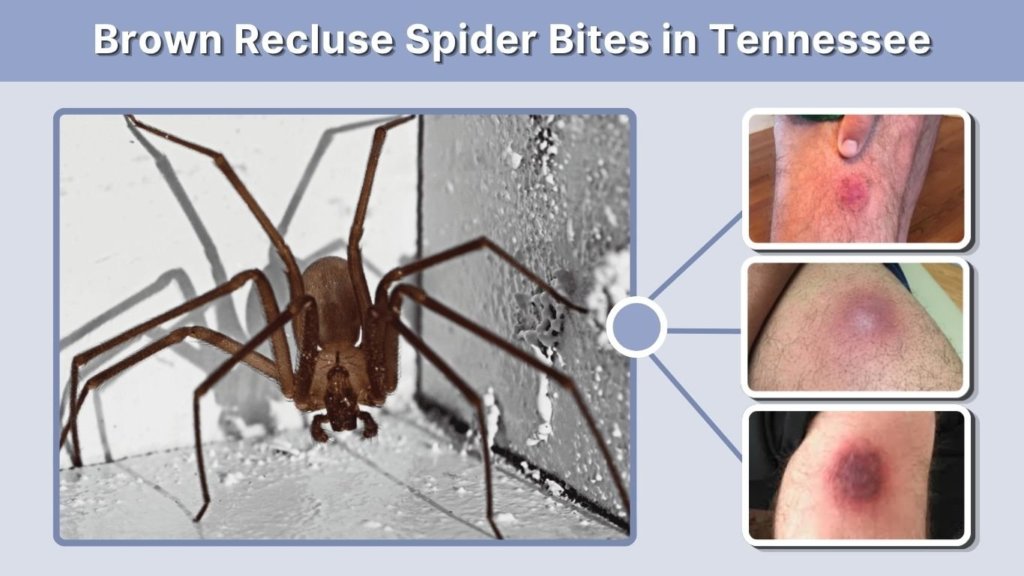
Brown recluse bites in Tennessee usually happen by accident. The spider does not chase people. Bites occur when the spider is pressed against skin, such as when someone puts on stored clothing, slips into shoes, reaches into boxes, or rolls over in bed.
The CDC says brown recluses cannot bite humans without counterpressure, such as when the spider is accidentally trapped against the skin. It also notes that bites may cause localized pain, a small white blister, and in some cases a severe skin lesion needing professional medical attention.
Possible Bite Symptoms
A brown recluse bite may cause:
- Little or no pain at first
- Burning or stinging feeling
- Itching
- Redness
- Small pimple or blister
- Blue, purple, or dark center
- Slow-healing sore in severe cases
- Fever, nausea, or weakness in rare systemic cases
UT Extension says the bite is often initially painless, then may start with a central pimple and an irregular red reaction in 6–12 hours, followed by blister formation or skin death in some cases. It also notes that suspected bites can be confused with wasp stings, bee stings, tick bites, allergic reactions, or skin abscesses.
What to Do After a Suspected Brown Recluse Bite
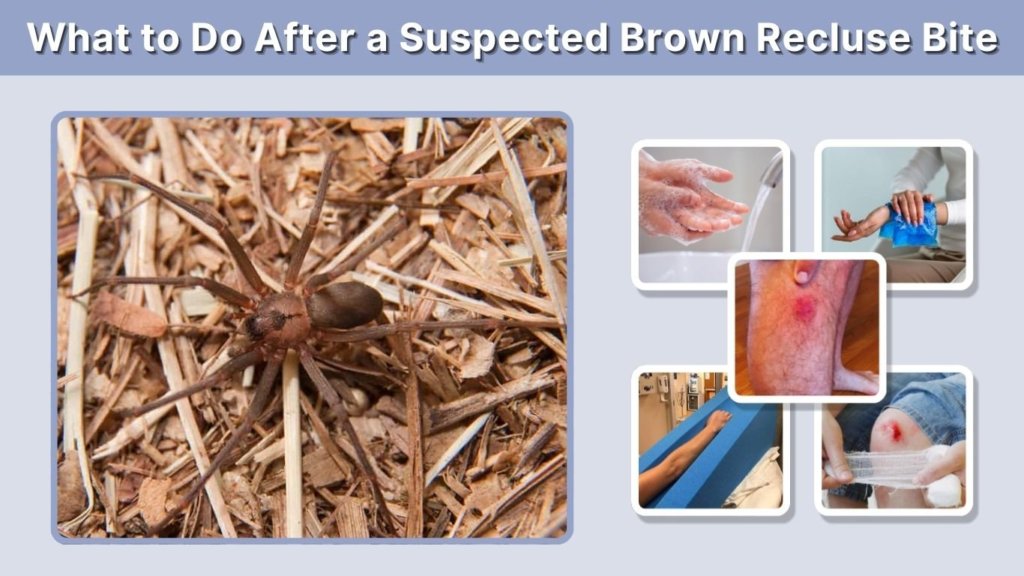
A suspected brown recluse bite should be handled carefully, especially if symptoms worsen. Do not cut the wound, do not try home surgery, and do not wait for severe tissue damage before seeking help.
First Aid Steps
Use these steps:
- Stay calm.
- Wash the bite area with soap and water.
- Apply a cold cloth or ice pack wrapped in cloth.
- Elevate the area if possible.
- Try to identify or capture the spider safely.
- Seek medical care if pain, blistering, swelling, darkening, or illness develops.
CDC first aid guidance for spider bites includes staying calm, safely identifying the spider if possible, washing the bite area with soap and water, and using ice or a cold cloth to reduce swelling.
Brown Recluse Spider Infestation in Tennessee
A brown recluse infestation in Tennessee may go unnoticed because the spiders hide in quiet areas. One spider does not always mean an infestation, but repeated sightings, multiple sticky-trap captures, egg sacs, shed skins, and activity in storage areas are stronger warning signs.
Signs of Infestation
Look for:
- Several brown spiders caught on sticky traps
- Repeated sightings indoors
- Loose, irregular webs in hidden places
- Egg sacs in storage areas
- Shed skins
- Spiders in boxes, clothes, shoes, or bedding
- Activity in attics, crawl spaces, basements, or garages
UT Extension says brown recluse spiders build irregular, patternless webs in poorly lit areas, usually with a thicker retreat portion in a protected crevice or sheltered space.
Brown Recluse Egg Sacs and Life Cycle in Tennessee
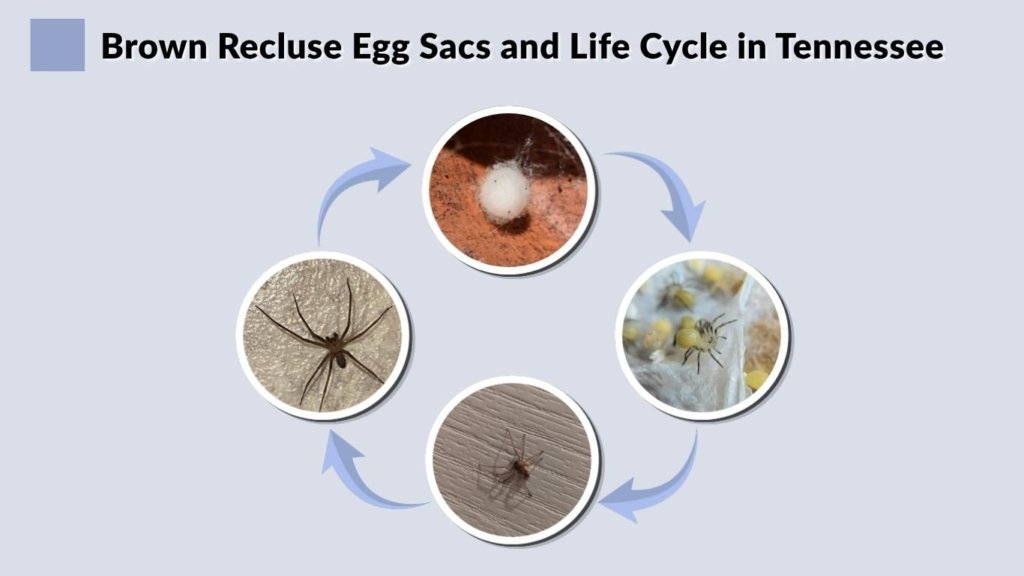
Female brown recluses can produce egg sacs in sheltered locations. UT Extension says brown recluse egg sacs develop between February and September, with most development from May through July. Each egg sac normally contains 20–50 eggs, and a female usually constructs up to five egg sacs.
| Life Stage | Tennessee Homeowner Clue |
| Egg sac | Hidden silk sac in dark area |
| Spiderlings | Small pale versions of adults |
| Juveniles | May be found near webs or shed skins |
| Adults | Roam at night and hide by day |
| Web retreat | Loose, irregular silk in protected place |
Finding egg sacs or many small spiderlings suggests breeding activity and should be treated more seriously than seeing one wandering spider.
How to Prevent Brown Recluse Bites in Tennessee Homes
Bite prevention is very important in homes where brown recluses are present. The goal is to reduce accidental skin contact.
Bite Prevention Tips
- Store clothing in sealed plastic bags or boxes.
- Store shoes in plastic shoe boxes.
- Shake out shoes and clothing before wearing.
- Move beds away from walls and curtains.
- Remove bed skirts from box springs.
- Avoid bedspreads that touch the floor.
- Inspect bedding before getting into bed.
- Place glue boards under bedposts in infested rooms.
UT Extension recommends these steps for homes where brown recluse spiders are present, especially because many bites happen when spiders are pressed against skin in clothing or bedding.
How to Control Brown Recluse Spiders in Tennessee
Brown recluse control is not just spraying around the room. These spiders hide in cracks, boxes, wall gaps, attics, basements, and cluttered storage areas. UT Extension says the best solution for serious brown recluse problems is hiring a professional pest control company.
Home Control Steps
Start with these practical steps:
- Remove unused boxes and paper clutter.
- Replace cardboard boxes with sealed plastic bins.
- Vacuum spiders, webs, and egg sacs.
- Wear gloves and long sleeves while cleaning.
- Move firewood away from the house.
- Remove old furniture and junk from outside areas.
- Seal cracks, crevices, and utility openings.
- Add door sweeps and weather stripping.
- Use sticky traps to find spider hotspots.
- Call pest control for repeated sightings or heavy activity.
UT Extension recommends removing preferred habitat, moving firewood away from the home, sealing cracks and crevices, cleaning cluttered areas, vacuuming spiders and webs, and using sticky traps throughout the home to locate and reduce brown recluse populations.
Brown Recluse vs Common Tennessee Lookalikes
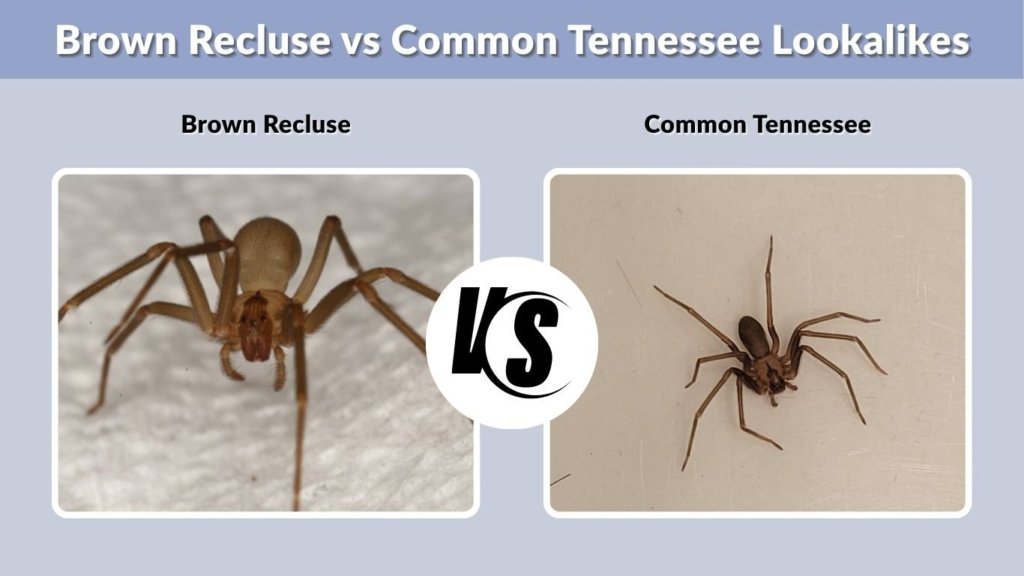
Not every brown spider in Tennessee is a brown recluse. Wolf spiders, nursery web spiders, house spiders, and grass spiders are often mistaken for recluses. Oklahoma State University describes the brown recluse as tan to dark brown, with a violin-shaped mark, six eyes instead of eight, and a body size near 1/4 to 1/2 inch.
Lookalike Clues
It may not be a brown recluse if it has:
- Very hairy body
- Strong leg bands
- Bold abdomen patterns
- Large front-facing eyes
- Round orb web
- Funnel-shaped grass web
- Thick, stocky body
- Fast jumping behavior
If you are unsure, catch the spider safely in a jar or on a sticky trap and ask a local extension office or pest control professional for identification.
FAQs
Do brown recluse spiders live in Tennessee?
Yes. Brown recluse spiders live in Tennessee. UT Extension says they are found in every county with the possible exception of a few extreme eastern counties, and they are far more common in the western half of the state.
Are brown recluse spiders common in Nashville, Tennessee?
They can be common in Nashville and Middle Tennessee because this region is within their established range. They are most often found in dark, quiet places such as closets, basements, garages, attics, boxes, and stored clothing.
Are brown recluse spiders poisonous in Tennessee?
Yes, brown recluse spiders are venomous. Their bites can cause localized pain, blistering, and in some cases skin tissue damage. However, they are shy spiders and usually bite only when trapped against the skin.
What should I do if I find a brown recluse spider in my Tennessee home?
Do not handle it barehanded. Capture it safely for identification if possible, place sticky traps along walls and storage areas, reduce clutter, vacuum hidden areas, and call pest control if you keep finding spiders.
When are brown recluse bites most common in Tennessee?
UT Extension says most bites occur from March to October, when people accidentally disturb spider habitats such as closets, outbuildings, or woodpiles. Indoor spiders may remain active outside that seasonal pattern.