
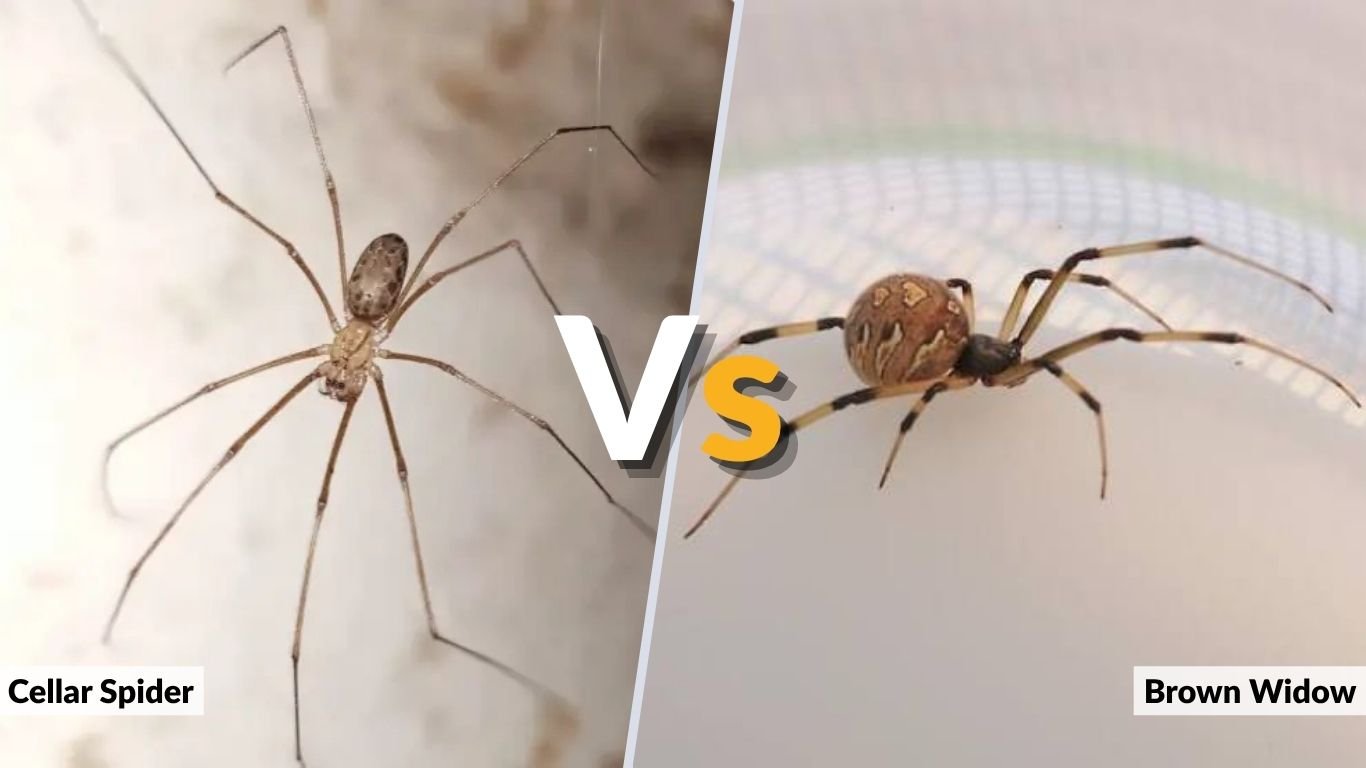
Cellar spiders and brown widows can both appear around homes, garages, sheds, and dark corners, but they are very different spiders. A cellar spider is usually a harmless nuisance with very long, thin legs and messy webs. A brown widow is a widow spider with medically important venom, though serious bites are uncommon. This guide explains how to tell them apart, where they hide, and when you should be cautious.
Cellar Spider vs Brown Widow: Quick Comparison
Both spiders build irregular webs, so people may confuse them at first glance. The fastest way to separate them is by body shape, leg length, markings, egg sacs, and risk level.
| Feature | Cellar Spider | Brown Widow |
| Scientific group | Family Pholcidae | Latrodectus geometricus |
| Body shape | Small, fragile body with very long legs | Rounder abdomen, widow-like body |
| Color | Pale gray, tan, or whitish | Tan to brown, sometimes darker |
| Web | Loose, messy web in corners | Irregular cobweb in protected areas |
| Key marking | Usually no hourglass | Orange/yellow hourglass underneath |
| Egg sac | Plain silk sac | Spiky, round egg sac |
| Human risk | Very low | Higher, but bites are usually uncommon |
Cellar spiders are widely described as harmless household spiders, while brown widows are true widow spiders and should be treated with more caution.
What Does a Cellar Spider Look Like?
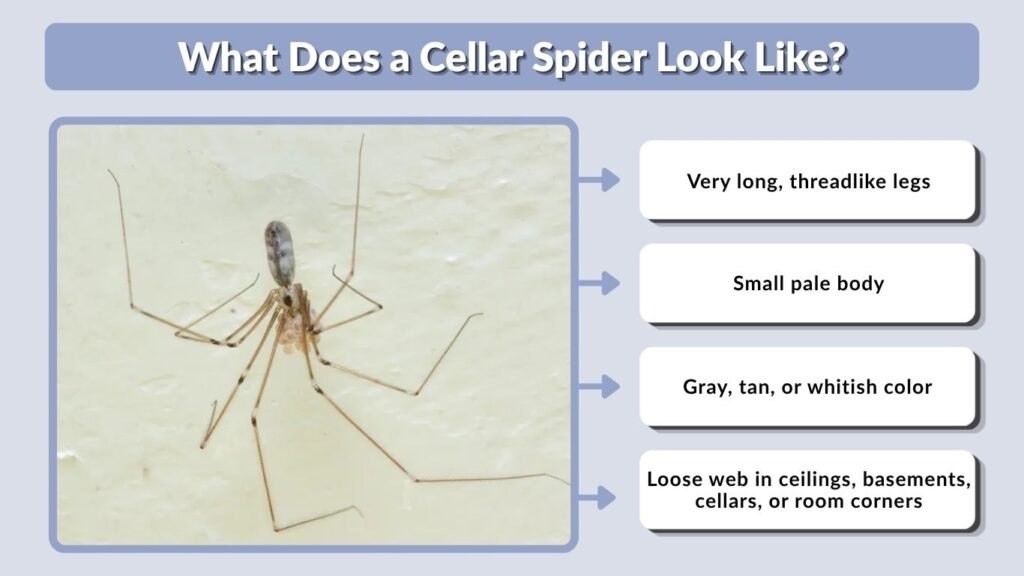
Cellar spiders are the thin, delicate spiders often called “daddy longlegs spiders.” They are not the same as harvestmen, which are not true spiders.
Main identification signs
Look for these features:
- Very long, threadlike legs
- Small pale body
- Gray, tan, or whitish color
- Loose web in ceilings, basements, cellars, or room corners
- Rapid vibrating or bouncing when disturbed
The Missouri Department of Conservation describes cellar spiders as fragile, harmless spiders with extremely long, thin legs and a habit of vibrating in their webs when alarmed.
Are cellar spiders dangerous?
Cellar spiders are not considered dangerous to humans. They can become annoying when they create many webs, but they are not a serious bite threat. The University of Maine Extension notes that cellar spiders may build large populations indoors but are not harmful or dangerous to people.
What Does a Brown Widow Look Like?
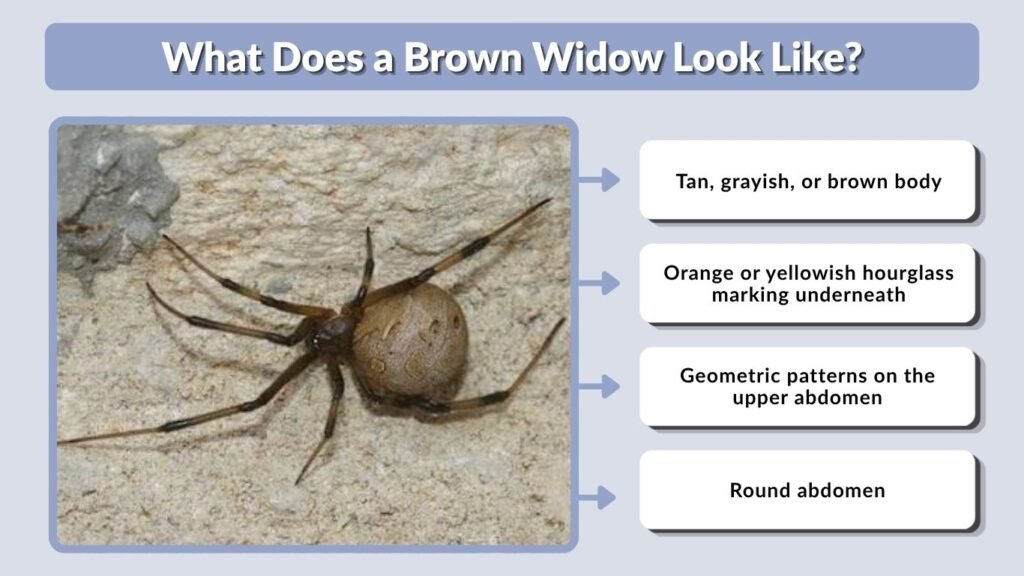
Brown widows are close relatives of black widows. They are usually lighter than black widows, but color alone is not enough for identification.
Main identification signs
A brown widow may have:
- Tan, grayish, or brown body
- Round abdomen
- Banded legs
- Orange or yellowish hourglass marking underneath
- Geometric patterns on the upper abdomen
- Spiky, round egg sacs
The brown widow’s spiky egg sac is one of the easiest clues. UCR’s Center for Invasive Species Research describes brown widow egg sacs as round and yellow with many little silk spikes, unlike the smoother egg sacs of many other widow spiders.
Are brown widows dangerous?
Brown widows have neurotoxic venom, but bites are reported less often and are usually less severe than black widow bites. UC IPM identifies the brown widow as a worldwide subtropical widow spider, and LSU AgCenter notes that brown widow bites are extremely rare and usually happen when an adult female is accidentally trapped against the skin.
Cellar Spider vs Brown Widow Identification Table
Use this table when you see a spider in a corner, garage, shed, or basement.
| Clue | More Likely Cellar Spider | More Likely Brown Widow |
| Legs | Extremely long and thin | Long but stronger-looking, often banded |
| Abdomen | Small and narrow or oval | Rounder, widow-like abdomen |
| Color | Pale, gray, tan, whitish | Brown, tan, gray, sometimes dark |
| Underside mark | No clear hourglass | Orange/yellow hourglass |
| Web position | Ceiling corners, basements, cellars | Outdoor furniture, garages, sheds, clutter |
| Egg sac | Smooth/simple | Spiky or “sea mine” shape |
| Risk | Low | Handle with caution |
The egg sac is especially useful because brown widow egg sacs have distinctive pointed projections, while cellar spider webs usually contain simpler silk sacs.
Habitat and Web Differences
Cellar spiders usually prefer quiet indoor areas. You may find them in basements, ceiling corners, closets, crawl spaces, and garages. They often hang upside down in their loose webs and wait for insects to become trapped.
Brown widows also live around human structures, but they are often found in more protected outdoor or semi-outdoor spaces. Common places include patio furniture, storage bins, sheds, mailboxes, garages, fence rails, and clutter near buildings. UC IPM reports that brown widows occur in subtropical habitats and have spread in parts of the United States, especially warmer regions.
Bite Risk: Which Spider Is More Dangerous?
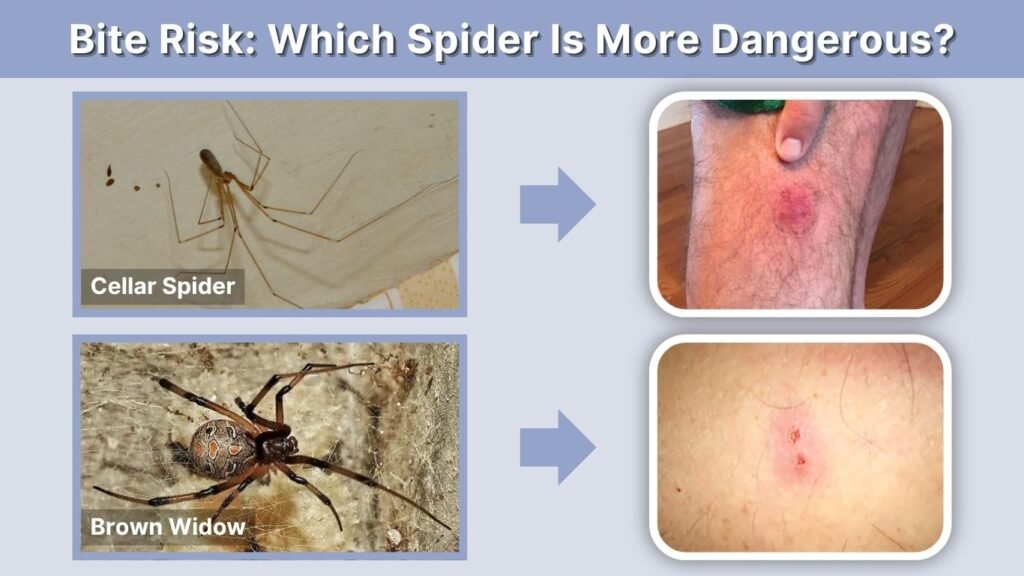
A cellar spider is far less concerning. It is mainly a nuisance spider, not a medically important one. Brown widows deserve more caution because they belong to the widow spider group.
| Bite Factor | Cellar Spider | Brown Widow |
| Likely to bite? | Very unlikely | Uncommon, usually defensive |
| Venom concern | Not medically important | Medically important widow venom |
| Typical reaction | Usually no serious issue | Local pain, redness, possible stronger symptoms |
| Emergency risk | Very low | Higher for children, elderly people, or severe symptoms |
| Best action | Remove webs, reduce insects | Avoid handling, remove carefully, call pest control if many |
Widow spider bites can cause immediate sharp pain and may lead to local or systemic symptoms in some cases, according to Merck Manual. Brown widow envenomation is often mild but can sometimes cause moderate symptoms such as radiating pain or nausea.
What to Do If You Find One
Do not crush an unknown spider with bare hands. Identification matters, especially if it might be a widow spider.
For cellar spiders:
- Vacuum webs and egg sacs
- Reduce indoor insects
- Seal gaps around doors and windows
- Remove old webs from ceiling corners
For brown widows:
- Wear gloves when moving stored items
- Check patio furniture, bins, and outdoor clutter
- Remove spiky egg sacs carefully
- Avoid touching the spider directly
- Call pest control if you find many widows
Brown widows are not aggressive, but accidental contact can lead to bites. Careful inspection and clutter reduction are the safest control steps.
FAQs
Are cellar spiders the same as brown widows?
No. Cellar spiders belong to a different spider group and usually have tiny bodies with extremely long legs. Brown widows are true widow spiders with rounder abdomens, banded legs, orange or yellow hourglass markings, and distinctive spiky egg sacs.
Can a cellar spider kill a brown widow?
Cellar spiders sometimes catch other spiders in their webs, but you should not rely on them for brown widow control. If you see brown widows or spiky egg sacs around your home, remove them safely or contact a pest control professional.
How can I identify a brown widow egg sac?
A brown widow egg sac is round and covered with small silk spikes or projections. It can look like a tiny spiky ball, pollen grain, or sea mine. This is one of the clearest signs that brown widows may be present.
Should I kill cellar spiders?
You do not have to kill cellar spiders. They are generally harmless and may catch small insects. If they bother you, vacuum the webs and relocate the spider if possible. Reducing indoor insects also helps keep their numbers lower.
When should I worry about a spider bite?
Seek medical help if pain spreads, muscle cramps develop, nausea occurs, breathing feels difficult, or the bite victim is a child, older adult, or medically vulnerable person. If possible, safely capture or photograph the spider for identification.
