

The barn funnel weaver is a common spider found in outdoor structures such as barns, sheds, and garages. Known for its distinctive funnel-shaped web, this spider often catches the attention of homeowners and farmers alike. Despite its somewhat intimidating appearance and fast movements, the barn funnel weaver is generally harmless to humans. Understanding its behavior, habitat, and identification features can help reduce fear and promote a more balanced view of its role in controlling insect populations.
What Is a Barn Funnel Weaver?
The barn funnel weaver belongs to the family Agelenidae, a group of spiders known for building funnel-shaped webs. These spiders are often referred to as grass spiders or funnel weavers due to their unique web structure and hunting style.
Barn funnel weavers are typically found in rural and semi-rural environments where they can easily build webs in corners, along walls, or near ground surfaces. Their webs consist of a flat sheet that narrows into a funnel-shaped retreat where the spider hides.
Although they may appear aggressive due to their speed, these spiders are shy and prefer to retreat rather than confront humans. Their main role in the ecosystem is to capture insects, making them beneficial rather than harmful.
Barn Funnel Weaver Identification

Physical Characteristics
- Medium-sized spider with a brown or grayish body
- Long, slender legs adapted for fast movement
- Distinct striping patterns on the cephalothorax and abdomen
- Prominent spinnerets extending from the rear
Web Structure
- Funnel-shaped web with a flat sheet
- Non-sticky silk used to detect vibrations
- Funnel serves as a hiding and retreat area
- Commonly built in corners, grass, or near ground level
Common Misidentification
- Often confused with wolf spiders due to similar size
- Wolf spiders do not build webs
- Funnel weavers have visible spinnerets, unlike many similar species
- Behavior differs—funnel weavers rely on webs, while wolf spiders hunt actively
Barn Funnel Weaver Habitat and Distribution
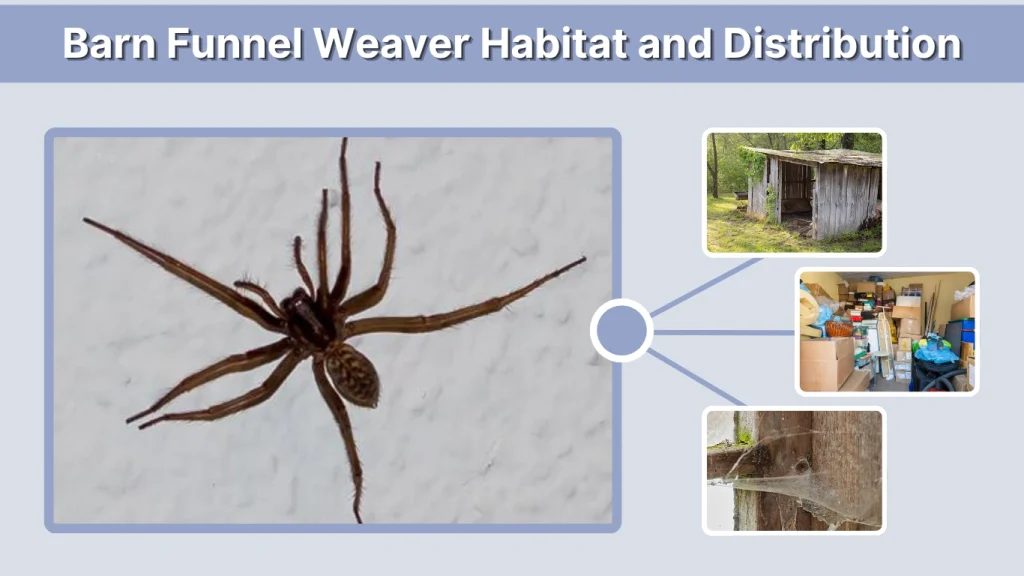
Barn funnel weavers are widely distributed in many regions, particularly in temperate climates. They are commonly found in barns, sheds, garages, and other man-made structures where there is minimal disturbance. These spiders prefer dry environments with plenty of surfaces to anchor their webs.
In addition to barns, they can also be found in gardens, tall grass, and along fences. Their presence is often linked to areas with abundant insect activity, as these locations provide a steady food source. Seasonal changes can influence their visibility, with increased activity during warmer months when insects are more plentiful.
Behavior and Lifestyle
Hunting Technique
- Waits inside the funnel for prey
- Detects vibrations on the web surface
- Rushes out quickly to capture insects
- Drags prey back into the funnel
Speed and Movement
- Extremely fast runners
- Retreat rapidly when disturbed
- Rarely remain exposed for long periods
- Depend on speed rather than strength
Daily Activity
- Active during the day and dusk
- Remains hidden when not hunting
- Rebuilds or repairs webs regularly
- More visible in warmer seasons
Is the Barn Funnel Weaver Dangerous?
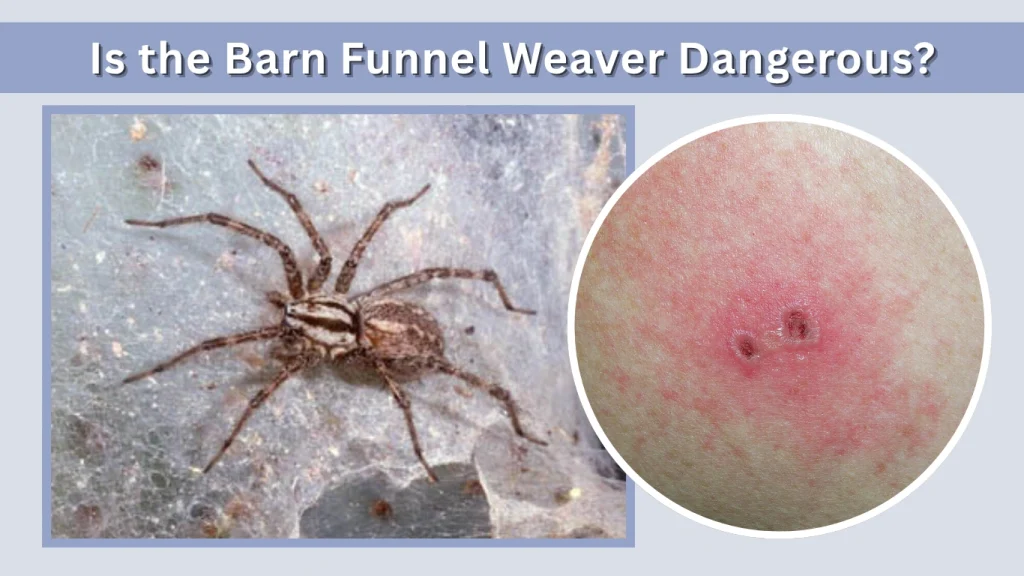
The barn funnel weaver is not considered dangerous to humans. Its venom is mild and not medically significant, meaning it does not pose serious health risks. Bites are rare and typically occur only when the spider is accidentally handled or trapped against the skin.
If a bite does happen, symptoms are usually minor, such as slight redness, mild pain, or irritation. These effects generally subside without the need for medical treatment. Compared to more dangerous spiders, the barn funnel weaver is harmless and should not be a cause for concern.
Barn Funnel Weaver vs Wolf Spider
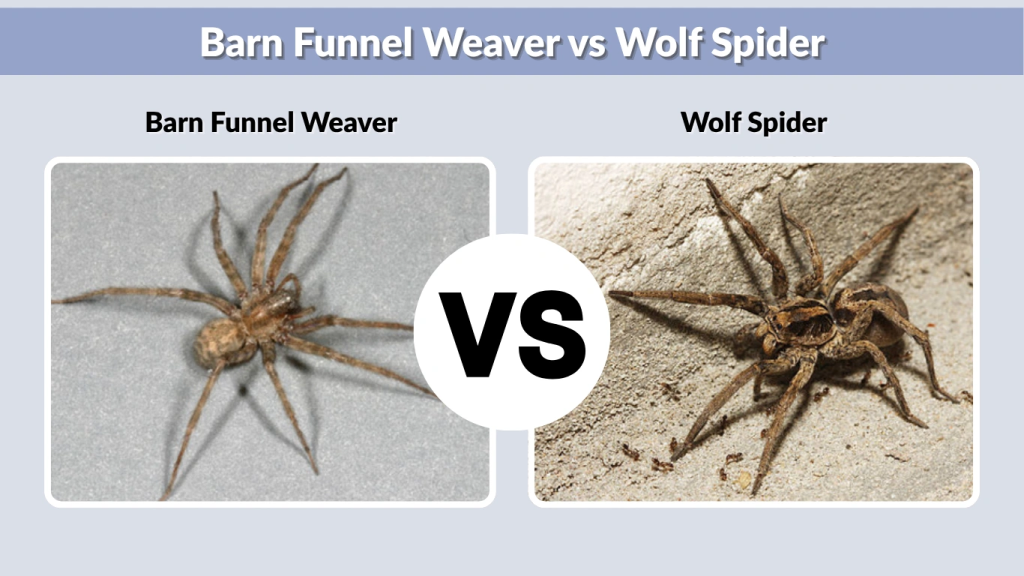
Key Differences
- Barn funnel weaver builds funnel-shaped webs, wolf spider does not
- Funnel weaver has long visible spinnerets, wolf spider lacks these
- Wolf spider has a more robust, hairy body
- Funnel weaver appears slimmer and more streamlined
Behavior Comparison
- Funnel weaver waits in its web for prey
- Wolf spider actively hunts without webs
- Funnel weaver retreats quickly into its funnel
- Wolf spider relies on speed and vision
Risk Level
- Barn funnel weaver: harmless to humans
- Wolf spider: also generally harmless but may bite if threatened
- Both species are not medically significant
Benefits of Barn Funnel Weavers
Barn funnel weavers play a valuable role in controlling insect populations, especially in barns and outdoor structures where pests are common. By feeding on flies, mosquitoes, beetles, and other insects, they help reduce nuisance pests naturally.
Their webs act as efficient traps, capturing insects without the need for chemicals or human intervention. This makes them an eco-friendly form of pest control. In agricultural settings, their presence can be particularly beneficial, as they contribute to maintaining a healthier environment for animals and stored crops.
How to Get Rid of Barn Funnel Weavers
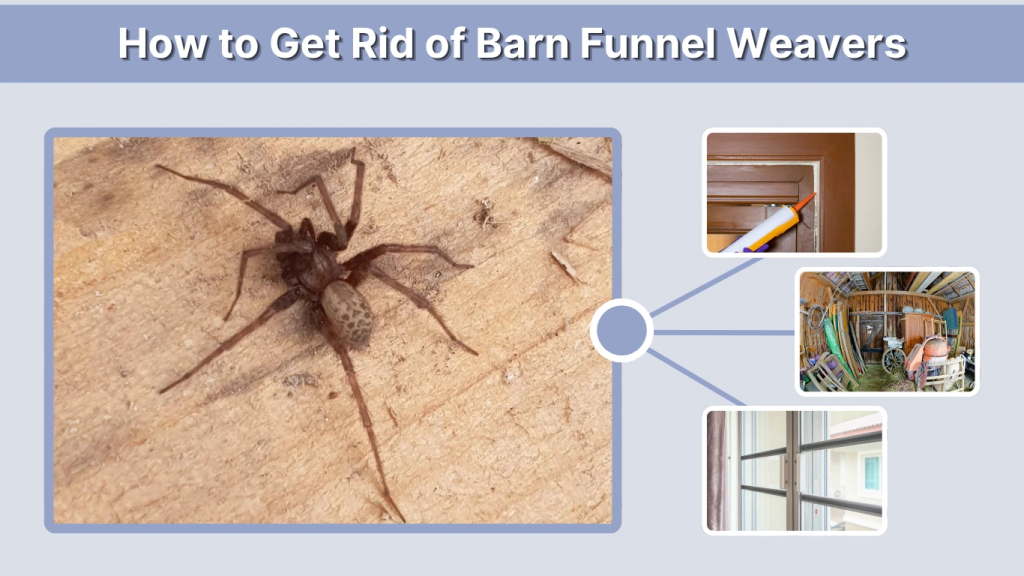
Prevention Methods
- Seal cracks and openings in walls and foundations
- Reduce clutter in barns, garages, and storage areas
- Limit outdoor lighting that attracts insects
- Keep doors and windows properly screened
Cleaning Tips
- Remove webs regularly using a broom or vacuum
- Clean corners, edges, and hidden spaces
- Eliminate insect sources that attract spiders
- Maintain dry and well-ventilated areas
Safe Removal
- Capture the spider using a container and release it outdoors
- Avoid crushing or using excessive chemicals
- Use natural deterrents if needed
- Wear gloves when handling to avoid accidental contact
When to Call Pest Control
If barn funnel weavers become excessively numerous or repeatedly return, it may indicate an underlying insect problem or structural issue. In such cases, professional pest control services can help identify and address the root causes.
Experts focus not only on removing spiders but also on reducing the conditions that attract them, such as moisture, entry points, and food sources. This ensures a more effective and long-term solution rather than temporary removal.
FAQs
What does a barn funnel weaver look like?
The barn funnel weaver is a medium-sized brown spider with long legs and visible spinnerets at the rear. It often has striped patterns on its body and is commonly seen near its funnel-shaped web.
Are barn funnel weavers poisonous?
They have venom, but it is harmless to humans and not medically significant. Bites are extremely rare and usually cause only mild irritation.
Do barn funnel weavers bite humans?
Bites are uncommon and typically occur only when the spider is provoked or trapped. They are not aggressive and prefer to escape rather than bite.
Why are they called funnel weavers?
They are named for their unique funnel-shaped webs, which include a flat surface leading into a tunnel where the spider hides and waits for prey.
Where do barn funnel weavers live?
They are commonly found in barns, sheds, garages, gardens, and grassy areas where they can build stable webs and access plenty of insects.