

The pink toe tarantula (Avicularia avicularia) is one of the most popular pet tarantulas due to its gentle temperament and striking appearance. Known for its distinctive pink-tipped feet and tree-dwelling lifestyle, this species stands out among other tarantulas. It is especially favored by beginners because it is generally calm, less aggressive, and relatively easy to care for. Native to the tropical rainforests of South America, the pink toe tarantula thrives in warm, humid environments that mimic its natural habitat.
Unlike ground-dwelling tarantulas, this species prefers vertical spaces and is often seen climbing branches or resting in elevated web structures. Its unique behavior, combined with its attractive coloration, makes it both fascinating to observe and rewarding to keep. In this guide, we will explore everything you need to know about pink toe tarantulas, including their habitat, baby care, lifespan, and essential facts.
Pink Toe Tarantula Overview
The pink toe tarantula is an arboreal species, meaning it lives primarily in trees rather than on the ground. This characteristic greatly influences its behavior, enclosure needs, and overall care. It is native to regions such as Brazil, Guyana, Suriname, and other parts of northern South America, where tropical climates provide the warmth and humidity it requires.
In appearance, adult pink toe tarantulas typically have a dark body with subtle shades of black, brown, or even bluish tones. Their most recognizable feature is the bright pink coloration on the tips of their feet, which helps them grip surfaces while climbing. This adaptation allows them to move efficiently across branches and even smooth surfaces like glass.
Behaviorally, they are known for being docile and less defensive compared to many other tarantula species. Instead of biting, they are more likely to flee or jump when they feel threatened. This makes them a preferred choice for those new to tarantula keeping. However, despite their calm nature, they are still delicate creatures and should be handled minimally to avoid stress or injury.
Pink Toe Tarantula Habitat
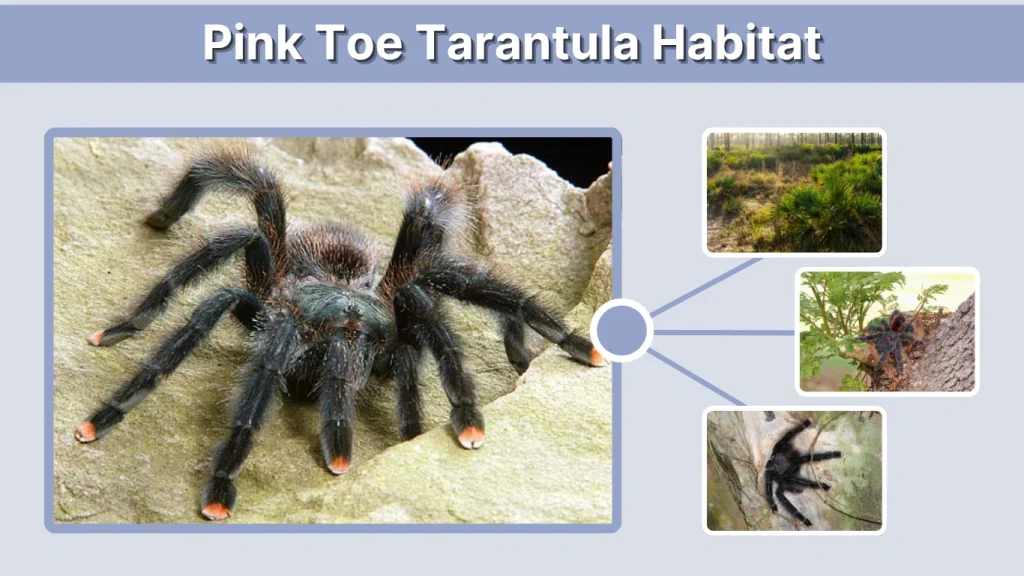
Natural Habitat
In the wild, pink toe tarantulas inhabit tropical rainforests where environmental conditions remain relatively stable throughout the year. These forests are characterized by high humidity, warm temperatures, and dense vegetation, all of which contribute to the spider’s survival.
Rather than living on the forest floor, pink toe tarantulas spend most of their time in trees. They create silk retreats in branches, leaves, or tree hollows, which serve as both shelter and hunting grounds. These elevated locations help them avoid predators and provide access to a variety of prey, including insects and small invertebrates.
The humidity in their natural habitat is moderate to high, but it is balanced with good airflow. This is an important detail because, while they require moisture, they are sensitive to stagnant or overly damp conditions. Proper ventilation is just as critical as humidity for their health.
Captive Habitat Setup
- Use a tall enclosure rather than a wide one
- Ensure strong ventilation to prevent mold and bacteria
- Maintain temperature between 24–28°C
- Keep humidity at moderate levels without over-misting
- Add vertical climbing structures like branches or cork bark
Creating a proper enclosure that mimics their natural environment is essential for keeping a pink toe tarantula healthy. One of the most common mistakes beginners make is providing too much moisture without enough airflow, which can lead to health problems. A balanced setup with both humidity and ventilation will help replicate the conditions found in their rainforest home.
Baby Pink Toe Tarantula Care
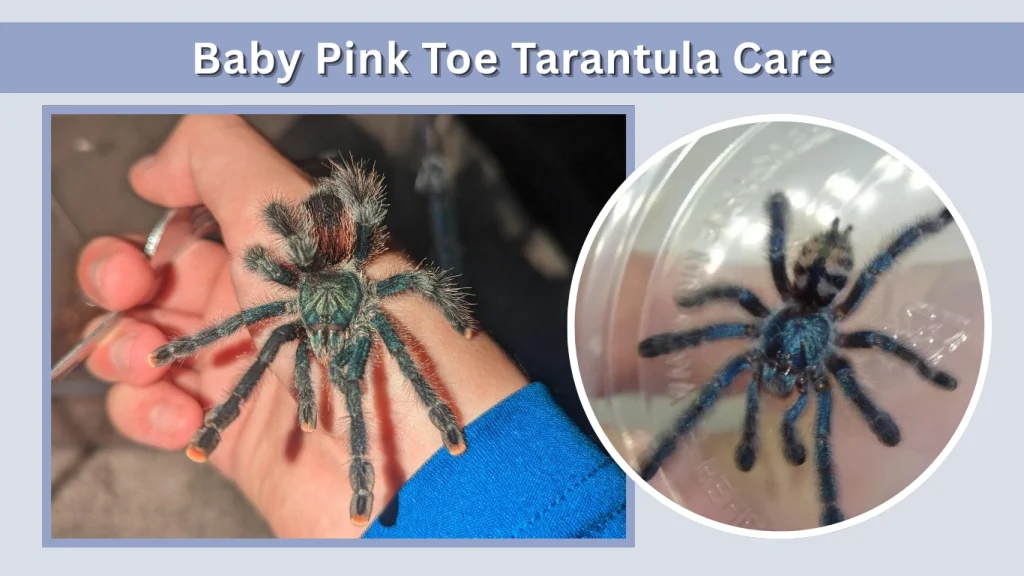
Appearance and Growth
Baby pink toe tarantulas, often referred to as spiderlings, look quite different from their adult counterparts. They are much smaller in size and usually lack the vibrant pink coloration that gives the species its name. Instead, spiderlings may appear more muted in color, with their distinctive pink toes becoming more visible as they grow.
As they mature, they go through a process called molting, where they shed their exoskeleton to allow for growth. Each molt brings subtle changes in size, color, and overall appearance. This gradual transformation continues until they reach adulthood.
Spiderling Care Requirements
- Use a small, secure enclosure to prevent escape
- Feed appropriately sized prey like fruit flies
- Maintain slightly higher humidity than adults
- Monitor closely during molting periods
Caring for baby pink toe tarantulas requires extra attention because they are more fragile than adults. They are particularly sensitive to dehydration and environmental changes, so maintaining stable conditions is crucial. Feeding should be done with small prey items that are easy for them to catch and consume.
Another important aspect of spiderling care is monitoring their molting process. During this time, they become vulnerable and should not be disturbed. Ensuring a calm, stable environment will help them successfully transition to the next stage of growth.
Pink Toe Tarantula Lifespan
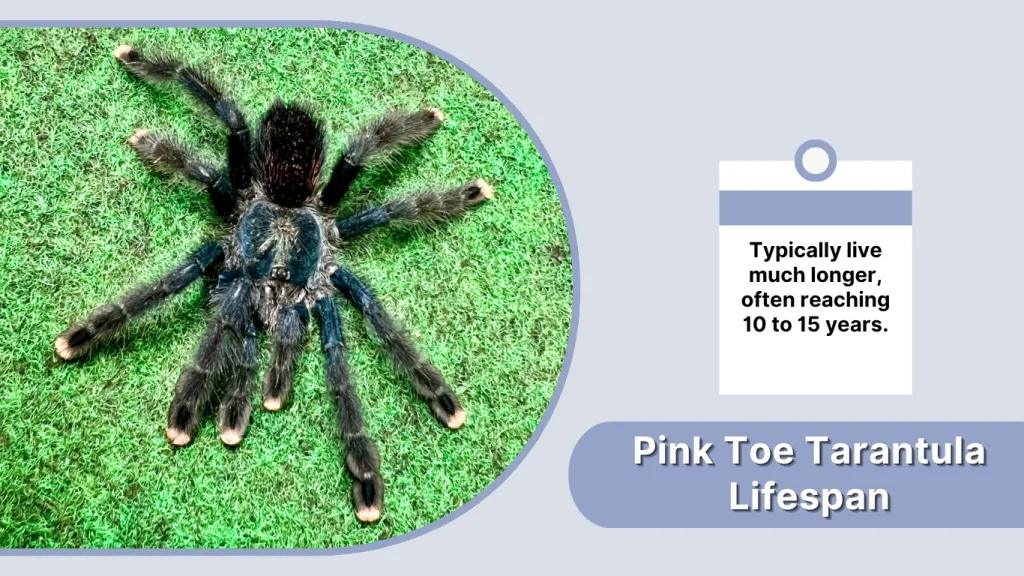
Pink toe tarantulas have a notable difference in lifespan between males and females, which is common among many tarantula species. Female pink toe tarantulas typically live much longer, often reaching 10 to 15 years when kept in proper conditions. Their longevity makes them a long-term commitment for pet owners.
Male pink toe tarantulas, however, have significantly shorter lifespans. Once they reach maturity, their primary focus becomes reproduction, and they usually live only 3 to 5 years. This difference is important to consider when choosing a tarantula as a pet, especially for those looking for a long-term companion.
Several factors influence the lifespan of a pink toe tarantula. Proper diet, consistent environmental conditions, and minimal stress all contribute to their overall health and longevity. Poor ventilation, incorrect humidity levels, or inadequate feeding can shorten their lifespan. Providing a stable and well-maintained habitat is key to ensuring they live as long as possible.
Pink Toe Tarantula Bite and Safety
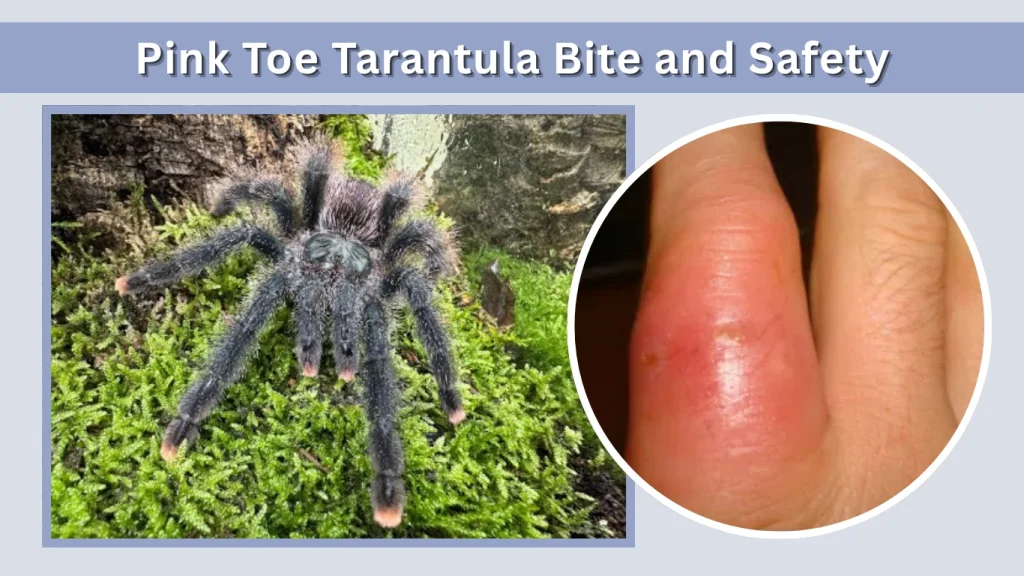
Bite Facts
- Rarely bites unless severely threatened
- Venom is mild compared to many other tarantulas
- Effects are similar to a bee sting in most cases
Defensive Behavior
- More likely to jump away than attack
- May flick urticating hairs when stressed
- Displays warning posture before biting
Although pink toe tarantulas are often considered safe compared to other species, it is still important to understand their defensive behaviors. They are naturally shy and prefer to escape rather than confront threats. When they feel cornered or stressed, they may adopt defensive postures, flick hairs, or in rare cases, bite.
Their venom is not considered dangerous to humans. Most bites result in mild symptoms such as redness, slight swelling, or irritation. Serious reactions are extremely rare, though individuals with allergies should always exercise caution. Overall, pink toe tarantulas are not aggressive and are unlikely to cause harm if handled responsibly and given proper space.
Interesting Pink Toe Tarantula Facts
- They are arboreal and spend most of their lives in trees
- Their pink toes help them grip and climb smooth surfaces
- They build tube-like silk shelters instead of flat webs
- They are nocturnal and hunt mainly at night
- They can jump short distances when startled
Pink toe tarantulas are fascinating creatures with behaviors that make them stand out among other tarantula species. Their ability to climb and even jump gives them a level of agility that surprises many first-time owners. Unlike ground-dwelling tarantulas, their web structures are more three-dimensional and are often used as both shelter and hunting grounds.
Their nocturnal nature means they are most active during the evening and nighttime hours. This is when they explore their environment, hunt prey, and maintain their web structures. Observing these behaviors can be particularly rewarding for keepers who enjoy watching natural instincts in action.
Care Summary for Beginners
Essential Care Checklist
- Provide a tall enclosure with good airflow
- Maintain temperature between 24–28°C
- Keep humidity moderate, not overly damp
- Feed live insects such as crickets or roaches
- Avoid frequent handling to reduce stress
For beginners, the pink toe tarantula is often recommended due to its manageable care requirements. However, success largely depends on understanding its specific needs. Unlike many other tarantulas, ventilation plays a critical role in its health. Too much humidity without airflow can lead to serious problems.
A balanced environment, proper feeding schedule, and minimal disturbance will help ensure your tarantula thrives. By following a simple care routine, even new keepers can successfully raise and maintain a healthy pink toe tarantula.
FAQs
Are pink toe tarantulas good for beginners?
Yes, pink toe tarantulas are widely considered beginner-friendly due to their calm temperament and relatively simple care requirements. They are less aggressive than many other species and rarely bite. However, they still require proper habitat setup, especially good ventilation, which beginners must understand to keep them healthy.
How often should a pink toe tarantula be fed?
Pink toe tarantulas are typically fed once or twice a week, depending on their size and age. Spiderlings may need more frequent feeding, while adults can go longer between meals. It’s important to provide appropriately sized prey and remove uneaten food to maintain a clean and safe enclosure.
Do pink toe tarantulas need high humidity?
They require moderate humidity, but not excessively high levels. Unlike some tarantulas, pink toes are sensitive to overly damp environments, especially with poor ventilation. A balanced setup with adequate airflow is more important than constantly high humidity to prevent mold and health issues.
Can a pink toe tarantula bite be dangerous?
A pink toe tarantula bite is generally not dangerous to humans. The venom is mild and typically causes symptoms similar to a bee sting, such as slight pain or swelling. Severe reactions are rare, but caution should always be taken, especially for individuals with sensitivities or allergies.
How big do pink toe tarantulas grow?
Adult pink toe tarantulas usually reach a leg span of about 4 to 5 inches. Females tend to grow slightly larger and live longer than males. Their size, combined with their climbing ability and striking appearance, makes them an appealing species for both beginner and experienced tarantula keepers.
Conclusion
The pink toe tarantula is a unique and captivating species that combines beauty, calm behavior, and relatively easy care. Its arboreal nature, gentle temperament, and manageable requirements make it an excellent choice for beginners as well as experienced enthusiasts. By understanding its habitat, feeding habits, and environmental needs, you can provide a safe and comfortable home for this fascinating creature.